Category Archives: Uncategorized

A New Proposed Height Increase And Grow Taller Method From Periosteum Removal (Breakthrough)

In the last post I would reveal that I had found a study done years ago where a group of researchers found that if you strip the periosteum area close to (but not on) the epiphyseal cartilage area, there was a noticeable increase in longitudinal growth of the bone.

What I would suggest then in this post is an idea for increasing height for people who are still growing which I would say is very simple.

What I would suggest is that the individual would try to stimulate the areas close to the growth plates in their body, near the bone area to lead to increased longitudinal growth.

If we remember the application of the LSJL method using the dumbbells, I would suggest actually something very similar. We take a large, rather blunt heavy instrument, and apply a sliding force to the region of the lower leg/tibia in the epiphysis region, which would be close to the physis (growth plate).

While the rate/frequency of the rubbing has not been determined or optimized yet, I propose that the rubbing action of say a heavy, large surfaced dumbbell would be effective enough to possibly strip some of the periosteum level cells and possibly cause some increased growth.

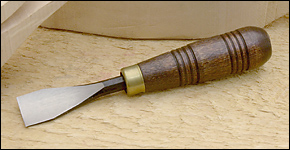
What I have been thinking is to use a type of chisel that one finds from woodworking like a fishtail chisel wurlhich can evenly and accurately reach a more uniform compressive load action on the bone area.
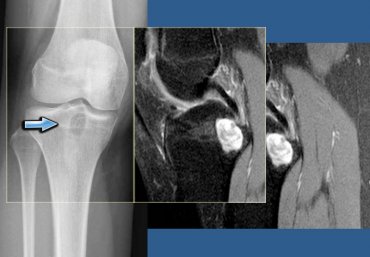
kneeThe area to rub in the knee region is right on the bone area above where the growth plate would be located. Refer to the picture to the left where the arrow is point at. We would be wanting to rub and try to get the periosteum in the bone area above it.

The action I would suggest is to go with a scrapping or up and down motion on the bone above the tibial physis but the motion should be performed across the entire bone region.

If the study “A PROCEDURE FOR STIMULATION OF LONGITUDINAL GROWTH OF BONE” done on rabbits can be translated to humans even slightly, this method for increased longitudinal growth in growing children should work.

However it might be a better idea to move away from sharp tools that might have been traditionally for woodworking purposes and go with even the hard, but large area edge of a textbook to get the same type of movement and stimulating effect. Interesting, this idea was also proposed in the Book “School Of Height” which I had briefly talked about in the previous post “The School Of Height By A.S. Palko Book Arrived, Thanks Kazlina“, but the idea was instead to rub the knee or joint regions with a certain type of material.


 

What loads are generated on the bone during typical exercise?

The generation of loads in excess of the osteogenic threshold by physical movement.

“stresses in bones in excess of the osteogenic threshold will stimulate bone growth; however, protocols for the generation of these stresses had not been established. Two trial movements were examined in the study: the plié and a movement requiring the subject to move a leg sequentially to 45° displaced positions – the star excursion balance test. Using inverse dynamics and an optimisation approach, the loads in the muscles crossing the hip and knee joints and the corresponding joint contact forces were calculated. It was found that the osteogenic threshold was exceeded in both these trials identifying them as suitable exercises in the maintenance of bone health. In the order of increasing bone load at the hip, and hence increasing bone growth stimulation, are the following demi plié, star excursion balance test with maximum reach criterion, grande plié and star excursion balance test with maximum speed criterion. In the order of increasing bone load at the knee are demi plié, grande plié, star excursion balance test with maximum reach criterion and star excursion balance test with maximum speed criterion. However, due to the high loads encountered, these exercises are not recommended for subjects with advanced osteoporosis although the boundary between therapeutic bone loading leading to increase in bone mineral density and loads capable of causing fracture is unclear.”

“BMD fracture thresholds:110 mg/cm^3 in the distal femur and 70 mg/cm^3 in the proximal tibia”

“threshold of stress at which bone growth is stimulated corresponding to a stress of approximately 20MPa, which for a bone’s Young’s modulus of 20 GPa is 1000me.”

“As the lever arm at which the muscles act at the joint is typically relatively small compared to the segment length to which they are attached, the loads in the muscles and hence the compressive forces in the joint and bone can be very large”

“during a quasi-static rise from a deep squat, the tibio-femoral joint forces were 5.5–6.6 times the body weight.”

“a hip joint contact force of 2.38 times body weight occurred while walking at 4 km/h, 2.51 times body weight during stair ascent and 2.60 times body weight during stair descent.”

The star excursiion balance test generated a force around 6 times bodyweight in the knee.

A Procedure For Stimulation Of Longitudinal Growth Of Bone By Stripping The Periosteum (Breakthrough)

I recently got an email from Tyler where he showed me a very interesting study done from Iran about the possibility of getting closed growth plates to regenerate back from using trauma. The study is entitled “Growth Plate Reappearance after Closure in Ankle Radiography for Trauma” and he would write his own post about it entitled “Reverse Ossification” on HeightQuest.com. I was very curious at how he found this really interesting study and he reminded me that you can just go to Google Scholar and type in the phrase “longitudinal bone growth“.

So that is what I did. I typed it in and looked at the results I would find. The results are REALLY good and they were very relevant to our research. From one of the results that appear, I was directed to an old study entitled “A PROCEDURE FOR STIMULATION OF LONGITUDINAL GROWTH OF BONE, AN EXPERIMENTAL STUDY” BY Y. K. W1J, M.B., CH.B., PEIPING, CHINA

The entire document is 13 PDF pages for most of the pages are just pictures and tables and for some height increase researchers like me it was a rather easy and quick read.

The researchers would try to experiment on the long bone with a still functional/working epiphyseal plate and try to either manipulate the epiphyseal plate or the bones around it to get the overal growth rate of the epiphysis to increase for people with limb length discrepancies.

Almost all of the ideas the researchers tried did not work in increasing the growth rate and a lot of the ideas actually decreased or stunted the growth rate.

This would include…

I. Insertion of Foreign Material into a Drill Hole Placed Immediately Distal to the Proximal Epiphyseal Cartilage of the Tibia

II. Indirect Interference of Circulation of Bone

III. Ferguson’s Operation-Curettage of Bone Marrow.

IV. Stripping of the Periosteum

While there was an old study from 1033 by Ferguson which suggested that putting a drill through the bone cose to the epiphyseal and then curetting the marrow inside would stimulate the longitudinal growth, the 3rd type of experiment showed no real longitudinal growth. What was seen however was that the 4th type of bone modification did lead to bone lengthening. When the long bones in the tibia and femur are cut open in the rabbits in the anteromedial space, we do see that the resultant long bones seemed to have increased in length faster than in the controls. The tibia is exposed to a longitudinal incision while the femur is given a lateral incision.

From the study…

Table IV shows the measurements of the length of the bones after the preceding experiments. Figures 1 and 2 illustrate examples of the results obtained. Definite longitudinal overgrowth of the operated bone was observed in all instances except in the tibiae of rabbits Nos. 36, 48, and 51. The bones operated upon were seen to be slightly thicker and rougher than those of the control side, but, in spite of this, the periosteum was not particularly adherent.

From the conclusion/summary…

SUMMARY

In these experiments various surgical procedures were employed, with the hope of finding a method for stimulation of the longitudinal growth of bone. The first three groups of experiments (a repetition with minor modifications of the procedures of Meisenbach, Pearse, Ferguson, and others) failed to produce significant increase in the length growth.

By chance, in several animals, we observed that stimulation of the length growth was produced by the simple procedure of loosening or stripping the periosteum from the shaft of the bone. Consequently, this operation was repeated on twenty-two animals, with quite uniform and significant results, as shown in Table IV. With but three exceptions out of twenty-two rabbits, the operated leg showed definite lengthening when compared with the normal leg on the opposite side. Although the amount appeared to be small, it actually represented an increase of from 5 to 15 per cent. over the normal growth of the bone during that period of VOL. XIX, NO. 4, OCTOBER 1937920 Y. K. WU AND L. J. MILTNER time. Observations of the monthly roentgenograms showed that the most active stimulation of length growth of the bones took place during the first three months following the operation. We are unable to give a definite explanation of the factors which, after the periosteum had been stripped, producing this stimulation of the longitudinal growth.

Analysis & Interpretation:

This study I have found is one of those studies that just are very strange and make very little sense. It would seem that if we remove using some blunt instrument to strip away the periosteum it would lead to some longitudinal growth. I would need to go back to the drawing board and look into the science and theory of bone remodeling to figure out why this even happens. Of course we must remember that this experiment was done on young laboratory animals who still have functional growth plates. It could be very easily that extra activity on the bone areas close to the growth plate can stimulate extra growth.


Natural Height Growth January 2013 – Monthly Website Traffic Data Report.

Note: For the report from last month where I gave both the yearly and monthly numbers of the traffic to the website, go to the post “Natural Height Growth December 2012 – Monthly And End Of Year Website Traffic Data Report

One idea for a regular monthly post I have been doing almost since the beginning of the blog are these monthly reports on the traffic. I have been doing them for all the months and this post will be for the month of January in 2013.

Analysis & Interpretation: 

The month of January seems to have been a little slower and I can only assume that the reason the rate of increase in the traffic has been slowing down over time is from the rate of the number of posts being published here decreasing. In the beginning of the blog, There was around 170-180 blog posts put up in just 1 month!! Now the numbers have decreased to only around 30-50 per month.

What we see is that there was almost 34,000 total visits in the month of January, from the 1st day to the 31st day. The average # of people went from around the 850-900 per day mark in December to around 1000 total visitors/day. Around the middle of the month, the website went viral again where the traffic to the website almost increased by 3X from 1000 total visitors/day to almost 3000 total visitors/day. This was written about in the post “Website Traffic Volume Went Through An Extreme Increase And Other Technical Operational Details“. The news stations and national TV networks picking up on the story over the fact that Tanya Angus passed away and I was one of the earliest sites to report on the news and I got it from TheTallestMan.com website.

Sometimes the traffic is below the 1000 mark around the 950 mark, but other days sees the traffic increase to almost 1150 total visitors/day. Something I do see and realize is a problem is that many of the old and regular visitors to the website are not really coming or reading anymore and I wonder what is missing from the website. The website’s growth is indeed slowing down. This is expected since it is harder for larger websites (and larger things in general) to experience the same level of growth that might have been seen when the website was smaller. Going from 100 total visitors/day to 200 total visitors/day is much easier than going from 1000 total visitors/day to 2000. The very fact that a person’s own success can be their own downfall and that is sort of what is happening recently. Much more negative comments and reception have been appearing recently and the website is only getting slower and slower, and harder and harder to edit and change. There is just a lot more information that needs to be edited and changed.

Personal Note: 

On a personal note, I am in a new relationship with someone new so that has been taking up a lot of my time recently. There have been quite a few days when my social and personal obligations have forced me to not update or write for the website but I do find that I am getting a lot of personal satisfaction with this improvement in my life. I sort of realize now that I do my best work and are the most productive when I am single, focused, and slightly angry. That is sort of a hard state to be in at this point.

Screen Shot 2013-02-03 at 6.22.03 AM


Screen Shot 2013-02-03 at 6.22.39 AM

New Proposed Method To Increase Height And Grow Taller Using TGF-Beta1, Hyaluronic Acid, And Autologous Synovial Fluid

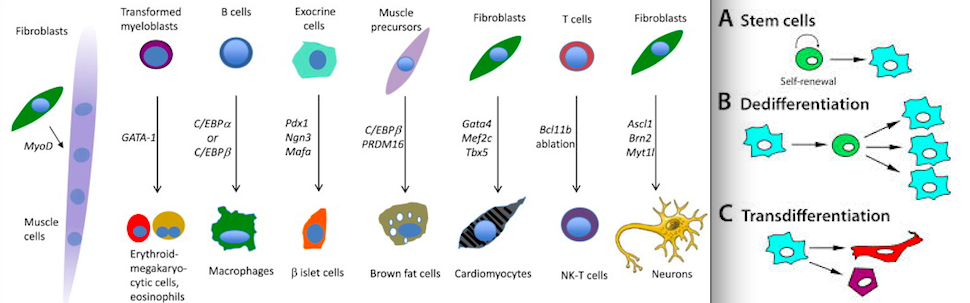
Recently while I was doing research on the link between aggrecan and its connection and effect on the cartilage, I came across this study which seems that suggest that by combining the hyaluronic acid with an external source of synovial fluid we can still get chondrogenic differentiation from mesenchymal stem cells in vivo.

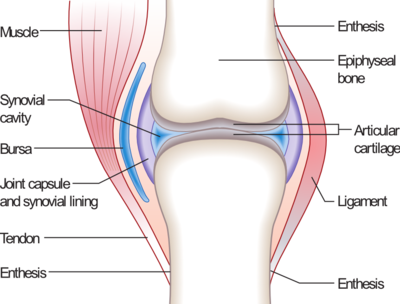
JointAfter reading over the abstract a very simple idea came to me and made me wonder whether in vivo cartilage formation would be just easier to perform. If we remember from our research on microfracture surgery on a possible way to increase height, we note that the microfracture surgery was really very simple. You make a hole in the articular cartilage defect region with a awl and the hole will reach the below the initial bone surface to the sub-cortical level and get to the marrow when the MSCs are. The MSCs leak out and that clotting action creates a another cartilage in the defect’s place after about 2-4 months. However that cartilage would be with disorganized fibers known as fibrocartilage.

This may be one of the easiest proposed ways to increase height yet. The study below shows that if you infuse TGF-beta 1 into a culture of explanted MSCs from the marrow of horse, then the culture will under staining to check for proteoglycan and type 2 collagen see high levels. While the hyaluronic acid by itself does little in terms of anabolic chondrocyte formation, the hyaluronic acid with synovial joint fluid does have some chondrogenic ability. What I propose is a 4 step process for height increase.

  1. Take X-rays of the individual’s knee region to figure out where exactly their articular cartilage ends and where the synovial joint begins.
  2. We are targeting the region inside the synovial joint where the hyaluronic acid (as a GAG) and the synovial joint will be.
  3. We make two incisions on the medial and lateral side of the end of the tibia cutting into the joint, so that the synovial fluid can reach into the inside of the epiphysis.
  4. We inject TGF-Beta1 into the epiphysis, where it will be mixed with the HA and the SF. Since the fluid will flow into the marrow all three compounds will help the MCSs inside to go through chondrocyte differentiation.
  5. The way the incision on the bone will be made will be a from the side to give the bone to heal in a certain way that the MSCs produced will create a band of fibrocartilage which will let is easier for the bone to expand longitudinally.
  6. We make another injection of TGF-beta 1 at a high level, arund 200 ng/ mL into the joint itself to stimulate the chondrogenic property of the HA and SF already in the knee. This will also precent any leaking of MSCS out of the induced incision from diluting the effect of the TGF-Beta1.

The full text for the study is available from clicking the link.

Hyaluronic acid and autologous synovial fluid induce chondrogenic differentiation of equine mesenchymal stem cells: a preliminary study

Abstract

Mesenchymalstem cells(MSC) have the potential to differentiate into distinct mesenchymal tissuesincluding cartilage, which suggest these cells as an attractive cell source for cartilage tissue engineering approaches. Our objective was to study the effects of TGF-beta1, hyaluronic acid and synovial fluid on chondrogenic differentiation of equine MSC. For that, bone marrow was aspirated from the tibia of one 18-month-old horse (Haflinger) and MSC were isolated using percoll-density centrifugation. To promote chondrogenesis, MSC were centrifuged to form a micromass and were cultured in a medium containing 10 ng/ml TGF-beta1 or 0.1 mg/ml hyaluronic acid (Hylartil®, Ostenil®) or either 5%,10% or 50% autologous synovial fluid as the chondrogenesis inducing factor. Differentiation along the chondrogenic lineage was documented by type II collagen and proteoglycan expression. MSC induced by TGF-beta1 alone showed the highest proteoglycan expression. Combining TGF-beta1 with hyaluronic acid could not increase the proteoglycan expression. Cultures stimulated by autologous synovial fluid (independent of concentration) and hyaluronic acid demonstrated a pronounced, but lower proteoglycan expression than cultures stimulated by TGF-beta1. The expression of cartilage-specific type II collagen was high and about the same in all stimulated cultures. In summary, hyaluronic acid and autologous synovial fluid induces chondrogenesis of equine mesenchymal stem cells, which encourage tissue engineering applications of MSC in chondral defects, as the natural environment in the joint is favorable for chondrogenic differentiation.

© 2004 Elsevier Ltd. All rights reserved.

An Immediate Rejection By A Girl On A Man’s Potential To Be A Dating Partner Due To His Lack Of Height, Being Short

Today while I was being lazy I was getting my daily YouTube viral video fix and I came across a video on this old MTV show called NEXT where a group of people, usually 5 of the same sex, who get in a bus and would all vie to get the attraction and attention, or money of the person who is judging them. I decided to post this video up to show just how important height can be in real life situations and can lead to a bad first impression and rejection from the opposite sex as a potential dating partner.

I remember being sort of addicted in my younger days to watching teenage based dating shows on MTV in high school. MTV shows from the 2000s, last decade,  like Room Raiders, Eliminate, and NEXT were shows which I sort of learn some of my social skills from.

On this episode of NEXT a girl named Brittany at 19 years old comes on looking for a guy she can have fun with.

Th first guy to get off the bus was 18 years old named Sean. In less than 2 minutes after he got off the bus, immediately after introducing himself, she would eliminate him from the potential group of guys to be a dating partner.

She would say that “he is just not tall enough”. When a guy gets a rejection like that it just hurts to watch and he couldn’t think of any comeback except to make a self depreciating joke of “still waiting for that growth spurt”. She would reply with a sort of condescending tone of “good luck with that” and then make her rationalization that “I need a boyfriend that I can look up to, literally”. From the look of the video, it would appear that Sean was about the same height as Brittany but the angles may be off a little.

If I was to give my own thoughts on what this girl did I felt that it was not a nice to thing to reject a person due to something that they have no control over. Maybe this guy was already sensitive on his lack of height but her immediate rejection of him on national TV because of being too short may be much more painful than other situations. This situation shows that the lack of height may be the most detrimental against men in the area of dating and relationships. Very few people would reject another person immediately unless that is something that is lacking from the first impression. When it comes to being shorter than your peers, that first impression may not be as good.

The video is taken from this YouTube source HERE.