Category Archives: Uncategorized

How To Grow Taller And Increase In Height Using Human Growth Hormones Or Somatropins

This is one of those articles which I realized that had to be written at some point to make sure I was complete and thorough in all of my research. At this point it is rather obvious for the long time visitor that if we had the ability to use the grow taller treatment when we still had open growth plates known as growth hormone injections of growth hormone therapy, most of us who tried would have ended up with a taller final height.

I have NOT written extensively about the possibility of using growth hormone therapy and treatments to make children who have short stature (below average stature in their age range) which is the result of growth hormone deficiency to make them taller. Instead, I have probably written more about growth hormone secretagogues than the actual growth hormones that are around. I have written about growth hormone segretagogues in the post “What Are Growth Hormone Secretagogues?”. It has been shown in many studies and experiments that not just growth hormones, but also the growth hormone secretagogues would also cause increased growth rates and adult height.

One thing that the general public doesn’t know is that the pituitary gland that is releasing the GH is also responsible for releasing a few other types of hormones that control the endocrine function of the body. The pituitary gland releases both the growth hormone, which is known as somatropins or somatotropins and also the compound known as somatostatins. Both of these seem to be from the anterior region of the pituitary gland.

Something to note is that there is both synthetic and natural growth hormones. The growth hormones that are taken from human cadavers is known as just hGH and the growth hormone made from recombinant DNA technology is known as rhGH.

There is probably over dozens of PubMed Studies which show that injecting growth hormones like Humatrope, Somatropin, Nutropin, and Genotropin in a young child who is still growing with open growth plates will lead to them developing a higher growth rate and end up taller when they finish growing vertically.

Only 5 studies are chosen to be listed below. The main point is that for some people, getting injected with growth hormones will make them taller.

  1. Effect of growth hormone therapy on height in children with idiopathic short stature: a meta-analysis.
  2. Effect of growth hormone treatment on adult height of children with idiopathic short stature. Genentech Collaborative Group.
  3. Growth velocity, final height and bone mineral metabolism of short children treated long term with growth hormone.
  4. Final height after combined growth hormone and gonadotrophin-releasing hormone analogue therapy in short healthy children entering into normally timed puberty.
  5. Adult height in short normal girls treated with gonadotropin-releasing hormone analogs and growth hormone.

If the reader would prefer to read over the abstracts, they would also notice that growth hormone therapy can in improved upon by combining the injected growth hormone with another type known as gonadotropin-releasing hormone analogs (GnRHa). From the 5th source…

“…the combination of GH and GnRHa is significantly more effective in improving adult height than GH alone in girls with idiopathic short stature, early or normal onset of puberty…”

The values for final height increase is very noticeable.

  • With GH alone – around 6 cms
  • With GH and GnRHa together – around 10 cms

The amount of GH & GnRHa used is around 100 microg/kg or 10 g/L (for the GH standard dosage). The dosages were given around every 2 weeks for years, usually a 3-5 year range until the child is getting close to full bone maturity, which is when over 1 years time, their height increased only 1 cm or less with the bone age (BA) usually over 15 years of age.

The first paper was insightful in showing just how much more growth can be achieved by a child who is given the treatment over a controlled group without the therapy. On average, the increased growth was about 1 extra inch of height increase every year. On average, the total extra height gained was 2-2.5 inches of extra adult height from using the growth hormones. When the cost is calculated out, it is shown that extra inch of height gained from therapy is actually around an extra $35,000 each time.

However there are studies which seem to show that for these kids, the therapy does not mean that they will be able to push past what their body was genetically programmed to reach. The 3rd study seems to conclude with the opposite point.

The study concluded with “…We conclude that combined rhGH and GnRH analogue therapy in short adolescents with normally timed puberty does not contribute to increase their final height above their pretreatment predicted adult height…

Some height increase researchers have argued citing research done like the study above that it is not that everyone will end up taller from getting excess GH release, but that only people who are already suffering from the genetic pathology of having the growth hormone deficiency disorder will have their height increased. The deficiency may not just be about growth hormones but other types. It would also include certain types of disorders that result in short stature like Turner’s Syndrome and IUGR.

I actually have to disagree with their point when we see what happens to people like Tanya Angus or Sultan Kosen. If the GH is not making these people taller from the pituitary gland suffering hyperplasia, then what is causing them to get taller?

We can see from Angus’s case that before she was suffering from the metastasizing pituitary tumor, she was already at a respectable 5′ 8″ tall, a good height to be at for the average statured American female. From an endocrinological point of view, she was not suffering from any type of growth retardation endocrine diseases when her abnormal grow started when she was around the age of 18. It was clear that she never suffered from any type of growth hormone deficiency. When her tumor pushed the pituitary gland into hyperplasia, GH was increased over 10X, and she grew. If a person who does not suffer from growth hormone deficiency develops a pituitary tumor, no matter how much the tumor is causing excess GH release, they should not be increasing in height, only maybe muscle mass and increased energy, since it is seen that GH is also touted as the hormone that is supposed to be good for anti-aging and age reversal properties.

However Tanya Angus did get taller around the age of 18, from the height of 5′ 8″ and her tumor kept pushing GH throughout her body.

It would be easy to rebuttal the conclusion of the last study with another study…

This study noticed that for girls who don’t have growth hormone deficiencies but do notice precocious puberty, their height was increased up to 12 cms if they used a combination of growth hormones and GnRHa

Then again new findings like “High dose growth hormone treatment induces acceleration of skeletal maturation and an earlier onset of puberty in children with idiopathic short stature.” seem to shift the overall physician’s opinion back to the idea that maybe GH treatment is not as good as we think…

“…Long term growth hormone (GH) treatment in children with idiopathic short stature (ISS) results in a relatively small mean gain in final height of 3-9 cm, which may not justify the cost of treatment. As it is unknown whether GH treatment during puberty adds to final height gain…”

There is a gain, but the gain is around 1-3.5 inches in extra height. Is the height increase really worth that much money they ask? It would seem that if the child gets the GH therapy for too long, the bone age and bone maturity can be advanced so far that it can cause precocious puberty, meaning the amount of time left to grow is decrease.

Some articles are actually agreeing with this idea like “High-dose GH treatment limited to the prepubertal period in young children with idiopathic short stature does not increase adult height” confirm this new opinion. It seems that compared to controls, the GH therapy doesn’t really make the final adult height increase a lot, especially when the therapy is taken off. It would seem that the growth rate actually decreases to below average if the growth hormone is stopped being added.

So now I am fully confused. Does growth hormone help shorter kids really end up taller than if they didn’t use the therapy, or is the increase so little that the cost of the treatment is just not worth it?

The 3rd study seems to make a good overall conclusion about the results. “…We and others have demonstrated a clear increase in their growth velocity short term, but improvement of their final height remains unclear and controversial” The thing to really take away from this post is that maybe the GH and GnRHa is only good for the first few years, but then have no effect towards increased longitudinal growth of the bones, meaning that the overall final adult height is not really increased that much, if at all.

The entire point of all 5 studies can be summarized by the conclusion made in the 2nd study by the Genentech Collaborative Group which was published in 1999…

“Long-term administration of growth hormone to children with idiopathic short stature can increase adult height to a level above the predicted adult height and above the adult height of untreated historical control children.”

As for other applications and whether the growth hormone therapy would work to cure other causes for idiopathic short stature, there has been studies that say that they can. These include

  • hypophosphatemic rickets
  • osteogenesis imperfecta
  • intrauterine growth retardation (IUGR)
  • Turner’s syndrome

For some of these disorders, the increase in height can be as dramatic as 12 cms (or almost 5 inches!)
Evidence Showing Layers Of Hyaline Cartilage In Adult Human Intervertebral Disk And Bone Junction (Important)

Something that I finally have found evidence for and many height increase researchers have suspected have turned out to be true from recent research.

A finding in a Pubmed article “On vertebral body growth.” reveals a piece of information that most professional physicians would know but most amateur height increase researchers might not know is…

“…Unlike other long bones of the skeleton, vertebral body epiphyses never ossify, and after the end of the growth period of life they are reduced into thin plates of hyaline cartilage which are situated between vertebral body and intervertebral disc….”

I always thought that there was some layer of cartilage left from the ossification process of the normal bone development process and it seems that we might all be right about it. After typing the phrase “Intervertebral Disk Cartilage” into google, I found even more evident that there are cartilage in adult human vertebrate bones

From a webpage of a sort of advanced Biology or Anatomy Medical School course entitled ANAT D502 – Basic Histology – Cartilage, Bone & Joints, Bone Formation Pre-Lab – revised 9.23.12″ which is from Indiana University – Purdue University Indianapolis.

vertebral disk cartilage


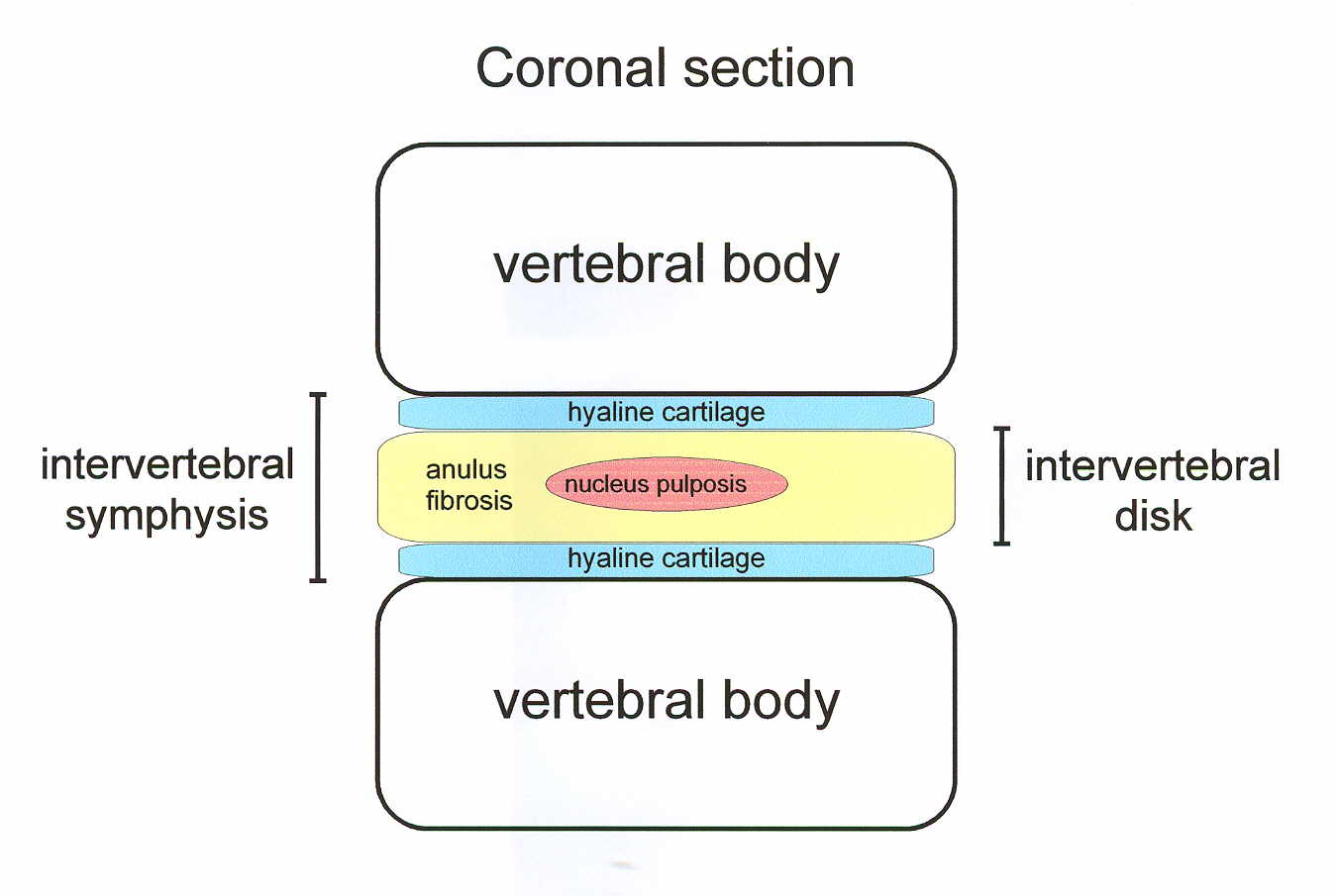
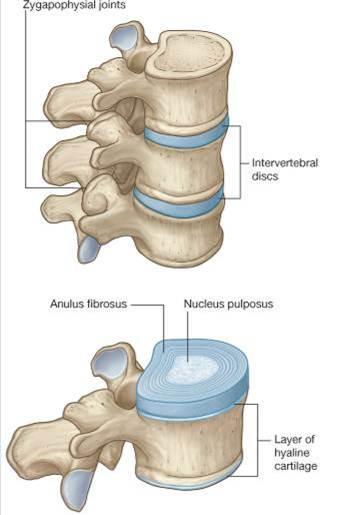
Something to notice is that there is supposed to be layers of hyaline cartilage surrounding the nucleus pulposis and anulus fibrosis.

While the intervertebral disk consists of only the…

  1. Anulus Fibrosis
  2. Nucleus pulposis

The two layers surrounding the intervertebral disks and are in the juntion between the disks and the vertebral bone are where the hyaline cartilage are supposed to be. The entire thing is called intervertebral symphysis. I would guess that the layer of hyaline cartilage is made much bigger to be used in the diagram but it should be there in adult humans.

Another PubMed article “Morphology of the cartilaginous endplates in human intervertebral disks with ultrashort echo time MR imaging.

It definitely suggest that at the ends of the disks are these surfaces of the bone which are covered in cartilage, just like how the ends of a long bone, (ie femur) have a layer of articular covering them. More images show the same, thing although it is never explicitly stated that the diagrams are for adults. we know that in children who are still growing, there has to be some sort of endplate which acts like a growth plate. I am suggesting that the diagrams are for adults, which would give us hope.

vertebrate bone cartilage

cartilageWhile this is sort of exciting, potentially good news, it is important to always be cautious in being too over-optimistic. I would refer to the study “Articular cartilage and intervertebral disc proteoglycans differ in structure: An electron microscopic study”

Abstract

Articular cartilage and the intervertebral disc tissues have different material and biological properties and different patterns of aging and degeneration. To determine if the proteoglycans of these tissues differ in structure, we used the electron microscopic monolayer technique to compare baboon articular cartilage proteoglycans with baboon annulus fibrosus, transition zone, and nucleus pulposus proteoglycans. Intervertebral disc and articular cartilage porteoglycans differed signficantly. Articular cartilage contained large proteoglycan aggregates formed from hyaluronic acid central filaments, multiple monomers, and large nonaggregated monomers. These molecules were identical to those of nasal cartilage, growth plate cartilage, chondrosarcomas, or menisci. In contrast, the intervertebral disc tissues contained only nonaggregated proteoglycan monomers and clusters of monomers without apparent central filaments. Intervertebral disc nonaggregated monomers were shorter and more variable in length than those from articular cartilage, and nucleus pulposus nonaggregated monomers were even shorter and more variable in length than transition zone and annulus fibrosus monomers. These observations suggest that significant differences in proteoglycan metabolism exist between articular cartilage and intervertebral disc.

Conclusion:

There is studies and anatomical diagrams showing evidence that there is a layer of very thin hyaline cartilage that is still there even in adult humans. If that is the case, we might have another source of mesenchyme we can try to work with to stimulate height increase. This new development will allow height increase researchers to push in an entirely new direction in research, through possible stimulation of the torso.

No Chemical, Supplement, Pill, Or Vitamin Ingested Orally Can Increase Height Or Make Someone Grow Taller After Growth Plate Closure

I will probably have to remove the Supplement Guide section for chemicals, compounds, or supplements which I thought would allow for the person to grow taller after this post since the whole point of this post is to refute all the possible vitamins and supplements I did list in the Supplement Guide as something that could potentially help people grow taller after growth plate closure.

Here is something I wanted to say for a long time since I have noticed that every month, there is a new pill, herbal formulation, or miracle drug being sold on the internet which is supposed to help people who are already adults with completely closed growth plates grow. I have reviewed so many of the pills, including Gloxi Height Enhancer, MFIII, GrowthMax Plus, Elevate GH, Baryca Carbonica, Slicea, etc. I am really tired of doing the reviews and sort of running out of patience.

Everyone of these supplements have shown no promise, at least for the person with fully close plates. The only two supplements which i still think might lead to a very little bit of increased height from increasing synovial joint volume in the knees have been glucosamine sulfate and hyaluronic acid since they are both proteoglycans and glycoaminoglycans which can be found in the extracellular matrix of the synovial knee. If we can add more content in the matrix, that might theoretically give the lubricated liquid inside the gap extra space. meaning when a person stands up there is less height loss from compression by the upper body.

However even these supplements have a low level of working.

The main problem with any pill that claims to work is always the fact that the pill would have to have at least two major effects and not at the same time.

1. One step would be to somehow remove the hard inorganic, nonliving tissue between the bone cells (osteocytes) and lacunae in the extracellular matrix of the bones. 

2. The second step would be to be able to cause only chondrogenesis (to create cartilage) to occur in the area which lost the inorganic nonliving tissue. 

These may be the two major steps but there are at least 4 major considerations any inventor would have to take into account if they were to create some pill that really worked.

Consideration #1: They would have to be able to not get ingested by the stomach when going through the person’s digestive system. The stomach has hydrochloric acid which can burn holes through steel so any compound that is swallowed would first have to not get broken down by the stomach juices and acids.

Consideration #2: They would also have to be small, safe, or non threatening enough that the host’s immune system and white blood cells would not find them and decide that they are some foreign invader and try to rip the component to pieces. Not just white blood cells, but proteins throughout the body will all be fighting it to prevent infections and inflammations.

Consideration #3:  The effect the swallowed substances would work on have to be very specific and work locally. If we did find a pill that can de-ossify the bone and remove the hard inorganic material, it would work on our entire body turning us into a puddle of rubber or skin tissue lying on the ground. The pill or supplement must be able to target the areas of the body where the old growth plates used to be.

Since the region of long bones where the old growth plates cartilage used to be has no type of easy to identifying marker, this step would be very hard. Being able to target only certain areas of the body is much easier to do using needles, shots, and injections than the holistic way pills are used, which dispers out and diffuse throughout the body after they do get into the blood stream.

Consideration #4: If the pill can remove the hydroxyapatites, how would the calcium mineral deposits be removed in an orderly fashion so that chondrogenesis can immediately begin. Let’s remember that the whole growth plate has at least 4 major process going on simultaneously in a very steady state, continuous fashion with one process occurring right after the other, sort of like how in the Olympics you see in the 4 person relays where one person who finishes running passes the baton to the person after them right when they cross the finish line.

Consideration #5: Let’s say that we do manage to replace the bone material with the cartilage material, which is much more elastic and easy to work with in terms of tensile loading. How would we be able to align the few chondrocytes that are made to not only multiply to a high enough number so that they would have some type of overall morphological effect on the cartilage they are embedded in , but also to align themselves so that they are stacking in the columns seen in normal  growth plates.

The truth is that I have left out at least a few other major considerations which I have currently forgotten but this is just showing that there is probably never going to be any type of 1 kind pill or supplement which we can swallow and make us taller as adults. That desire is wishful thinking.

If I was to guess, if we do ever find any kind of alternative to limb lengthening surgery in term sof ingesting some type of “pill” it would have to be very resistant from the body’s natural immunogical defenses, have to be able to two two process simultaneously while also doing them sequentially. Then it would have to be able to direct cells and extracellular matrix to the right direction i movement and the right alignment for the cells that are created.

At this point, there is no pill that comes even close to doing any of these things. The medical field is still very young and we can’t even find a miracle cure for some easy like high cholesterol or blood pressure. The cure for short stature may not come about for decades, if not centuries and it might come in the form of a nano scale sized organic, but intelligent robot.

Increase Height And Grow Taller Using Stem Cells And Tissue Engineering

At this point in the research I would have to say that the prospect of being able to figure out a way to make a human body start to grow vertically again is actually very challenging. From doing more reading and achieving a better understanding on how the microscopic mechanisms and physiology of the growth plates, bones, and cartilage really work, I would say that I am starting to lean towards the side of most professional physicians and growth specialists in that there is no simple, easy to perform non-invasive way to make the body grow taller.

Ilizarov StatueThat however does NOT mean that we should give up toward figuring out an idea that would be better towards getting taller in a faster, less painful, less time consuming way. I would like to point out the fact that it wasn’t until the 1990s, just 20 years ago that physicians in the USA and the western nations like Great Britian, France, Germany realized that the idea of being able to slowly distract and pull human bones apart safely was even possible. The famous Gavriil Ilizarov spent 30 years studying in the former USSR perfecting his external fiaxtor method before he presented his finding in the late 1980s to the rest of the world. Even in the 90s most orthopedic surgeon’s did not know that lengthening of the bones was even possible without severe surgical complications. His legacy can be seen these days in Kurgan, Russia where there is a famous orthopedic surgery clinic named after him as well as his own statue, where he is depicted holding his famous external fixators. For more information about Gavriil Ilizarov, refer to the Wikipedia article on him

The research is reaching a plateau and the really detailed ways and process on how the signaling pathway in a growth plate really work is not even half understood. This means that we really don’t know how the growth plate cartilages in the human body really work at the finer details level.

There is one way that is absolutely sure to work, and that is to break the long bones that make up part of the overall height and then pull the two parts of the broken bone apart as the non-union is going through the healing process. This break is known by the general term Distraction Osteogenesis as well as the terms Callotasis or Callus Distraction. Refer to the studies and articles below…

From the 2nd study…

“…Callotasis is a lengthening technique that involves slow, controlled distraction after subperiosteal-submetaphyseal osteotomy”

  • Distraction is another term that being pulled apart. 
  • Subperiosteal means situated or occurring beneath the periosteum, which is the layer of bone cells that surrounds the main bone layering.
  • Metaphyseal (or the Metaphysis) means the growing part of a long bone between the diaphysis and the epiphysis
  • Sub-Metaphyseal means going underneath or beneath the layer of the boen area known as metaphysis or metaphyseal.
  • Osteotomy means cutting the bone which is not from some accidental fracture but due to a precise intentional surgical cut.

The break is not actually through the entire bone as is believed by some journalists who report on the surgery and say that people’s legs are sawed in half to make them grow taller. That is not completely true. All that is really needed is to break through the harder bone type, the cortical bone type for a chance to pull the bones apart. The trabecular bones themselves do have strength in themselves but they are much weaker. When the external fixators (or internal fixators) that is fixed onto the rods that are drilled through the limb is then pulled in a tensile direction, the trabecular bones will give way under the metal pulling which is how the bones are actually lengthened. Trabecular bones have a much higher porosity than cortical bones and have around only a fraction of the resistance towards plastic deformation.

The bones have a certain ability to start healing at a dramatic rate and the way that is done is through the flow of blood, marrow, and adult type stem cells to the region forming a cartilage-bone matrix material that is known as fibrocartilage, which will eventually turn into bone. The clogging nature of the mixture forms a emulsion-like coagulation known as the callus.

The other idea is what has been proposed for over 6 years on the Height Quest blog/website created by Tyler. He calls the method Lateral Synovial Joint Loading.

It would be easy to dismiss someone like Tyler as a quack or another internet marketer trying to sell a useless product but after 6 years of doing dedicated research and stating that he has grown upwards of 4 cms of height from applying the method as well as at least 3 other people claiming to gain a sizable height increase, the method can not be easily dismissed away. If he is a scam artist, he is one very dedicated scam artist in doing so much research, some of which has been rather enlightening.

Refer to the two posts I wrote months ago about how to do the technique for more details

Or you can just read the original source which I created the posts/guides around…

The entire method is basically a leap of faith on the efficacy over the idea of a biomedical technique performed on lab animals (mice) by a group of University Professors and Grad Students. This group in the biomedical engineering department at the University of Indiana did the experiments headed by two people…

  • Hiroki Yokota –Website
  • Ping Zhang – Website not found (or was taken down)

The two main studies that the entire technique is based on are…

I don’t know whether this idea will ever catch on but it seems that there is a small group of researchers and experimenters who are trying it out taking around 10 minutes out of each day for up to a few years to see if there are any results.

This leaves actually only one other idea that has been shown to possibly work, but only at the theoretical level at this point. That is the idea of using the two areas of biomedical engineering of stem cell technology and tissue engineering to create functional growth plates which will eventually be implanted back into the adult human’s leg bone to start growth again. Of course, this idea will also require invasive surgery.

  • Area #1: Stem Cell Research & Stem Cell Technology
  • Area #2: Tissue Engineering, or more specifically Tissue Regenerative Medicine

These two areas of study are intertwined in many ways. All that we are trying to do is to regenerate a type of tissue that would cause bone tissue to expand volumetrically. That required cartilage tissue. So we are trying to make cartilage form. From multiple researchers over many decades, the overall conclusion reached is that due to the way the extracellular matrix in cartilage tissue works and how low in concentration the chondrocytes are in the cartilage, cartilage tissue is very hard to form at a fast proliferative rate.

From Source 1 “…Unlike bone and all other connective tissue types, cartilage is avascular,  lacking blood vessels.  For this reason alone, cartilage does not possess the regenerative capacity of bone or the other connective tissue types.  Remember, nutrient delivery is essential for tissue repair.  Blood vessels provide the nutrient delivery to most tissues.”

The best example is in the articualr cartilage seen in the knees and hips of older people. Over the years, from pounding and shocks from walking, the articular cartilage layer in the joints decrease in thickness, and eventually the layer is rubbed (or compressed) away leading to bone touching bone, causing the nerve endings in the joint area to signal pain signals to the brain. That cartilage layering is very hard to get back. Right now there are some proposed ideas on how to make the cartilage layer thicker.

So the main idea I am proposing in this post is that besides the ideas of callotasis and the scientific unproven (and experimental unproven at least on a high consistent level) loading of the lateral ends of long bone epiphysis, the last major idea that is reasonable to do at this point in technology is to create growth plates from scratch.

The Basic Science

From basic tissue engineering principles, we first need some type of cells from the subject or patient to start out with. This means that a possible biopsy is first done, more specifically a Bone Marrow Biopsy. Refer to the link on MedlinePlus for more information about Bone Marrow Biopsy.

From basic stem cell principles, we can’t just scrape the inner check of the subject to get ordinary cells. We need the stem cells because they still have a chance to change into the right type of cells we need in the beginning. We need stem cells to start out with, or at least the precursors to both the bone cells and the precursors to the cartilage cells.

In the study “Engineering Growing Tissues” which I would cite as the main reason I wrote the post “Engineering Growing Cartilage Tissue In Vivo Through Chondrocyte Transplantation (Big Breakthrough!)”, it was shown that to see from histological examination the phenomenon of actual bone tissue growing in size aka volumetrically, we would need both bone AND cartilage cells to begin with, not just cartilage cells or precursor (progenitor) cartilage cells.

Side Note: Theoretically we could just take a swab of the epithelial cells in the inner cheek of the subject and using the process of transdifferentiation turn them into the cartilage cells or stem cells needed to start the tissue engineering regeneration but the process of cell-cell transdifferentiation is just not well understood at this time. Currently the cell process of transdifferentiation has not even begun to be figured out yet so there is no way that we can figure out how to manipulate a fully differentiated cell to dedifferentiate back to its precursor form or into a another cell type. I would guess that it has to do with something in the microRNA of each cell, but it would require real professional researchers to figure that out. That could take many decades for anything to pan out.

Something I have been wondering is whether it is possible to just start out with not a pregenitor cell like a stem cell, but just some chondrocytes or cartilage taken from the subject’s/patient/s body. The easiest place I would guess is from the nose, or ears. The simplest idea would be to puncture a small hole in the earlobe to grab a piece of ear cartilage. However the type of cartilage that is found in the ear or nose may not have the right collagen type of chondrocyte concentration. It might be better to just take the cartilage sample, and then using chemical filtration techniques or purification techniques, separate using bioseparation principles the chondrocytes from the cartilage matrix.

So we need to get either of 3 types of cell types to start with from the subject…

  • Stem Cells – Most likely way is using bone marrow biospy, which is EXTREMELY painful
  • Progenitor cells – for Both the cartilage and bones cell types 
  • Cartilage and Bone cells – Bone biopsy and clpping an ear or nose

Since stem cells are technical progenitor cells for all tissue types, it just makes sense that we go with a bone marrow biopsy to get the needed adult human stem cells in the beginning. I am not sure if the idea of using already differentiated, mature chondrocytes and osteoblasts would even work from the studies I have read, but it is a long shot.

From the marrow derived sample, we have to filter and purify the sample, removing the plasma, red blood cells, white blood cells, and whatever else is in the marrow from the stem cells.

These stem cells are not as powerful in their potential as say from the umbilical cord of a newborn baby or fetus, but they should be good enough. They are what some people call yellow in nature.

From the Wikipedia article on Adipose Tissue….

“…Recent advances in biotechnology have allowed for the harvesting of adult stem cells from adipose tissue, allowing stimulation of tissue regrowth using a patient’s own cells. In addition, adipose-derived stem cells from both human and animals reportedly can be efficiently reprogrammed into induced pluripotent stem cells without the need for feeder cells. The use of a patient’s own cells reduces the chance of tissue rejection and avoids ethical issues associated with the use of human embryonic stem cells.”The issue of tissue rejection is something that is also needed to be addressed for any type of implantation, explantation, or transplantation to work. The human body has its own natural resistance and defense system against foreign contaminants.

From the adult adipose derived stem cells (ASCs), we can get them into a type of medium, usually calf serum to help them grow and multiple in number. This is the proliferation stage.

Update June 21, 2013: It seems that my understanding of stem cells is somewhat wrong. I mistakenly believed that adipose derived stem cells and bone marrow stem cells are the same thing when new sources have come out to show that they are two different types of stem cells in adult humans. This post/article will need to be eventually rewritten to make the clear distinction between the adipose-derived stem cells (ASCs or ADSCs) and the bone marrow stem cells (MSCs or BDSCs). I will be reading over the studies…

I personally would say that it is better to take the stem cells from the bone marrow for our tissue engineering applications.

Once we have been able to get the stem cells to start differentiating into both the bone tissue cells and cartilage tissue cells that we want (because we want to have BOTH), we take the needed amount of concentration of cells, and embedd them into a scaffold. The scaffold is needed to act as a temporary holding structure for the cells to attach themselves to while they are still going through the proliferation stage.

The last major piece is the addition of certain types of growth factors to stimulate the bone and cartilage cells to start. At this stage, the best candidates I have found in research for the highest chondrogenic potential are a combination of TGF-Beta2 with BMP-7, and also the addition of GDF-5.

The scaffold with the growth factor mixture and the grown cell culture is what will be surgically implanted into the human body and let to naturally grow in vivo.

The result is the biotechnology of reinitiating the human body to grow taller again from getting a new growth plate added in. This is the idea on how to grow taller using stem cells technology and tissue engineering regenerative medicine. 

Things To Consider

This method will require the need to do a major surgical process. However, once the implant manages to fuse and be functional in parallel with the rest of the human bone, it will mean that we have been to get the human body to grow taller using new growth plates.

I don’t know just how far biotechnology will advance in the next 50 years. Some people have said that the 21st century will be the century of Biology and Breakthrough Biotechnology and Medicine from understanding Genetics and maybe there is still new fields and areas of medical study that has not even been invented yet. However at this point, this is what I think will be the best viable option for real continued height increase starting at the point of adulthood and bone maturity.

The idea of using stem cells and tissue engineering together to grow completely functional growth plates which can be implanted into the adult human body to make them grow taller again is not the dream that so many height increase seekers wish for but it is based on hard scientific fact and research. There are many studies showing how well stem cells work in growing tissues. There are many journalists who are claiming that one day tissuing engineering will be so advances that we will be able to replace individual organs and tissue parts like our body was a car.

I don’t want to focus on science fiction or make grand claims. This is what is possible, and I think this may be the other really big idea that will be here within a couple of decades helping people continue to grow taller when their first set of growth plates are gone.


The Analogue Of Our Height Desires And Obsession For Male Genitalia And Penis Size May Be From Body Dysmorphia Disorder

Some people who comment on here say that I am crazy or obsessed with this issue and I can only agree with them. This subject on height and height increase is an obsession of mine. That is why I have been able to continue to do the type of research which I have found no where else on the internet, in terms of breadth, quantity, insight, and quality anywhere else beside maybe HeightQuest.com on the internet at least for English Language based websites. Maybe there are forums or websites or blogs which are even bigger then here like the old, now dead GrowTallForum.com forum or the GiantScientific.com forum which no one comments on anymore the last I checked.

If I was to be diagnosed by someone like Dr. Paley on why I am so preoccupied with this fixation on something which most people would say I have no control over and can’t change no matter what I do except short of limb lengthening surgery, he would say that I suffer from Body Dismorphia Disorder. Somehow I don’t like my body, but specifically the height aspect of it. This is abnormal for someone who is around the average USA height male, at around 5′ 11″. Most people who feel any type of short statured psychological disorders would more likely be on the short side. However, it would seem that Body Dysmorphia Disorder for the issue of height seems to affect many people who people would say is rather tall. The guy I interviewed recently Joey describes himself as 5′ 10″. The old researcher and contributor to the website Kazlina comes from a family of tall women, and she is aroudn the 5’8-5’9″ range. I read about this one guy from the old Impartial Height Increase Boards who was 6′ 4″ and was so intent on increasing his height that he was ready to go to China back in the mid 2000s for the surgery. I think he said that he wanted to be 7 feet for some reason, but after many years he stopped caring about this issue.

It would seem that no matter how tall or how much we have as humans, we never stop wanting and wishing we could get more or be more. My sister does. My dad does. My current gf does. Both of my female cousin wish that too. This desire is epidemic and affects so many people.

Something that would be very fitting to the same subject of being dissatisfied with our body would be where young adult males become preoccupied with the size of their penis or genitalia. I recently found a forum that is frequented quite a lot called Matters Of Size at MatterOfSize.com.

I took the time to read over the goal of the website and was very surprised that there were men who were so fixated on this area of life that they would devote many hours of a day for many months or years just for the possibility of increasing their penis length or width (girth).

I personally have no issues with the size of my own genitalia and I am confortable with that. These men who are on the website are. I would say that the same type of dissatisfaction we here have about our height, those guys on the forum have the same type of dissatisfaction for their genitalia size. People wish to be bigger. When subjects like whether Stretching or Jelqing I realize just how unique this area of the internet is. This type of forum about the male’s immense desire to feel better about themselves through getting a bigger penis size is very unique, but also very analogous to what we are doing. It is not wrong,  and I would never judge on how these guys want to spend their time to improve themselves in the way they think they need to to feel better about themselves and think they are good enough to love and be loved.

I think that we are doing the same thing, hoping, wishing, striving, working to become taller than what is given to us naturally. Both of the endeavors stem from at least a small degree of body dysmorphia disorder. Both of these areas of study and research are the human being way of trying to change something in their physical appearance to look better.


Drinking Milk And Getting Calcium Will Only Increase Growth Rate And Height Substantially In Pre-Pubescent Girls, A Personal Theory

This is a theory that I am proposing which I have sort of reached after doing research for only less than 1 year. In this post I wanted to go deeper on the old mother’s tale of telling their children to drink their milk so that they will grow taller. The relationship between drinking milk and increasing one’s growth rate and ending up with a taller final height has been around at least as long as I have. I wrote about this connection a long time ago in the post “The Real Correlation Between Milk, Calcium, Bone Growth, And Height”

In that old post I had said that there is some evidence in showing that children who are malnourished in general will obviously lead to stunted growth. The fact is that height is correlated to how well calcium is absorbed into the body. The actual mineral that determines whether Calcium will be absorbed into the bone while the growth plates are still around and endochondral ossification is still going on is Vitamin D. Vitamin D is what will really determine whether the ossification will go faster and lead to more bones building on top of each other while the longitudinal growth was still going on.

The primary focus when mothers and nutritionists talk about is the calcium in the milk but they don’t tak much about the vitamin D. The truth is that in most diets in the developed world, Calcium deficiency is not a very big problem. The bigger issue could be Vitamin D. There is usually enough Calcium in the blood but if there is no way for the bone to absorb it, then the milk that is ingested will be wasted and will probably eventually be passed through the urinary tracts and expelled out of the body.

My theory is that drinking milk and getting calcium will only help increase the growth rate and height in pre-pubsecent girls. – due to low bone density in females and that fact that the effect of calcium is overtaken by the effect of estrogen when puberty does start.

From source #1 – “Height and Height Z-Score Are Related to Calcium Absorption in Five- to Fifteen-Year-Old Girls

Clearly, an adaptive mechanism of increased calcium absorptive efficiency could be inadequate to meet the needs of very tall individuals or those with a severely deficient calcium intake, especially over a prolonged period of time (22). However, the results of recent controlled trials generally suggest that adequate mineralization of the skeleton does not require very high calcium intake levels during growth (11, 32). The ability to adapt calcium absorptive efficiency to biological needs for calcium is likely part of the reason that more moderate calcium intakes are adequate even during pubertal growth (9, 11, 32)

The section from this study shows that for even developing kids, they don’t need excess levels of Calcium concentration before they reach a level for optimum/highest growth rate of the bone.

From source #2 – “Calcium supplements in healthy children do not affect weight gain, height, or body composition.

This 2nd article seems to show that if the developing kid tried to increase the calcium level in their blood from taking calcium supplements, they would see almost no increase in increased height. The value from this study was an increase of just 2 mm.

From source #3Does a LOW Intake of CALCIUM Retard GROWTH or Conduce to STUNTEDNESS?”

Where calcium supplements have been fed for short periods to children and youths accustomed to intakes of calcium less than the recommended allowances, there appears to be no critical evidence that these additions have specifically produced increments in height beyond such observed in controls.

The conclusion is reached that it has not been established that calcium intake per se is of importance in regulating height. It is suggested that apart from gross undernutrition, the critical intake of calcium below which retardation of growth occurs, lies below the wide range of calcium contents of everyday diets consumed in different parts of the world.

The 3rd source shows that even when calcium supplements are given to kids who are accustomed to lower calcium rates, their growth rates and final height don’t increase much. They conclude that calcium intake is not that important in regulating height. Most diets around the world, besides malnutriton, already has enough calcium intake to not need to worry about deficiency calcium levels which would lead to stunted growth.

Source #4 – Calcium—Good for Teen Growth and Bone Building

This source was the first one that showed that adolescent males who take calcium supplements seem to show a final height on average 0.25 inches greater than a controlled group. However the researchers noted at the end stated that the 1/4 th of an inch greater height was only for the short term, and did not indicate whether the higher height was really for the boys’ ultimate final height.

As for girls, they state. “In a previous study, adolescent girls who were past puberty (ages 16 to 18) experienced an increase in bone-mineral density but did not increase in height more than girls who did not take calcium.” – The calcium supplements did help give them stronger bones by increasing the BMD but not their height.

Source #5 – Effect of cow milk consumption on longitudinal height gain in children

A section of the paper…

“Bonjour et al (6) found that prepubertal girls who consumed a diet including calcium-enriched foods grew in height in a randomized, double-blind, placebo-controlled study. In our longitudinal study, the mean height gain in the high-consumption group was higher than that in the low-consumption group, and the difference in height gain between the 2 groups was 2.5 cm/3 y.”

We could say that this source seems to suggest that girls who take high levels of calcium when they are still in the ages before puberty have on average 2 cm more in height for every 3 years of growth then girls who has low levels of calcium in their diet. The researchers concluded for this paper that drink large amounts of milk would be good for a person.

Source #6 – Adolescent height: relationship to exercise, milk intake and parents’ height.

The researchers here concluded that “Milk intake of female adolescents from Group I was significantly more than the other groups. It is concluded that parents’ height in both males and females and milk intake in females contribute to a greater adolescent height.”

Group 1 had the adolescents which were in the 97% percentile of height.

Conclusion:

These 6 sources which I had used before seem to point at the relationship that milk only has a reasonable effect on a child’s growth rate in kids who are in the pre puberty ages. There is evidence in the last 3 sources which seem to suggest that calcium intake from milk ingestion would help increase height, but the difference seems to be a couple of cms, not the 4-5 inches of difference those “Got Milk” commercial would make a parent believe. In most diets in the developed nations, Calcium and Vitamin D can be obtained from many other sources besides milk, cheese, or any other type of milk derivative. The calcium at moderate levels in girls seem to have the same rate of bone growth as high levels of calcium.

Source 5 and source 6 shows that girls who are still very young seem to have some benefit towards height from high milk consumption, and the result is just around 2 cms for every 3 years. Beyond the puberty stage, there is no more benefit towards height in girls. For boys, the increase is around .25 inches or a little less than 1 cm. The affect however was only for the short term, not the overall affect towards final height.