Author Archives: Tyler

How bone knows how to grow

How does bone know how to be the proper shape and size for development?  Can we manipulate this to grow taller?

I received this email from the author regarding how distraction osteogenesis would affect how bone manipulates growth in regards to maintaining placement of superstructures:

“It is indeed an interesting question as it challenges the system with an unnatural manipulation – i.e. interstitial growth.

The simple answer is: we haven’t tried, so I can’t say for sure.

If the relative locations of ligament and tendon insertions are what you are interested in, then previous works show that the periosteum is involved in regulation of their positions (see list below). Moreover, if the balance between proximal and distal growth rates is what you are interested in, then other works show that cross-sectional cutting and stripping of the periosteum can cause temporal acceleration in overall growth rate of the bone (also in humans, if I remember correctly), followed by a potential change in proximal to distal growth balance (I don’t think that these works test how these influence the positioning of superstructures in the bone; see list below).
Therefore, if the operation you are applying includes anchoring of the periosteum to the bone or its cutting and stripping, this is something that may influence the scaling of the bones.”

Isometric Scaling in Developing Long Bones Is Achieved by an Optimal Epiphyseal Growth Balance.

“One of the major challenges that developing organs face is scaling, that is, the adjustment of physical proportions during the massive increase in size. Although organ scaling is fundamental for development and function, little is known about the mechanisms that regulate it. Bone superstructures are projections that typically serve for tendon and ligament insertion or articulation and, therefore, their position along the bone is crucial for musculoskeletal functionality. As bones are rigid structures that elongate only from their ends, it is unclear how superstructure positions are regulated during growth to end up in the right locations. Here, we document the process of longitudinal scaling in developing mouse long bones and uncover the mechanism that regulates it. To that end, we performed a computational analysis of hundreds of three-dimensional micro-CT images, using a newly developed method for recovering the morphogenetic sequence of developing bones. the relative position of all superstructures along the bone is highly preserved during more than a 5-fold increase in length, indicating isometric scaling. It has been suggested that during development, bone superstructures are continuously reconstructed and relocated along the shaft, a process known as drift.  most superstructures did not drift at all. Instead, we identified a novel mechanism for bone scaling, whereby each bone exhibits a specific and unique balance between proximal and distal growth rates, which accurately maintains the relative position of its superstructures. Moreover, we show mathematically that this mechanism minimizes the cumulative drift of all superstructures, thereby optimizing the scaling process. [There’s] a general mechanism for the scaling of developing bones. More broadly, these findings suggest an evolutionary mechanism that facilitates variability in bone morphology by controlling the activity of individual epiphyseal plates.”

If we can trick the bone into thinking it’s drifting maybe we can convince it to grow to maintain the position of the superstructure.  For example, dislocating the bone or similar means.

Although the molecular mechanisms regulating each growth plate for different bones are similar the bones still have different elongation rates.

“superstructures, known as bone ridges, tuberosities, condyles, etc., are necessary for the attachment of tendons and ligament as well as for articulation. To perform these functions they are located at specific positions along the bone. Bone superstructures emerge during early skeletogenesis . During growth, bones elongate extensively by advancement of the two growth plates away from the superstructures. It is therefore expected that during elongation, superstructures would remain at their original position near the center of the bone. Nevertheless, the end result is proper spreading of superstructures along the mature bone, which clearly implies the existence of a morphogenetic mechanism that corrects their locations.”

It’d be interesting to see what happens to bone superstructures during distraction osteogenesis.

“An ossified bone is a rigid object and so are the superstructures protruding from it, implying that they cannot be relocated by means of cell migration or proliferation. Therefore, any scaling mechanism must be adapted to overcome these physical restrictions.”<-So we have to make the bone less rigid.

“forelimb bones tend to grow away from the elbow joint, whereas bones in hind limbs tend to grow toward the knee joint.”

” Because the periosteal sheath is stretched over the entire external surface of the bone, including both the superstructures and the growth plates, it can pass to the growth plates signals concerning the relative position of superstructures.”<-Then perhaps we can manipulate longitudinal bone growth by manipulating the periosteal sheath.

“periosteal tension down-regulates growth plate activity, as the higher the tension level, the more inhibited growth plate activity is.  Damaged periosteum forms a scar tissue at the site of destruction. This scar tissue, which anchors the periosteum into the bone, creates an independent tension level near each growth plate. As a result, a new growth balance is formed, which equals the ratio between the distances from the site of the scar to the two ends of the bone, therefore maintaining the relative position of the scar site.. Superstructures can be considered as natural anchoring points for the periosteum into the ossified bone, either due to the insertion of tendons through them into the bone cortex, or by means of steric interference, such as in the tibiofibular junction. This results in a regulatory loop whereby the superstructures determine the tension levels of the two periosteal segments, which control the ratio of growth rates by inhibiting growth plate activity, which in turn maintains the relative position of the superstructure.”

Mechanical regulation of musculoskeletal system development 

“During embryogenesis, the musculoskeletal system develops while containing within itself a force generator in the form of the musculature. This generator becomes functional relatively early in development, exerting an increasing mechanical load on neighboring tissues as development proceeds. A growing body of evidence indicates that such mechanical forces can be translated into signals that combine with the genetic program of organogenesis. This unique situation presents both a major challenge and an opportunity to the other tissues of the musculoskeletal system, namely bones, joints, tendons, ligaments and the tissues connecting them. Here, we summarize the involvement of muscle-induced mechanical forces in the development of various vertebrate musculoskeletal components and their integration into one functional unit.”

“These forces [on the cell cytoskeleton], which can be translated into biochemical signals by molecules possessing mechanotransduction capabilities, are transmitted across transmembrane receptors into the extracellular matrix (ECM) and can also reach neighboring cells.”

“In the case of musculoskeletal development, exogenous forces acting on tendons and the skeleton are generated by muscle contraction.”

“Bone morphology is regulated by mechanical forces at different levels, as demonstrated by the various developmental and functional aberrations that arise in the absence of muscle contraction. (1) Bone elongation is impaired due to reduced chondrocyte proliferation in the growth plate. (2) Additionally, the organization of resting chondrocytes into columns is impaired, which can also affect skeletal elongation. (3) Bone eminence growth is arrested, resulting in smaller or absent eminences. (4) Differential appositional growth is lost, resulting in a circular circumferential shape. (5) Joint formation is impaired during embryonic development, leading to joint fusion.”

“These effects on chondrocyte proliferation could be mediated by yes-associated protein 1 (YAP1), a mechanosensor that is part of the Hippo signaling pathway. Indeed, changes in YAP cellular localization in chondrocytes were identified in vitro in response to matrix stiffness, and YAP was shown to regulate bone size, promote chondrocyte proliferation and inhibit chondrocyte differentiation in vitro and in vivo by suppressing collagen type X”

“mechanical forces can regulate both the content and the dynamics of proteoglycan and collagen production by these cells”

“Bones grow in width by preferential periosteal growth, which involves repetitive steps of strut-and-ring construction by mineral deposition.”

“non-selective mechanosensitive cationic channels, PIEZO1 and PIEZO2, which are expressed in a variety of tissue types, including chondrocytes”

“the attachment between the very elastic tendon and the very rigid bone creates a point of high stress concentration during force transfer, which could lead to detachment. Dissipation of this stress is achieved either by the formation of fibrous attachments, in which tendon fibers are inserted into the cortical bone in a structure that resembles a root system, or by the formation of a fibrocartilaginous attachment composed of different layers that gradually change in stiffness. Although enthesis development begins in the embryo, the formation of the unique transitional tissue and its subsequent mineralization occur postnatally.”

Growth and mechanobiology of the tendon-bone enthesis

“In the mature skeleton, the tendon-bone enthesis is an interfacial zone of transitional tissue located between compliant, fibrous tendon to rigid, dense mineralized bone. This transitional tissue provides a mechanism of stress and strain reduction at the interface between two mechanically dissimilar tissues”

“Fibrous entheses are generally found at insertion sites of stabilizing tendons, whereas fibrocartilaginous entheses are typically found at insertions of tendons that contribute to joint movement. Fibrous enthesis attach directly to bone and typically form Sharpey’s fibers, which are perforating fibers that embed into bone’s periosteal surface”

“Fibrocartilaginous entheses consist of four distinct histological zones, including aligned tendon, unmineralized fibrocartilage, mineralized fibrocartilage, and subchondral bone. A smooth and uniform basophilic tidemark distinguishes the transition between the two fibrocartilaginous zones, and this tidemark is disrupted and irregular in enthesopathy. The fibrocartilage enthesis matures during postnatal growth in response to mechanical loads from skeletal muscle and consists of cells that express both tenogenic and chondrogenic factors”

“Morphologically, the development of the enthesis has been likened to a “miniature” or arrested growth plate. However, unlike growth plates in long bones which eventually fuse at skeletal maturity, the fibrocartilage of the enthesis retains the morphological features of fibrocartilage and maintain Gli1+ cells at the interface throughout postnatal growth”

Lasting organ-level bone mechanoadaptation is unrelated to local strain

“Bones adapt to mechanical forces according to strict principles predicting straight shape. Most bones are, however, paradoxically curved. To solve this paradox, we used computed tomography–based, four-dimensional imaging methods and computational analysis to monitor acute and chronic whole-bone shape adaptation and remodeling in vivo. We first confirmed that some acute load-induced structural changes are reversible, adhere to the linear strain magnitude regulation of remodeling activities, and are restricted to bone regions in which marked antiresorptive actions are evident.{this is actually a good finding because it emphasizes that bone is an adaptive tissue} We make the novel observation that loading exerts significant lasting modifications in tibial shape and mass across extensive bone regions, underpinned by (re)modeling independent of local strain magnitude, occurring at sites where the initial response to load is principally osteogenic. This is the first report to demonstrate that bone loading stimulates nonlinear remodeling responses to strain that culminate in greater curvature adjusted for load predictability without sacrificing strength.”

“Wolff’s law is at odds with the curved overall shape of most bones, however, because adherence to these principles would predict straighter bones.”

“bones is instead optimized for load predictability. This would lead to the prediction that as bone curvature increases and predictability of the bending direction is augmented, its strength decreases”

“bone acts as an organ to acquire lasting modifications in shape and strength with greater bending predictability, which involves coordination of spatial remodeling that is unrelated to local strain magnitude.”<-it could be unrelated to local strain magnitude because of fluid forces.

“acute bone gains are lost within 6 weeks after load and extend this by showing that this is achieved through a simple reversal, involving greater resorption and lower formation in the proximal tibia in the chronic phase”

“net load-induced acute gains in the mid-to-distal tibia are, in contrast, lasting. Our 4D analyses reveal that this gain in bone mass is achieved predominantly by an enhanced formation in the acute phase, with only minor subsequent modifications in remodeling in the chronic postload phase. Comparing the remodeling activities in these two diverse, proximal and distal, locations by our novel application of whole-bone 4D analyses leads us to propose that the rapidity of load-induced acute changes in bone remodeling and the rate of their chronic postload reversal are linked. Reversibility in the proximal tibia is aligned to a marked load-related antiresorptive effect, while, contrarily, the lasting adaptation in the mid-to-distal region is principally linked with load-induced osteogenesis. It is intriguing that only the latter leads to permanent modification in bone shape.”

“Long-term curvature changes in nonbiological materials can involve creep deformation.”

“We show that some acute load-induced structural changes are reversible and adhere to linear strain magnitude feedback-loop regulation of remodeling activities. On the other hand, a vast proportion of the bone retains lasting structural memory of loading to generate nonlinear, strain magnitude–independent remodeling to achieve greater curvature optimized for load predictability without sacrificing strength.”<-some bone changes may be due to creep deformation thus being permanent.

Heterotopic Ossification

Heterotopic ossification is endochondral ossification that occurs outside the bone.  Understanding why it occurs can help us find ways to induce endochondral ossification within the bone.  The biggest issue with inducing a new growth plate in bone is the permissive local environment criteria.  The bone likely has to be degraded in some way to induce a neo-growth plate as the existing bone environment likely puts a constraining factor on growth.

Identifying the Cellular Mechanisms Leading to Heterotopic Ossification.

“Heterotopic ossification (HO) is a debilitating condition defined by the de novo development of bone within non-osseous soft tissues, and can be either hereditary or acquired. The hereditary condition, fibrodysplasia ossificans progressiva is rare but life threatening. Acquired HO is more common and results from a severe trauma that produces an environment conducive for the formation of ectopic endochondral bone. Despite continued efforts to identify the cellular and molecular events that lead to HO, the mechanisms of pathogenesis remain elusive. It has been proposed that the formation of ectopic bone requires an osteochondrogenic cell type, the presence of inductive agent(s) and a permissive local environment. To date several lineage-tracing studies have identified potential contributory populations. However, difficulties identifying cells in vivo based on the limitations of phenotypic markers, along with the absence of established in vitro HO models have made the results difficult to interpret. The purpose of this review is to critically evaluate current literature within the field in an attempt identify the cellular mechanisms required for ectopic bone formation. The major aim is to collate all current data on cell populations that have been shown to possess an osteochondrogenic potential and identify environmental conditions that may contribute to a permissive local environment. This review outlines the pathology of endochondral ossification, which is important for the development of potential HO therapies and to further our understanding of the mechanisms governing bone formation.”

“of the 80 % of war victims who suffer major extremity trauma during combat injury, approximately 64 % of these patients go on to develop some degree of HO”

“Current evidence suggests that the formation of ectopic bone in vivo requires three primary conditions: (1) a cell type capable of osteogenic differentiation, (2) the presence of inductive agents and (3) a permissive local environment”

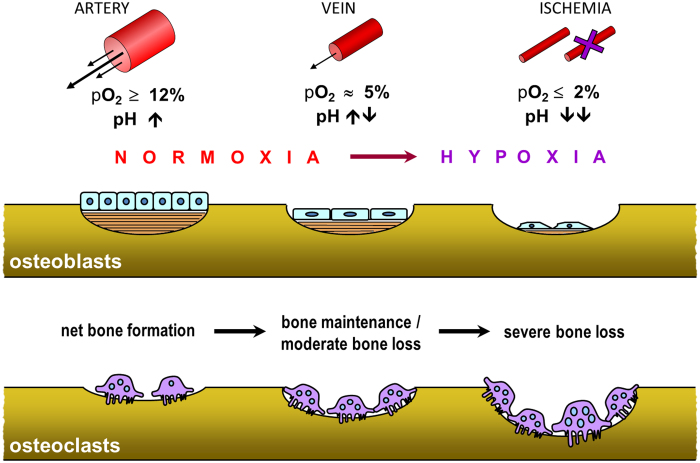
“o date many contributory biological factors have been implicated in the aetiology, including the bone morphogenetic proteins (BMPs), inflammation, prostaglandin E2, hypercalcemia, hypoxia, abnormal nerve activity, immobilisation and dysregulation of hormones”
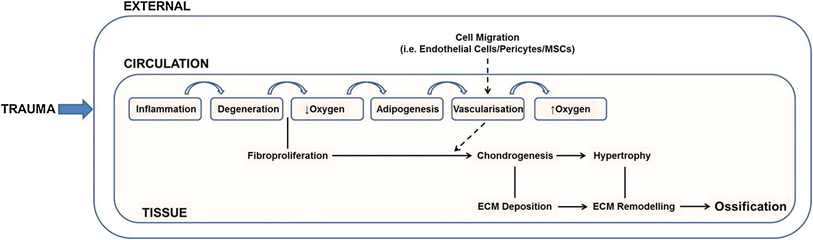
heterotropic endochondral ossification factors

“Tissue damage leads to the infiltration of immunological cells (monocytes, neutrophils and leukocytes) through the local vasculature. Resulting fibro-proliferation of an as yet unknown cell population is accompanied by hypoxia and the generation of brown adipose tissue at the site of damage. The presence of adipose tissue is hypothesised to lower the local oxygen tension leading to the establishment of a chondrogenic environment. Neovascularisation accompanies chondrogenesis and provides an avenue through which systemic cell types (endothelial cells, pericytes etc.,) may enter the injury site, and potentially contributed to osteochondrogenic differentiation. A subsequent increase in local oxygen tension promotes chondrocyte maturation and hypertrophy. The collagenous matrix deposited by these cells is then remodelled and ossified to form endochondral bone”<-If we induce such factors in the bone we can create new growth plates in there too.

“MSCs have frequently been shown to form endochondral bone when cultured under appropriate conditions (e.g. under hypoxia and/or in the presence of TGF-β)”

“MSCs may also contribute to chondrocyte hypertrophy and the progression of HO via their immunomodulatory effects, primarily through the production of anti-inflammatory cytokines and nitric oxide (NO)”

Several cell types are listed that are capable of heterotopic ossification are likely present in bone.

“Bone marrow HSC side population    Lin−/Sca-1+/cKit+/CD45+”

“Mesenchymal precursor cell (MPC)    CD44+/CD49e+/CD73+/CD90+/CD105+”

“MSC    CD73+/CD90+/CD105+”

“cells presenting the glutamate transporter GLAST were found to contribute to the formation of ectopic bone, and that these GLAST+ cells appeared to be distinct from the Tie2+ population”

” a significant upregulation in transcriptional activity in key osteogenesis-related genes (ALPL, BMP-2, BMP-3, COL2A1, COLL10A1, COL11A1, COMP, CSF2, CSF3, MMP8, MMP9, SMAD1 and VEGFA) in patients that developed HO compared to those who did not.”

Influence of transcutaneous electrical stimulation on heterotopic ossification: an experimental study in Wistar rats.

“Heterotopic ossification (HO) is a metaplastic biological process in which there is newly formed bone in soft tissues, resulting in joint mobility deficit and pain. Different treatment modalities have been tried to prevent HO development, but there is no consensus on a therapeutic approach. Since electrical stimulation is a widely used resource in physiotherapy practice to stimulate joint mobility, with analgesic and anti-inflammatory effects, its usefulness for HO treatment was investigated. We aimed to identify the influence of electrical stimulation on induced HO in Wistar rats. Thirty-six male rats (350-390 g) were used, and all animals were anesthetized for blood sampling before HO induction, to quantify the serum alkaline phosphatase. HO induction was performed by bone marrow implantation in both quadriceps of the animals, which were then divided into 3 groups: control (CG), transcutaneous electrical nerve stimulation (TENS) group (TG), and functional electrical stimulation (FES) group (FG) with 12 rats each. All animals were anesthetized and electrically stimulated twice per week, for 35 days from induction day. After this period, another blood sample was collected and quadriceps muscles were bilaterally removed for histological and calcium analysis and the rats were killed. Calcium levels in muscles showed significantly lower results when comparing TG and FG (P<0.001) and between TG and CG (P<0.001). Qualitative histological analyses confirmed 100% HO in FG and CG, while in TG the HO was detected in 54.5% of the animals. The effects of the muscle contractions caused by FES increased HO, while anti-inflammatory effects of TENS reduced HO.”

“The formation of heterotopic bone may be due to muscle trauma (myositis ossificans). It is common in people who have undergone total hip arthroplasty , those with spinal cord injuries, and victims of head trauma, all of which often lead to long periods of immobilization of the affected limbs.”

“skeletal muscle serves as a physical safeguard for the other organs and is anatomically located immediately beneath the skin, so it represents the most damaged organ in the body. Although skeletal muscle is characterized by the presence of fatty and connective tissues that originated from nonmyogenic mesenchymal progenitors, those progenitors were initially identified in BM”

“Muscle contraction occurs by the deposition of calcium in muscle tissue, and this stimulates the sliding of actin and myosin myofibrils, which characterizes the contractile process”

“electrical stimulation helps the deposition of calcium, causes changes in oxygen content and pH, stimulates expression of growth factors, and recruits help in osteoblast migration and secretion of extracellular matrix (ECM), leading to bone formation.”

“Mechanotransduction refers to the process by which the body converts a mechanical stimulus into a cellular response”

Cholesterol accumulation caused by low density lipoprotein receptor deficiency or a cholesterol-rich diet results in ectopic bone formation during experimental osteoarthritis.

“Osteoarthritis (OA) is associated with the metabolic syndrome, however the underlying mechanisms remain unclear. We investigated whether low density lipoprotein (LDL) accumulation leads to increased LDL uptake by synovial macrophages and affects synovial activation, cartilage destruction and enthesophyte/osteophyte formation during experimental OA in mice.

LDL receptor deficient (LDLr−/−) mice and wild type (WT) controls received a cholesterol-rich or control diet for 120 days. Experimental OA was induced by intra-articular injection of collagenase twelve weeks after start of the diet. OA knee joints and synovial wash-outs were analyzed for OA-related changes. Murine bone marrow derived macrophages were stimulated with oxidized LDL (oxLDL), whereupon growth factor presence and gene expression were analyzed.

A cholesterol-rich diet increased apolipoprotein B (ApoB) accumulation in synovial macrophages. Although increased LDL levels did not enhance thickening of the synovial lining, S100A8 expression within macrophages was increased in WT mice after receiving a cholesterol-rich diet, reflecting an elevated activation status. Both a cholesterol-rich diet and LDLr deficiency had no effect on cartilage damage; in contrast, ectopic bone formation was increased within joint ligaments (fold increase 6.7 and 6.1, respectively). Moreover, increased osteophyte size was found at the margins of the tibial plateau (4.4 fold increase after a cholesterol-rich diet and 5.3 fold increase in LDLr−/− mice). Synovial wash-outs of LDLr−/− mice and supernatants of macrophages stimulated with oxLDL led to increased transforming growth factor-beta (TGF-β) signaling compared to controls.

LDL accumulation within synovial lining cells leads to increased activation of synovium and osteophyte formation in experimental OA. OxLDL uptake by macrophages activates growth factors of the TGF-superfamily.”

“multiple injections of members of the TGF-super family, such as TGF-β or BMP-2, directly into the knee joint of the mouse caused abundant enthesophyte/osteophyte formation”

New Yokota/Zhang patent and New potential Height Increase device

The first Yokota/Zhang patent doesn’t provide that much insight but the second study provides a potential device that gives an alternative method of bone lengthening.  The study is confusing so I’d appreciate any second opinions.

Mechanical bone loading to reduce arthritic pain

“mechanical loading of the knee to downregulate nerve growth factor beta (NGFb), which is believed to be a major cause of pain in arthritic joints.”

“the joint loading may be performed at between 0.5 N and IO N, preferably at 1 N, and the fluid flow may be performed at, for example, 5 dyn/cm2. In one aspect, the results described herein suggest that gentle knee loading analogous to massage therapy is beneficial not only to enhancing bone formation and accelerating wound healing but also to preventing NGFP-induced nerve growth and pain perception in cartilage.”

” it has been recently suggested that a consequence of compressive loading is production of hydrostatic pressure as well as fluid flow to cartilage.”<-Hydrostatic pressure in bone could be a key to induce neo-growth plates.

“In osteoarthritis, chondrocytes are known to be exposed to flow shear presumably due primarily to synovial fluid and high amplitude of fluid flow reproduces the hallmarks of osteoarthritis in vitro. The frequency of 5 Hz might not be representative of massage to humans by hands but more pertinent to those by vibrator for foot massage. In another embodiment as described herein, the levels of loading in vivo have been optimized herein to produce anabolic response in the bone and cartilage.”

“Cyclic compression was applied to the mouse right knee using a custom-made piezoelectric loading device following reported methods. The mouse was mask-anesthetized using 2% isoflurane, and lateral loads to the knee were applied for 5 min at 5 Hz with a peak-to-peak force of 1 and 3 N.”

“Knee loading at 1 N but not at 3 N decreased the phosphorylation level of p38 (p- p38) in the cartilage”

“it was discovered herein that joint loading, illustratively, of a knee at 1 N, reduced mRNA levels of NGF and its low affinity receptor, p75 in cartilage and subchondral bone. Additionally, it was discovered that, in cartilage, joint loading, illustratively, of a knee at 1 N, reduced the phosphorylation level of p38 MAPK (p38-p) and activity of Racl GTPase. Additionally, it was discovered that, fluid flow at, for example, 5 and 10 dyn/cm2, reduced mRNA levels of NGFP and p75{neuron related gene} in C28/I2 human chondrocytes.”

“Nerves are known to exist in trabecular bone of the epiphysis, and are believed to grow in response to NGF{it’s possible that the growth of these nerves could affect height growth} . Although healthy cartilage is not believed to consist of vascular or neural tissues, arthritic cartilage is believed to lose its ability to remain aneural and avascular. It has been reported that dynamic loading to cartilage evokes stimulation of matrix synthesis{Could enough matrix synthesis increase height}, as well as regulation of enzymatic activities of matrix metalloproteinases. In addition to the reported regulatory role in matrix homeostasis, in one embodiment of the invention herein the results herein point out that mechanical stimuli at moderate amplitudes regulate transcription of NGF and its receptor in cartilage and chondrocytes.”

“both gentle mechanical loading and salubrinal share the Racl -mediated signaling pathway for – mRNA expression of NGF. In myocardial remodeling, it is reported that deficiency of Racl reduces stress to the endoplasmic reticulum. Since the elevated phosphorylation level of eIF2ot by salubrinal also suppresses stress to the endoplasmic reticulum, the observed linkage of salubrinal to Racl appears to be consistent with downregulation of NGF .”  Note that an increase in Rac1 expression was linked to an increase in chondrogenic marker genes.  This suggests that gentle mechanical loading may not be best for inducing exogenic bone mesenchymal chondrogenesis(neo-growth plate) and more extreme load may be needed.

This next paper is listed at the end as a related method:

System and Method for Joint Restoration by Extracapsular Means

“A system and method for joint restoration by extracapsular means includes an actuator operable to apply a force to a portion of a bone to effect a change in the joint space geometry. One embodiment of the system includes an actuator operable to apply a cyclic loading to subchondral bone of a femur, wherein loads of a predetermined magnitude are alternately applied and released. Between periods of cyclic loading, rest periods are provided where no load is applied. Over time, the femoral joint surface is remodeled in accordance with the location, direction, magnitude, and frequency of the loading.”

“Osteocytes sense the increased strain environment, and respond accordingly. When bone tissue is damaged as in the micro-cracking that occurs in the presence of excessive stress or strain, osteoclasts remove the necrotic osteocytes. This activates growth factors held in the osteocytes, such as bone morphogenic protein (BMP) or transforming growth factor (TGF) beta 1.”

At sufficiently high stress levels, deformation will occur with time, leading to “creep-failure”, or deformation that does not recover once the load is removed. The creep response of bone is significantly larger in younger bones as compared to older bones.”

“Similarly, when bone is measured on a large scale, it exhibits very classical (single elastic constant) behavior, but when the scale is reduced down to the trabecular level or below, the behavior becomes much more viscoelastic in nature, and tends to follow a Cosserat (multiple elastic constants) curve. This allows for much higher than predicted (by the classical approach) strain limits before failure occurs. In order for bone formation to be initiated, the magnitude of mechanical strain of the bone must surpass some threshold. Therefore, for restorative remodeling to occur, this threshold must be exceeded, while not causing failure”

” Trabecular bone can be found inside the condylar region of a femur, and alongside the cortical bone. The trabecular bone transfers the loads from the subchondral bone to the cortical bone, and the subchondral bone is that bone which supports the articular regions of the joint surfaces. Each different type of bone may undergo different deformation mechanisms. For example, cortical bone in particular exhibits “cement line slippage” between the osteons, which accounts for an ISF type (almost viscoelastic) behavior when applied to localized regions. This is typically considered the reason bone is a “tough, non-brittle” material. It is also a response that is dependent on the direction of the applied load-a result of the oriented structure of bone”

” a more rapid load onset results in a more rapid bone change. Conversely, a slower application of a load results in a smaller change, but thickening of the bone to handle the higher stress. Thus, a static load may build more dense bone, but a dynamic load may cause greater overall deformation of the bone.”<-Thus we should probably try to make sure that the clamping is the least static possible.  Constantly increasing clamping force is one way.

” the system components described herein can take advantage of the properties of bone that allow the bone to deform under constant stress via a “creep” or plastic deformation mechanism. The system components can push on the underside—e.g., the trabecular side—of the deformed subchondral bone, forcing a change of surface dimension on the joint surface (opposing) side of the subchondral bone. The subchondral bone may be softened to facilitate the reshaping process by drilling, cracking, laser etching, ultrasonically, biologically or by chemically treating the subchondral or the underlying cancellous bone, or by any other means in conjunction with the use of the system of the present invention, either to facilitate the initial movement, or during subsequent treatments. The devices according to the present invention may be permanently implanted in the bone, or can be removed after the desired results are obtained.”<-Can we induce a similar plastic deformation mechanism but in order to increase height.

“the term “static load” as used herein does not imply that a load that can or will never change; rather, the term refers to a load that is either constant for some period of time, or a load that is applied so slowly as to approximate a constant load. This is distinguished from a dynamic load, which may be a single load applied very quickly, or may be a cyclic load of constant amplitudes and/or frequency, or one of varying amplitudes and/or frequency.”<-So we may want to rapidly clamp then unclamp in order to get a single load applied rapidly.

the present invention has applications where shortening or lengthening of bone is desired to restore a normal joint geometry, and little or no joint surface remodeling is required. For example, a system including piezoelectric actuators can be applied to one or both sides of a joint to correct an angular displacement. ”

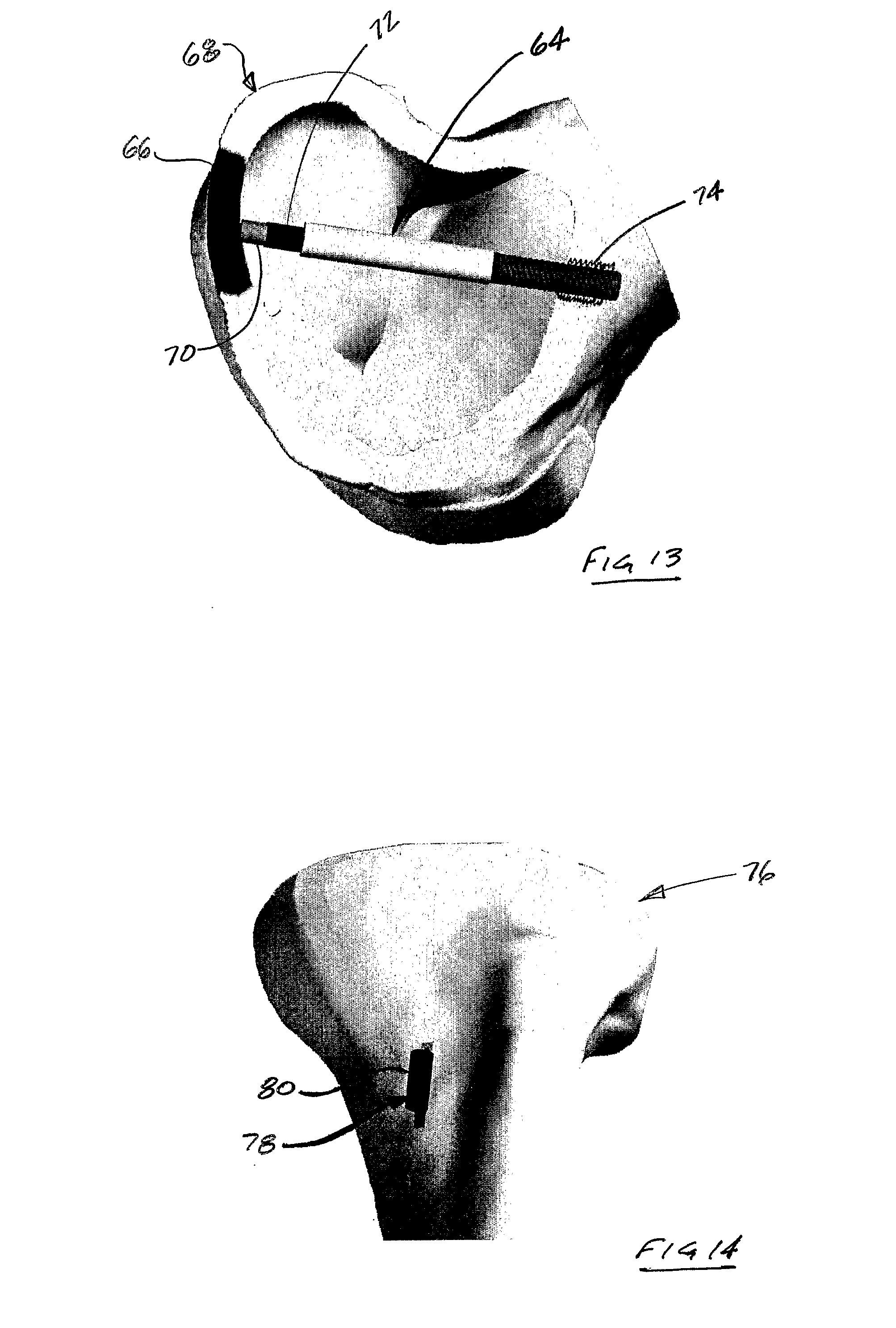
” For example FIG. 14 shows a tibia 76 having a system 78 in accordance with the present invention attached to it. The system 78 includes a linear actuator 80, which can be used to apply a static load, a cyclic load, or some combination thereof to the tibia 76. When a system, such as the system 78, includes two or more such actuators, one can be inserted in the cortical region and over time “grow” one side—e.g., the lateral side—and another can be inserted on the medial side to contract the bone. This effects an angular change at the joint line, and restores a more appropriate mechanical joint alignment.”<-For our purposes, we’d just set the two actuators to length bone.

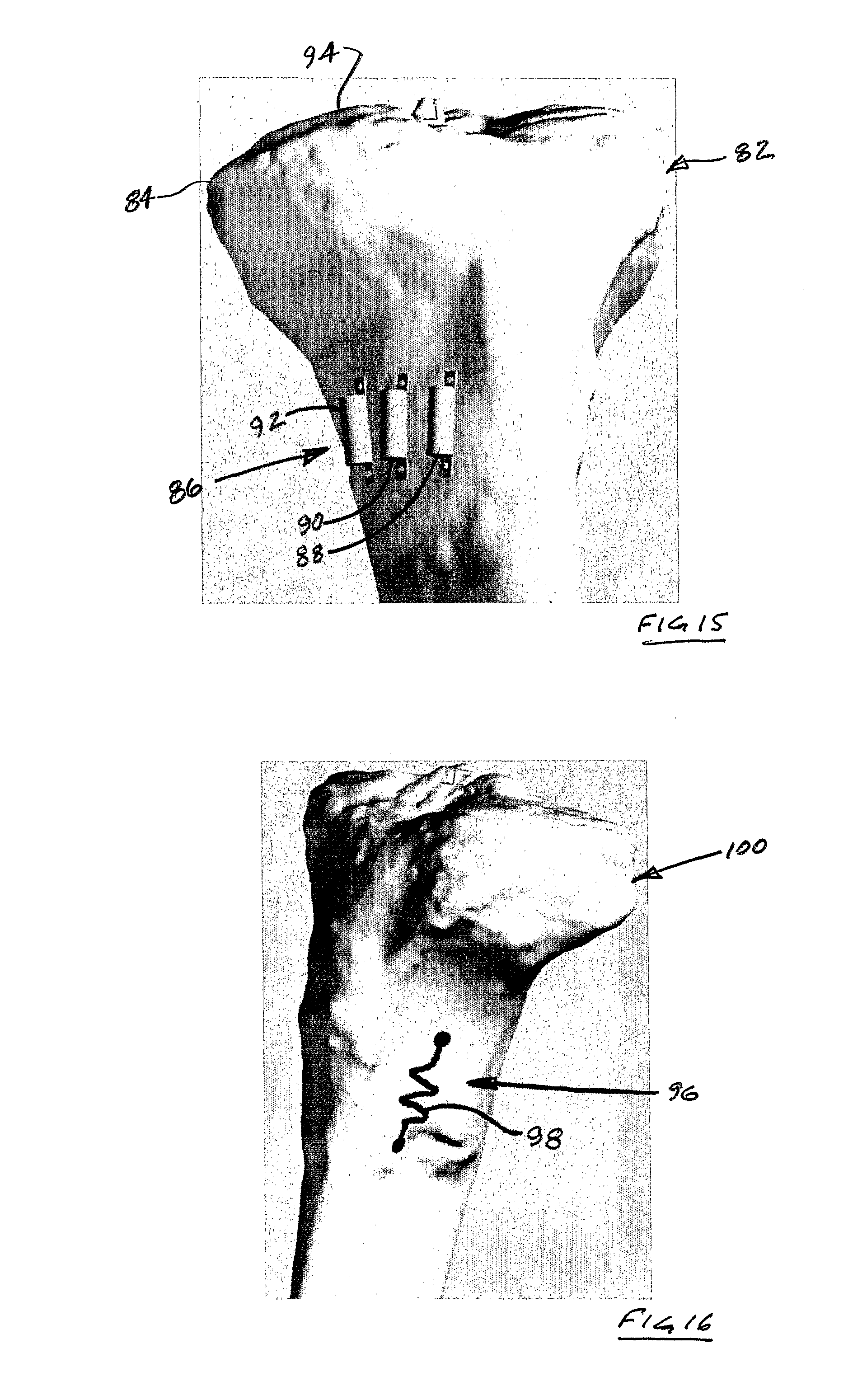
ActuatorBone


FIG. 14 shows a system in accordance with another embodiment of the present invention, the system including a linear piezoelectric actuator to increase the length of a tibia;

actuators to increase tibia length

“FIG. 15 shows a system in accordance with another embodiment of the present invention, the system including a plurality of linear piezoelectric actuators to increase the length of a tibia as an alternative to an osteotomy”

Nowhere does it state that this would be limited to individuals with opten growth plates and in fact there are no visible growth plates on this bone.

This is an example of a linear actuator:

Note that I have no idea whether this actuator is sufficient in any way to provide a lengthening force on the bone.  It is just an example.

Note that the linear actuator is used in addition to the invention.  It seems that MIchael has considered using a linear actuator for a height increase device before.

” a swelling memory polymer can be used to provide expansion in a predetermined direction to a predetermined volume, thereby exerting pressure against the containing tissues. Shape memory alloys, such as Nitinol (Ni-TI) can also be used. Such alloys, commonly used in bone staples, can be formed as “muscle wires” and inserted into the cortical bone, where they lengthen in response to outside stimuli.”

“A shape memory alloy could also be formed as a spring, and configured to lengthen (or contract) upon application of an electrical current, for example, an 80 mA current at 20C”

This is how he describes inserting the device into the bone:

“creating an aperture[opening] in the bone proximate the articular surface, thereby making accessible an internal portion of the bone generally opposite the articular surface;
accessing the internal portion of the bone through the aperture in the bone; and
applying the at least one loading condition to the internal portion of the bone, thereby facilitating structural changes in the bone supporting the articular surface”

Then he describes inserting the device into the bone:

“wherein the at least one loading condition is applied to the bone with a joint restoration system including a housing having an aperture therethrough, and an elongate member configured for insertion into the aperture in the housing, the method further comprising attaching the housing to the bone such that the aperture in the housing is generally aligned with the aperture in the bone, and
wherein applying the at least one loading condition to the internal portion of the bone includes inserting the elongate member through the apertures such that the elongate member contacts the internal portion of the bone and applies a force thereto.”

“the joint restoration system further including a compression member configured to cooperate with the housing to apply a force to the elongate member, the method further comprising inserting the compression member into the housing such that it contacts the elongate member and imparts a force thereto, thereby facilitating the application of the force to the internal portion of the bone by the elongate member.”

Here he describes the bone lengthening method:

“The method of claim 1, wherein the at least one loading condition is applied to an external portion of the bone such that the certain structural change includes at least one of an increase in a length of the bone or a decrease in a length of the bone.”

” The method of claim 6, wherein the at least one loading condition is applied to the bone with a joint restoration system including an electromechanical actuator, the method further comprising:
attaching the actuator to the external portion of the bone; and operating the actuator to apply the at least one loading condition to the external portion of the bone.”

” piezoelectric devices will often have displacements in the 100’s of micrometers, which will not provide enough travel to effect desired bone growth in many patients. To overcome this limitation, the actuator is provided with a secondary movement mechanism. The secondary mechanism is configured to provide a ratcheting, positive lock that outwardly extends the extendable component by some discrete amount. This allows the application of a stepwise series of 100 micrometer piezoelectric adjustments, until a total bone displacement of 1-5 mm displacement is achieved.”

The paper A LINEAR ACTUATED TORSIONAL DEVICE TO REPLICATE CLINICALLY RELEVANT SPIRAL FRACTURES IN LONG BONES, describes one potential way a linear actuator can be applied to bone.  Although the device therein does not seem to be applied along the longitudinal axis as suggested by the patent but rather on the top and bottom of the bone.

This paper describes the use of a linear actuator to move a nail in distraction osteogenesis.  Note that in the patent above it specifically states there there is no osteomy required for this device to lengthen bone.

A paper from the LSJL scientists with a potential design of a knee loading device

I found another paper that studied the LSJL knee device here.

I happened upon this paper however which was published at a conference and has potential new insights.

FEA analysis of a portable knee rehabilitation device

“The knee loading device examined in this paper only remains effective for small levels of deformation. The intended displacement of the working device is very small, a maximum of only 6.35mm, and therefore the device cannot accommodate large deformations as such deformations will greatly decrease the effective range of motion of the device.”<-So the device mentioned in this paper can only deform the bone by a maximum 6.35mm and likely less than that as just because the device can be displaced by 6.35mm doesn’t mean it will displace the bone by 6.35mm.

According to mechanostat theory, you have to deform the bone by at least 1500microstrain or 0.15% of a bones original length to get into the plastic deformation range to actually stretch the bone out permanently.

The average adult femur is 2.34 cm in diamater and the maximum displacement is the same regardless of femur shape and size.  The diameter of the femur is what matters as the device loads laterally.  The maximum displacement force is well over what is needed to plastically deform the bone.  But remember that the maximum displacement force is not actually how much the bone is deformed and the bone is being loaded laterally and not being stretched.  By loading laterally a moderate stretching force should be applied but not by the entirety of the deformation.

So it is not that the device can induce an increase in deforming the bone but it is possible by changing the microenvironment via degradation of cortical bone, initiation of mesenchymal condensation, and an increase in chondrogenic signaling.

If you click on the link above to see the study and look at figures 2 and 3, you can see that the device looks remarkably like a clamp.

“The described joint loading modality applies lateral loads to synovial joints.”

“To apply such [the needed] load, a device would need to have a means of producing a transverse force directly to the end of a long bone, such as at the knee{My current working theory is the load needs to be applied at the the epiphysis with the intent to maximize bone on bone contact and not on the synovial joint} . A cyclic force applied in such an area would force a slight shift of the fluid within the bone towards the opposite end of the bone in a controlled fashion.  While no such device currently exists for use on humans{I think a clamp device can serve such a role}, a new joint study seeks to develop a portable device designed for human use to be used in future testing.”<-For our purposes we would likely want more fluid flow as to induce cortical bone degradation and mesenchymal condensation.

“a pressure of approximately 6.90KPawas used as the load for each vertical pad [in a potential joint loading device]. The pressure equates to approximately 40 N over the entire surface area which is the desired maximum load for the device.”

An Irwin Quick Grip 12-inch can generate 300lbs of force.

300lbs is 1334N which is well over 40N but it is likely that you are not going to be able to generate that force however it is also likely that you will generate over 40N of force.

“stress is equal to force divided by cross-sectional area and strain is equal to change in length divided by original length. Stress and strain are related by Hooke’s Law, which states that stress is directly related to strain by a factor known as the Modulus of Elasticity, which is unique to every material.”

To effectively measure strain we’d have to be able to measure microchanges in bone length which I do not see as being possible at this juncture.

“Given the duty cycle of 5 minutes of daily operation per patient with a 1
Hz frequency loading function during operation; or 300 cycles per operation, this device is designed to last for 2683 uses. The choice of 1 Hz as one example was linked to daily
human physical activities such as walking. The device is able to induce loads up to 20 Hz, and it is a future task to evaluate appropriate loading frequencies.”<-Given that walking does not traditionally increase bone length we would likely use a different frequency.  But using a clamp it’s very hard to get such frequencies.  20Hz is equal to 20times per second and it would be virtually impossible to rapidly unclamp and reclamp in that amount of time.

What my current LSJL method instead tries to progressively clamp harder and harder(while still being mindful not to clamp to the point of too much pain) to increase the number of “cycles”.

It should be noted that nothing in this study mentions using this device for longitudinal bone growth but the other studies that Yokota et al. have done on the joint loading modality suggests that it could.  If you look at figure 1B(in the study link above), you can see that joint loading puts pressure on the cortical bone from the medullary cavity.  At a sufficient enough pressure, there could be degradation of the cortical bone and there was evidence of this in a diagram in one LSJL study.  The degradation of cortical bone is highly significant as one of the key events of fusion is the joining of the cortical bone of the epiphysis to the diaphysis.  By degrading cortical bone, we can reverse some of the constraining effects of cortical bone on future longitudinal bone growth.  After all, a key event in distraction osteogenesis is the inducement of a cortical bone fracture.

New height increase supplement

Here’s a paper from Korea about a new longitudinal bone growth supplement that may be promising:

Effect of KH-BaRoKer-SeongJangTang based on traditional medicine theory on longitudinal bone growth

“KH-BaRoKer-SeongJangTang (KBS) is a recently developed formulation by using traditional drugs considering traditional medical theory of Oriental books such as ShinNongBonChoGyeong and JuRye, which has been used to improve the growth of child in Korea. Although KBS is usually prescribed to many children who are in retard for their age, its pharmacological effects have not been fully understood in experimental models. The aim of this study was to evaluate the effects of KBS on bone growth. Growth plate thickness and bone parameters such as bone volume/tissue volume (BV/TV), trabecular thickness (Tb.Th), trabecular number (Tb.N), connection density (Conn.D), and total porosity were analyzed by means of microcomputed tomography. Serum insulin-like growth factor-I (IGF-I) levels were measured by enzyme-linked immunosorbent assay. Hepatic IGF-I mRNA expression was analyzed by real-time polymerase chain reaction. Phosphorylation of signal transducer and activator of transcription5 (STAT5) was investigated using Western blot analysis and immunohistochemistry. The thickness of growth plate was increased by KBS. BV/TV, Tb.Th, TbN, Conn.D, and total porosity were improved by KBS. Hepatic IGF-I mRNA and serum IGF-I levels were elevated by KBS. Phosphorylation of STAT5 was increased with administration of KBS. These results suggest that KBS would be helpful to children who are in retard for their age through the elevation of IGF-I.”

Increase in Stat5 phosphorylation, increase in IGF-1, and increase in growth plate thickness could be indicative that the supplement could increase growth.

“Male ICR mice (4 weeks old) and diets were purchased from Dae-Han Experimental Animal Center (Eumsung, Republic of Korea), acclimated for 7 days, and then randomly assigned for 2 weeks to adequate protein (CON, 20% protein) or low protein diet (PEM, 4% protein) . The protein source used was casein. Except for the protein content, the two diets were identical and isocaloric. After 2 weeks, mice were divided into five groups, CON (adequate protein diet + distilled water (DW)-administered group); PEM (low protein diet + DW-administered group); KBS (low protein diet + KBSadministered group); Arg (low protein diet + Arg-administered group); Glu (low protein diet + Glu-administered group). The mice were fed indicated diet, administered each material three times a week for 12 weeks, housed four to six per cage in a laminar air-flow room, and maintained at a temperature of 22 ± 1℃, a relative humidity of 55 ± 1% throughout the study.”

So it seems that this supplement is an IGF-1 mimetic.  Whether this can increase height in children with normal IGF-1 levels depends on the bodies negative feedback mechanisms.

“Binding of GH to GHR activates receptor-associated intracellular tyrosine protein kinase Janus kinase 2 (JAK2), which phosphorylates signal transducer and activator of transcription 5 (STAT5). The phosphorylated STAT proteins translocate to the nucleus, where they bind to specific DNA sequences and regulate gene transcription. Among the signal cascades from the GHR, the JAK2-STAT5 pathway is regarded as a major pathway that mediates the action of GH on gene transcription in the liver. This pathway was shown to be responsible for the transcriptional action of GH on IGF-I. IGF-I is a mitogenic factor for various cells and plays an important role in cell growth and survival, and the majority of plasma IGF-I is biosynthesized in the liver”

Two of the ingredients of the supplement are listed to be arginine and glutamine which aren’t exactly game changing.  A detailed list of the ingredients are given in Table 2 of the paper(link provided).

KBS on bone thickness


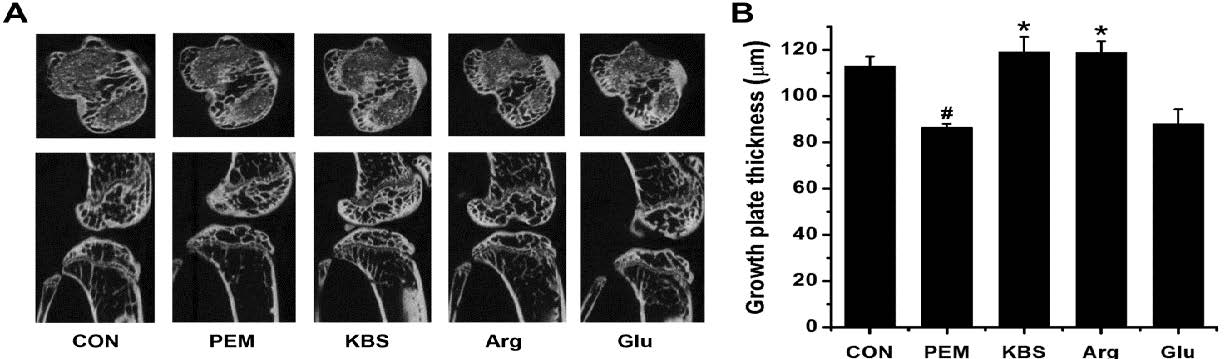
The kbs growth plate and the general bone architecture does look a little bit better than the Arginine group.

“Effect of KBS on tibial growth plate thickness. (A) Representative 3D CT images of knee joint showing growth plate. (B) The thickness of excised bone growth plate was determined on five points. CON, adequate protein diet + DW-administered group; PEM, low protein diet + DW-administered group; KBS, low protein diet + KBS-administered group; Arg, low protein diet + Arg-administered group; Glu, low protein diet + Glu-administered group”

So the supplement didn’t have much more benefit over arginine.

“The lengths of proximal tibia growth plate in the CON and PEM groups were 112.82+/- 4.18 and 86.43+/-1.47, respectively. The growth plate lengths in the KBS, Arg, and Glu groups were 119.05+/- 6.48, 118.75+/- 4.81, and 87.82+/- 6.38, respectively. KBS and Arg significantly enhanced the longitudinal bone growth, whereas Glu did not”

Interestingly, the serum IGF-1 levels were lower than the contAnother major ingredient was a variation on the Hominis Placenta Extract.  Given that the source is the human placenta which is very powerful, it is possible that this extract has of yet undocumented effects.  And many species eat the placenta.rol group in the KBS group and lower than that in the Arginine group.

“Carthami Tinctorii Fructus increased the level of serum IGF-I and lengths of femur and tibia, however, its effect was very small and transient”

Something we can ascertain is that maybe excess IGF-1 levels don’t have that large of a benefit on height.  As the excess IGF-1 levels of KBS versus arginine groups did not result in increased height.

KBS and Arginine increased growth plate thickness by about the same amount so it’s hard tell whether KBS has additional effects beyond arginine.  The difference between KBS and Arginine growth plates are so small and the variance is so large that it’s hard to attribute the difference to anything other than normal variation.

It’s possible that KBS could increase longitudinal bone growth but whether that affect is greater than Arginine is unknown

Here’s the study on Carthami Tinctorii Fructus:

Determination of mineral content in methanolic safflower (Carthamus tinctorius L.) seed extract and its effect on osteoblast markers.

“Safflower (Carthamus tinctorius L.) seeds are used as a folk medicine to enhance bone formation or to prevent osteoporosis in Korea. Therefore, the methanolic extract of safflower seeds (MESS) containing high mineral content, such as calcium (Ca), potassium (K) and phosphorous (P), was evaluated for the role on osteoblast (Ob) markers of Sprague-Dawley rats. In serum of 3 to 11 weeks (wks) old rats, both osteocalcin (OC) content and bone-specific alkaline phosphatase (B-ALP) activity increased to their maximum levels in 4-7 wks. Hence, 3 wks old rats were selected for 8 wks oral treatment of MESS, resulted in the significant increase of Ob markers in serum such as OC content (4-8 wks), B-ALP activity (1-2 wks) and insulin-like growth factor I (IGF-I) level (1 wk), and the growth parameter such as the length of femur (2-8 wks) and tibia (4 wks). On the basis of Pearson’s correlation coefficient, there were a moderate correlation between OC and B-ALP at 8 wks, a low correlation between OC and IGF-I at 1, 4 and 8 wks, a moderate correlation between OC and femur length at 1, 2 and 8 wks, and a moderate correlations between OC and tibia length at 1 and 8 wks of MESS-treated groups. The result reveals that the changes of OC correlated at low to moderate level with the changes of B-ALP activity, IGF-I content and femur and tibia length in the MESS-treatment period. On the other hand, there were a strong correlation between IGF-I and femur length at 2 wks and moderate correlation between IGF-I and tibia length at 1, 2 and 8 wks of MESS-treated groups.

“A Korean herbal formulation, Gami-Honghwain, is comprised of crude ingredients from safflower seeds and hominis placenta.”

“There are reports about chemical components of the safflower. Its leaves contain eight flavonoids, some of which showed potent antioxidant activities. Its seeds also contain numerous polyphenolic compounds such as lignans, glucosides, flavonoids and serotonins”

The increase in tibia and femur length ranged from 3-5%.  Note though that a 3% increase of someone who’s 5’9″ brings them to 5’11”.  And at all data points the treated group had longer bones than the control group.

“. In the aqueous extract from safflower seeds, there are K (2.306 μg/g), P (1.043 μg/g), Mg (0.474 μg/g), Al (0.175 μg/g), Fe (0.100 μg/g), Ca (0.075 μg/g), Zn (0.070 μg/g), Na (0.066 μg/g), Cu (0.055 μg/g) and Sr (0.022 μg/g). In the MESS, there are Ca (3.752 μg/g), K (1.313 μg/g), P (1.161 μg/g), Na (0.177 μg/g), Fe (0.170 μg/g), Zn (0.042 μg/g), Mg (0.023 μg/g), Al (0.019 μg/g), Cu (0.015 μg/g) and Sr (0.002 μg/g).”<-None of these seem to be novel compounds except for Strontium which is found in small amounts in normal human food.  Since Strontium amounts are so small it would be possible to be deficient in it and extra dietary strontium may increase longitudinal bone growth.

The Questions that Must be Answered for a Height Increase Routine to Work

In evaluating potential height increase routines, there are questions that have to be answered true to potentially be effective.  Asking these questions before attempting a routine or supplement, will help to determine if that supplement or routine could possibly be effective although there are many supplements that can be synergestic.

1a.  Does the method increase longitudinal bone growth?

b. Or does the method stimulate an increase the thickness of the bone in a longitudinal direction(top of head or bottom of heel)?

c.  Or does the method target another tissue that is a determinant in height(for example: cartilage or skin at the top of the head)?

d. Does the method alter alignment(posture or loosening of ligaments via relaxin)?

The rest of these questions will involve assuming that 1a was the question that was answered yes to as b-d would have different follow up questions. Note that GH and IGF-1 are a maybe in terms of answering question 1a.  They tend to encourage tissue growth but do not necessarily encourage chondrogenic differentiation(although IGF-1 may).  Something like IGF-2 is something more likely to increase height as it is involved in an earlier development state.  And the growth plate is at an earlier development state than full bones.  GH and IGF-1 are present at all developmental states whereas something like IGF-2 is not.

2.  Does the method involve degradation of cortical bone?

b. Does the method stretch cortical bone(plastic deformation which requires extreme loads)?

This likely has to be an important criteria in the success of a height increase routine.  The end of growth involves the fusion of cortical bone between the diaphysis and the epiphysis.  Distraction osteogenesis involves the cracking of cortical bone.  Cortical bone is likely like a large constraint on longitudinal bone growth.  Note: LSJL likely degrades cortical bone via an increase in fluid flow.

bone loading without drillingD is the LSJL loaded bone and C is not.  There’s definitely degration of the trabecular bone in D and F.  In D the LSJL cortical bone looks thicker and stronger which would make it harder to grow taller.  However in F there are some signs of degradation.  First, note that in E, that the inner bone is a fairly solid circular object but in F there is a part that juts outward on the upper lateral region of F this could be a sign of cortical bone degradation.    And note that 50% is the dead center of the bone which is not a likely target for increasing bone length.  75% is much closer to the epiphysis and since most longitudinal bone growth occurs at the epiphysis this is very promising that the necessary cortical bone degradation can occur to enable bone elongation to occur.

The bone loading only occurred for 3 days.  If bone loading had occurred longer it is possible that the protrusion of the inner bone would extend far enough to reach the outer point of bone enabling a neo-growth plate to form.  The mice were 14 weeks old which is fairly fair along the skeletal maturity process.  Mice growth plates don’t fuse but they do become dysfunctional and this is the time when growth cessation occurs.  So a potential protrusion caused by cortical bone degradation at a late skeletal maturity state is promising for the possible effectiveness of LSJL on adults.

3.  Does the method stimulate chondrogenic differentiation?

Bones have not yet been shown to be capable of interstitial growth and only through an intermediary tissue(cartilage) are they able to grow longer.  It would be possible to grow taller through the articular cartilage(which is capable of endochondral ossification) at the longitudinal ends of the bones but there does not as of yet seem to be an effective way of doing that.

The creating of an intermediary tissue like cartilage within the bone seems to be necessary to make the bones grow longer.  LSJL upregulates chondrogenic genes.

In addition, the chondrogenic intermediary must progress through the various stages and undergo hypertrophy to push the bone apart.  But it appears that endochondral ossification tends to be the standard procedure for chondrogenic tissue.