Category Archives: Uncategorized

A Chart Of The Genes And Proteins Shown To Help Pluripotent Progenitor Stem Cells Differentiate Towards The Chondrogenic Lineage And Inhibit The Osteogenic Lineage

Note: I seem to remember that I might have already done a post on this diagram I have pasted below in this post before months before. Given the large number of posts I have written, my memory is not clear on which post that was. So I guess it is okay if I decided to redo an old post all over again, just so that it can be a review for me on the concepts and results.

This is one of those chart, tables, or diagrams which show that the research we have been doing is on the right track ,or at least that we are finally being good enough in our readings to know that what we have been hypothesizing is validated by other scientific works.

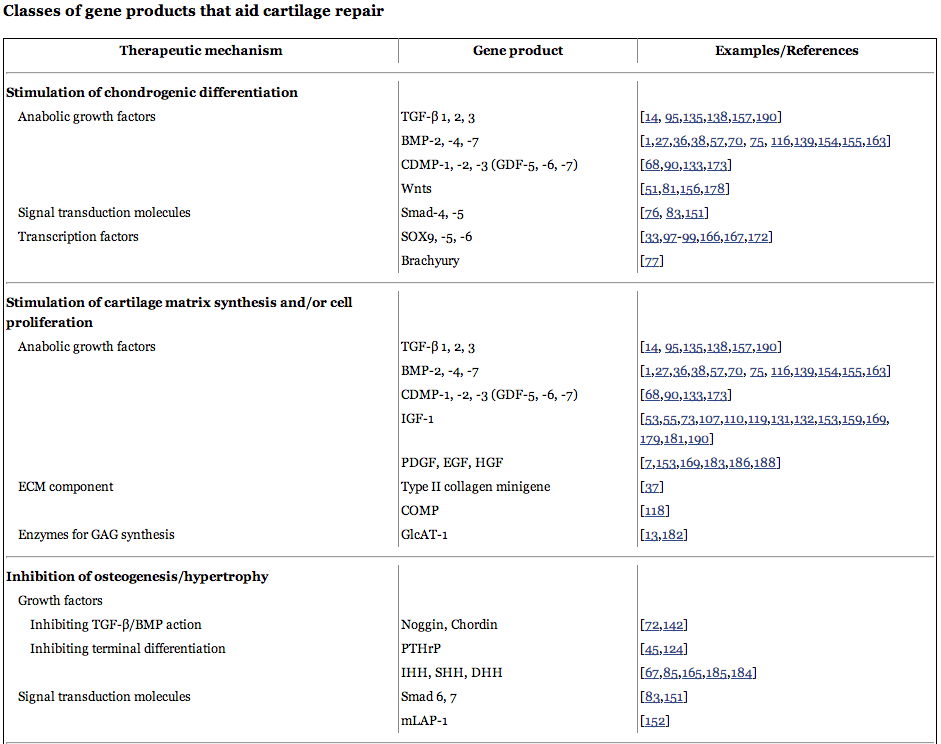
From the PubMed study & article “Concepts in Gene Therapy for Cartilage Repair“…

Analysis & Interpretation

I note that the growth factors in the chart are only for chondrogenesis and cartilage generation. This is good because so often when we are talking about the skeletal structure, we only are focused on the growth factors which will be best for osteogenesis, since most studies on bones and cartilage are for chronic, old age issues like osteoperosis and rheumatic arthritis, which are caused by bone mineral density decreases and cartilage degeneration. Nobody has done any research to see the research of cartilage generation from the lens towards height increase.

The chart below is rather big and complicated but the main point is that almost everything listed below has anabolic aka growth potential to make cartilage grow from at least progenitor mesenchyme cells if they are there.

So let’s go down the list.

We have seen the TGF-Betas before, type 1 and 2. Type 3 I am not familiar with.

We have the BMPs, 2, 4, and 7 which we have done extensive research on and they seem to be better at getting multipotent stem cells to differentiate into the chondrogenic lineage than the ostegenic lineage.

The CDMP stands for Cartilage Derived Morphogenic Protein. It seems that they go by a more familiar names, the Growth Differentiation Factors, and I have stated in at least two previous posts, (Is Growth Differentiator Factor 5 GDF5 Gene The Most Influential Gene Towards Height?” and A New Proposed Theory To Increase Height And Grow Taller Using GDF-5 (Breakthrough!)) that GDF-5 has potential to be huge in our goals to become taller. As for GDF-6 and GDF-7, I did a post about the whole group of GDFs many month ago entitled “A Detailed Study And Analysis On Growth Differentiation Factors GDFs Which Influence Growth And Height” and I seem to remember that only 2 of the many GDFs had potential to be used as a growth factor for chondrogenesis.  However I will look into the reference studies listed.

We have Smad which is both the gene that creates the protein, and the protein, but I have not done any research on it yet.

The Sox9 gene was shown to be critical in the post “Why Does The Epiphyseal Cartilage Disappear But The Articular Cartilage Remain? (Breakthrough!)” which shows that for Chondromodulin Type I to work and the area of the articular cartilage to not get vascularized, we need the Sox9 gene to be turned on.

The IGF-1 is very well known by researchers to have chondrogenic effects since it seems to be able to directly effect the receptors on the surface of chondrocytes.

Everything else, like the Brachyury, mLAP1, PDGF, EGF, HGF, Comp, etc. I have never even heard of.

What might be better for me to relearn the growth factors and proteins that help in cartilage regeneration is to look at the sections the chart is broken into,

Stimulation of Chondrogenic Differentiation

  • Anabolic Growth Factors
  • Signal Transduction Molecules
  • Transcription Factors

Stimulation of Cartilage Matrix Synthesis and/or Cell Proliferation

  • Anabolic growth factors
  • ECM Component
  • Enzymes for GAG synthesis

Inhibition of Osteogenesis & Hypertrophy

  • Growth factors – 1. Inhibiting TGF-Beta & BMP action, 2. Inhibiting terminal differentiation
  • Signal Transduction Molecules

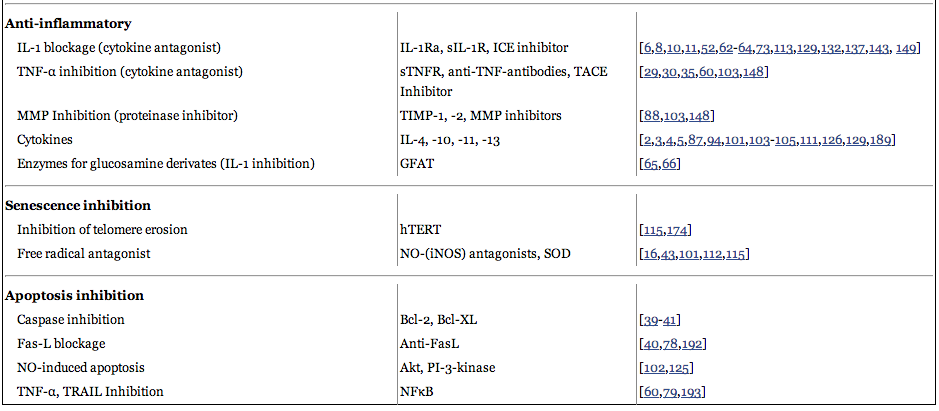
Anti-Inflammatory 

  • IL-1 blockage (cytokine antagonist)
  • TNF-2 inhibition (Cytokine antagonist)
  • MMP inhibitory (Proteinase inhibitor)
  • cytokines
  • Enzymes for glucosamine derivatives (IL-1 inhibition)

Senescence Inhibition

  • Inhibition of telomere erosion
  • Free radical antagonist

Apoptosis Inhibition

  • Caspase inhibition
  • Fas-L blockage
  • NO – induced apoptosis
  • TNF-alpha, TRAIL inhibition

From a process point of view, we can see that multiple studies have been done to show that you can try to manipulate each stage of the cartilage or chondrocyte’s life. You can trying to inhibit apoptosis, inhibit senescence, decrease inflammation, inhibit hypertrophy and differentiation into bone cells. The more anabolic strategy is to stimulate cartilage cell division and create more of the extracellular cartilage matrix.

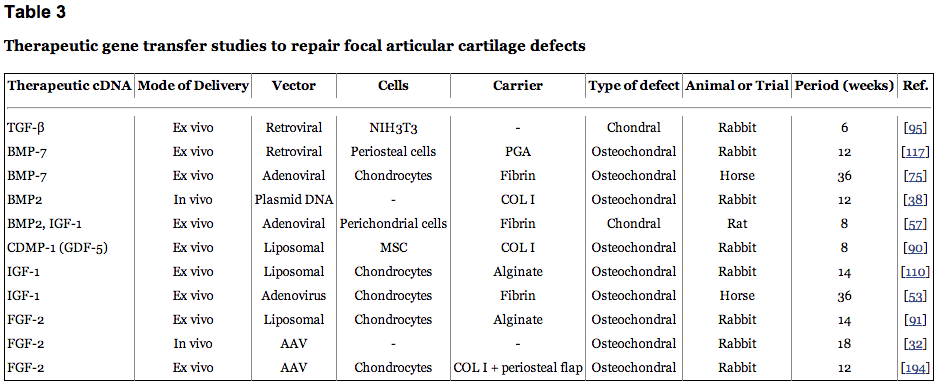
If we were just to look at the side of trying to make more cartilage and chondrocytes, we could just use Table 3, and use  the BMP-2,7, the TGF-Beta, GDF-5, and IGF-1 to stimulate more cartilage growth. However it is clear from the first table that we must somehow also get the other half of the process working too so that we can prevent the cells from aging or dying too quickly, as wells keeping them from going the bone cell direction in transformations.

It seems that there are at least a dozen ways that the cartilage cells get evolved to a point which makes them none functioning. Many of the proteins and cytokines I have seen before but with little research. This table is sort of an introductory way for the researchers to see which types of PubMed studies they should be look for to understand the types of molecular mechanism which control the chondrocyte.

Implications For Height Increase

The two tables below shows us that beyond just stimulation of chondrogeniic differentiation and cartilage matrix synthesis, and cell proliferation, we would have to also consider the other side, which is how to keep them from aging and dying so we have more time to manipulate the cartilage tissue to expand and multiple in the direction which we want to lengthen long bones.
1

2

3

How To Read A Chart Describing The Growth Factors That Regulate The Sections Of The Epiphyseal Growth Plate (For The Researcher)

I recently found a nice diagram of the signaling pathways of the various proteins in a study (the 1st link below cited). I felt that it would be appropriate right now to look at the diagram since I feel confident now that I am sufficiently prepared to be able to look at the diagram and be reasonable well versed in knowledge to be able to dissect and really do some real analysis on the pathways.

From PubMed study “Mechanisms of Growth Plate Maturation and Epiphyseal Fusion

Authors: Joyce Emonsa Andrei S. Chaginc Lars Sävendahlc Marcel Karperienb Jan M. Wita

2nd resource : “LOCAL REGULATION OF GROWTH PLATE CHONDROCYTES: Molecular PLATE CHONDROCYTES: Molecular Mechanisms and Implications for Longitudinal Bone Growth” -Author: Anenisia Coelho de Andrade – Thesis for Doctoral Degree (Ph D) 2010

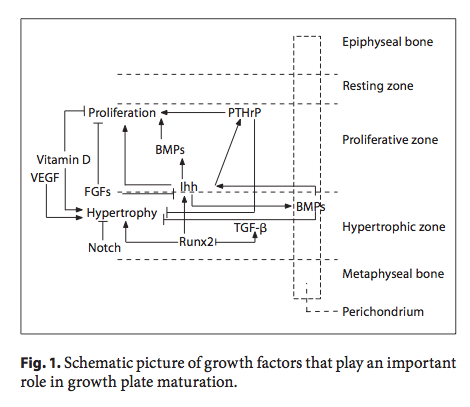
Analysis of the Chart to the right:

growthplatepathwaysWhat we are seeing right here is that the growth plates are controlled in each section by certain growth factors we have already seen before many times. However the fact is that we never fully tried to at least summarize all the growth factors together to make a better, more general understanding of the local regulation patterns and pathways that are involved.

Here is what we already know from our studies:

There is basically 3 main areas in the growth plate, the resting zone, the proliferative zone, and the hypertrophic zone. Some authors and medical professionals might even put a zone between the proliferative and hypertrophic zone called the pre-hypertrophic zone, as well as put the layer of ossification and calcification in, but the main idea can be summarized in three zones. The number of chondrocytes we have as the raw material is from the resting zone. From what I have gathered, that area seems to have a finite number of chondrocytes there which does not proliferate. The multiplication in number through cell division seems to happen when it gets to the proliferative zone.

The Legend or Map: All arrow heads indicate that the protein signal is promoting or up-regulating the protein is is pointed to.

The main pathway for the growth factor regulations is one which we have looked at a few times before, on posts like “The Connection Between Regenerating Deer Antlers and The PTHrP, PTH And IHH pathway for Cartilage Regulation, PTHrP Seems To Be The Answer (Big Breakthrough!)”

This is what I would call the IHH-PTHrP negative feedback loop pathway. It shows that the PThrP does two main things. The PTHrP is found mainly in the proliferative zone, as indicated by the diagram of how pathways work in the growth plate above.

  • Help stimulate, cause, or increase chondrocyte proliferation
  • Help inhibit, down-regulate, or decrease chondrocyte hypertrophy

As for the IHH, it has multiple functions and connections with other growth factors. It seems to be found in both the proliferative and hypertrophic zone, although the diagram suggest that is might be more in the proliferative zone.

It stimulates, up-regulates, and/or increases BMPs in both the proliferative and hypertrophic zones as well as PTHrP

  • Runx2 seems to stimulate the production of IHH
  • The FGFs however seems to inhibit or down-regulate the protein IHH

One compound in the diagram that has sort of caught my attention is the Runx2 protein/gene. It seems to modulate and maybe help increase the IHH, TGF-Betas, and the chondrocyte hypertrophy.

As for the BMPs, they are multiple types of BMPs, found in both the hypertrophic zone and the proliferative zone. It seems that BMPs in general help increase chondrocyte proliferation, decrease hypertrophy, and has some type of controlling role on the IHH.

In the end, we could try to describe all of the diagram in two major segments by asking the question “Which growth factors stimulate or inihibit the proliferation and hypertrophic zones?

So let’s do a listing of the two main zones.

Proliferation Zone

Stimulating/Increases:

  • IHH
  • BMPs
  • PTHrP

Inhibiting/Decreases:

  • Vitamin D
  • FGFs

Hypertrophic Zone

Stimulating/Increases:

  • Vitamin D
  • VEGF
  • Runx2

Inhibiting/Decreases:

  • Notch
  • BMPs
  • PThrP

Conclusions:

It is interesting to note that one of the posts which I felt was pivotal in the evolution of this website was the one where I initially suggested that PTHrP was probably the key growth factor we should be trying to get into our bone material to stimulate cartilage regeneration. I came to that conclusion after reading about the fact that abnormal overgrowth after study was shown to be from a high level of PTHrP expression, which happens in cancers.

What I have always believed in my personal opinion was that chondrocyte proliferation was always more important that chondrocyte hypertrophy towards longitudinal growth. Maybe Tyler would believe the opposite, since technically you grow taller in the bones only through hypertrophy of the chondrocytes, where they expand in volume multiple times. It was shown in one study that the rate of the longitudinal increase was proportional to the rate of volume increase in the chondrocytes in hypertrophy.

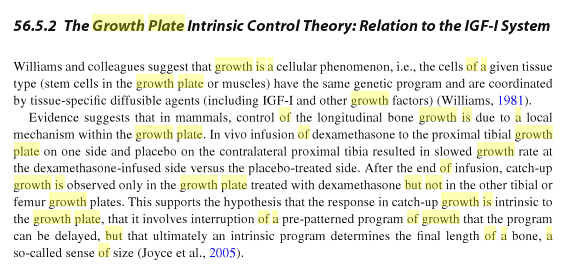
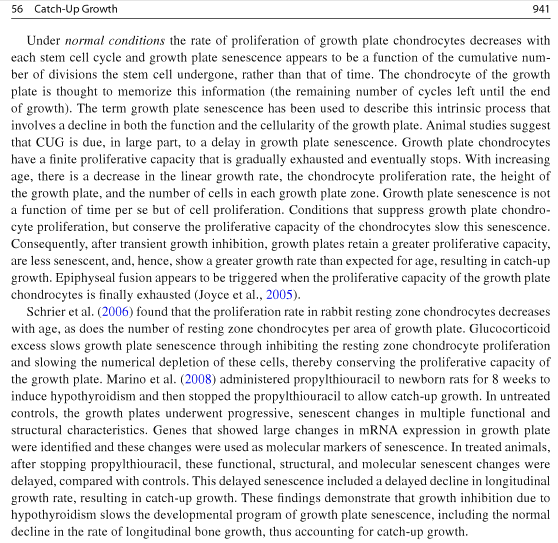
However I have found enough evidence to show that the real process limiting step in this multiple step process was the fact that you eventually run out of chondrocytes. From the Thesis “LOCAL REGULATION OF GROWTH PLATE CHONDROCYTES: Molecular PLATE CHONDROCYTES: Molecular Mechanisms and Implications for Longitudinal Bone GrowthThe Ph. D candidate seems to reference a study “Growth Plate Senescence Is Not a Function of Time per se but of Growth” which I would google and come up with the study “Growth-inhibiting conditions slow growth plate senescence.”

The abstract is pasted below…

J Endocrinol. 2011 Jan;208(1):59-67. doi: 10.1677/JOE-10-0302. Epub 2010 Oct 25.
Growth-inhibiting conditions slow growth plate senescence.
Forcinito P, Andrade AC, Finkielstain GP, Baron J, Nilsson O, Lui JC.
Source

Developmental Endocrinology Branch, Program in Developmental Endocrinology and Genetics, Eunice Kennedy Shriver National Institute of Child Health and Human Development, National Institutes of Health, CRC, Room 1-3330, 10 Center Drive, MSC-1103, Bethesda, Maryland 20892-1103, USA.

Abstract

The mammalian growth plate undergoes programmed senescence during juvenile life, causing skeletal growth to slow with age. We previously found that hypothyroidism in rats slowed both growth plate chondrocyte proliferation and growth plate senescence, suggesting that senescence is not dependent on age per se but rather on chondrocyte proliferation. However, one alternative explanation is that the observed slowing of growth plate senescence is a specific consequence of hypothyroidism. We reasoned that, if delayed senescence is a general consequence of growth inhibition, rather than a specific result of hypothyroidism, then senescence would also be slowed by other growth-inhibiting conditions. In this study, we therefore used tryptophan deficiency to temporarily inhibit growth in newborn rats for 4 weeks. We then allowed the animals to recover and studied the effects on growth plate senescence. We found that structural, functional, and molecular markers of growth plate senescence were delayed by prior tryptophan deficiency, indicating that the developmental program of senescence had occurred more slowly during the period of growth inhibition. Taken together with previous studies in hypothyroid rats, our findings support the hypothesis that delayed senescence is a general consequence of growth inhibition and hence that growth plate senescence is not simply a function of time per se but rather depends on growth.

This abstract thus suggest that the reason growth plates develop senescence,or aging is because they run out of chondrocytes. So this means that the step of chondrocyte proliferation or the number of chondrocytes in the resting zone are the limiting steps in the multi-step process. The reason why chondrocyte numbers in the resting zone is another rate limiting step is because of the study “Depletion of resting zone chondrocytes during growth plate senescence.”

And that is why I have felt that PTHrP is more important than IHH, since IHH promotes hypertrophy and PTHrP promotes proliferation.

Indirectly, the IHH stimulates BMPs in both zones which increase proliferation and decrease hypertrophy so maybe after more research, I may have to reverse my conclusion in this (and previous posts) but it is well known that IHH can negatively regulate PTHrP while PTHrP have always been about stimulating cell proliferation and there are no studies which show that PTHrP has any function like inhibiting anything.

As a final parting message, I would like to paste two clippings from the Medical Reference Book “Handbook of Growth and Growth Monitoring in Health and Disease” by Victor R. Preed, pge 940-941.

growthplate101growthplate102

The 32 Absolute Worst Parts About Being Tall

Taken from the media and entertainment website BuzzFeed.com.

I thought it was funny, and maybe something to think about for us who wish to be taller and think we are too short. It helps put some things into perspective and gives us the opposite side to think about. Taller people have many problems as well due to their stature, just as short people have problems due to their stature.

Tall people are literally giants among men, walking around with near total impunity, being given every advantage along the way. But sometimes the blessing can also be a curse.

by Tanner Ringerud @ BuzzFeed Staff – posted on February 18, 2013 at 11:08am EST

1. Every hug is awkward.

2. “I need someone tall to grab something!”

3. Low ceilings.

4. Beds are way too small.

5. Everyone hates you at shows.

6. You don’t fit in foreign cars.

7. People think it’s socially acceptable to jump on your back without asking.

8. Everyone expects you to be good at sports (but you’re not).

9. You’ve never actually seen your face in a mirror before.

10. Long legs means naturally outpacing anyone you walk with.

11. The deep end of the pool always leaves something to be desired.

12. Long sleeves are never long enough.

13. And pants are always way too short.

14. People ALWAYS insist you’ve grown since you last saw them.

15. One size fits all never fits.

16. Everyone asks how tall you are.

17. You haven’t been able to relax in a bathtub since you were 10.

18. Airplane seats are knee destroyers.

19. Your knees don’t fit under your desk.

20. You can never hear people at parties.

21. Getting called “Jolly Green Giant” when you wear green.

22. Everyone uses you as a beacon in crowds.

23. You’re always picked to be the goalie.

24. You always have to stand in the back of group pictures.

25. Or awkwardly crouch to get in frame.

26. “What’s the weather like up there?”

27. Public transportation wasn’t built for you.

28. You can’t swing on swings.

29. People use you for shade or to block wind.

30. Your legs are always in the way on trains, buses, and airplanes.

31. It’s always unnerving to meet people who are taller.

32. The points of open umbrellas are always right at eye level.

Increase Height And Grow Taller Using A Remote Controlled Bionic Spine And Implantable Magnetic Metal Extender

spinal

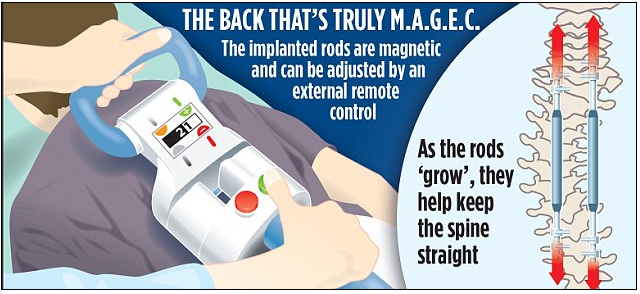
This is one of the craziest things I have seen so far in doing the research towards any type of height increase.

What I am about to show the people who read this website just how advanced medical technology had reached in helping people but I also try to open people’s minds up on just how varied and diverse the solutions can be. This is one of them. I refer to the article “Now I can walk tall… all thanks to my remote controlled bionic spine” 

This is not a joke but I would guess that if a person is really crazy enough to grow taller through any means possible, they could try this implantable magnetic metal extender into their spine and have it extended make them taller using a remote control. Of course this idea requires a type of surgery that is very invasive and can lead a person to paralysis.

I would not suggest this since that titanium implanted rose are not supposed to be removed. Every time a person goes through the metal detector in an Airport, the detector will go off.

In addition, I would guess no sensible rational doctor or surgeon would ever accept this idea for only cosmetic reasons. It seems to be more for people who have severe vertebrate or intervertebral disk collapse. When the person develops scoliosis, lordosis, or vertebral curvature, this method would decompress the torso and straighten it back up. However it might be a lot better to try kyphoplasty or lordoplasty first which is less invasive. It might be that this type of spinal rod implantation are for war veterans and soldier who lost certain areas of their body like limbs and vertebrate and need a way to stand back up.

In the same way, there is also the option of having metal rods implanted into your body which will lengthen slowly over time from having the limb with the rod subjected to a magnet which will extend the rod in length.

The article “Texas Doctors Magnetically Lengthen Nine-Year-Old’s Leg as She Growsshows that you can get the implant and then non-invasively make the bone area longer by putting it in a machine which pulls the leg (or arm) in a longitudinal fashion. Of course we see that the girl has lost most of the bone in her leg from disease. One should not want to go through what she has to. She also has to always have the metal rod implanted in her body for the rest of her life.

Body Hack XX: Most East Asian People Don’t Need Deodorant Due To Their Earwax Forming Gene

This is going to be one of those posts which I will be arguing over an idea which many people in general society will not believe is true but there is a lot of scientific articles and studies published which would suggest that my hypothesis is correct.

I was reading an article from the website The Guardian entitled “Are you wasting money on deodorant? The answer can be found in your ears

The section I want to refer the reader to is copy and pasted below…

“There is one trait known to be dictated by a single gene though: earwax type. Most Europeans have wet earwax, because they have at least one copy of the “wet” version of a gene (catchily called ABCC11). Just over a million people in the UK have a rarer dry type of earwax, as they have two copies of a different version of the gene (we all have two of every gene, one from our mothers, and one from our fathers).

This gene doesn’t just define our earwax type. It also holds the code for building the protein that transports sweat out of pores in our armpits, where it attracts the bacteria that cause body odour. Or at least, one version of it does. The lucky “dry earwax” people don’t produce the protein, so they don’t make the apocrine underarm sweat that attracts bacteria (it’s worth noting we produce two types of sweat, the other being body-wide ecrine sweat, salty water, which isn’t affected by this gene).”

If the reader cared to read over that section, they can see that the single gene mutation which would cause the earwax to go from wet to dry is the same gene mutation that causes people to perspire a lot in their armpits.

Of course, what is less well known is that for most east asian people, their earwax is dry, not wet. (source 1, source 2)

From source 1, they state, “Today, 80 to 95 percent of East Asians have dry earwax, whereas the wet variety is abundant in people of African and European ancestry (97 to 100 percent).

It seems that East Asians have a that single gene mutation that prevents the specific compound known as cerumen from reaching the ear which is what makes earwax wet.

We can then make the connection that since East Asian people don’t have that gene to form wet earwax, then most of them won’t have the gene to make the perspiration in the armpits.

I can validate this issue with the fact that many of the people I know are Asian themselves and few of them who come from their native countries have ever even heard of this idea of the deodorant, let alone use them. However the smell of East Asians are different, and it is not from their armpits.

So, most East Asians don’t need to use deodorant as much as say europeans, caucasians, and africans.

After looking at this issue even further, I would find more articles from StraightDope.com which states…

“It’s not that Asians don’t have sweat glands under their arms; the difference is that they have markedly fewer apocrine glands than black or white people. That doesn’t mean they sweat less–eccrine glands, the other main type of sweat gland, are a thousand times more numerous on most bodies, and Asians have plenty of them. But apocrine glands are the kind that make you stink.”

From another source the same thing is noticed where asian people have less of that certain gland in their armpits.

Even Scientific America would have an article about this issue showing that many Asians who don’t actually stink or sweat in their armpits wear deodorant, which is a sort of Middle Eastern or American derived idea. From Scientific America, the article states…

Smelly genes

Several years ago ago, scientists discovered that a gene called ABCC11 determined whether people produced wet or dry earwax. Interestingly, people who produce the “dry” version of earwax also lack a chemical in their armpits that bacteria feed on to cause underarm odor.

“This key gene is basically the single determinant of whether you do produce underarm odor or not,” Day said.

While only 2 percent of Europeans lack the genes for smelly armpits, most East Asians and almost all Koreans lack this gene, Day told LiveScience.

No one knows exactly why gene prevalence varies so much between populations, but its absence in East Asia suggests that being stinky was evolutionarily selected against there over the last several thousand years, he said.”

Even newspapers like the Miami Herald would say the same claim that because of this gene mutation only found in east asians, particularly koreans, they don’t really need to use deodorant.

So, In conclusion if you are East Asian, particularly Korean and you are a daily, habitual user of deodorant of the armpits from what American media and commercials might tell you, you may not need it and just wasting money on something which does nothing for you.

Below Average In Height Women Have Slightly Higher Reproductive Success From Evolutionary Perspective

While I was doing research for the article on what would be considered the optimum or “perfect” height difference or height ratio for heterosexual couples, I came across this PubMed study.

The results are actually not what I would expect but is still very interesting.

As for men, there is clear evidence that taller than average in height men have more reproductive success. The study “Evolutionary fitness: Tall men have more reproductive success” basically put a nail on the coffin on that issue. There is no arguing over this claim or societal phenomena. Not only that, it is found that women may actually want an even taller male for mating or sex during certain times of their menstraul cycle, when they are the most fertile due to wanting to have healthier and taller babies which is told to them by their reptilian brain and instincts. The study “Women’s height, reproductive success and the evolution of sexual dimorphism in modern humans.” put a nail in the coffin also for this discussion. Women during certain times of the month want taller, more masculine men since their body, evolution, nature, and their instinct tell them so at some biological subconscious level. So for men, it seems that to really have high reproductive success, it is not just enough to be “tall” but “even taller”.

Analysis & Interpretation

The first thing that is slightly off what I would initially think was the claim “Men do not use stature as a positive mate-choice criterion as women do.” this means that when making a mating choice, men don’t put as much emphasis on the women’s height/size as the women would. A tall men is equally willing to date, marry, and mate with a short female as a tall female. Inverse, both the tall and short females tend to lean toward the taller male, while both lean away from the shorter men. This results in what the researchers call sexual dimorphism, which means that the height differences between the two sexes are here to stay and probably won’t converging in the middle and cause the height difference to be removed.

The fact is that we already know that females who are too short or too tall have less reproductive success. That is easy to understand since traditionally, extreme stature in either of the two ends indicates some genetic pathology. I had expected that overall, the slightly taller in height women would have more reproductive success than the  slightly shorter than average female but that is not true.

Let’s just use some general correlations to reach this conclusion. In general, people or families who are more well off in more developed, more modern countries are taller. Richer people in general are taller than shorter people, due to many different reasons from diet and psychological issues probably. However, we also know that richer people are probably more careful with their money and how to invest and allocate capital. This means that richer or better off people from the more developed countries would have less children. We remember that many young woman from southern African nations, Bangladesh, Paksitan, India, or the Philippines which might be considered more of a developing nations have realtively large families with many children, around the 3-6 children range. However, they are from these nations where the conditions means that they are probably not as tall as their female counterparts in more developed nations like Denmark and Sweden. From these two correlation, then we can see that due to poverty and lower quality of life conditions alone, there is a connection between the fact that the women is shorter than the average height of women in the world, and having more children. While the young woman in Canada may be 5′ 6″ and have 2.1 children, the woman in the Philippines is probably more like 5′ 3″ with 3.5 kids. This shows the phenomena to match the studies numbers, since more kids is how most census makers and anthropologists would define evolutionary or reproductive success. If a women has more kids, she is more successful evolutionarily, assuming of course all her children live to adulthood and manage to reproduce/ have children on their own. Thus, we have shown that indeed, shorter than average females are indeed more sucessfull reproductively than their taller than average in height peers.


Proc Biol Sci. 2002 Sep 22;269(1503):1919-23.

Women’s height, reproductive success and the evolution of sexual dimorphism in modern humans.

Nettle D.

Source
Departments of Biological Sciences and Psychology, The Open University, Walton Hall, Milton Keynes MK7 6AA, UK. d.nettle@open.ac.uk

Abstract

Recent studies have shown that, in contemporary populations, tall men have greater reproductive success than shorter men. This appears to be due to their greater ability to attract mates. To our knowledge, no comparable results have yet been reported for women. This study used data from Britain’s National Child Development Study to examine the life histories of a nationally representative group of women. Height was weakly but significantly related to reproductive success. The relationship was U-shaped, with deficits at the extremes of height. This pattern was largely due to poor health among extremely tall and extremely short women. However, the maximum reproductive success was found below the mean height for women. Thus, selection appears to be sexually disruptive in this population, favouring tall men and short women. Over evolutionary time, such a situation tends to maintain sexual dimorphism. Men do not use stature as a positive mate-choice criterion as women do. It is argued that there is good evolutionary reason for this, because men are orientated towards cues of fertility, and female height, being positively related to age of sexual maturity, is not such a cue.

PMID: 12350254 [PubMed – indexed for MEDLINE]

PMCID: PMC1691114  – Free PMC Article