Category Archives: Uncategorized

Genetic Mutation Causes Pituitary Tumor Gigantism, The Interesting Case Of Charles Byrne The Irish Giant

Somehow while I as doing research for the site I stumbled upon a site and article that made me question a few of my own assumptions on the way growth works. The article talks about the interesting case of Charles Bryne who was called The Irish Giant. Apparently the propensity for the development of pituitary gigantism may have a genetic and hereditary cause, at least for some people. I have always thought that gigantism was a disorder that was random and hit people indiscriminantly.

If you want to take a look at the article your self, the site I found it from can be reached by clicking HERE.

I’m going to copy and paste the full article right below and do a VERY extensive analysis and critique of this article because I believe that this giant will definitely further at least me understanding of growth possibilities and how height works. I will highlight all the parts that are important


In a Giant’s Story, a New Chapter Writ by His DNA

By GINA KOLATA (Published January 5, 2011)

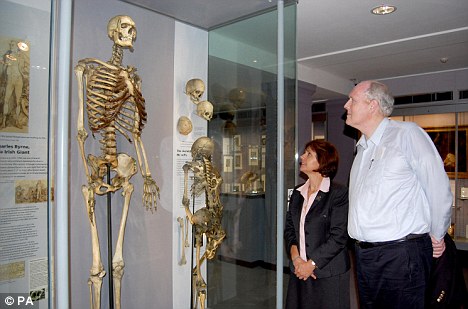
He was a giant of a man, 7 feet 7 inches tall, who left his home in Ireland when he was 19 and traveled to London to make his fortune as a freak. There Charles Byrne, known as the Irish Giant, garnered wealth and fame. But, suffering from tuberculosis and an excessive love of gin, he died a few years later, in 1783. A surgeon — John Hunter — bought Mr. Byrne’s corpse, boiled it in acid to remove the flesh, and exhibited the skeleton in his museum in London.

And there the bones remained, studied in 1909 by the renowned American surgeon Harvey Cushing, who removed the top of the skull and pronounced that Mr. Byrne had had a pituitary tumor. Other than that, Mr. Byrne remained a curiosity, a famous giant, the subject of a 1998 novel by the British writer Hilary Mantel, yet, with only a skeleton remaining, of little interest to science.

Until now: researchers in Britain and Germany have extracted DNA from Mr. Byrne’s teeth and solved the mystery of his excessive height.

It turned out to be a rare and mysterious gene mutation, discovered only in 2006. The researchers then found the mutation in four families from Northern Ireland, near where Mr. Byrne was born. Following a hunch, they decided to ask whether Mr. Byrne had had the mutation, too, and whether the mutation indicated that the four families were related to him. Their hunch was right.

The group, led by Dr. Marta Korbonits, professor of endocrinology and metabolism at Barts and the London School of Medicine and Dentistry, reports its finding in Thursday’s issue of The New England Journal of Medicine.

Symptom-producing pituitary tumors are rare, and those caused by an inherited mutated gene are rarer still. At most only 5 percent of people with pituitary tumors have them in their families.

The tumors can lead to disfigurement — patients develop bulging foreheads and large jaws, hands and feet — and chronic severe headaches. They can also cause visual problems, because the tumor presses on the optic nerve. They may even cause milk secretion, because the tumor can secrete prolactin, a hormone that is needed for fertility and to produce milk in the breasts.

Usually, tumors that secrete growth hormone start to grow in adulthood, after people have reached their full height. But when tumors start growing in children or adolescents — as they do with many patients with the mutated gene — they can result in gigantism because they make the gland churn out growth hormone, prodding bones to keep growing. Pituitary tumors are of great interest to researchers because they grow very slowly and almost never spread elsewhere in the body.

Dr. Shlomo Melmed, a pituitary tumor researcher at Cedars-Sinai Medical Center in Los Angeles, explained that the tumor cells undergo premature aging. “We think it might be protective,” Dr. Melmed said, a reason the tumor does not spread.

The involvement of the gene, known as AIP, in pituitary tumors is a surprise, researchers say. Mutations in the gene are associated with about 20 percent of inherited pituitary tumors when no other organ is involved. But it is not clear why mutations in this gene, which seems to be involved in metabolism — possibly to detoxify chemicals — can cause tumors or how these tumors form.

“There is nothing solid scientifically,” said Dr. Constantine Stratakis, a geneticist and pituitary tumor researcher who is the acting scientific director for the Division of Intramural Research at the National Institute of Child Health and Human Development.

And for unknown reasons, only about 30 percent of people with the mutated gene develop tumors.

In London, Dr. Korbonits said she had been aware of the Irish Giant because of her work on pituitary tumors. She suspected he might have had the AIP mutation when she saw a drawing of him standing with twin brothers who also were giants, who came from a nearby village, and who were said to be related to Mr. Byrne. That, she said, “suggested it was a genetic disease.”  (Me: So the Irish Giant had lived close to TWO brothers who were relative who were also giants!!)

And she had found the gene in members of four families from the same region of Ireland.

Dr. Korbonits wrote to the Hunterian Museum, where Mr. Byrne’s skeleton is still displayed, and asked to test the giant’s DNA, and then she and her colleagues removed two of his molars. She enlisted the help of an expert on ancient DNA, Joachim Burger of Gutenberg University in Mainz, Germany, to extract DNA from the giant’s teeth. She was worried that the DNA might be too degraded to analyze — after all, the giant’s corpse had been boiled in acid and then displayed in a museum for a couple of centuries.

“It was not clear at all that we would have suitable DNA,” Dr. Korbonits said. The DNA turned out to be broken in many pieces, but it could still be analyzed.

The investigators calculated that the giant and the four contemporary Irish families had a common ancestor who lived about 1,500 years ago. And, they report, there are probably 200 to 300 people living today who have inherited that same mutation.

One is Brendan Holland, a 58-year-old Irishman who sells mining equipment. Mr. Holland started growing excessively when he was 13, he said in a telephone interview.

“I kept growing and growing,” he said, eventually reaching a height of 6 feet 9 inches. As he grew, he said, he became less coordinated, developed frequent violent headaches and had sporadic episodes when he could not see. He had no idea what was wrong, but left school when he was 19, on the theory, he said, “that all that studying was giving me headaches.”

Finally, when Mr. Holland was 20 and living in London, an endocrinologist, Dr. G. Michael Besser at Barts and the London School of Medicine, figured out that Mr. Holland had a pituitary tumor. As soon as the tumor was destroyed with radiotherapy, Mr. Holland’s headaches disappeared and his growth hormone levels dropped to normal.

After the AIP gene mutation was discovered in 2006, Dr. Korbonits asked to test Mr. Holland to see if he had it. He did. Then, Mr. Holland said, she started suggesting he might be related to the giant.

“She was asking me pointed questions about where he lived and where I lived,” Mr. Holland said. “Then she said, ‘I think it is possible that you and this chap are related.’ ”

With the giant’s DNA analysis, it turned out that Dr. Korbonits was right.

Mr. Holland says he was touched thinking about the giant’s life, knowing how hard it is to be so tall and the subject of barbs and jeers.

The genetic analysis also had another effect, he said.

“I remember having a conversation with Dr. Besser when I was first diagnosed,” Mr. Holland said. “I said, ‘With eight children, why was I suffering from it and none of the others?’ He was very honest with me: He said they did not have a medical explanation.”

Now, at least, Mr. Holland has an explanation for his physical problems. And that helps, he said.

“I can only speak for myself,” he said, “but having a logical explanation helps me to come to terms with my condition.”

This article has been revised to reflect the following correction:

Correction: January 7, 2011

An article on Thursday about a genetic mutation in the case of Charles Byrne, known as the Irish Giant, misstated the year of publication of a novel by Hilary Mantel based on him. It was 1998, not 2007.


Here is the 2nd resource I wanted to use and that is from TheTallestMan.Com website. The webpage for Charles Byrne is found HERE.

This is the few parts on the page that really got me puzzled.

Charles Byrne (1761 – 1783) also known as Charles O’Brien or “The Irish Giant”, was a human curiosity or freak in London in the 1780s….His exact height is of some conjecture, but most accounts refer to him as from 8 feet 2 inches (248 cm) to 8 feet 4 inches (254 cm) tall, however true and undeniable skeletal evidence pitches him at just over 7 feet 7 inches….Although Charles Byrne was 22 years old when he died, radiographic images of his wrist bones showed that the epiphyses were not yet fused. His “bone age” was estimated to be only about 17, indicating that he was still growing at the time of death.”

The last resource I wanted to use HeightQuest.Com Again because Tyler does talk in a few articles about the fact that Gigantism and Pituitary tumors are not as simple as made to believe to the public.

FULL CRITICAL ANALYSIS: Like most of the general public my view point for gigantism was always very simple. The way gigantism and suspiciously tall humans happen is very logical and sequential.

1. The gigantism is from a benign or malignant tumor that has grown to a certain size to push against he pituitary gland at a region to cause excess release of HGH.

2. The HGH gets released to the liver which creates IGF-1 which runs gets distributed by the blood stream and causes any areas of the body like cartilage to start accelerated cell divions thus the bones and body of the person gets bigger in all dimension.

3. It does NOT matter whether the person was past puberty or before puberty. As long as the pituitary gland can release excess HGH, the human body will find a way to grow even by height. My old theory on how a post-puberty adult person with completely fused growth plates grew was that the IGF-1 reached the cartilage on the ends of their synovial joints and caused chondrocyte proliferation there. You can read up on that theory/ idea in my previous post found HERE.

4. The condition people have before growth plate closure is called Gigantism. The condition people have after growth plate closure is Acromegaly. It does not matter whether a person has Gigantism or Acromegaly, they will increase in height in both cases. So growth plate closure does not inhibit continual height increase.

5. As long as person has a pituitary gland that can release excess HGH, their body will find a way to grow in size, and height.

The issue now is that the case of Charles Byrne puts some of my deepest beliefs and ideas on how height work into question. The first problem I had with it was when the article stated the phrase “researchers have now figured out the reason for his excessive height” . For me, I didn’t think that scientist needed another reason to explain his height because his height can already be explain by the fact that he had a pituitary tumor problem, so he was just another pituitary giant. End of story. I didn’t understand why scientists and geneticists felt the need to look for another reason for his height. Didn’t the fact that an old surgeon state that he suffered a pituitary gland problem be good enough to explain his gigantism??

That was where I was coming from. Well it turns out that the situation is not that simple.

First, Bryne apparently has a genetic propensity to develop a pituitary condition causing gigantism. The researchers had found two twin brothers who were related to Byrne who also developed into giants, from gigantism. There is actually a genetic mutation in the AIP gene to cause this condition of pituitary gland disorder and gigantism to be far more prevalent. Byrne had it and his blood relatives throughout  the centuries also have it and a modern distant relative developed acromegaly. This is the first complication.

Second, on the Tallest Man’s Website, they showed that Byrne was reported in height upwards of 8′ 4″ but his skeleton measures 7′ 7″ , still a very amazing height. He died when he was 22 but X-Rays show that his growth plates were still there and that his plates indicated he was growing like a 17 year old. This excerpt challenged two beliefs I had always had.

Belief 1 – Pituitary giants even though they have the pituitary gland problem should not be able to also influence their growth plates and the rate at which the growth plates go through senescence.

Belief 2- Pituitary giants have the same age range for growth plate evolutions as the rest of us.

It seems that Byrne not only had a pituitary gland problem and had ALSO a genetic mutation to cause him to be more likely to develop gigantism, His growth plates were also very different from the average person. Could it be that either the genetic mutation or the fact that he has a putuitary condition cause his growth plates to go through with senescence a lot slower than the average human? That would be definitely something that I have never considered, but Tyler did.

I had tried to show that with cases like Sultan Kosen and Tanya Angus that they had closed growth plate because they were in their 20s or late teens when they started to go through their growth spurt. Tanya grew from 5′ 8″ to 6′ 11″ from age 18-30. Kosen grew from 8′ 1″ to 8′ 3″ from 27-29.

This just shows that Pituitary giants like Byrne , Kosen, and Angus may be even more unique than the ordinary pituitary giant (or the other possibility is that all or most pituitary giants have this skill and potential). I do note that Byrne did not start go through his massive growth spurt when he was in his adult years, but that he suffered from gigantism so he went through his massive growth spurt as a child with growth plates still open.

If this new case proves that having either the genetic mutation or pituitary condition can actually have an affect on the  rate of senescence of the growth plates in the individual, then my previous theory is wrong and that humans may NOT actually be able to grow taller naturally after puberty after all. My idea was that with enough HGH released into the body, the articular cartilage was what took over the height increase growth.

I decided not to write about the findings found by Tyler since this article post is getting quite long so I will save the discussion of the relationship between gigantism , pituitary giants, and gene mutations from the articles I found on HeightQuest for another time. That post will be very interesting so I can compare old and new theories to see which one makes more sense.



Product Review IX: HeightMax, HeightMax Concentrate, Height Max Plus

I think this review will be a lot easier and simpler than my previous reviews. The HeightMax product was marketed by Sunny Health Nutrition Technology & Products, Inc. The owner was Sunny Sia.

It is quite obvious from the get go that this product is product that doesn’t work. If you want to see all the other online websites that state that the HeightMax product is a scam, just click on the 5 links below. There was at least another 20 links and website all stating the same thing, that this product is a scam.

1. HeightMax Wikipedia Article

2. FTC Website – official complaint filing by the FTC at the US District Court in Tampa, Florida

3. ScamSafe

4. NutraIngredients

5. TrustOn

This is the section on the FTC complaint filing done on Sunny Health Nutrition Technology & Products, Inc.


Federal Trade Commission enforcement action

On or about November 21, 2006, the Federal Trade Commission filed a complaint against Sunny Health Nutrition Technology & Products, Inc. and its owner, Sunny Sia, charging the defendants with making false and unsubstantiated claims for HeightMax Concentrate and HeightMax Plus, as well as for two other supplements, Liposan Ultra Chitosan Fat Blocker and Osteo-Vite.

The Federal Trade Commission complaint charged that claims for the pills were unsubstantiated or false and that the defendants invented William Thomson, a supposed expert who appeared in theadvertisements. According to the complaint, the advertisements for HeightMax Concentrate and HeightMax Plus misrepresented that:

  • HeightMax increases height in users ages 12-25 over what they would achieve without the product;
  • HeightMax causes users to grow an additional 2 to 3 inches in 6 months;
  • Clinical tests prove that: (i) HeightMax increases the height of teenagers and young adults; and (ii) regular use of HeightMax for 6 months causes a 10% to 25% gain in height, and use for more than a year causes a 20% to 35% gain in height;
  • HeightMax increases lean body mass and reduces body fat in users ages 12-25; and
  • William Thomson, an expert with a Ph.D. in Biochemistry, created HeightMax after years of research and clinical trials.

The Federal Trade Commission complaint also alleged that the defendants made unsubstantiated or false claims for Liposan Ultra Chitosan Fat Blocker, a weight loss supplement, and Osteo-Vite, marketed to older consumers for bone-building.

To settle the charges, defendants Sunny Health Nutrition Technology & Products, Inc. and its owner, Sunny Sia, agreed to pay $375,000 in consumer redress. The settlement also holds the defendants potentially liable for $1.9 million in the event that they misrepresented their finances. The order to settle the FTC’s charges requires that claims for any dietary supplement, food, or drug must be true, non-misleading, and substantiated. In addition, it prohibits the defendants from misrepresenting endorsements, including the existence or expertise of any endorser.

On November 30, 2006 the Honorable Susan C. Bucklew, Federal District Court Judge, signed a Stipulated Judgment requiring defendants to pay $375,000 based on the accuracy of sworn financial statements. The Judgment included an avalanche clause, requiring payment of full redress for $1.9 million if the financial statements were not accurate.

On April 24, 2007, the FTC announced that the defendants shall be required to pay the full $1.9 Million after hidden assets were discovered. In the settlement, the $1.6 million balance of the judgment was suspended based on sworn financial disclosure documents showing inability to pay. Shortly after that settlement, the FTC discovered that the defendants kept at least $1.8 million in an undisclosed PayPal account. The FTC immediately obtained a temporary restraining order to freeze the funds, which was granted on December 8, 2006. The defendants have been ordered to pay the entire $1.9 million.

Judge Bucklew’s new order, signed on February 22, 2007, and agreed to by the defendants, requires them to pay the entire $1.9 million, using the funds in the account at PayPal and other sources if necessary. The conduct prohibitions from the previously entered order remain unchanged. The FTC will set up a refund program for HeightMax purchasers, using the money collected.

Height Increase And Long Bone Lengthening Through Joint Loading Modality Developed By Hiroki Yokota

I have gotten into contact with MiniGolf/ Tyler of HeightQuest.Com and he gave me two leads or methods to pursue and look into. One idea/method is the Joint Loading Modality developed by Hiroki Yokota and the other is the idea/method of Growth Plate Regeneration developed by Robert Ballock. I wanted to focus all of my attention on the Joint Loading Modality idea for this post.

The first link I get taken to after typing in the words “Yokota’s Joint Loading Modality” into google is an article or PDF that which appears on a site called “China Osteoporosis Forum”  .You an also find it by clicking on the link HERE. The title of the paper is ” Osteogenic potentials with joint-loading modality’. I am going to look over the article, figure out what they are talking about, and explain it in a language which the average person can understand. My education background is in Chemistry and Engineering but I do like the Medical Sciences (but not enough to want to go to medical school!) so I think I am capable of stripping down the article and explain it in the most important parts.

My approach is NOT to read the entire thing, but to read only the abstract, the introduction, and the discussion and conclusion. That should definitely be enough to understand 90% of all the stuff and central themes the research experiment is talking about. I understand as a former engineer that in all specialized high education fields, each field has its own lingo, and terms, and medicine is quite possibly the most notorious. (If you have ever watched even 1 episode of the TV show ER you would know what I am talking about)

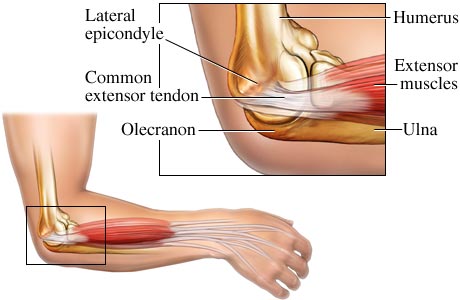
Summary: The idea of the experiment was to test to see what would happen to a mouse’s forearm bone (the ulna) if the experimenters put the forearm in a clamping device that squeezes the arm in a horizontal direction. The squeeze or loading is applied on the upper end of the lower forearm aka the proximal end. This end is the end that is closest to the elbow. while is was originally believed that a force or load of up to 1000 microNewtons (a Newton is the basic unit of force) is needed to create any bone deformation or bone formation, the experimenters really only used 30 microNetons, and the force was not a constant force but was sinusoidal so the compression was moving up and down in s way that creates a frequency. The strain was also calculated using Mechanics of Materials definition (delXdiff/delX)

The compression was done with the bones still inside the arm, surrounded by muscles and ligaments. The place the force was applied was at the very end of the long bone (ulna) at the proximal end. Only the right arm was compressed so that the result could be compared to the left arm which had nothing done to it.

Three distances of the main bone part (called diaphysis) was used as measurement places.The results showed that after just 0.5 Newtons (this is the maximum load before decreasing) at a 2 Hz for 3 minutes a day for 3 days increased the mineral- izing surface (two- to threefold), the rate of mineral apposi- tion (three- to fivefold), and the rate of bone formation (six- to eightfold) in the ulna. That means the bones grew in thickness, volume, and length. The length means that the ulna somehow increased in length. The difference of the loading is checking by putting two electric nodes at difference distances up the mouse’s forearm and measuring the voltage/ potential drop. The potentials show that the interstitial fluid flow was increased through the cortical and other type of bone as a way to react to the loading. The correlation of the interstitial fluid increase flow and the potentials to the increasing loading was almost at r^2=1.

Conclusion: This was the first scientific article I had to review and it was a pain. The main point is that if you apply enough a strong force to the ends of a the long bones next to the elbow or knee, there is a chance that the result is increased interstitial fluid flow to the ends of the lone bone which will lead to new bone formation in thickness and length. One obviously wants to translate these results to humans to see if their long bones will grow doing this method but that will be hard to do since very few humans will allow someone to put a compressive loading on their bones since the muscle and ligaments will be also compressed and pain will be felt. Theoretically we could move the sinusoidal compression load up by 10 times to 5 Newtons, and see what happens. 

A Surgical Method To Increase Height Using the Articular Cartilage Bone Growth Theory

If you had read the previous post about my theory on why pituitary giants can still grow after their growth plates fused, you should have also read the ending where I claim that we as normal people without pituitary gland problems can also grow just like them, if we can do 2 things

1. Increase the level of growth hormone in our bodies.

2. Make sure the cartilage in our body right now is strong, thick, and healthy. (Taking certain multivitamins can help with this).

However, on the same walk where I had the rather crazy insight that our adult growth can be stimulated by the cartilage at the end of our long bones, I also thought of a truly amazing idea on how to surgically increase a persons’s height using that idea.

The concept really is a biomedical and/or biomechanics idea that I just thought up while walking around (I think I should just state that if you want great ideas to come to you, just start taking long walks around your neighborhood and talk to yourself alone).

My Method

This is the technique or surgical method we can do to increase out height. It has to be combined with the idea the that the other cartilage can be used to grow.

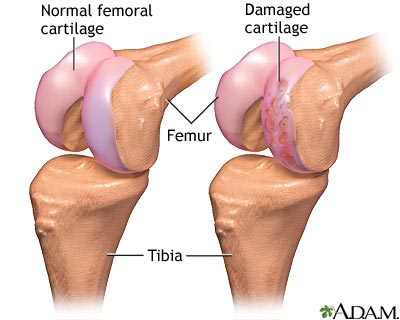
We first look at a picture of the lower distal end of the femur. What my idea is to drill holes into the distal end of the femur and replace the holes with stem cell grown cartilage.

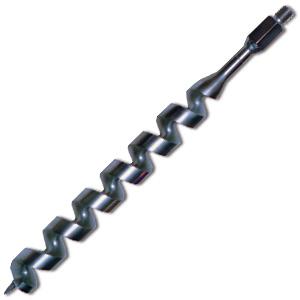
The idea is to connect the cartilage implants with the end articular cartilage. The cartilage implants with be cylindrical and the out edges will be in a screw formation. so something that looks like a thick piece of plastic screw.

There will be 6 cartilage pieces that are cylindrical in shape implanted at a 45% angle into the lower distal end of the femur. We have to make sure that the implanted cartilage is willing to be accepted by the patients body. The idea is to never touch the middle bone part with all the marrow because we don’t want to mess with it.

The screws are supposed to be able to touch just barely the articular cartilage ends which will mean that as time goes on and the cartilage starts ossifying, we can theoretically use humatrope and other growth hormones to stimulate the cartilage to expand. the expansion of the 6 screws implanted in a inward radial direction of the end of the femur at a 45% angle should allow the cartilage to push against the effect of gravity and expand to turn the bones longer. We can even do daily injections of genotropin or humatrope into the implanted cartilages to add even further chondrocyte division and limb length growth.

I am guessing the method can allow for 1-2 extra inches in growth. After say 1-2 years after the cartilage closes again, we can re drill on the same lower femur at the other 6 points on the outer edge of the lower distal end another 6 cartilages to add another 1-2 inches.

What I have not figure out currently is what the shaped of the drill and cartilage implants should be. My first guess is a screw like form, but that may make the increase in height not feasible. so it may be another idea, like a curved cylindrical device in a 6 helical formation. The reason the cartilage can push against gravity is that fact that the implanted 6 caritilages are supposed to go all the way through the bone to touch the other cartilage thus forming an continuous cartilage structure just like picture #2 above.

I know what I just said is a little hard to picture in your brain. It is hard for me to explain even though I thought up this idea. Just imagine a lower curved lens as the cartilage at the end of the femur. There is a 6 part helical formation that comes out of the lens.

Cartilage Growth Beyond Epiphyseal Plates, A Theory On How Pituitary Giants Grow And Definite Proof That Adults Can Still Grow

In the last real post I had done, I had talked about the interesting case of how Tanya Angus, a pituitary giant grew from the age of 20-30 from 5′ 8″ to 6′ 11″. Her standing height was “only” 6′ 6″ but her severe spine curvature led to a 5 inch lost height. I just couldn’t figure out how it is possible that someone could grow because the two fundamental ideas behind human growth seemed to go against each other.

I was walking on the street when a rather intuitive idea came to me. Follow my logic and tell me if it makes any sense.

The other person I previous mentioned in the previous post was this guy (Brown) who also suffered from acromegaly and he had grown to 6′ 3″ so I am guessing that being able to add height is a common occurrence among pituitary giants. Sow HOW? I remember reading that he was suffering from great knee pain . I know that knee injury is a very common form of injury and pain that happens to humans. Our joints are particularly sensitive to injury, like out knees, hips, and ankles. However, I also remembered what my father told me about my grandmother. My grandmother also suffered from great knee pain, but the knee pain was because she had lost all of her knee cartilage.  All she had was three bones, the femur and tibia with fibula rubbing against each other. So I combined the two ideas together.

< Here is my theory: Pituitary giants grow from using the cartilage at the end of long bones (aka articular cartilage), NOT the epiphyseal cartilage plates which have disappeared.  >

The pain the giants are going through is from the loss of cartilage in their joints (knees) since the cartilage has has to proliferate and expand.

If we look at the picture on the right we can see a picture of what the lower end of a femur looks like, which is filled with cartilage that is about 3-4 mm thick. Now, if we remember the characteristic and dimensions of an epiphyseal plate, it is also about 3-4 mm thick.

Remember that the current theory is that the epiphyseal cartilage after puberty and the signaling of estrogen slows the division of chondrocytes into new ones so the older ones diminish in number through calcification.  Let’s assume that theory is true. So that means that in theory, that area can no longer be a nest for longitudal bone growth. If we assume that new growth can not occur from bone, then we HAVe to find another place where cartilage exists. so what place is the closest to the old epiphyseal position that is cartilage? The obvious and easiest answer is the articular cartilage. The theory for adults is that most adults still have the articular cartilage needed to support and cushion their walking.


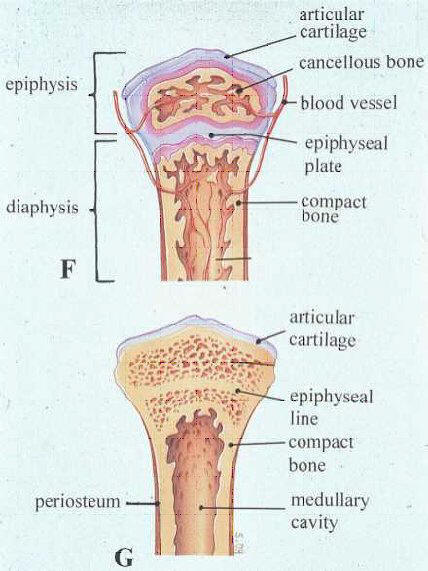
If we look at the 2nd picture on the left we can see the canal like wall the epiphyseal plates create between the long bone’s end and it’s middle section. The cartilage is a type of cartilage called hyaline and mostly made of collagen and water. Over time the lower type of cartilage disappears, but the top cartilage still remains. Now, we remember that we keep that cartilage until we are in our middle to late age so that cartilage never goes away.

The key to remember is that the articular cartilage plate and thickness is similar to the epiphyseal plates!

Since the pituitary giant is releasing as much HGH as possible into the liver and creating IGF-1 as much as possible, the HGH will try to go into any part that can possibly replicate. Since the cartilage in the knees is there, the growth factor causes that part to get bigger. This actually makes a lot of sense if we remember that for pituitary gland giants, the first thing they notice that gets bigger that they supposedly stopped growing was the hand and feet. If we remember our anatomy for our distals and tarsals, we remember that the hands have 14 joints, all filled with cartilage. The hands are getting bigger and longer, from using the cartilage at the end. There is still a thin layer in that cartilage to allow for chondrocyte multiplication.  

Where ever there is cartilage, there is growth. If we remember the picture of a skull, the adult human still has some cartilage in some areas of their skull, mostly in the area between the eyes and nose (the eyebrow ridge middle region, just look at a picture of Richard Kiel HERE). Then there is the cartilage close to the jaw area. If you look at the pituitary giant, that is where you really see the major difference in their faces and other normal people.

Let’s look at the hands of well know life coach Anthony Robbins,


Tony Robbins is well know for being one of the world’s most famous and best life coaches for the last 30 years. He is very well known for his 6′ 7″ figure which was only 5′ 3″ when he was 113 or 14. He grew like CRAZY from 14-16. If you see his hands, they are very big, but also proportional. Most people have given a joke saying that tony robbins has “banana hands” because of the size of his fingers. He is also a pituitary giant, but his benign tumor had shrank later in life so he did not need the surgery to correct for that.

So, the main point of this article is to show my theory that the way pituitary giants, and possibly other humans can still grow even through their adult years is to use the cartilage still left at the ends of their long bones.

Then, I suggest then to start taking calcium with Vitamin D3 and Glucosamine with Chondroitin to make sure the cartilage stays around and is thick and strong.

Longtiduinal epiphyseal bracket

Longitudinal epiphyseal bracket.

“Longitudinal epiphyseal bracket or bracket epiphysis is an uncommon disorder of growth. Alternatively known as a delta phalanx, it is due to an anomalous secondary ossification center that extends longitudinally along the diaphysis{causing anomalous secondary ossification centers may be a way to grow taller}. Although rare, longitudinal epiphyseal bracket most commonly manifests in the hands as clinodactyly and in the feet as hallux varus. ”

“The etiology of longitudinal epiphyseal bracket is not completely understood, but is thought to result from incomplete development of primary ossification centers”<-If this method is the cause then it unfortunately will not likely help us grow taller.

“A typical metatarsal only has a proximal epiphysis, but with a bracket, there is a continuous proximal, medial, and distal epiphysis. The metatarsal cannot elongate normally because of the abnormal epiphysis bracketing the bone.”