Category Archives: Uncategorized

How Close Are We Towards Growth Plate Regeneration To Grow Taller?

This seems like a reasonable question to ask when a person who is past bone maturity and physeal ossification is interested in learning how they can grow taller.

Well, to answer this question, there are many factors and variables we have to take into consideration. It is really hard to give a definite answer, although I have stated before that we might be as close as 15 years away from some commercial company developing the technology to do that. On the other end, it could be as far away as 50-70 years, assuming that the rate of progress continues for the fields of tissue engineering, regenerative medicine, 3D Bio-printing, and stem cell R&D. Let’s remember that the rate of scientific/technological progress for the biological sciences and biomedical application does not follow the trajectory of Moore’s Law, unlike electronics and Computer Science. To make progress and breakthroughs in BIology is extremely resource/financially intensive, unlike CS, which often just requires a programming wunderkid sitting in his underwear in his dorm room eating Cheetos.

I revealed in a post a month ago about the company EpiBone who is developing osteochondral grafts as implants which has as an advisor Dr. Warren Grayson, who I have said since 2013 is one of maybe 6-7 researchers in the world we should be following. Refer to the post EpiBone Company To Engineer Osteochondral Grafts – Research Breakthrough!. The company reveals that there are definitely plenty of people who realizes that there is a huge financial incentive to get this technological problem to work out. There has already been at least 1 patent filed by the research group at EpiBone on how to use a bioreactor to build bone tissue. Refer to “Methods, Devices and Systems for Bone Tissue Engineering Using a Bioreactor – US20120035742 A1”

Let’s now look at the research of Dr. Robert Tracy Ballock, who I have said is the other main researcher we should be following. His work has been on the Growth Plate for the last 15 years or so. He has been working with Dr. Eben Alsberg, who showed that it was possible to growth a functional growth plate. Refer to his grant on Growth Plate Regeneration available here. Further searching on this grant and his work shows that there was 2 grants, one for the 2012-2013 period, and a 2nd grant for the 2013-2014 time frame. (2012-04-11 – 2014-09-30). If you search around the internet for any new academic papers published under Dr. Ballock’s name, he has not published anything for this year, or even late 2014. I would guess that he is finished with his research from the grant which lasted 2 years and plans to write something up. There might even be a Patent application that is filed from his research soon. Whatever he has found, he is not revealing it yet, at least not to the general public.

3 months ago there was a biomedical conference where a university researcher named Dr. Juan Taboas (Ph. D) presented his work called “Repair and Regeneration of the Physis” at the Houston Methodist Research Institute. Just two months ago, the video of his presentation was available for the general public to watch, but now that video has been set to private and one requires a password to watch the video. I did watch maybe the first 5 minutes of the presentation, which was over 1 hour long. There was a video/audio syncing problem so I was not able to record the presentation back then. The part I watched was not that informative and did not reveal too much about his current research.

The abstract of his talk is below…

Physeal regeneration poses a considerable challenge in orthopaedic regenerative medicine. The physis is the cartilaginous interfacial structure at the ends of the long bones that produces appendicular skeleton growth. Fracture, infection, and cancer can result in limb deformity and loss with significant morbidity and medical cost despite their status as rare disorders. Dr. Taboas and his research group are developing hydrogel and stem cell based point-of-care therapies to prevent and repair limb growth disruption in pediatric patients, and for endochondral repair of large boney defects in children and adults. They are currently evaluating the effect of hydrogel composition and zonal patterning on construct growth and architecture maintenance in an in vivo murine subcutaneous implantation model. These techniques may be applied to regenerate other skeletal tissues that require appropriate interfaces with bone for proper function, such as articular cartilage and ligament.

Here is something that the average reader needs to understand. There is a branch (or maybe sub-branch) in the medical research fields known as Orthopaedic Research. Technically, orthopaedic research refers to diseases and injuries of bones, joints, nerves, and muscles. However, there what is not written, but also implied is the cartilage and the tendons as well. Keep this note in mind as we go further along.

When I was at the 2nd Organ-On-A-Chip and 3D Bioprinting Conference in Boston a month ago, there was a presenter at the conference who revealed that she and her group was working on getting stem cells to build tendon tissue. Tendon tissue is what connects muscle tissue to bone tissue. It is similar to cartilage, because of the high level of collagen, although not the same type of collagen. Her presentation was ” Engineering Tissue Microenvironment Informed by Development, Healing and Disease”. Refer to Catherine Kuo, Assistant Professor at Tufts University. Apparently, she got her postdoctoral training in the Cartilage Biology and Orthopaedics Branch at the NIAMS of the NIH. The last I heard, she was changing positions to a different university. This shows that the field of stem cell technology is being applied to form every type of tissue.

There was a paper that was being passed around at the conference which asked all the people at the conference what type of tissue they planned to use the 3D Bioprinter on. The type of tissue that was most often formed from the 3D Printers was cartilage. Not bone, not vascular tissue (blood vessels like capillaries), not tendons, but cartilage. This reveals something critical. It seems that all of the major researchers understand what would be the easiest type of tissue one can print using this new form of technology. Everyone is thinking the same thing, and we are almost all pursueing the same idea: Cartilage.

I would guess that a large percentage of the research done in this well known field known as orthopaedics is on cartilage research, specifically cartilage growth and regeneration.

So what does Dr. Grayson, and Taboas have in common?

It turns out that they both were all at the 2011 Termis Regenerative Medicine Conference in Houston. Their names was on the list of Attendees. I was supposed to go to the 2015 Termis Conference in Boston, but the cost was just too high for me. Dr. Atala of Wake Forest was going to be there. If you plan to take this type of research seriously, you have to spend the money (about $2,000) to attend these types of exclusive conferences to learn what the real academic researchers are working on.

What about Dr. Ballock?

He is a medical doctor as well as a researcher since he has both a Ph. D.and M.D. (Smart guy). Like all academic researchers, he is involved in a lot of societies and academic groups. I am sure he flies around a lot to give presentations and talks in various conferences and conventions. Back in 1998 he was at this conference called “Bioengineering & Orthopedic Science – Gordon Research Conference” which is now known as “Musculoskeletal Biology & Bioengineering”. It was held from July 26-31 in Andover, New Hampshire. He gave a talk called “”Control of Cell Proliferation in the Growth Plate”. It seems that for almost 2 decades this guy has been working on getting the growth plate to work out. He was involved in this multidisciplinary conference back in 2008 called the “Cleveland Clinic Cartilage Innovation Summit”. The conference was basically a group of researchers gathering to talk about the subject of “The Clinical Science and Outcomes of Cartilage Repair, Maintenance, Regeneration and Replacement”.

So What Am I Trying To Conclude From All This Information?

Some people who are in industry who focus mainly on earning income and profit for their employers and no longer in academics (who focus mainly on the research, discovery, and learning more) would say that something along the lines that all the breakthrough research discoveries one finds in the university lab is still useless if one chooses not to bring their findings into real application and shared with the rest of the world.

This applies to the field of Orthopedics (and most any other type of medical research). What I have found in the last 6 months from attending the conferences which talk about the rising field of 3D Printing, and specifically 3D Printing applied to tissue formation is that the researchers in the university labs are trying their hardest to bring their research to the public.

Dr. Grayson is going to help EpiBone succeed in getting bone implants to work. There is already too many companies who have gotten the theory and science down on getting lab grown stem cell derived bone tissue to be reimplanted into the subjects body with complete success. The 1st step in getting bone tissue to be grown from stem cells or mesenchymal stem cells has been multiple times with the academic researchers forming companies to get their research out to possibly make them millionaires. There is no problem with this since the academics see a way to make personal gain from their years of hard work and research.

When we then move towards the 2nd/next step of getting fibrocartilage to be printed from lab grown pieces of cartilage or chondrocyte, there are labs like Dr. Atala or Dr. Lawrence Bonassar who have already achieved that too. You have seen many pictures of the outer ear lobe being grown in the labs in cultures and even on the backs of lab mice. The same can be said about nose tips, which are also fibrocartilage.

The 3rd step is to get Hyaline Cartilage to be printed or grown in the lab. We are getting super close to getting Hyaline cartilage to be printed. There were 2 exhibitors at the Organ-On-A-Chip Conference, (Cellink and RoosterBio) who would be able to provide the raw materials, cell culture medium and seed mesenchymal stem cells, to let any professional lab to play around to eventually get the lamellar structure of hyaline structure to work out. I would be willing to guess that by the time the 2020 Termis World Conference comes around, we would have succeeded there.

Should we try to the traditional seed stem cell into scaffold method or should we try the more revolutionary way of growing cartilage tissue from scratch using the 3D Bioprinter? – We would have to make that decision eventually.

The 4th step would be to get Epiphyseal Hyaline Cartilage to be grown/printed. Ballock has been working on this problem for 20 years. He got a grant for the 2012-2014 time frame to go research on growth plate regeneration. It is not just him who is working on getting this thing to work out. In the grant, he wrote that if he is successful, the growth plate regeneration technology can be used by people who have already reached bone maturity. He knows what his research would mean and how it would effect the public.

Of course, orthopaedic research and development is something that thousands of people around the world are working on. He is not the only one trying to get growth plate regeneration to work out.

  • There has been teams in Hong Kong who got the chondrocyte implantation idea to work back in the early 2000s. Based on certain Non-Disclosure Agreements (NDAs) I signed early on, I can not reveal the exact details of those studies, only to say that the experiments were done and were successful.
  • I revealed early on, in the late 2012 that there were military hospitals in China who have gotten growth plate transplantations to be successful. Where did they get the growth plate in the first place is still suspicious though.
  • I wrote about the fact that even plastic surgeons in Russia, like Dr. Teplyashin have gotten the scaffold technique to be successful but this controversial technique is probably only offered to Russian millionaires in secret for maybe $200 K a pop. They got it to work out in sheep, but that doesn’t mean they have ever performed the same surgery on humans.

The truth is that we are getting quite close, with the best option being people like Ballock. If he is willing to write up his results from his work for the last 3 years, and take those results and form a company around it to develop growth plates grown out of scratch (ie 3D Printed) or based on the traditional tissue engineering method using scaffolds and growth factors, he would have something working in 10-15 years. Of course I could be way too optimistic.

To answer the original question, I would make a very tentative guess based on the idea of Kurzweil’s Law of Exponential Growth, if someone like Ballock is willing to form a company around his discoveries and try to bring it to public, we would have a limb lengthening alternative based on 3D Bioprinting, Stem Cells and Scaffolds, and tissue Engineering within 10-15 years with enough funding. When it comes to funding, I would say that biomedical engineers and researchers would need maybe at least $100-$300 Mil to get this procedure out to public. So who is willing to fund this type of project?
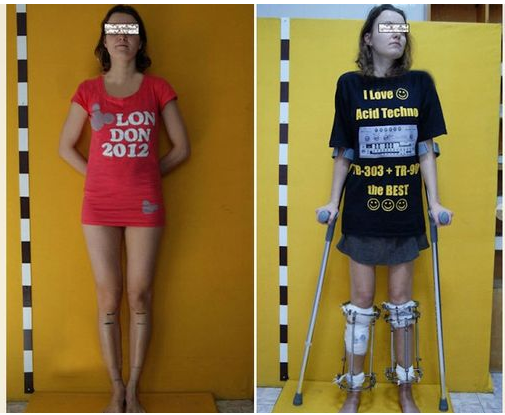
Girl Uses Cosmetic Limb Lengthening Surgery To Increase Height By 8 Inches

Alexandra TranserThis is sort of old news but it is sometimes still worth mentioning. Back in March of this year there was another story that came out of a person who got cosmetic limb lengthening surgery. Unlike most of the people you hear about, this person was a girl.

While it is not very often we find girls who decide to go through with the surgery, there have been enough cases of girls who do it for the prospect of becoming a model. This girl fits that type of case study.

We refer to this article from Mirror, which is a UK based type media outlet/source. – http://www.mirror.co.uk/news/world-news/aspiring-model-spends-thousands-surgery-5115453

A 5′ 4″ tall aspiring model Alexandra Transer got the surgery done for a supposed 6,000 pounds and she has already gotten 6 cms out of it. She comes from a family of people who are below statured. Her mother is 5′ 2″ and her father is 5′ 5″. She chose not to go to University but work for her father in Engineering and saved up the 6,000 UK pounds to get the surgery.

She had wanted to be a model for most of her life, but when she contacted a modeling agency, they told her that she was below the height requirement and that the only way for her to get to that strict modeling height requirement was to extend her legs. She decided to do just that and went through with it, which we found very impressive and brave.

This first surgery she has decided to do is one of a total of 3 planned. There is supposed to be 2 more surgeries she will go through which will eventually put her at 6 feet. Her estimated time frame is that the 3rd surgery will be done by 2018. She will be in her 30s by then and may not get any type of modeling work but she did say that she plans to dye her hair blonde and then feel like a model being tall and blonde.

It seems that maybe what she really wants is to feel beautiful. On this website, we don’t judge. Vanity is something we all go through.

Some new information we learned is that she is actually from Russia herself, Volgograd. For anyone familiar with the LLS community, Volgograd is actually really famous because of the Centre of Anthropometrical (Orthopaedical) Cosmetology and Correction. Refer to Dr. Alexander Barinov and Dr. Viktor Shatov, of the center RUCOSM. Dr. Alexander Barinov is famous for being a protege and student to the more legendary Dr. Yegorov.

She mentioned that a former Soviet Athlete, a Valery Brumel, got this type of surgery done on them in 1968. Why did this olympic athlete get it done back in the 60s? We don’t know about that. I personally suspect that one of the reasons she was willing to go through with the surgery unlike so many other people who wish to be taller but are too afraid of surgery is because she comes from Russia, and specifically her home town has one of the most popular and recognizable centers for height increase surgery in the world. I am sure her parents at first was very reserved in her desires but they probably had a better understanding for why she would go through with it than other parents. Since they are from Russia originally, going a center like RUCOSM would not be as difficult of a transition as other people from other countries who might know any of the local Russian customs or language. Maybe for this girl, going to get limb lengthening surgery is as simple as driving the 3 miles to one’s local gym center to exercise.

Based on current conversion rates, it seems like she paid about $9,400 USD to get the first surgery.

We here have done our own level of research on LLS, and the cost of it. Most people have said that the cost of getting LLS is usually about $50,000 with a trip to one of the more well known, reputable surgeons costing upwards of $100,000 with everything covered, for maybe 10 cm or 4 Inches of increase in the leg bones. The lowest cost I personally have heard of was around $10,000 for the cost of surgery from a former Chinese surgeon. The reduced price of getting one’s leg extended seems to suggest that the cosmetic procedure may be becoming much more prevalant. That may be a good thing for some people who really want to go through with it and are looking for a cheaper alternative.

When we looked at the cost for LLS back in 2011, it seems that the cost was around 12,000 Euros, at least in the RUCOSM center, in Volgograd. Our source was from the Short Support Group website. The 12,000 euros cost was supposed to cover pretty much everything, including a 3 month stay. Of course, from the RUCOSM website, they state that for each surgery, they can only increase one’s bone length by 7-9 cm maximum. This is why Alexandra needed 3 total surgeries, to gain 8 inches or 20 cms of height to reach her desired goal of 6 feet tall from her original 5′ 4″. For her, she was very happy with the results, and there were no complications.

Refer to here for an interview with Dr. Barinov.

Note what he claimed for the cost of the surgery

  • How much does the height increasing procedure cost? – Dr.Yegorov works with different clinics, both state and private. The total cost of the procedure including all necessary expenses is from $15,000 to $30,000 US dollars depending on the clinic and the accommodation and service conditions.

We would say that $10,000 USD is a little unrealistic of cost. A more reasonable cost would be probably $25,000 and that would just be for 7-8 cms of increase, assuming that no complications are developed.  Of course those will be 2011 prices. Since it is 2015, We should expect maybe $30-35 K in fees in total. How Alexandra was able to just pay $10,000 we are not sure. Maybe she got her surgery done in the UK, and not Russia. Maybe instead of paying the thousands of dollars in fee for staying at the hospital facility to recuperate, she was able to have someone take her to her home in Volgograd (which might just be a few blocks away) during that time, allowing her to save thousands in hospital fees.


How bone knows how to grow

How does bone know how to be the proper shape and size for development?  Can we manipulate this to grow taller?

I received this email from the author regarding how distraction osteogenesis would affect how bone manipulates growth in regards to maintaining placement of superstructures:

“It is indeed an interesting question as it challenges the system with an unnatural manipulation – i.e. interstitial growth.

The simple answer is: we haven’t tried, so I can’t say for sure.

If the relative locations of ligament and tendon insertions are what you are interested in, then previous works show that the periosteum is involved in regulation of their positions (see list below). Moreover, if the balance between proximal and distal growth rates is what you are interested in, then other works show that cross-sectional cutting and stripping of the periosteum can cause temporal acceleration in overall growth rate of the bone (also in humans, if I remember correctly), followed by a potential change in proximal to distal growth balance (I don’t think that these works test how these influence the positioning of superstructures in the bone; see list below).
Therefore, if the operation you are applying includes anchoring of the periosteum to the bone or its cutting and stripping, this is something that may influence the scaling of the bones.”

Isometric Scaling in Developing Long Bones Is Achieved by an Optimal Epiphyseal Growth Balance.

“One of the major challenges that developing organs face is scaling, that is, the adjustment of physical proportions during the massive increase in size. Although organ scaling is fundamental for development and function, little is known about the mechanisms that regulate it. Bone superstructures are projections that typically serve for tendon and ligament insertion or articulation and, therefore, their position along the bone is crucial for musculoskeletal functionality. As bones are rigid structures that elongate only from their ends, it is unclear how superstructure positions are regulated during growth to end up in the right locations. Here, we document the process of longitudinal scaling in developing mouse long bones and uncover the mechanism that regulates it. To that end, we performed a computational analysis of hundreds of three-dimensional micro-CT images, using a newly developed method for recovering the morphogenetic sequence of developing bones. the relative position of all superstructures along the bone is highly preserved during more than a 5-fold increase in length, indicating isometric scaling. It has been suggested that during development, bone superstructures are continuously reconstructed and relocated along the shaft, a process known as drift.  most superstructures did not drift at all. Instead, we identified a novel mechanism for bone scaling, whereby each bone exhibits a specific and unique balance between proximal and distal growth rates, which accurately maintains the relative position of its superstructures. Moreover, we show mathematically that this mechanism minimizes the cumulative drift of all superstructures, thereby optimizing the scaling process. [There’s] a general mechanism for the scaling of developing bones. More broadly, these findings suggest an evolutionary mechanism that facilitates variability in bone morphology by controlling the activity of individual epiphyseal plates.”

If we can trick the bone into thinking it’s drifting maybe we can convince it to grow to maintain the position of the superstructure.  For example, dislocating the bone or similar means.

Although the molecular mechanisms regulating each growth plate for different bones are similar the bones still have different elongation rates.

“superstructures, known as bone ridges, tuberosities, condyles, etc., are necessary for the attachment of tendons and ligament as well as for articulation. To perform these functions they are located at specific positions along the bone. Bone superstructures emerge during early skeletogenesis . During growth, bones elongate extensively by advancement of the two growth plates away from the superstructures. It is therefore expected that during elongation, superstructures would remain at their original position near the center of the bone. Nevertheless, the end result is proper spreading of superstructures along the mature bone, which clearly implies the existence of a morphogenetic mechanism that corrects their locations.”

It’d be interesting to see what happens to bone superstructures during distraction osteogenesis.

“An ossified bone is a rigid object and so are the superstructures protruding from it, implying that they cannot be relocated by means of cell migration or proliferation. Therefore, any scaling mechanism must be adapted to overcome these physical restrictions.”<-So we have to make the bone less rigid.

“forelimb bones tend to grow away from the elbow joint, whereas bones in hind limbs tend to grow toward the knee joint.”

” Because the periosteal sheath is stretched over the entire external surface of the bone, including both the superstructures and the growth plates, it can pass to the growth plates signals concerning the relative position of superstructures.”<-Then perhaps we can manipulate longitudinal bone growth by manipulating the periosteal sheath.

“periosteal tension down-regulates growth plate activity, as the higher the tension level, the more inhibited growth plate activity is.  Damaged periosteum forms a scar tissue at the site of destruction. This scar tissue, which anchors the periosteum into the bone, creates an independent tension level near each growth plate. As a result, a new growth balance is formed, which equals the ratio between the distances from the site of the scar to the two ends of the bone, therefore maintaining the relative position of the scar site.. Superstructures can be considered as natural anchoring points for the periosteum into the ossified bone, either due to the insertion of tendons through them into the bone cortex, or by means of steric interference, such as in the tibiofibular junction. This results in a regulatory loop whereby the superstructures determine the tension levels of the two periosteal segments, which control the ratio of growth rates by inhibiting growth plate activity, which in turn maintains the relative position of the superstructure.”

Mechanical regulation of musculoskeletal system development 

“During embryogenesis, the musculoskeletal system develops while containing within itself a force generator in the form of the musculature. This generator becomes functional relatively early in development, exerting an increasing mechanical load on neighboring tissues as development proceeds. A growing body of evidence indicates that such mechanical forces can be translated into signals that combine with the genetic program of organogenesis. This unique situation presents both a major challenge and an opportunity to the other tissues of the musculoskeletal system, namely bones, joints, tendons, ligaments and the tissues connecting them. Here, we summarize the involvement of muscle-induced mechanical forces in the development of various vertebrate musculoskeletal components and their integration into one functional unit.”

“These forces [on the cell cytoskeleton], which can be translated into biochemical signals by molecules possessing mechanotransduction capabilities, are transmitted across transmembrane receptors into the extracellular matrix (ECM) and can also reach neighboring cells.”

“In the case of musculoskeletal development, exogenous forces acting on tendons and the skeleton are generated by muscle contraction.”

“Bone morphology is regulated by mechanical forces at different levels, as demonstrated by the various developmental and functional aberrations that arise in the absence of muscle contraction. (1) Bone elongation is impaired due to reduced chondrocyte proliferation in the growth plate. (2) Additionally, the organization of resting chondrocytes into columns is impaired, which can also affect skeletal elongation. (3) Bone eminence growth is arrested, resulting in smaller or absent eminences. (4) Differential appositional growth is lost, resulting in a circular circumferential shape. (5) Joint formation is impaired during embryonic development, leading to joint fusion.”

“These effects on chondrocyte proliferation could be mediated by yes-associated protein 1 (YAP1), a mechanosensor that is part of the Hippo signaling pathway. Indeed, changes in YAP cellular localization in chondrocytes were identified in vitro in response to matrix stiffness, and YAP was shown to regulate bone size, promote chondrocyte proliferation and inhibit chondrocyte differentiation in vitro and in vivo by suppressing collagen type X”

“mechanical forces can regulate both the content and the dynamics of proteoglycan and collagen production by these cells”

“Bones grow in width by preferential periosteal growth, which involves repetitive steps of strut-and-ring construction by mineral deposition.”

“non-selective mechanosensitive cationic channels, PIEZO1 and PIEZO2, which are expressed in a variety of tissue types, including chondrocytes”

“the attachment between the very elastic tendon and the very rigid bone creates a point of high stress concentration during force transfer, which could lead to detachment. Dissipation of this stress is achieved either by the formation of fibrous attachments, in which tendon fibers are inserted into the cortical bone in a structure that resembles a root system, or by the formation of a fibrocartilaginous attachment composed of different layers that gradually change in stiffness. Although enthesis development begins in the embryo, the formation of the unique transitional tissue and its subsequent mineralization occur postnatally.”

Growth and mechanobiology of the tendon-bone enthesis

“In the mature skeleton, the tendon-bone enthesis is an interfacial zone of transitional tissue located between compliant, fibrous tendon to rigid, dense mineralized bone. This transitional tissue provides a mechanism of stress and strain reduction at the interface between two mechanically dissimilar tissues”

“Fibrous entheses are generally found at insertion sites of stabilizing tendons, whereas fibrocartilaginous entheses are typically found at insertions of tendons that contribute to joint movement. Fibrous enthesis attach directly to bone and typically form Sharpey’s fibers, which are perforating fibers that embed into bone’s periosteal surface”

“Fibrocartilaginous entheses consist of four distinct histological zones, including aligned tendon, unmineralized fibrocartilage, mineralized fibrocartilage, and subchondral bone. A smooth and uniform basophilic tidemark distinguishes the transition between the two fibrocartilaginous zones, and this tidemark is disrupted and irregular in enthesopathy. The fibrocartilage enthesis matures during postnatal growth in response to mechanical loads from skeletal muscle and consists of cells that express both tenogenic and chondrogenic factors”

“Morphologically, the development of the enthesis has been likened to a “miniature” or arrested growth plate. However, unlike growth plates in long bones which eventually fuse at skeletal maturity, the fibrocartilage of the enthesis retains the morphological features of fibrocartilage and maintain Gli1+ cells at the interface throughout postnatal growth”

Lasting organ-level bone mechanoadaptation is unrelated to local strain

“Bones adapt to mechanical forces according to strict principles predicting straight shape. Most bones are, however, paradoxically curved. To solve this paradox, we used computed tomography–based, four-dimensional imaging methods and computational analysis to monitor acute and chronic whole-bone shape adaptation and remodeling in vivo. We first confirmed that some acute load-induced structural changes are reversible, adhere to the linear strain magnitude regulation of remodeling activities, and are restricted to bone regions in which marked antiresorptive actions are evident.{this is actually a good finding because it emphasizes that bone is an adaptive tissue} We make the novel observation that loading exerts significant lasting modifications in tibial shape and mass across extensive bone regions, underpinned by (re)modeling independent of local strain magnitude, occurring at sites where the initial response to load is principally osteogenic. This is the first report to demonstrate that bone loading stimulates nonlinear remodeling responses to strain that culminate in greater curvature adjusted for load predictability without sacrificing strength.”

“Wolff’s law is at odds with the curved overall shape of most bones, however, because adherence to these principles would predict straighter bones.”

“bones is instead optimized for load predictability. This would lead to the prediction that as bone curvature increases and predictability of the bending direction is augmented, its strength decreases”

“bone acts as an organ to acquire lasting modifications in shape and strength with greater bending predictability, which involves coordination of spatial remodeling that is unrelated to local strain magnitude.”<-it could be unrelated to local strain magnitude because of fluid forces.

“acute bone gains are lost within 6 weeks after load and extend this by showing that this is achieved through a simple reversal, involving greater resorption and lower formation in the proximal tibia in the chronic phase”

“net load-induced acute gains in the mid-to-distal tibia are, in contrast, lasting. Our 4D analyses reveal that this gain in bone mass is achieved predominantly by an enhanced formation in the acute phase, with only minor subsequent modifications in remodeling in the chronic postload phase. Comparing the remodeling activities in these two diverse, proximal and distal, locations by our novel application of whole-bone 4D analyses leads us to propose that the rapidity of load-induced acute changes in bone remodeling and the rate of their chronic postload reversal are linked. Reversibility in the proximal tibia is aligned to a marked load-related antiresorptive effect, while, contrarily, the lasting adaptation in the mid-to-distal region is principally linked with load-induced osteogenesis. It is intriguing that only the latter leads to permanent modification in bone shape.”

“Long-term curvature changes in nonbiological materials can involve creep deformation.”

“We show that some acute load-induced structural changes are reversible and adhere to linear strain magnitude feedback-loop regulation of remodeling activities. On the other hand, a vast proportion of the bone retains lasting structural memory of loading to generate nonlinear, strain magnitude–independent remodeling to achieve greater curvature optimized for load predictability without sacrificing strength.”<-some bone changes may be due to creep deformation thus being permanent.

Heterotopic Ossification

Heterotopic ossification is endochondral ossification that occurs outside the bone.  Understanding why it occurs can help us find ways to induce endochondral ossification within the bone.  The biggest issue with inducing a new growth plate in bone is the permissive local environment criteria.  The bone likely has to be degraded in some way to induce a neo-growth plate as the existing bone environment likely puts a constraining factor on growth.

Identifying the Cellular Mechanisms Leading to Heterotopic Ossification.

“Heterotopic ossification (HO) is a debilitating condition defined by the de novo development of bone within non-osseous soft tissues, and can be either hereditary or acquired. The hereditary condition, fibrodysplasia ossificans progressiva is rare but life threatening. Acquired HO is more common and results from a severe trauma that produces an environment conducive for the formation of ectopic endochondral bone. Despite continued efforts to identify the cellular and molecular events that lead to HO, the mechanisms of pathogenesis remain elusive. It has been proposed that the formation of ectopic bone requires an osteochondrogenic cell type, the presence of inductive agent(s) and a permissive local environment. To date several lineage-tracing studies have identified potential contributory populations. However, difficulties identifying cells in vivo based on the limitations of phenotypic markers, along with the absence of established in vitro HO models have made the results difficult to interpret. The purpose of this review is to critically evaluate current literature within the field in an attempt identify the cellular mechanisms required for ectopic bone formation. The major aim is to collate all current data on cell populations that have been shown to possess an osteochondrogenic potential and identify environmental conditions that may contribute to a permissive local environment. This review outlines the pathology of endochondral ossification, which is important for the development of potential HO therapies and to further our understanding of the mechanisms governing bone formation.”

“of the 80 % of war victims who suffer major extremity trauma during combat injury, approximately 64 % of these patients go on to develop some degree of HO”

“Current evidence suggests that the formation of ectopic bone in vivo requires three primary conditions: (1) a cell type capable of osteogenic differentiation, (2) the presence of inductive agents and (3) a permissive local environment”

“o date many contributory biological factors have been implicated in the aetiology, including the bone morphogenetic proteins (BMPs), inflammation, prostaglandin E2, hypercalcemia, hypoxia, abnormal nerve activity, immobilisation and dysregulation of hormones”
heterotropic endochondral ossification factors

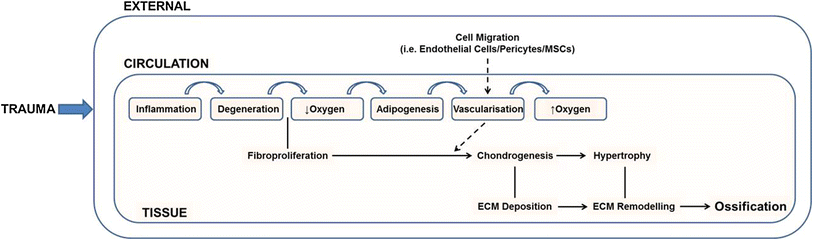
“Tissue damage leads to the infiltration of immunological cells (monocytes, neutrophils and leukocytes) through the local vasculature. Resulting fibro-proliferation of an as yet unknown cell population is accompanied by hypoxia and the generation of brown adipose tissue at the site of damage. The presence of adipose tissue is hypothesised to lower the local oxygen tension leading to the establishment of a chondrogenic environment. Neovascularisation accompanies chondrogenesis and provides an avenue through which systemic cell types (endothelial cells, pericytes etc.,) may enter the injury site, and potentially contributed to osteochondrogenic differentiation. A subsequent increase in local oxygen tension promotes chondrocyte maturation and hypertrophy. The collagenous matrix deposited by these cells is then remodelled and ossified to form endochondral bone”<-If we induce such factors in the bone we can create new growth plates in there too.

“MSCs have frequently been shown to form endochondral bone when cultured under appropriate conditions (e.g. under hypoxia and/or in the presence of TGF-β)”

“MSCs may also contribute to chondrocyte hypertrophy and the progression of HO via their immunomodulatory effects, primarily through the production of anti-inflammatory cytokines and nitric oxide (NO)”

Several cell types are listed that are capable of heterotopic ossification are likely present in bone.

“Bone marrow HSC side population    Lin−/Sca-1+/cKit+/CD45+”

“Mesenchymal precursor cell (MPC)    CD44+/CD49e+/CD73+/CD90+/CD105+”

“MSC    CD73+/CD90+/CD105+”

“cells presenting the glutamate transporter GLAST were found to contribute to the formation of ectopic bone, and that these GLAST+ cells appeared to be distinct from the Tie2+ population”

” a significant upregulation in transcriptional activity in key osteogenesis-related genes (ALPL, BMP-2, BMP-3, COL2A1, COLL10A1, COL11A1, COMP, CSF2, CSF3, MMP8, MMP9, SMAD1 and VEGFA) in patients that developed HO compared to those who did not.”

Influence of transcutaneous electrical stimulation on heterotopic ossification: an experimental study in Wistar rats.

“Heterotopic ossification (HO) is a metaplastic biological process in which there is newly formed bone in soft tissues, resulting in joint mobility deficit and pain. Different treatment modalities have been tried to prevent HO development, but there is no consensus on a therapeutic approach. Since electrical stimulation is a widely used resource in physiotherapy practice to stimulate joint mobility, with analgesic and anti-inflammatory effects, its usefulness for HO treatment was investigated. We aimed to identify the influence of electrical stimulation on induced HO in Wistar rats. Thirty-six male rats (350-390 g) were used, and all animals were anesthetized for blood sampling before HO induction, to quantify the serum alkaline phosphatase. HO induction was performed by bone marrow implantation in both quadriceps of the animals, which were then divided into 3 groups: control (CG), transcutaneous electrical nerve stimulation (TENS) group (TG), and functional electrical stimulation (FES) group (FG) with 12 rats each. All animals were anesthetized and electrically stimulated twice per week, for 35 days from induction day. After this period, another blood sample was collected and quadriceps muscles were bilaterally removed for histological and calcium analysis and the rats were killed. Calcium levels in muscles showed significantly lower results when comparing TG and FG (P<0.001) and between TG and CG (P<0.001). Qualitative histological analyses confirmed 100% HO in FG and CG, while in TG the HO was detected in 54.5% of the animals. The effects of the muscle contractions caused by FES increased HO, while anti-inflammatory effects of TENS reduced HO.”

“The formation of heterotopic bone may be due to muscle trauma (myositis ossificans). It is common in people who have undergone total hip arthroplasty , those with spinal cord injuries, and victims of head trauma, all of which often lead to long periods of immobilization of the affected limbs.”

“skeletal muscle serves as a physical safeguard for the other organs and is anatomically located immediately beneath the skin, so it represents the most damaged organ in the body. Although skeletal muscle is characterized by the presence of fatty and connective tissues that originated from nonmyogenic mesenchymal progenitors, those progenitors were initially identified in BM”

“Muscle contraction occurs by the deposition of calcium in muscle tissue, and this stimulates the sliding of actin and myosin myofibrils, which characterizes the contractile process”

“electrical stimulation helps the deposition of calcium, causes changes in oxygen content and pH, stimulates expression of growth factors, and recruits help in osteoblast migration and secretion of extracellular matrix (ECM), leading to bone formation.”

“Mechanotransduction refers to the process by which the body converts a mechanical stimulus into a cellular response”

Cholesterol accumulation caused by low density lipoprotein receptor deficiency or a cholesterol-rich diet results in ectopic bone formation during experimental osteoarthritis.

“Osteoarthritis (OA) is associated with the metabolic syndrome, however the underlying mechanisms remain unclear. We investigated whether low density lipoprotein (LDL) accumulation leads to increased LDL uptake by synovial macrophages and affects synovial activation, cartilage destruction and enthesophyte/osteophyte formation during experimental OA in mice.

LDL receptor deficient (LDLr−/−) mice and wild type (WT) controls received a cholesterol-rich or control diet for 120 days. Experimental OA was induced by intra-articular injection of collagenase twelve weeks after start of the diet. OA knee joints and synovial wash-outs were analyzed for OA-related changes. Murine bone marrow derived macrophages were stimulated with oxidized LDL (oxLDL), whereupon growth factor presence and gene expression were analyzed.

A cholesterol-rich diet increased apolipoprotein B (ApoB) accumulation in synovial macrophages. Although increased LDL levels did not enhance thickening of the synovial lining, S100A8 expression within macrophages was increased in WT mice after receiving a cholesterol-rich diet, reflecting an elevated activation status. Both a cholesterol-rich diet and LDLr deficiency had no effect on cartilage damage; in contrast, ectopic bone formation was increased within joint ligaments (fold increase 6.7 and 6.1, respectively). Moreover, increased osteophyte size was found at the margins of the tibial plateau (4.4 fold increase after a cholesterol-rich diet and 5.3 fold increase in LDLr−/− mice). Synovial wash-outs of LDLr−/− mice and supernatants of macrophages stimulated with oxLDL led to increased transforming growth factor-beta (TGF-β) signaling compared to controls.

LDL accumulation within synovial lining cells leads to increased activation of synovium and osteophyte formation in experimental OA. OxLDL uptake by macrophages activates growth factors of the TGF-superfamily.”

“multiple injections of members of the TGF-super family, such as TGF-β or BMP-2, directly into the knee joint of the mouse caused abundant enthesophyte/osteophyte formation”

Attraction Is Not A Choice. Accept It.

It is the year 2015 but sometimes the best content to explain one’s frustrations in life was already discussed and worked out years before. Let’s rewind time. In 2001, the underground Pick-Up-Artist community was just starting out in online forums and discussion boards. The internet was the tool that allowed many sub-cultures to develop from people of similar interests, passions, and obsessions to come together to discuss the issues that concerned them the most.

Trying to meet, and attract beautiful women to date, have sex with, and marry has been a desire and focus for young men of our species since time began. Young men has always desired to find some type of magic spell or potion to get attractive girls to like them as much as they like the girls. When two females get together, almost always inevitably the conversation lead to talking about dating, sex and relationships. Relationships are complicate, just like the desires, needs, and hangups in people. This is why humans find inter-dynamic drama between humans so interesting. Psychology is well known as one of the most common college majors because people are so fascinated with themselves and how their own minds work. We are the subject of most of our fascination, if not obsessions. Millions of books have been written about the human experience in the areas of sociology, ethnic studies, memoirs, and psychology. It is a very selfish behavior but that is what we are made of.

Drama is what makes the boredom of our everyday lives go away. The baby-internet allowed for this ancient practice of attracting a “hot” female to be focused at a higher intensity until it caused a complete global phenomena. Young men today now know about the art of picking up girls because the internet has been so effective in getting messages and information to spread to all the people in the world.

Finding the best mate possible is obviously one of the most critical and resource intensive endeavors one will take in life, if not the most critical since we are just animals. We are born, we breathe, we eat, we defecate, we look for a mate to reproduce with to pass on our genes (unconsciously ala The Selfish Gene), we have sex, we have offspring, we raise our offspring to an age which they can fend for themselves and have offspring of their own, we grow old, we die. As males of our species, we have hundreds of millions of sperm at any one moment compared to the fertilizing female egg, which is only a few hundred throughout her lifetime. From just a biological resource point of view, the females are the bottle neck in our species, from turning into a virus that just overruns the entire planet. Females will always do the choosing of which male mating partner is worthy of having sex with. Accept that as a normal, healthy, horny, sex-desiring heterosexual male, you will never have the type of power as a female when it comes to accessibility for a reproductive partner.

What is well known is that there is a minority group of men, whether 1% or 10% , which will have more sexual opportunities and chances than the rest (99% or 90%). What makes these men different from the rest of the men who don’t get as many chances to have reproductive success is that they are considered more valuable in females eyes than the others. If you lines up all 3.5 Billion men in a row and let the other 3.5 billion females choose, obviously any person looking at the data of female selection will notice some obvious patterns.

The most obvious of all these patterns is that females on average, want their mating male partners to be bigger aka taller than them, and more than that, taller than the average height of the males in their local tribe. For the longest time, size in terms of height or stature was the most dominant factor when it comes to what females find attractive. We know from epidemiologists that the average height of a nation is an extremely accurate and good predictor of the quality of life in one’s country. There are exceptions, (like Bosnia, Senegal and South Sudan) but the general principle is that taller people on average indicate that they have better genes and fitness, from million years of evolutionary development.

When humans moved further away from the monkeys , turning from paleolithic/hunter-gatherer to farmer/grower and began to call themselves “civilized” the concept of 1) money, 2) land ownership, and 3) property (number of cattle, camels, pigs)  became the 2nd concept of value which women started to believe in. Being wealthy and having land and resources became the 2nd core factor of what women found valuable since we have become “civilized”.

However, civilization has only been going on for 10,000 years so far. Evolution and what we are hard-wired to behave has been around for 1 million years. As animals, the female sex has the brain instinctually program to desire men who are bigger/taller. Taller men on average have higher levels of testosterone levels, and exhibit slightly higher levels of violent/dominant tendencies and behavior. In any prehistoric tribe, there may have been only 50 individuals.  Out of the 50, maybe only 5-7 females are in their reproductive years. Based on the higher birth rate of male/female, there would be around 6-9 men for the 5-7 females. This means that certain men will fail to pass on their genes. Back in the prehistoric age, you can not show off your bank account to impressive women. As a young, virile, horny man you only have a few ways. You show off your strength, your courage, or your dominance. Being clever, witty, or with a good sense of humor helps on occasion in getting 1 girl out of the 7 to find a slightly weaker men “cute”  or “adorable” and she might choose him, but any level of jealousy from the larger men who are more violent means the smaller guy who might be less capable gets killed over the larger guys wanting to take more women for themselves, ala harem style.

Dominance among men in tribes is most easily established through greater height. It can also be established from being wider in torso, with broad shoulders, large arms, and large hands. However, physiologically speaking, all boys fill out as they turn into older real men. This means that the factor of bulk/width is negated. You can’t exercise your way to longer bones or taller height. Almost all men can over time exercise to become wider and more muscular. This means that no matter how much the shorter man tries to exercise to make themselves wider aka “bigger”, their effort can be negated by the taller male who puts in some effort and makes them just as wide as the shorter men. Based on proportions alone (shoulder bone size), the taller men putting in the same level of effort can become wider (on average) than the shorter man.

As it was famously claimed by the UK based program Secrets of the Sexes – Episode 2: Attraction (Documentary)  who looked at what attracted women to men, one of the researchers just said “Just be tall. Don’t go to the gym, don’t exercise. Just be tall“. This reveals something which will aggravate all men. As men we are proactive and take a lot of action and initiative in what we want. When we want something, most of us will do the work to reach our goals. We are strivers.  We are willing to spend hours in the gym to work our bodies to look better in front of the mirror, but there is nothing that we can do to get taller. This is what puts the short guy into a bind. We are stuck in a position which we can’t control.

Ultimately, I go back to the most famous phrase ever used in the original PUA community. Attraction is not a choice– David DeAngelo.

Basically, women can not choose to mate/breed with the shorter men since their brains were not developed to think that way. There will be exceptions to any rule, with a minority of women being okay with mating with someone shorter than them, but the general rule is that for men, being taller is better. There are some disadvantages of being tall like not being able to fit in airplane seats, not finding long enough pants, etc. but those problems are more nuisances which are the result of “civilization”. If you really asked tall men if they are willing to trade their tall height for having a more convenient life, most would refuse since they understand at some level that they are “better” than their shorter peers. They can be extremely ignorant, uneducated, and crass, but they will still find great confidence and happiness in being taller than their more successful and rich male peers. That is their form of identity which they can use to ride out the struggle and disappointment that each human has to deal with in life. For some men, being taller than others can be the most important factor in life since they have nothing else to be proud of.

Have anyone ever noticed why does it seem like the most obnoxious vocal racists always seem to be (stereotypically) southern, hill-billy, red-neck hicks who are not well educated and don’t have a lot of money? – The real answer is psychological which stems from a ego defense mechanism known as compensation. Because being “white” is the only thing that they have that they can put their identity to to make themselves feel better about themselves. They may be poor, uneducated, uncouth, and crass, but they are “white”. The white red-neck can look at his more well-off rich, educated black neighbors but still believe that they are better than their neighbor because they are “white”. No matter what happens, you can’t take their identity, their “whiteness” away. Eventually the issue of “race” becomes what they decide to focus their energy, time, and effort on. They want to preserve what they think is their primary source of identity. The KKK could be a reaction response to the fact that the old black slaves have started to do better in life than the poor whites, who felt their sense of superiority slipping. The KKK want to keep the black american population down at the bottom, to validate their own self-worth. This is exactly the same as height. Once you are white or “tall”, that doesn’t go away no matter how badly you screw up your life and how many poor choices and decisions you make. You will always have the fact that you are intrinsically white/tall to fall back upon psychologically to sooth any damaged ego. The human mind is really ingenious in that way.

I do frequent the reddit.com/r/short sub-group and a recent thread (available here) does have one women just being probably as honest with her feelings as possible. A responder would write to her and explain in words why she is trying to absolve herself of being accountable but this is what this guy doesn’t get. Words are useless. Being angry at a women for bashing and talking shit about short men does nothing except make her resolve and opinions stronger. Trying to convince a women by talking with them that they are being “illogical” or “not rational” or “not make any sense” doesn’t work.

Attraction 1Attraction 2Attraction 3

What these type of women are really saying is this message…

I know myself, and I know what I like. I don’t give a fuck about what you say, and I don’t care what you think (maybe I used to when I was younger and more naive and concerned about the opinions of other people but not anymore) since I am going to live my life as I want to. Nothing you say or write out into words is going to make me change my mind or what I have felt most of my life. Maybe this automatic reaction and feeling I have is not completely organic but manufactured from hollywood & media marketing but I just can’t help it. Deal with It.

When the women than adds something like “my last boyfriend was 6′ 4” this is their way of saying to future men who wish to be her potential future romantic partner that they literally don’t measure up to what the girl expects in a guy, from her references in her past experience. This is also a way for the women, who could be very young, nubile, extremely attractive, and highly prized to filter out men. Height is probably the best, most effective way to filter out a large portion of men out of their selection pool. (remember, having too many choices is a bad thing. Having less choices makes it easier). With anything else, any other factor, like education level, level of hygiene, fashion sense, income level, ownership of property, the men the female previously rejected can take their rejection and use their bitterness/anger as fuel to better themselves in that area of life and then come back to the girl to prove her wrong and then show off their new improved life. The height filter is amazingly effective in making sure that the millions of men who would want to mate with the attractive female can never come back into the picture (aka potential mating partner in the selection process/pool) since they can’t change that area of their life. 

Half of the time, the girl can be a real bitch and use intentionally to inflict emotional daggers at men that to hurt/piss off men who are shorter than their arbitrary height requirements, but for the other half, it is a way to let go of certain men who are chasing after her nonstop by giving an excuse that the guy can not back from aka letting them down easily (instead of saying to the guy’s face” I am just not attracted to you”). Height requirements is an effective rule of thumb to follow in making a mate selection choice. Some men do it too, but not to the same level or degree.

I may not have been part of the PUA scene which had been big maybe a decade ago, but the old David DeAngelo phrase “Attraction is not a choice” is the most succinct phrase to explain females preference for taller men than anything I could have thought of. For short men and brothers out there, we are at an advantage being given the short end of the stick in terms of genetics, but that is okay since height is the not only factor that effects how women will look at us. There are things we can do. Few of us will never face rejection. Almost no men will get every single girl he wants.

Sometimes no matter how much we do accomplish and make in terms of money, we still can’t win against the taller guy, because we are just animals acting out our neurological patterns which have been pre-programmed into our heads from birth. Shorter men have to try harder, and that is the way life operates. Stop complaining. Accept it.

So is there nothing we can do as men who have it harder than others? What can we do? – Become Mister Right. Think Different.

New Yokota/Zhang patent and New potential Height Increase device

The first Yokota/Zhang patent doesn’t provide that much insight but the second study provides a potential device that gives an alternative method of bone lengthening.  The study is confusing so I’d appreciate any second opinions.

Mechanical bone loading to reduce arthritic pain

“mechanical loading of the knee to downregulate nerve growth factor beta (NGFb), which is believed to be a major cause of pain in arthritic joints.”

“the joint loading may be performed at between 0.5 N and IO N, preferably at 1 N, and the fluid flow may be performed at, for example, 5 dyn/cm2. In one aspect, the results described herein suggest that gentle knee loading analogous to massage therapy is beneficial not only to enhancing bone formation and accelerating wound healing but also to preventing NGFP-induced nerve growth and pain perception in cartilage.”

” it has been recently suggested that a consequence of compressive loading is production of hydrostatic pressure as well as fluid flow to cartilage.”<-Hydrostatic pressure in bone could be a key to induce neo-growth plates.

“In osteoarthritis, chondrocytes are known to be exposed to flow shear presumably due primarily to synovial fluid and high amplitude of fluid flow reproduces the hallmarks of osteoarthritis in vitro. The frequency of 5 Hz might not be representative of massage to humans by hands but more pertinent to those by vibrator for foot massage. In another embodiment as described herein, the levels of loading in vivo have been optimized herein to produce anabolic response in the bone and cartilage.”

“Cyclic compression was applied to the mouse right knee using a custom-made piezoelectric loading device following reported methods. The mouse was mask-anesthetized using 2% isoflurane, and lateral loads to the knee were applied for 5 min at 5 Hz with a peak-to-peak force of 1 and 3 N.”

“Knee loading at 1 N but not at 3 N decreased the phosphorylation level of p38 (p- p38) in the cartilage”

“it was discovered herein that joint loading, illustratively, of a knee at 1 N, reduced mRNA levels of NGF and its low affinity receptor, p75 in cartilage and subchondral bone. Additionally, it was discovered that, in cartilage, joint loading, illustratively, of a knee at 1 N, reduced the phosphorylation level of p38 MAPK (p38-p) and activity of Racl GTPase. Additionally, it was discovered that, fluid flow at, for example, 5 and 10 dyn/cm2, reduced mRNA levels of NGFP and p75{neuron related gene} in C28/I2 human chondrocytes.”

“Nerves are known to exist in trabecular bone of the epiphysis, and are believed to grow in response to NGF{it’s possible that the growth of these nerves could affect height growth} . Although healthy cartilage is not believed to consist of vascular or neural tissues, arthritic cartilage is believed to lose its ability to remain aneural and avascular. It has been reported that dynamic loading to cartilage evokes stimulation of matrix synthesis{Could enough matrix synthesis increase height}, as well as regulation of enzymatic activities of matrix metalloproteinases. In addition to the reported regulatory role in matrix homeostasis, in one embodiment of the invention herein the results herein point out that mechanical stimuli at moderate amplitudes regulate transcription of NGF and its receptor in cartilage and chondrocytes.”

“both gentle mechanical loading and salubrinal share the Racl -mediated signaling pathway for – mRNA expression of NGF. In myocardial remodeling, it is reported that deficiency of Racl reduces stress to the endoplasmic reticulum. Since the elevated phosphorylation level of eIF2ot by salubrinal also suppresses stress to the endoplasmic reticulum, the observed linkage of salubrinal to Racl appears to be consistent with downregulation of NGF .”  Note that an increase in Rac1 expression was linked to an increase in chondrogenic marker genes.  This suggests that gentle mechanical loading may not be best for inducing exogenic bone mesenchymal chondrogenesis(neo-growth plate) and more extreme load may be needed.

This next paper is listed at the end as a related method:

System and Method for Joint Restoration by Extracapsular Means

“A system and method for joint restoration by extracapsular means includes an actuator operable to apply a force to a portion of a bone to effect a change in the joint space geometry. One embodiment of the system includes an actuator operable to apply a cyclic loading to subchondral bone of a femur, wherein loads of a predetermined magnitude are alternately applied and released. Between periods of cyclic loading, rest periods are provided where no load is applied. Over time, the femoral joint surface is remodeled in accordance with the location, direction, magnitude, and frequency of the loading.”

“Osteocytes sense the increased strain environment, and respond accordingly. When bone tissue is damaged as in the micro-cracking that occurs in the presence of excessive stress or strain, osteoclasts remove the necrotic osteocytes. This activates growth factors held in the osteocytes, such as bone morphogenic protein (BMP) or transforming growth factor (TGF) beta 1.”

At sufficiently high stress levels, deformation will occur with time, leading to “creep-failure”, or deformation that does not recover once the load is removed. The creep response of bone is significantly larger in younger bones as compared to older bones.”

“Similarly, when bone is measured on a large scale, it exhibits very classical (single elastic constant) behavior, but when the scale is reduced down to the trabecular level or below, the behavior becomes much more viscoelastic in nature, and tends to follow a Cosserat (multiple elastic constants) curve. This allows for much higher than predicted (by the classical approach) strain limits before failure occurs. In order for bone formation to be initiated, the magnitude of mechanical strain of the bone must surpass some threshold. Therefore, for restorative remodeling to occur, this threshold must be exceeded, while not causing failure”

” Trabecular bone can be found inside the condylar region of a femur, and alongside the cortical bone. The trabecular bone transfers the loads from the subchondral bone to the cortical bone, and the subchondral bone is that bone which supports the articular regions of the joint surfaces. Each different type of bone may undergo different deformation mechanisms. For example, cortical bone in particular exhibits “cement line slippage” between the osteons, which accounts for an ISF type (almost viscoelastic) behavior when applied to localized regions. This is typically considered the reason bone is a “tough, non-brittle” material. It is also a response that is dependent on the direction of the applied load-a result of the oriented structure of bone”

” a more rapid load onset results in a more rapid bone change. Conversely, a slower application of a load results in a smaller change, but thickening of the bone to handle the higher stress. Thus, a static load may build more dense bone, but a dynamic load may cause greater overall deformation of the bone.”<-Thus we should probably try to make sure that the clamping is the least static possible.  Constantly increasing clamping force is one way.

” the system components described herein can take advantage of the properties of bone that allow the bone to deform under constant stress via a “creep” or plastic deformation mechanism. The system components can push on the underside—e.g., the trabecular side—of the deformed subchondral bone, forcing a change of surface dimension on the joint surface (opposing) side of the subchondral bone. The subchondral bone may be softened to facilitate the reshaping process by drilling, cracking, laser etching, ultrasonically, biologically or by chemically treating the subchondral or the underlying cancellous bone, or by any other means in conjunction with the use of the system of the present invention, either to facilitate the initial movement, or during subsequent treatments. The devices according to the present invention may be permanently implanted in the bone, or can be removed after the desired results are obtained.”<-Can we induce a similar plastic deformation mechanism but in order to increase height.

“the term “static load” as used herein does not imply that a load that can or will never change; rather, the term refers to a load that is either constant for some period of time, or a load that is applied so slowly as to approximate a constant load. This is distinguished from a dynamic load, which may be a single load applied very quickly, or may be a cyclic load of constant amplitudes and/or frequency, or one of varying amplitudes and/or frequency.”<-So we may want to rapidly clamp then unclamp in order to get a single load applied rapidly.

the present invention has applications where shortening or lengthening of bone is desired to restore a normal joint geometry, and little or no joint surface remodeling is required. For example, a system including piezoelectric actuators can be applied to one or both sides of a joint to correct an angular displacement. ”

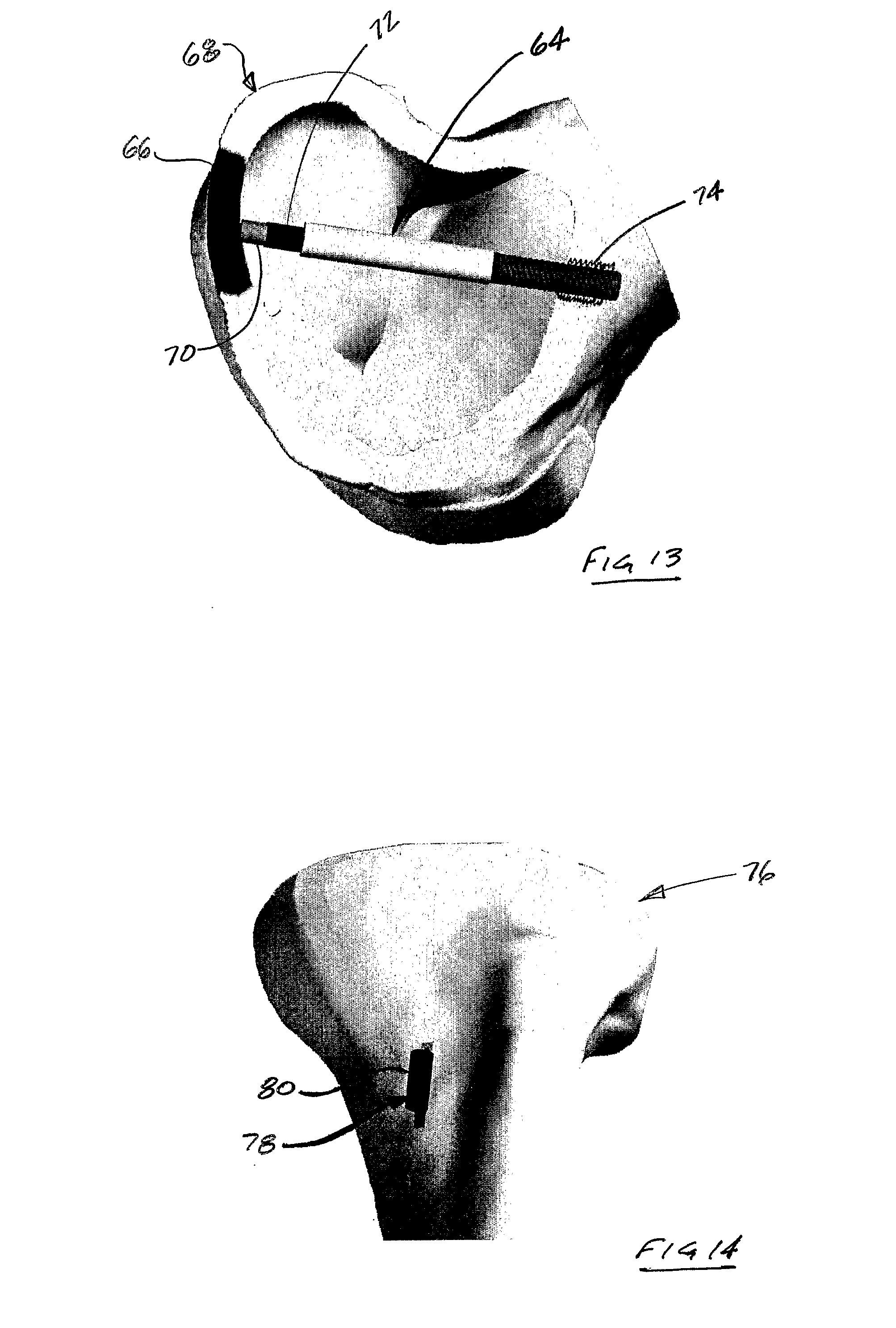
” For example FIG. 14 shows a tibia 76 having a system 78 in accordance with the present invention attached to it. The system 78 includes a linear actuator 80, which can be used to apply a static load, a cyclic load, or some combination thereof to the tibia 76. When a system, such as the system 78, includes two or more such actuators, one can be inserted in the cortical region and over time “grow” one side—e.g., the lateral side—and another can be inserted on the medial side to contract the bone. This effects an angular change at the joint line, and restores a more appropriate mechanical joint alignment.”<-For our purposes, we’d just set the two actuators to length bone.

ActuatorBone


FIG. 14 shows a system in accordance with another embodiment of the present invention, the system including a linear piezoelectric actuator to increase the length of a tibia;

actuators to increase tibia length

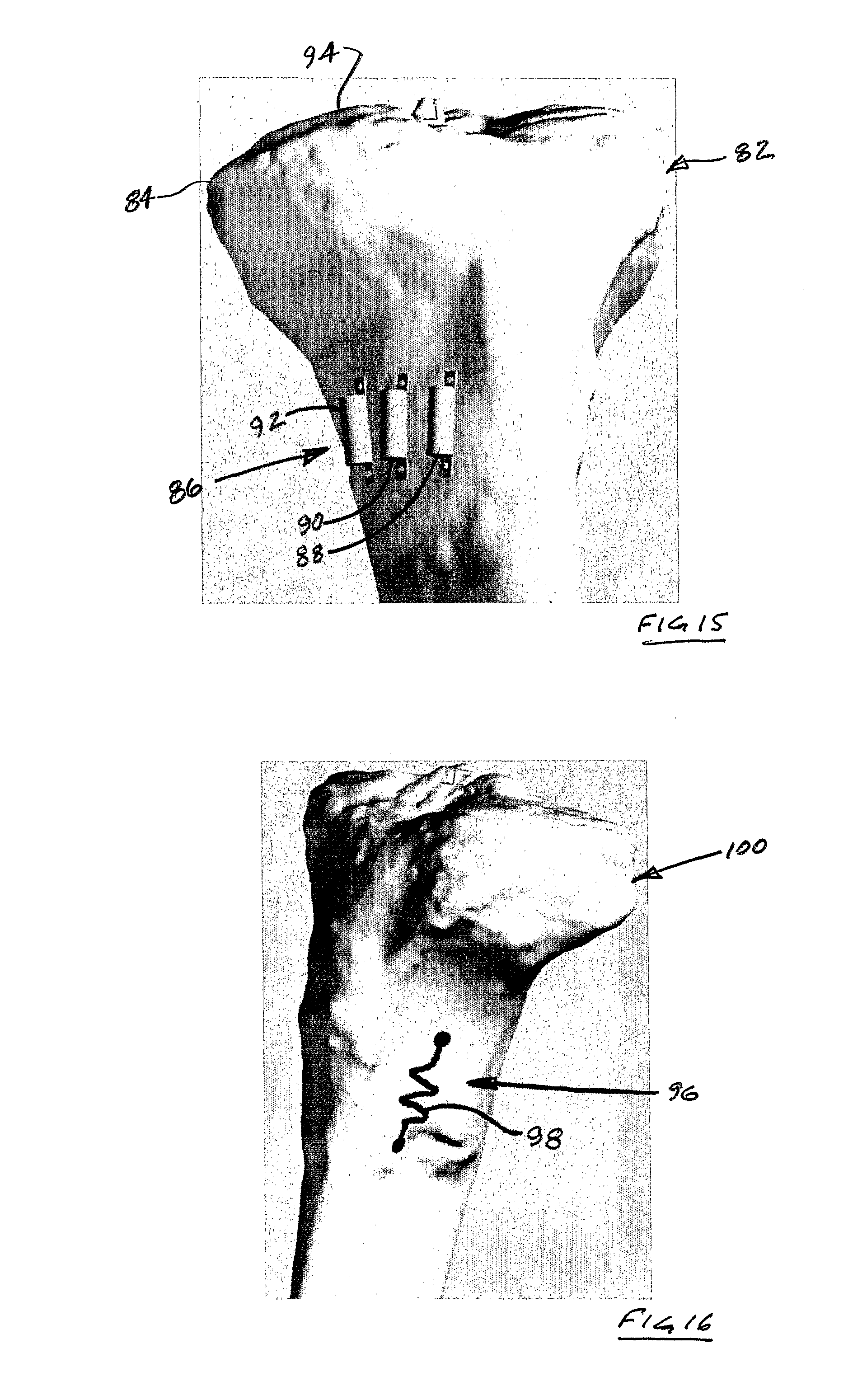
“FIG. 15 shows a system in accordance with another embodiment of the present invention, the system including a plurality of linear piezoelectric actuators to increase the length of a tibia as an alternative to an osteotomy”

Nowhere does it state that this would be limited to individuals with opten growth plates and in fact there are no visible growth plates on this bone.

This is an example of a linear actuator:

Note that I have no idea whether this actuator is sufficient in any way to provide a lengthening force on the bone.  It is just an example.

Note that the linear actuator is used in addition to the invention.  It seems that MIchael has considered using a linear actuator for a height increase device before.

” a swelling memory polymer can be used to provide expansion in a predetermined direction to a predetermined volume, thereby exerting pressure against the containing tissues. Shape memory alloys, such as Nitinol (Ni-TI) can also be used. Such alloys, commonly used in bone staples, can be formed as “muscle wires” and inserted into the cortical bone, where they lengthen in response to outside stimuli.”

“A shape memory alloy could also be formed as a spring, and configured to lengthen (or contract) upon application of an electrical current, for example, an 80 mA current at 20C”

This is how he describes inserting the device into the bone:

“creating an aperture[opening] in the bone proximate the articular surface, thereby making accessible an internal portion of the bone generally opposite the articular surface;
accessing the internal portion of the bone through the aperture in the bone; and
applying the at least one loading condition to the internal portion of the bone, thereby facilitating structural changes in the bone supporting the articular surface”

Then he describes inserting the device into the bone:

“wherein the at least one loading condition is applied to the bone with a joint restoration system including a housing having an aperture therethrough, and an elongate member configured for insertion into the aperture in the housing, the method further comprising attaching the housing to the bone such that the aperture in the housing is generally aligned with the aperture in the bone, and
wherein applying the at least one loading condition to the internal portion of the bone includes inserting the elongate member through the apertures such that the elongate member contacts the internal portion of the bone and applies a force thereto.”

“the joint restoration system further including a compression member configured to cooperate with the housing to apply a force to the elongate member, the method further comprising inserting the compression member into the housing such that it contacts the elongate member and imparts a force thereto, thereby facilitating the application of the force to the internal portion of the bone by the elongate member.”

Here he describes the bone lengthening method:

“The method of claim 1, wherein the at least one loading condition is applied to an external portion of the bone such that the certain structural change includes at least one of an increase in a length of the bone or a decrease in a length of the bone.”

” The method of claim 6, wherein the at least one loading condition is applied to the bone with a joint restoration system including an electromechanical actuator, the method further comprising:
attaching the actuator to the external portion of the bone; and operating the actuator to apply the at least one loading condition to the external portion of the bone.”

” piezoelectric devices will often have displacements in the 100’s of micrometers, which will not provide enough travel to effect desired bone growth in many patients. To overcome this limitation, the actuator is provided with a secondary movement mechanism. The secondary mechanism is configured to provide a ratcheting, positive lock that outwardly extends the extendable component by some discrete amount. This allows the application of a stepwise series of 100 micrometer piezoelectric adjustments, until a total bone displacement of 1-5 mm displacement is achieved.”

The paper A LINEAR ACTUATED TORSIONAL DEVICE TO REPLICATE CLINICALLY RELEVANT SPIRAL FRACTURES IN LONG BONES, describes one potential way a linear actuator can be applied to bone.  Although the device therein does not seem to be applied along the longitudinal axis as suggested by the patent but rather on the top and bottom of the bone.

This paper describes the use of a linear actuator to move a nail in distraction osteogenesis.  Note that in the patent above it specifically states there there is no osteomy required for this device to lengthen bone.