There is another underground group of individuals these days who have developed a methodical approach to tracking and measuring nearly everything they do. These are the Biohackers, who have developed the name “quantified self movement”. For them, the objective is to find out ways to manipulate and get the body and the mind to be at its optimum state using what science and the data states.
The article of the San Francisco Gate is below. Again, I will highlight the parts which I felt is important or relevant to what we are doing with this site.
‘Biohackers’ mining their own bodies’ data
Glen Martin
Updated 12:09 p.m., Thursday, June 28, 2012
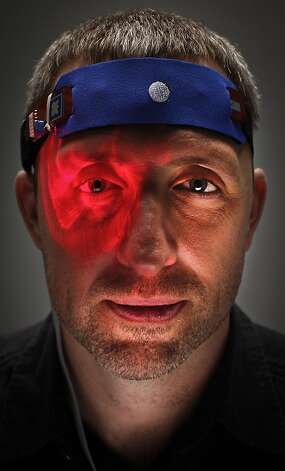
Dave Asprey, seen on Wednesday, June 6, 2012 in San Francisco, Calif., is considered a guru of the biohacking movement. Asprey has helped develop a prototype HEG (Hemoencephalography ) neurofeedback device that helps train the brain, and he also uses a soliton laser which helps with healing. Photo: Russell Yip, The Chronicle / SF
(06-28) 12:07 PDT SAN FRANCISCO — Dave Asprey’s morning regimen will seem deeply unfamiliar to anyone accustomed to starting the day with a cup of sludge from the Mr. Coffee, a Pop-Tart and a self-administered slap across the face in the bathroom mirror.
The first thing Asprey does is check his Zeo, a small biometric device that monitors sleep patterns. He’s looking for a balance between REM sleep and deep sleep: REM sleep, Asprey says, rejuvenates the brain, while deep sleep revives the body.
“What I don’t want to see is a lot of light sleep or waking episodes,” he says. “That would require adjustments to my schedule.”
After that, he gulps some compounds: L-tyrosine, an amino acid that Asprey says improves mood and thyroid function; vitamin D3, which proponents claim tunes the immune system and promotes bone density; vitamin K1, considered a toner for the cardiovascular system; and piracetam, a “smart” drug purported to raise oxygen levels in the brain.
Then it’s off to the kitchen for a cup of coffee. Not just any old mud, though. Asprey drinks a special decoction that has been purged of mycotoxins. And he mixes it with big dollops of coconut oil and butter from grass-fed cows.
“That’s my entire breakfast,” says Asprey. “It puts my body in full burn mode – if necessary, I have enough energy to go for eight hours.”
Certainly, Asprey needs that energy. The 42-year-old former Bay Area resident sleeps only five hours nightly, devoting his abundant waking time to book and Web projects, whirlwind speaking tours, regular travels to Silicon Valley and helping his wife raise their two young kids.
After his morning routine, he recharges his body with a refined “Paleo” diet that includes large quantities of grass-fed meat, some veggies “and a ton of butter.” Every 10 days, he exercises 15 minutes with special barbells on a vibrating plate that jerks up and down 30 times a second.
“That tells your body, ‘It’s time to grow’ ” muscle, he says. When he feels stressed, he consults his emWave2, a device that allows him to monitor and consciously change his heart rate via biofeedback.
For Asprey, life isn’t something to accommodate, negotiate or endure. He’s out to optimize it.
Nothing new in that, of course: In the past six decades, self-help gurus from Jack LaLanne to Werner Erhardt and Tony Robbins have coached, cajoled or bullied us into being more fit, successful and well-adjusted. But their approaches have focused on mere exercise or attitude. Asprey and a growing number of like-minded peers are taking things down to the molecular level. They’re trying to “biohack” the human body – tweak its biological processes to make it run at optimum efficiency.
The Quantified Self movement, as it’s called, incorporates various approaches; diet is an element, as are exercise, sleeping habits and the ingestion of arcane supplements. But the bedrock factors are meticulous measurement and data collection. Devotees use biometric devices to monitor brain activity, respiration rates, bloodstream oxygen levels, heart rate and blood pressure, physical activity – even blood flow to the brain.
Collection data
Periodically, they submit to blood tests – not just for the lipids and fasting glucose standard for most health checkups, but for expanded panels that examine up to 100 variables. All these data are archived – often on mobile apps – and quantified, as it were, to provide finely textured metabolic portraits.
“We’re now capturing more data on what it means to be a human being than at any time in history,” says Asprey, “and what we’re learning isn’t just telling is what we are. It’s telling us what we can be.”
The Quantified Self movement is just starting to come up on the scope of the medical community, and few physicians have written or spoken on it; none at UCSF Medical Center, for example, would comment for this piece. One of the few medical authorities who have addressed the trend is Dr. Ravi Bhatia, a professor of hematology and the director of the stem cell and leukemia program at the City of Hope National Medical Center in Duarte (Los Angeles County).
Bhatia says the detailed data collected by a given Quantified Selfer may be of genuine medical utility – but only for that specific individual.
“In order to draw broad conclusions, it’s essential to conduct studies and collect and verify data in a clinical setting,” says Bhatia. “Only then can you scientifically analyze the data and – ultimately – reach consensus for treatment. I’m not saying there’s no individual benefit to this monitoring. I’m just advocating clinical trials.”
The supplements
Bhatia also sees some risk in the Quantified Self community’s advocacy of exotic supplements.
“If someone is on a course of medical treatment, there’s always the risk of undesirable interactions,” he says. “(The supplements) can activate pathways that affect how prescribed medications are metabolized. On the whole, I understand the motivation. But it’s like everything else. It’s best to avoid dogmatism – to be reasonable and avoid extremes.”
Asprey, for his part, feels he is more of what he can be than he used to be. As a prime mover of Quantified Self, he has been hacking his body for several years. He claims to have jacked up his IQ by 40 points and supercharged his health.
“It’s a lot like making a map, and then using the map to determine where you want to go,” he observes. “For example, we’re using a little prototype unit that measures cerebral blood flow – it has a headband that shows how much blood is getting to the front of the brain, the prefrontal cortex.
“The headband shines infrared light into the skull. Red blood cells bounce the light back, and you can use that to monitor blood flow on a screen. Then you use standard biofeedback techniques to maximize the flow. You thus increase your ability to rationally analyze data and situations because the prefrontal cortex is where intellectual processes occur.”
If the rigorous diets, the plethora of gizmos and the constant monitoring of bodily functions sound like a lot of work, Asprey acknowledges it is.
“Self-motivation, obviously, is hard,” he says. “One way around that is to tweak the way you collect data. We’re working on apps that embed gaming techniques into the monitoring process. If it seems like fun, it’s easier for people to stick with it.”
The reasons underlying Quantified Self participation are varied. A desire for longevity is certainly a motivation for many, but so is the cutthroat economic climate – particularly in Northern California, the cradle of biohacking. Middle-aged IT professionals feel vulnerable, says Asprey.
“Silicon Valley chews people up young and spits them out,” he observes. “But lots of people feel they still want to contribute – and they’re looking for ways to compete with younger workers. Quantified Self helps them stay in the game.”
Primary motivator
The primary motivator, however, may be the simple desire to exercise control – exquisite, exact control – over one’s own body. Quantified Self isn’t a precisely scientific method, but it embeds science into the human potential realm to an unprecedented degree, says Brian Kerr, an adherent who went from being an unhappy, obese teen to a trim, successful marketing consultant through self-monitoring and a Paleo-style diet.
“A lot of people involved in this have endured a great deal of pain in terms of self-image,” Kerr observes. “Being seriously overweight deeply affects your outlook. So when you find something that works, that allows you to permanently drop the weight, that makes you feel healthy and aware and engaged, it’s a fantastic feeling. It’s something you want to share.”
And share Quantified Selfers do, with a vengeance. They blithely swap intimate medical data with one another in their quest for the ideal biohack.
There may be a certain inevitability to the biohacking urge, says Gaymon Bennett, a bioethicist with Center for Theology and the Natural Sciences in Berkeley.
The hacking of digital technology has become a common skill, he says.
“There is this expectation that the biohack – monitoring metabolic processes and influencing them through diet, supplement consumption and other practices – will yield results similar to a computer hack. You get this sense of a hunger to accelerate, a feeling that if (biohackers) could truly bioengineer the human organism, they would.”
Quantified Self is not a protocol recognized by the medical community. Concerns have been raised about the way some users apply the data that is collected and shared:
Me: Ok, so I realize I am being a little biased posting this article about Asprey again but I am very impressed and interested in the movement of biohackers. In the previous Body Hack post, I was talking about these groups of researchers who are doing synthetic biology, which is where people literally are building living organisms using individual components and parts. With the “Quantified Self Movement”, people are now trying to hack their bodies so that the body can be at its optimum. The are monitoring and checking for as many variable as possible to see what type of leverage they can get. The different types of supplements they take and the odd instruments the strap onto their bodies are all used to learn more about how their own bodies operate. Overall, if you want find out how to have a healthier body and mind, you should consider joining the movement.
There is a small underground group of people these days who are trying to do with biology and genetics what the computer hackers did 20 years ago. They are trying to figure out cool ways to hack biology and genetics. I personally think that this new field of synthetic biology is going to be a completely new area of study that will grow far bigger in the future.
This is a post I found from HPlusMagazine.com which talks about the DIY Biology movement going on.
DIY Bio: A Growing Movmeent Take On Aging
Parijata Mackey
January 22, 2010
A movement is growing quietly, steadily, and with great speed. In basements, attics, garages, and living rooms, amateurs and professionals alike are moving steadily towards disparate though unified goals. They come home from work or school and transform into biologists: do-it-yourself biologists, to be exact.
DIYbiology (“DIYbio”) is a homegrown synthesis of software, hardware, and wetware. In the tradition of homebrew computing and in the spirit of the Make space (best typified by o‘Reilly‘s Make Magazine), these DIYers hack much more than software and electronics. These biohackers build their own laboratory equipment, write their own code (computer and genetic) and design their own biological systems. They engineer tissue, purify proteins, extract nucleic acids and alter the genome itself. Whereas typical laboratory experiments can run from tens-of-thousands to millions of dollars, many DIYers knowledge of these fields is so complete that the best among them design and conduct their own experiments at stunningly low costs. With adequate knowledge and ingenuity, DIYbiologists can build equipment and run experiments on a hobbyist‘s budget. As the movement evolves, cooperatives are also springing up where hobbyists are pooling resources and creating “hacker spaces” and clubs to further reduce costs, share knowledge and boost morale.
This movement, still embryonic, could become a monster — a proper rival to industry, government, and academic labs. The expertise needed to make serious breakthroughs on a regular basis at home hasn‘t yet reached a critical mass, but there are good reasons to believe that this day will soon come.
Software
DIYbio software has been around for a long time. Folding@home, which came out of Professor vinjay Pande‘s group at Stanford Chemistry Department in 2000, is designed to perform computationally intensive simulations of protein folding and other molecular dynamics. FAH, as it‘s known, is now considered the most powerful distributed computing cluster in the world. Open source software for bioinformatics, computational neuroscience, and computational biology is plentiful and continues to grow. On their own time, students, professors, entrepreneurs, and curious amateurs contribute to open source work that captures their interests. BioPerl and BioPython have hundreds of contributors and tens of thousands of users. Programs like GENESIS and NEURON have been downloaded by computational neuroscientists for over twenty years.
The software part is easy. The FOSS/OSS machine is well established, and has been successful for a long time. As the shift to open source software continues, computational biology will become even more accessible, and even more powerful. (Red Hat has recently asked the US Supreme Court to bar all software patents, submitting an amicus brief to the Supreme Court in the “Bilski case.” See Resources.)
Hardware
Biological research is expensive. Microscopes, pipetmen, PCR machines, polyacrylamide gels, synthesizers — basics for any molecular biology lab — run from hundreds to thousands of dollars apiece. Traditional experiments cost hundreds-of-thousands to millions of dollars to conduct. How can the hobbyist afford this equipment? Unless “Joe (or Jill) the DIYBiologist” is extremely wealthy, they can‘t. So instead of purchasing brand new equipment, DIYers like to find good deals at auction sites like eBay or Dovebid, refurbish discarded equipment from labs or biotech companies, or — more and more frequently — build it themselves.
Hardware hacking has a rich history, filled with geek heroes, and these skills are being turned towards the creation of biotech equipment. On the bleeding edge of it all, some DIYbiologists are applying their skills to h+ technologies. SENS researchers John Schloendorn, Tim Webb, and Kent Kemmish are conducting life-extension research for the SENS Foundation, building equipment for longevity research, saving thousands of dollars doing it themselves.
Stem cell extraction and manipulation, DIY prosthetics, DIY neural prosthetics, sensory enhancements, immune system testing, general tweaking of whatever system strikes the hobbyist‘s fancy.
The DIY SENS lab is headed by PhD candidate John Schloendorn. John is a last- year PhD student at Arizona State University. He volunteers full time for the SENS Foundation. Entering his lab was a mind-blowing experience. The ceilings were high, the lab itself was spacious and well-lit. It smelled of sawdust, the product of constructing the furniture on site. The equipment was handmade, but brilliantly so. Elegance and function were clear priorities. When a panel could be replaced with a tinted membrane, it was. When metal could be replaced by sanded wood, it was. The on-site laser was modified from a tattoo-removal system. Costs were down, but the technical skill involved in manufacturing was top notch.
In addition to his own experiments, Schloendorn is building an incubator (no pun intended) for DIYbio engineers who work on fighting death.
Schloendorn tells me that working by ourselves might only take us so far, but thinks it‘s a great place to start (many successful discoveries and businesses were founded in someone‘s garage). He believes that being a DIYer doesn‘t mean you must “go it alone,” but can include cooperation and teamwork. He cautions that since time and effort are limited, DIYers must choose carefully what they‘re going to work on and do that which is most important for them. His personal priority is to solve parts of the aging question, and he‘d obviously like many other DIYers to take up this challenge. “I wanted to make a dent in the suffering and death caused by aging. It seemed like the SENS people were the smartest, most resourceful and best organized among those ambitious enough. Of course, there are also DIYers with no ambitions to save the world, who are content to ‘make yogurt glow‘ in the basement for their own personal satisfaction.”
The DIYbio community has a high-traffic mailing list, where projects are discussed, designs shared, and questions asked or answered. The community has worked on dozens of DIY designs: gel electrophoresis techniques, PCR machines, alternative dyes and gels, light microscopes, and DNA extraction techniques. All of them focus on enabling cheap and effective science.
Wetware
The most popular conception of wetware is the genome — the language of life, the ultimate hackable code. Genetic engineering and (more recently) synthetic biology are the hallmarks of this effort. Synthetic biology takes genetic engineering and builds it into a scalable engineering framework. It is the synthesis of complex, biologically-based (or inspired) systems that display functions that do not exist in nature. In synthetic biology, genetic code is abstracted into chunks, colloquially known as biological “parts.” These parts allow us to build increasingly complex systems: putting several parts together creates a “device” that is regulated by start codons, stop codons, restriction sites, and similar coding regions known as “features.” (Visit MIT‘s Standard Registry of Biological Parts for more detailed information, and tutorials on how to make your own biological part.)
These parts are primarily designed by undergraduates competing in the International Genetically Engineered Machine (iGEM) competition, the largest student synthetic biology symposium. At the beginning of the summer, student teams are given a kit of biological parts from the Registry of Standard Biological Parts. Working at their own schools over the summer, they use these parts, and new parts of their own design, to build biological systems and operate them in living cells.
Randy Rettberg, director of the iGEM competition, says that iGEM is addressing the question: “Can simple biological systems be built from standard, interchangeable parts and operated in living cells? Or is biology just too complicated to be engineered in this way?” The broader goals of iGEM include enabling the systematic engineering of biology, promoting the open and transparent development of tools for engineering biology, and helping to construct a society that can productively apply biological technology.
If this sounds suspiciously like a front for DIYbio, that‘s probably because it is. In addition to attracting the brightest young minds to the critical field of molecular biology, many of the founders of iGEM, including Drew Endy at Stanford, Tom Knight at MIT, and DIYbio-rep Mac Cowell are heavily involved in or supportive of the DIYbio community. The recent introduction of iGEM teams unaffiliated with universities (“DIYgem”) is a step towards an inclusive community, allowing anyone with the brain and the drive to participate at the level of academics.
So many seeking, Around lampposts of today, Change is on the wind. — Unknown
Mainstream science is increasingly friendly to DIYbio. DIYbiologist Jason Bobe works on George Church‘s Personal Genome Project (PGP), which shares and supports DIYbio‘s drive to make human genome data available for anyone to use.
How to get involved
Join the DIYbio mailing list (see Resources). Anyone can join and it‘s the best way to begin your involvement with DIYbio. You‘ll want to check out their DIYbio forums, which are growing rapidly. You can also find a local group there and connect with like-minded DIYers. Have a look around the DIYbio.org site, which lists some of the current projects:
BioWeatherMaps: “Self-Assembly Required”
Flash mobs meet consumer-generated science in the new DIYbio initiative Flashlabs, where they‘ll be pulling-off a new large-scale collaborative science project annually for amateurs and enthusiasts worldwide. Case in point — the BioWeatherMap initiative is a “global, grassroots, distributed environmental sensing effort aimed at answering some very basic questions about the geographic and temporal distribution patterns of microbial life.”
SKDB: “Apt-Get for Real Stuff (Hardware)”
Skdb is a free and open source hardware package management system. The idea is to let the user “make” a project by using all of the packaged hardware out on the web, so that the wheel isn‘t reinvented every time a new project is started. The package includes milling machines, gel boxes, semiconductor manufacturing processes, fabratories, robot armies, wetlab protocols… everything. At the moment, they‘re working on OpenCASCADE integration. Package maintainers from the DIYbio and open manufacturing communities assist others in bringing in projects into the system.
Smartlab: “Taking the Work out of Benchwork”
Project Smartlab is aiming to build hardware to augment the benchtop science experience. This includes automatic data logging instruments with painless electronic lab book integration, video streaming with “instant replay” features for those “did-I-just-pipette-that-into-the-wrong-tube” moments, and interactive protocol libraries that guide new scientists and the scientifically enthusiastic alike through tricky protocols.
The Pearl Gel Box: “A Built-In Transilluminator and Casting Box for $199!”
Want to get a jump start in DIYbio? The gel electrophoresis box is a basic tool for any DIYbiologist — and they‘re making kits so you can build your own. The Pearl Gel Box is cutting edge, open-source, and cheap. The participants in this project have created a professional grade gel box, available fully assembled or as free design documents. Plus, they want you to design new features like a built-in light filter or a mount for your digital cam.
This is a mere glimpse into the vast undertaking that is DIYbio. Most DIYers work independently on projects that have significant personal meaning. Tyson Anderson, a specialist in the US Army, was struck by the lack of technological infrastructure during his time in Afghanistan. Anderson, a transhumanist as well as a DIYbiologist, was trying to discuss the implications of the Singularity with the friends he had made there. He realized it was difficult to conceive of a technological paradise in a world with limited electricity. He looked to DIYbio to make a difference, and is now engineering bioluminescent yeast to construct sugar-powered lamps for his friends in Afghanistan.
Because there is much overlap between the DIYbio and transhumanist communities, it‘s not surprising that many emerging projects focus on both. DIY-SENS is only the tip of the iceberg. DIYh+ is a fusion of DIYbio and h+, coordinating projects that allow willing individuals to experiment with practical human enhancement. Example projects include supplement/ exercise regimens, DIY-tDCS, DIY-EEG, and the personal harvesting of stem cells. From the group description: “This group is a friendly cross between DIYbio and Open Source Medicine, with a dash of the ImmInst (Immortality Institute) forums [see Resources]. It‘s the slightly edgier half of OSM. The community, ideally, should strive to foster an open and safe way for responsible adults to learn about do-it-yourself human enhancement. We do not believe in limiting the use of medical technology to therapy.”
It‘s not just enhancement technology that can benefit from DIYbiology. As the popular distrust of doctors grows, people will want to understand and monitor their own body. Likewise, as personalized medicine becomes a reality, we will probably see a rise in the number of hobbyists who treat their own bodies as machines to be worked on — like a radio or a car — branching out from personalized genomics to things like DIY stem cell extraction and manipulation, DIY prosthetics, DIY neural prosthetics and sensory enhancements (infrared vision, anyone?), immune system testing, and general tweaking of whatever system strikes the hobbyist‘s fancy. This hacker‘s paradise has not yet come to pass, but it is, perhaps, our exciting future.
The road to true DIYbiology will not be easy. It‘s not a magic bullet. It will probably not produce the next Bill Gates, at least not for a long time. Biology is hard, messy, and failure is more common than success. The knowledge required takes time and effort to acquire, and even then, so-called textbook knowledge is being revised almost daily. Many are attracted by the glamour of it all. They‘re drawn to the romance of being a wetware hacker — the existential thrill of tweaking life itself. They tend to become quickly disappointed by the slow, tedious, difficult path they face.
Hobbyist biology is still in its infancy, and it will take a great deal of work before it reaches its potential. Few are more skeptical than DIYbiologists themselves. But many see no choice. Squabbles over sponsorship, intellectual property, and cumbersome regulations often prevent progress along more conventional lines. An anonymous DIYbiologist puts it this way: “universities charge far more than the experiments really cost, and bureaucratic rules constantly retard real progress.” Questions of IP and ownership can hamstring innovation in industry, while concerns for national security prevent real information sharing in government science. Large, unwieldy bureaucracies and regulatory agencies find it difficult to keep pace with the breakneck speed of technological progress. Thought-monopolies make it unwise to promote new ideas while waiting for tenure, despite the fact that many central dogmas of biology change. Individuals willing to intelligently circumvent convention may find themselves stumbling into uncharted areas of biology where they may make new discoveries.
Indeed, it is only in the last century that biology has become an unreachable part of the academic-corporate-government machine. History‘s naturalists, from Darwin to Mendel, are the true fathers of DIYbiology. They shared the spirit of discovery and scientific ingenuity and the drive to “figure it out yourself.” No one told Isaac Newton to discover the laws of classical mechanics, and you can bet he was never given calculus homework. Einstein‘s life would have been respectable if he hadn‘t spent a silent decade questioning the nature of spacetime. They were driven by the simple need to know, and they would not be stopped by the incidental truth that no one had figured it out before. DIYbiology is perhaps a reemergence of this basic curiosity, applied to the study of life.
As technologyl advances, let us study the workings of the cell the same way Newton may have studied the effects of gravity. Who wouldn‘t want to know? Who can resist a peek at the mechanisms of our own existence? DIYbio may be young, but it is a symptom of our species‘ unbreakable curiosity. We will know these secrets too, someday.
“For me, chemistry represented an indefinite cloud of future potentialities which enveloped my life to come in black volutes torn by fiery flashes, like those which had hidden Mount Sinai. Like Moses, from that cloud I expected my law, the principle of order in me, around me, and in the world. I would watch the buds swell in spring, the mica glint in the granite, my own hands, and I would say to myself: I will understand this, too, I will understand everything.” —Primo Levi
Without a lab supervisor to guide them, DIYbiologists must take a carefully disciplined (and perhaps more genuine) approach to science. DIYbio has the potential to revive a noble tradition of pure scientific curiosity, with a modern, engineering twist. If you want to get something done, some day it really will be possible to do it yourself.
Parijata Mackey is the Chief Science Officer of Humanity + and a senior at the University of Chicago, interested in applying synthetic biology, stem cell therapies, computational neuroscience, and DIYbio to life-extension and increased healthspan.
I didn’t write this article but I wanted to post it here to let other people know what is being build in around the world today. From the NY Times, the story of these group of people unfolds…
Do-It-Yourself Genetic Engineering
Douglas Adesko for The New York Times
From left, City College of San Francisco’s Leeza Sergeeva, Bowen Hunter, Angela Brock, Bertram Lee, Colby Sandate and Dirk VandePol.
By JON MOLAR
Published: February 10, 2010
IT ALL STARTED with a brawny, tattooed building contractor with a passion for exotic animals. He was taking biology classes at City College of San Francisco, a two-year community college, and when students started meeting informally early last year to think up a project for a coming science competition, he told them that he thought it would be cool if they re-engineered cells from electric eels into a source of alternative energy. Eventually the students scaled down that idea into something more feasible, though you would be forgiven if it still sounded like science fiction to you: they would build an electrical battery powered by bacteria. This also entailed building the bacteria itself — redesigning a living organism, using the tools of a radical new realm of genetic engineering called synthetic biology
Douglas Adesko for The New York Times
THINK TANK At the iGEM Jamboree at M.I.T., the audience awaits the awarding of the grand-prize trophy, a huge aluminum Lego that is kept by the winning team for one year, like the Stanley Cup.
Douglas Adesko for The New York Times
IT’S ALIVE! Team C.C.S.F. set out to create a battery powered by bacteria.
A City College team worked on the project all summer. Then in October, five students flew to Cambridge, Mass., to present it at M.I.T. and compete against more than 1,000 other students from 100 schools, including many top-flight institutions like Stanford and Harvard. City College offers courses in everything from linear algebra to an introduction to chairside assisting (for aspiring dental hygienists), all for an affordable $26 a credit. Its students were extreme but unrelenting underdogs in the annual weekend-long synthetic-biology showdown. The competition is called iGEM: International Genetically Engineered Machine Competition.
The team’s faculty adviser, Dirk VandePol, went to City College as a teenager. He is 41, with glasses, hair that flops over his forehead and, frequently, the body language of a man who knows he has left something important somewhere but can’t remember where or what. While the advisers to some iGEM teams rank among synthetic biology’s leading researchers, VandePol doesn’t even teach genetic engineering. He teaches introductory human biology — “the skeletal system and stuff,” he explained — and signed on to the team for the same reason that his students did: the promise of this burgeoning field thrills him, and he wanted a chance to be a part of it. “Synthetic biology is the coolest thing in the universe,” VandePol told me, with complete earnestness, when I visited the team last summer.
The first thing to understand about the new science of synthetic biology is that it’s not really a new science; it’s a brazen call to conduct an existing one much more ambitiously. For almost 40 years, genetic engineers have been decoding DNA and transplanting individual genes from one organism into another. (One company, for example, famously experimented with putting a gene from an arctic flounder into tomatoes to make a variety of frost-resistant tomatoes.) But synthetic biologists want to break out of this cut-and-paste paradigm altogether. They want to write brand-new genetic code, pulling together specific genes or portions of genes plucked from a wide range of organisms — or even constructed from scratch in a lab — and methodically lacing them into a single set of genetic instructions. Implant that new code into an organism, and you should be able to make its cells do and produce things that nothing in nature has ever done or produced before.
As commercial applications for this kind of science materialize and venture capitalists cut checks, the hope is that synthetic biologists can engineer new, living tools to address our most pressing problems. Already, for example, one of the field’s leading start-ups, a Bay Area company called LS9, has remade the inner workings of a sugar-eating bacterium so that its cells secrete a chemical compound that is almost identical to diesel fuel. The company calls it a “renewable petroleum.” Another firm, Amyris Biotechnologies, has similarly tricked out yeast to produce an antimalarial drug. (LS9, backed by Chevron, aims to bring its product to market in the next couple of years. Amyris’s drug could be available by the end of this year, through a partnership with Sanofi-Aventis.) Stephen Davies, a synthetic biologist and venture capitalist who served as a judge at iGEM, compares the buzz around the field to the advent of steam power during the Victorian era. “Right now,” he says, “synthetic biology feels like it might be able to power everything. People are trying things; kettles are exploding. Everyone’s attempting magic right and left.”
Genetic engineers have looked at nature as a set of finished products to tweak and improve — a tomato that could be made into a slightly better tomato. But synthetic biologists imagine nature as a manufacturing platform: all living things are just crates of genetic cogs; we should be able to spill all those cogs out on the floor and rig them into whatever new machinery we want. It’s a jarring shift, making the ways humankind has changed nature until now seem superficial. If you want to build a bookcase, you can find a nice tree, chop it down, mill it, sand the wood and hammer in some nails. “Or,” says Drew Endy, an iGEM founder and one of synthetic biology’s foremost visionaries, “you could program the DNA in the tree so that it grows into a bookshelf.”
Endy is part of a group of synthetic biologists that is focused on building up basic tools to make this process faster, cheaper and less research intensive, so that even the most sophisticated custom-built life forms can be assembled from a catalog of standardized parts: namely, connectable pieces of DNA called BioBrick parts, which snap together like Legos. Ideally you wouldn’t even need to know anything about DNA to manipulate it, just as a 5-year-old doesn’t need to understand the chemical composition of the plastic in his Legos to build a fortress on the living-room carpet.
With the field still in its infancy, and with such monstrously ambitious work ahead of it, you never really hear the word “failure” at iGEM. Some teams do manage genuine breakthroughs. (One of the most successful teams in 2009, drawn from two universities in Valencia, Spain, engineered a synthetic yeast that lights up in response to electricity, with which they might construct a computer screen made of yeast cells instead of digital pixels — a living LCD.) But students aren’t necessarily expected to build a perfectly functioning living machine in one summer. More important at this stage are the tools and the techniques they generate in the process of trying.
Over the past five years, iGEM teams have been collaboratively amassing a centralized, open-source genetic library of more than 5,000 BioBricks, called the Registry of Standard Biological Parts. Each year teams use these pieces of DNA to build their projects and also contribute new BioBricks as needed. BioBricks in the registry range from those that kill cells to one that makes cells smell like bananas. The composition and function of each DNA fragment is cataloged in an online wiki, which iGEM’s director calls “the Williams-Sonoma catalog of synthetic biology.” Copies of the actual DNA are stored in a freezer at M.I.T., and BioBricks are mailed to teams as red smudges of dehydrated DNA. Endy showed me a set stuck to paper, like candy dots.
Still, the real legacy of iGEM may end up being the future synthetic biologists it is inspiring. There was an irrepressibly playful atmosphere around the weekend-long iGEM Jamboree at M.I.T. — students strode around in team T-shirts or dressed up as bacterial mascots — and each year the winning team flies home with the BioBrick grand-prize trophy, a large aluminum Lego, which is passed from champion to champion like the Stanley Cup. IGEM has been grooming an entire generation of the world’s brightest scientific minds to embrace synthetic biology’s vision — without anyone really noticing, before the public debates and regulations that typically place checks on such risky and ethically controversial new technologies have even started.
City College, the first two-year college to enter a team at iGEM, is not the place to go if you want to see synthetic biology’s cutting edge. But it turns out to be an ideal place to understand the can-do fervor propelling the science forward. The question was never whether Team City College would win this year’s iGEM. It would absolutely not win. The question was how it managed to get there at all.
Of all the City College students, Colby Sandate seemed the most enthralled with synthetic biology; he often drove around the Bay Area to attend talks by its leading researchers and provocateurs or to visit start-ups. He hoped to make a career in the field, he told me, and felt lucky to be a part of the generation that would get in on its ground floor. “It’s a chance to be part of something bigger than ourselves,” he said. “A real modern scientific movement.”
Sandate, who is 21, is half indigenous Mexican, half Italian. He was working 20 hours a week selling Kiehl’s skin-care products to women in upscale Pacific Heights, but even so he emerged as the de facto leader of the City College team, shouldering a lot of the bureaucratic responsibilities and always projecting a low-key confidence in the lab. “His temperament is just indestructible,” VandePol told me one morning.
It was the first week in September, and the team was reconvening after a two-week break. City College closed its building for most of August, exiling the members of the synthetic-biology team from the unoccupied basement classroom they had commandeered as a lab (the school is not a research institution — there are no real laboratories). The school had been facing escalating financial trouble all year, and now with the fall semester starting and classrooms filling up, all it could offer the team members was a run-down greenhouse on the top floor of the science building. It was filled with plants, flies and compost tubs and smelled of mildew and loam: not the sterile environment their work required. So they began squatting in whatever classroom happened to be open on a given day, wheeling their materials around the halls on carts.
Teams at most schools pay students to work on their projects; some have budgets as high as $90,000. At the iGEM Jamboree, the backs of some team shirts overflowed, Nascarlike, with their sponsors’ logos, including those of a few multinationals like Monsanto and Merck. The City College team had rustled up a budget of $18,000. (A school administrator knew someone who knew the widow of a Berkeley scientist and Levi-Strauss heir.) Almost everything the team had was either donated or borrowed. An educational nonprofit lent it some equipment, and the students took frequent trips to a depot an hour south, where biotech start-ups ditch their old glassware. There were no stipends, and the students were balancing their work on the battery with jobs and their regular coursework. It made for an unpredictable, rotating cast.
But by early fall the core group that would travel to M.I.T. established itself. In addition to Sandate, there was the team’s founder, Leeza Sergeeva, a deadpan 19-year-old from Moscow; Angela Brock, 34, with a bleached, punk haircut, who came back to school to study electrical engineering after dropping out 10 years ago; and Bertram Lee, 47, a high-spirited man who wore his pants high on the waist and short at the ankles. Lee spent a decade designing databases in the financial sector, then took up science somewhat spontaneously after his parents passed away. Finally there was Bowen Hunter, a plucky 27-year-old certified massage therapist who went to a Southern Baptist high school in Texas that taught creationism instead of evolution and now wanted to get a master’s and teach in City College’s biotech track.
From a technical standpoint, the design of the team’s battery was relatively straightforward compared with other iGEM projects, but it turned out to be ambitious in its own way. Two glass containers, the size of cider jugs, would be connected by a glass tube. Each contained a different species of bacteria, living in a liquid medium. The bacteria on the right side, R. Palustris, are photosynthetic, converting sunlight into sugar, which they need to survive. The other bacteria also subsist on sugar but can’t generate their own; they use sugar as energy to create a small electric charge. Both types of bacteria exist, as is, in nature; the team spent a lot of time researching online for the best-suited species and ones they could easily obtain. VandePol fetched a particularly good strain of R. Palustris from a lab at M.I.T. when he flew there for an iGEM teachers’ training last spring, and the team bought the other bacteria, first discovered at the bottom of a bay in Virginia, for $240 through the mail.
The idea was to build a bacteria-based battery that could be powered entirely by the sun. To do that, the team would redesign the photosynthetic R. Palustris so that it released some of the sugar it made and sent it through the tube to fuel the electricity generation of the bacteria on the other side. The students would need to re-engineer R. Palustris to give up its food — something that in nature would be totally nonsensical. They had a long list of tasks, but this was the pivotal one: give R. Palustris a leak.
The story of iGEM and, to some degree, the vision of synthetic biology that it champions, begins not with biologists but with engineers. From the beginning, the approach was rooted less in the biologist’s methods of patient observation than in the engineer’s childlike love of building cool stuff and hyperrational expectations about the way things ought to work.
Drew Endy came to M.I.T. as a bioengineering fellow in 2002 at the age of 32. He now teaches at Stanford and is probably the field’s most voluble and charismatic spokesman. “I sort of Facebook-stalk him,” I overheard a student say at the jamboree. (Last month, the National Science Foundation financed the creation of a full-scale BioBrick part factory in the Bay Area, called the Biofab; Endy is a founding director.) At M.I.T., Endy found a group of colleagues — like him, all originally engineers by training — who were disappointed with how unmethodical a field that was termed “genetic engineering” appeared to still be: its major successes were more like imaginative, one-off works of art than systematic engineering projects. As Endy told me, “I grew up in a world where you can go into a hardware store and buy nuts and bolts, put them together and they work.” Just as you tell a computer to add 2 and 2 and know you’ll get 4, Endy said, you should be able to give a cell simple commands and have it reliably execute them — and explaining this, he still managed to sound honestly flummoxed that something so absolutely logical wasn’t actually true; his approach to the living world is astonishingly Spock-like. “Biology is the most interesting and powerful technology platform anyone’s ever seen,” he said. “It’s already taken over the world with reproducing machines. You can kind of imagine that you should be able to program it with DNA.”
Arguably this has been an implicit dream of genetic engineering all along. But starting in the mid-’90s, synthetic biologists concluded that we had amassed enough knowledge about how genomes work and developed enough tools for manipulating them that it was time to actively pursue it. In 2003, Endy formed a partnership with three other like-minded engineers at M.I.T., Gerald Sussman, Randy Rettberg and Tom Knight. Rettberg, who now directs iGEM, had absolutely no background in biology until, after retiring as a chief technology officer at Sun Microsystems in 2001, he started reading textbooks and hanging around Knight’s lab; the two friends worked early in their careers on designing computers. Knight had already developed the concept of BioBrick parts and a method for connecting them.
The four men decided that rather than spend decades figuring out how to turn life into the predictable machinery they wanted it to be and then teaching that to their students, they would enlist the students to help. They taught a monthlong course challenging teams of students to design E. coli that “blinked” — that is, generated fluorescent light at regular intervals. That first experimental class rapidly evolved, by 2006, into an iGEM Jamboree involving 35 schools. And from there, Endy told me, “this thing goes international fast.”
It’s easy to understand what makes synthetic biology alluring to undergrads. For biology students, iGEM is a chance to creatively design the kind of powerful biological systems inside organisms they’ve spent so many years studying. For engineers, it’s a chance to work with the most awesome material around: life. It’s also a rare opportunity for students to direct their own research. Experiments done for science classes are usually predetermined to work. Here, as Bowen Hunter put it, “You’re not just following instructions; you’re paving a way.” Consequently, many schools’ iGEM teams are initiated by students, almost as extracurricular clubs for the summer, not by professors or provosts. Endy told me, “We have now, in a bottom-up, grass-roots fashion, de facto installed a genetic-engineering curriculum for the future of our field in 120 schools worldwide.”
By now, many schools have taken a proactive approach, developing “iGEM boot camp” courses and smaller, intramural iGEM jamborees in advance of the competition. A public high school in San Francisco teams seniors with mentors from the University of California, San Francisco to compete. “I’ve just never seen an idea that galvanizes the excitement of young students as much as this,” says Wendell Lim, the team’s adviser. At Imperial College London, strong showings at the iGEM Jamboree have contributed to the growth of a full-fledged synthetic-biology institute. Or consider the case of the Slovenian iGEM team, the most intimidating squad coming into last fall’s jamboree and also the hardest to miss, having forgone mere team T-shirts for severe, blue athletic jerseys that made the dozen young Slovenians seem capable of sprinting 200 meters or throwing a discus at a moment’s notice. “I think the last two years, we have 100 percent, beyond doubt, the best shirts,” the team’s adviser, Roman Jerala, told me.
Slovenia had won the BioBrick trophy in two of the past three iGEMs, including the previous fall, when it produced a possible vaccine for a bacteria that causes stomach ulcers, presenting promising data in mice. The team is covered consistently by the Slovenian media, and Jerala had recently lectured about synthetic biology to the Slovenian National Assembly. A television network named him one of Slovenia’s seven most influential people.
The students at City College splurged. One day last summer, they ordered a brand-new $600 voltage meter, so that if they got the battery up and running, they could measure the electricity it generated. Their prototype might only light an LED, but by scaling up the two chambers of bacteria you could, in theory, build a credible tool for solving the world’s energy crisis — at lower cost than conventional solar panels. Sergeeva envisioned a smaller version to power space probes.
The voltage meter was the team’s only piece of new equipment, and its arrival one day last September was stirring. Though the team was woefully behind schedule, morale was high, and VandePol clearly wanted to keep it that way. “Isn’t this a little honey?” he said, slipping the yellow machine out of its box. “Let’s measure the voltage of something!”
He had Sandate hold the meter’s leads in each hand. Then he grabbed the lid of the Styrofoam cooler in which they kept their vials of DNA and started rubbing it against Sandate’s sweater, trying to get some static going. The meter didn’t move. Sandate looked at the soles of his sneakers. “Maybe if I’m not grounded,” he said. He stood on a chair. VandePol kept rubbing. Still nothing.
This was about how things were going for Team City College. Across the room, Bowen Hunter was, as usual, toiling away in front of the P.C.R. machine, a desktop appliance that looked like some 1970s conception of a futuristic food processor. P.C.R., or polymerase chain reaction, has been a key tool in genetic engineering since the late 1980s — a way to copy, rearrange or stitch together particular sequences of DNA by alternately heating and cooling the DNA to break and reform its chemical bonds. Hunter was carefully pipetting various fragments of other DNA, called primers, into the top of the machine. The team had been painstakingly experimenting with the right combinations of primers, as if perfecting a recipe, to copy a particular gene. Hunter had to add the contents of more than 100 different pipettes before she could run the machine, initiating a number of various reactions, and she sat there in her lab coat and goggles for hours, ripping open sterile pipette tips, chucking each used one into a plastic hazmat bin in front of her.
The team had done some more research and discovered that there are species of bacteria that already have holes in their cell membranes through which sugar passes; those bacteria all use the holes to let food in, but they could, theoretically, be made to do the reverse. It was exactly the design feature that Team City College needed to give its R. Palustris. They had already made multiple attempts to first pull that particular gene out of one bacterium and tweak it in a specific way to turn it into an easily connectable BioBrick part. Then they would try to insert that into R. Palustris.
Most iGEM teams’ designs involve many more manipulations of DNA; some teams create a dozen new BioBricks during the summer, but this hole-maker would be City College’s sole contribution to the registry. Even if the battery never worked, another synthetic biologist, 50 years from now, might stumble upon this custom-made part, take it off the shelf and put it to a totally different use in an organism he or she was designing. That is, if the City College students ever managed to actually create the BioBrick. If they didn’t design the primers correctly, a reaction would fail. If Hunter’s arm wasn’t totally steady as she deposited those chemicals into the machine, a reaction would fail. If flecks of her skin or her hair — or any other stray DNA in the room, for that matter — fell into the machine, a reaction would fail. And reactions were failing — again and again, for most of August and into the fall.
This work is not nearly as big a stumbling block for more typical iGEM teams. In fact, some better-financed teams outsource the job to professional gene-synthesis companies with superior, industrial-scale equipment. The cost of synthesizing genes has dropped tremendously in the last five years. (DNA is essentially an intricate chain of four different chemical compounds, each represented by a letter; a gene can be thousands of letters long. You can now send a sequence of those letters to companies like Blue Heron Biotechnology, outside Seattle, and get the actual gene back in the mail for a dollar, or less, per letter.) Across the bay from City College, a University of California, Berkeley iGEM team was building a piece of computer software that allowed it to design genetic parts by dragging and dropping DNA sequences together on the screen. Then, with the click of a button, the software fed instructions to a liquid-handling robot in their lab that executed various reactions and assembled each genetic part they needed. It was like when you line up songs on iTunes and burn the playlist on a CD. “We’re making way more DNA’s than we ever have before, and we couldn’t have done it without the robot,” the Berkeley team’s adviser told me.
City College didn’t have a robot. They had Hunter. And what astounded me as I continued to visit the team was how persistent she and everyone else remained despite the fact that — by any objective measure — their battery remained a failure. With only a few weeks to go, at 4 o’clock on a sunny Friday afternoon, the week before midterms, I found them pounding away at all dimensions of the project. Hunter was now working with the P.C.R. machine for hours at a time in a storage closet, the only space she could consistently find available.
Even if the battery wasn’t working, iGEM itself was. With the limits of what’s possible still totally unclear in synthetic biology, what the field may need most of all — what will move it forward faster — is a global mob of young people slogging away in their labs to construct stuff plucked from the edges of their imaginations. A new field needs failures to analyze and successes to build on. Moreover, if the goal is to make life easier to manipulate — requiring less time, money and, ultimately, expertise — “the fact that a community college can participate,” Drew Endy noted, “is a sign that we are succeeding.”
The rise of synthetic biology only intensifies ethical and environmental concerns raised by earlier forms of genetic engineering, many of which remain unsettled. Given synthetic biology’s open-source ethic, critics cite the possibility of bioterror: the malicious use of DNA sequences posted on the Internet to engineer a new virus or more devastating biological weapons. ETC Group, an international watchdog that has raised complicated questions about synthetic biology since its earliest days, also warns of the potential for “bio-error”: what unintended and unimaginable consequences might result from deploying all these freely reproducing, totally novel organisms into the world? What if those living machines don’t work exactly as planned? “In a way, you don’t have to have a working product to sell it,” says Jim Thomas, a senior researcher at ETC Group. “You just have to have a product that seems to work long enough to get into the open market.” And, Thomas adds, as corporations continue to invest in organisms that turn biomass into fuel or plastics, otherwise unlucrative crops will suddenly be commoditized as feedstock for those synthetic organisms — requiring more land to be cultivated and potentially displacing food crops or people.
“This absolutely requires a public and political discussion,” Thomas told me. “It’s going to change the alignments between very large corporations. It’s going to change the ownership and patenting of life forms. The field is growing at such a speed and industrial money is flowing into it at such a speed — and here you have very excited, smart, clever young people becoming wedded to these techniques. The worry is, there’s not a lot of space left for reflection.”
Most students I met at iGEM said they were attracted to synthetic biology because of the immense good it might accomplish and had spent their summers engineering very altruistic microbes: ones that generate cheap alternative energy, attack tumors or deliver pharmaceuticals within the body, detect fertilizer runoff in drinking water, reveal the location of land mines or, in the case of Stanford’s team, wipe out irritable-bowel syndrome. iGEM has begun to require students to consider any ethical or safety questions their projects raise, and Endy seems particularly intent on making sure that these issues, as they pertain to the field in general, are discussed publicly.
Still, the spirit of the competition is geared toward exuberance, not introspection. At the closing ceremonies, iGEM’s director, Randy Rettberg, told everyone that he was counting on them to “spread synthetic biology everywhere.” He invoked, as he does constantly, his role in pioneering the Internet 40 years ago and explained, “I think that over the next 40 years synthetic biology will grow in a similar way and become at least as important as the Internet is now and that you will be the leaders, that you will form the companies, that you will own the private jets and that you will invite me for rides.”
After Rettberg’s speech, the 2009 BioBrick trophy was ceremoniously awarded to the Cambridge University team, developer of “E. Chromi”: E. coli that is programmable to turn one of five colors when it detects a certain concentration of an environmental toxin. After the announcement, the Cambridge squad strode out onto the lawn in front of the auditorium, formed a human pyramid and posed for photos around the big silver Lego.
Team City College stood a few yards behind them with understated pride, reveling in the intellectual contact high and collegiality of the entire weekend — even though, in the end, the team never managed to produce a functioning BioBrick for the registry and was thus disqualified for the most basic form of commendation, an iGEM bronze medal. “That was sad,” one judge, a Harvard Ph.D. candidate named Christina Agapakis, later told me. “I really wanted to give them a medal. They were so excited and so motivated despite all the challenges they faced. I really liked them. I was definitely rooting for them as underdogs.”
In fact, the students from City College heard this from people, spontaneously, throughout the weekend: as one man who approached Colby Sandate put it, they embodied the audacity and the grit that iGEM is supposed to be about. The competition, after all, is itself a machine, engineered to absorb enthusiastic young people and produce synthetic biologists. “I was like, ‘Really?’ ” Sandate told me. “Nobody’s ever complimented us that much before.” He had chosen to genuinely embrace Team City College’s status as the Bad News Bears of synthetic biology. Like the head of a small start-up, he was already lining up equipment, lab space and seed money for the next year.
Jon Mooallem is a contributing writer for the magazine.
This article has been revised to reflect the following correction:
Correction: February 14, 2010
An article on Page 40 this weekend about synthetic biology misstates the cause of stomach ulcers for which a possible vaccine is being produced by a team of Slovenian students. The vaccine would treat ulcers caused by bacteria, not by a virus.
I had stated that I wanted to shift the subject of this site slightly to talk about other biological issues besides how to grow taller. I wanted to include a series of Mind Hacks and a series of Body Hacks.
This is the first in the series called “Body Hack”. For the first one I wanted to talk about the Bionie Eye, which has been in the news in recent days.
This article and story below was taken from the Huffington Post which you can find the original story by clicking HERE. The Youtube video is found from HERE.
Dianne Ashworth Bionic Eye: ‘Little Flash’ Brings Australian Woman Some Sight
Reuters | By Thuy Ong Posted: 08/30/2012 2:41 am By Thuy Ong
SYDNEY (Reuters) – A bionic eye has given an Australian woman partial sight and researchers say it is an important step towards eventually helping visually impaired people get around independently.
Dianne Ashworth, who has severe vision loss due to the inherited condition retinitis pigmentosa, was fitted with a prototype bionic eye in May at the Royal Victorian Eye and Ear Hospital. It was switched on a month later.
“All of a sudden I could see a little flash … it was amazing,” she said in a statement.
“Every time there was stimulation there was a different shape that appeared in front of my eye.”
The bionic eye, designed, built and tested by the Bionic Vision Australia, a consortium of researchers partially funded by the Australian government, is equipped with 24 electrodes with a small wire that extends from the back of the eye to a receptor attached behind the ear.
It is inserted into the choroidal space, the space next to the retina within the eye.
“The device electrically stimulates the retina,” said Dr Penny Allen, a specialist surgeon who implanted the prototype.
“Electrical impulses are passed through the device, which then stimulate the retina. Those impulses then pass back to the brain (creating the image).”
The device restores mild vision, where patients are able to pick up major contrasts and edges such as light and dark objects. Researchers hope to develop it so blind patients can achieve independent mobility.
“Di is the first patient of three with this prototype device, the next step is analyzing the visual information that we are getting from the stimulation,” Allen said.
The operation itself was made simple so it can be readily taught to eye surgeons worldwide.
“We didn’t want to have a device that was too complex in a surgical approach that was very difficult to learn,” Allen.
Similar research has been conducted at Cornell University in New York by researchers who have deciphered the neural code, which are the pulses that transfer information to the brain, in mice.
The researchers have developed a prosthetic device that has succeeded in restoring near-normal sight to blind mice.
According to the World Health Organization, 39 million people around the world are blind and 246 million have low vision.
“What we’re going to be doing is restoring a type of vision which is probably going to be black and white, but what we’re hoping to do for these patients who are severely visually impaired is to give them mobility,” Allen said.
(Reporting By Thuy Ong; Editing by Elaine Lies and Robert Birsel)
Me: This news story has been going around almost all of the major news stations and many internet news sources have written some article or post about this new biotechnology miracle that seems to come straight out of a science fiction novel.
This is the type of technology that will really push the medical community even further. I can see just how useful this bionic eye can become in future years for people who are either partially or completely blind.
Two days ago on the 1st of September the traffic on the site jumped up by over 1000% and after a few hours of researching to figure out what happened, it turned out an old post I did about Tanya Angus (HERE) had gotten a lot of views because the news stations and TV stations in the US had decided to do a story on her new condition. When people decided to do a google search on her name, this website turned up on the first page of Google’s rankings. So I felt that it would be appropriate to do an update on the condition of Tanya Angus.
These are the stories I have found on her new state, which seems to be that the doctors have learned a way to stop the pituitary gland tumor in her head to stop and to halt her growth process. From the ABC website (HERE) I will post the story below….
For the first time in a decade Tanya Angus, who is fighting a life-and-death battle against gigantism, has stopped growing. At seven feet and 400 pounds, she now has some hope.
Angus, a 33-year-old from Las Vegas, was diagnosed with acromegaly, a rare pituitary disorder that causes the body to produce too much growth hormone. It affects about 20,000 Americans.
Since 2010, when ABCNews.com first told her story, Angus has grown an inch taller and gained 30 pounds. Before the disease began its destructive course, she was only 5 feet 8 inches tall and weighed 135 pounds.
But for the last year, she has been treated with a drug that has kept the levels of growth hormone in her blood in the normal range.
“This is such good news,” Angus told ABC’s Las Vegas affiliate KTNV.
Angus has grown so large that she can barely walk and a swimming pool is the only place where she is without pain because she can float there.
“It feels so, like, liberating,” said Angus, who is being nearly crushed by her weight. She needs constant care from he family and friends.
Angus has a tumor on her pituitary gland but radiation and three surgeries have done nothing to stop her dangerous growth. One 13-hour operation nearly killed her, and another caused a stroke that took away most of her hearing.
As her body gets larger, so do her other organs. Her heart, lungs, joints and other parts of her body have also grown under the strain of this rare disease.
Doctors say it is one of the worst cases of acromegaly that they have ever seen. Her mother, Karen Strutynski, says it is the “worst in the world.”
About 95 percent of the time, the condition is caused by a non-cancerous tumor on the pituitary gland, according to the Pituitary Network Association. Such is the case with Angus, but her tumor is wrapped around her carotid artery, and is inoperable.
Dr. Laurence Katznelson, professor of medicine and neurosurgery at Stanford University Hospital in California and medical director of its pituitary center, did not treat Angus but serves as medical advisor to the online Acromegaly Community.
“Everything gets thicker and the facial features become abnormal,” he told ABCNews.com last year when Angus was speaking at a national conference.
Fluid accumulates in the body, causing stress on multiple systems in the body. Patients are more prone to cardiac conditions, hypertension and diabetes.
“They are in a lot of pain because they get severe headaches and their joints can be swollen and develop premature osteoarthritis,” he said. “Their mortality rate is two to four times greater than the general population.”
The disease is not hereditary and happens, “sporadically,” he said.
Acromegaly Has an Insidious Pattern
“There is such a slow onset,” said Katznelson. “Patients don’t present with, ‘I am getting bigger.’ You look at photos and their history over 10 years and you see it. But when we look in the mirror every day, we don’t see the changes.”
At 21, Angus was a beautiful young woman who rode horses, danced and had a boyfriend. But one day, she noticed changes in her 5-foot-8-inch frame: Her shoes didn’t quite fit, her jeans were too tight and her hands got bigger.
“She was perfectly normal, but by age 22 she had grown three inches,” said her mother. “Nobody knew what was going on.”
Angus, who lived in Michigan and was a supervisor at a Walmart, began to worry when even her face and head got larger. Her bosses also noticed — and fired her. And her boyfriend left when his parents began to ask, “Is she a man?'”
Tanya decided to return home in 2002. When her sister picked her up at the airport, she “freaked out,” because she didn’t recognize Tanya.
The doctor took one look and diagnosed acromegaly.
But now, say Angus and her mother, new treatments are promising. “This gives us renewed hope,” said Strutynsk.
And Angus, who has agreed to be part of a documentary on acromegaly, says she too feels optimistic, and encouraged by others.
“I read emails that people send in saying, ‘You’re my inspiration,’ or, ‘You are so strong.’ If I am helping other people, I feel I can do anything.”
Woman fighting one of world’s worst cases of gigantism finally stops growing at nearly 7ft and 400lbs
Tanya Angus, 33, from Las Vegas, suffers from the rare pituitary disorder acromegaly, which is life-threatening if not treated
She was just 5ft 8in and 130lbs at the age of 21, before her diagnosis
By DAILY MAIL REPORTER PUBLISHED: 15:42 GMT, 31 August 2012 | UPDATED: 18:29 GMT, 31 August 2012
Comments (74)
A woman who suffers from one of the world’s worst cases of gigantism has finally stopped growing thanks to aggressive new treatment.
Tanya Angus, 33, from Las Vegas, stands at nearly 7ft tall and weighs 400lbs having suffered from the rare pituitary disorder acromegaly for over a decade.
Efforts to treat the condition, that causes the body to produce too much growth hormone, remained unsuccessful until now, and Ms Angus, who was a slender 5ft 8 and 130lbs at the age of 21, continued to grow.
Over the past year, however, Ms Angus has been treated with a new drug, that has finally helped regulate her growth hormone levels.
Acromegaly, which affects 20,000 people in the U.S., is usually caused by a non-cancerous tumour on the pituitary gland. Ms Angus has undergone radiation and surgery three times in an effort to have hers removed, but, as it is wrapped around her carotid artery, it has proved too difficult.
If left untreated, acromegaly can be life-threatening, as it causes organs such as the heart and lungs to grow along with height and weight.
Sufferers are at higher risk of developing diabetes and high blood pressure, while the pressure on their joints causes swelling and early onset of osteoarthritis.
New treatment: The 33-year-old, from Las Vegas, has finally stopped growing at nearly 7ft tall, having struggled to find a way to halt the effects of her acromegaly for over a decade
Dr. Laurence Katznelson, professor of medicine and neurosurgery at Stanford University Hospital in California, toldABC: ‘Their mortality rate is two to four times greater than the general population.’
Describing the symptoms of acromegaly, which is not hereditary, Dr Katznelson said: ‘Everything gets thicker and the facial features become abnormal.’
Ms Angus, for now, is thrilled by the improvement in her condition.
She told KTNV: ‘This is such good news.’
Her mother, Karen Strutynski added: ‘This gives us renewed hope.’
Despite the improvement in her condition, Ms Angus’s acromegaly has taken a serious toll on her health.
She can barely walk and is in constant pain when she does – the only place she feels relief is a swimming pool, where the pressure on her joints is eased.
One surgery caused a stroke that severely damaged her hearing, another 13-hour procedure nearly killed her.
Helping hands: Ms Angus pictured with her medical team and her mother (in white) in 2010
It is a far cry from Ms Angus as a energetic 21-year-old, a keen horse-rider who loved dancing. Then 5ft 8in and 130lbs, she began to notice that her clothes no longer fit her, and her hands had become enlarged.
‘She was perfectly normal, but by age 22 she had grown three inches,’ her mother revealed. ‘Nobody knew what was going on.’
Ms Angus, who had been working as a supervisor at a Walmart in Michigan, was fired from her post when her head grew larger, and was dumped by her boyfriend when his parents questioned whether she was a man.
Not long afterwards, in 2002, she moved home to Las Vegas where a doctor quickly diagnosed her acromegaly.
Though she admits her appearance upsets her, Ms Angus hopes to inspire others with the same condition – indeed, she already receives many messages of support.
‘I read emails that people send in saying, “You’re my inspiration,” or, “You are so strong,”‘ she told ABC.
‘If I am helping other people, I feel I can do anything.’
Me: So the doctors managed to finally stop her from growing any bigger. Her life is saved. I really hope Ms. Angus can finally get back to living a more ordinary life and that she finds love again.
This will be one of those posts that I get a little more personal and philosophical. I was sitting around last night and could not believe what had happened the day before when the traffic jumped from around ~100 visits/day to over ~1400 visitors/day where there were hours where the site was getting almost 200 visitors.
At the time, I was very scared because I thought my site was begin attacked by a malevolent foreign invader like spam and I was almost going to cancel my Clicky Account because I was afraid that the advertising links Clicyk said was the source of my traffic was going to be charge to my Clicky account or something. After I managed to calm down and look over to see what had happened, I learned that my site had been involved in what I can only call a “viral moment”.
Afterwards I am still kind of stunned and confused at what happened. Before that day, the traffic to my site had been rather constant and consistent. I started the blog about 6 weeks ago and since then it had been going through a steady rate of growth, and you could actually draw a very nice trend line through the points at the top of the graph of visitors for every day. I had noticed that the traffic to the website sort of stalled for at least the last 2 weeks around the 100 visitor mark so I had secretly wished that maybe the traffic would increase a little. Well it did increase, and by a lot more than I could have hoped for.
So I asked myself, what caused this chain of events? Was it because of me, or because of something out of my control? Of course the smart observer would say that it was a combination of both my effort and rather dumb luck. I agree. We as finite beings can only do so much and accomplish as much as our bodies allows us. After a certain point, we have to leave the rest to random chance and hope that the rest of the world will be able to find our work of effort and find some value with them.
For the site, it definitely had a huge breakthrough. The breakthrough for me was a confirmation to myself that if I put a lot of hard work and persistence on a project of mine, I can make it go very far. For anyone to be able to constantly day in and day out produce as much content as possible, sometimes even 6-7 posts a day, there has to be some form of motivation factor. The subject one chooses to put this much effort in must have have some form of internal personal motivation behind it.
I have learned from reading enough books on self-improvement, personal development, how to accumulate wealth, and be successful that the desire to become successful is in everyone of us, but very few of us is willing to do what it really takes to succeed. If we remember the US retirement statistics, only 2% of the population will ever be able to retire comfortably. That means that the rest had never been able to save, invest, or accumulate the type of money they would need to live the rest of their life without working.
I really hate to tell the people who believe that there is some form of easy quick way to be successful that there is not. Even if there was such a solution, I haven’t found it. And if I did find it, there is high chance that me being the selfish human that I am would not want to tell anyone else about this secret method to “quick and easy success”. I see so many people these days who think that if they just go to business school for 2 years, get their MBAs, while spending half the time playing around with other business school peers, they will instantly be given a golden ticket to a upper-mid level management consulting job that pays in the 6 figures right out of school. That is not the case and that was never the case.
People who try to take the easy path in life and look for the shortcuts towards success often find that the path they took is actually longer than if they had just stayed on the hard path and endured for some time in their effort to succeed. If if the person should happen to reach success through that method, they often lose what they managed to accumulate.
This project is from my heart, a work that is built on spirit, love, and integrity. I will continue to put more work, persistence, and discipline in building this site/ blog to what I have always dreamed about. There is no easy way to get around it. I have to work hard. I have to be able to solve the provlems when challenges appear. I then have to learn from my past experiences and be able to not make the same mistakes as before.
The passion and desire is from the inside, not from some external influence. I am not motivated by money or fame. I would rather that this site get only 100 loyal readers who are willing to comment and collaborate on this project with me. We work together to create something amazing, a resource that the rest of the world can look to for all of their height increase and height related issues and question.
There is of course an element of dumb stupid luck involved for this project tot really take off and for people to come along and read what is written. The dumb licks often lead to the biggest breaks in life, after years and years of pure pain, suffering, and frustration. But in the end, given how life randomness, probability, and chance works, I know that one day I will see another great success again. I just need to focus on putting out great content, always searching for the latest information, and not giving up.
This post really doesn’t belong on this website but I felt that I still needed to talk about a little since it does have something to do with this site. I am sort of a website traffic analyst and last night before I went to sleep I noticed that the traffic on my website had oddly went through a rather large increase. At the time, my traffic was that I would get a little over 100 total visitors a day with 4-5 visitors on average per hour. Around 3 am I noticed that the traffic went from a 4 people/hour visit to a jump of 33 people/hour. Now that is insanely crazy because for me, anything above a 7 people/hour to my website was considered high.
Then the website really started to get traffic. for the 4 am time interval, my site got around 175 visitors/ hour. This is when I started to get scared and wondered whether my website was underattack from some spam or virus. I am not that knowledgeable on computers or internet marketing so I had no idea what was happening. The traffic sources stated that the traffic was coming from Advertisement. I went on google to find out what was happening and it turned out that I had created a Campaign that was letting me check the traffic of who was coming to my website. Anyone who gets into the website through the campaign method, which was through a specific webpage would signal that it was from advertisment.
Now that scared me even more since I have had experience with Google Adwords. I remember watching the traffic of a previous sit increase dramatically and not understanding why it happened. It turned out later that Google took my Adwords campaign and had Adsense Ads placed around. People were clicking on the Ads and coming to my website and I was paying $2/click for it. Eventually I was billed a very high bill for what happened. I learned from that lesson so these days, every time I see a spike in the traffic to my website, my reaction is nervousness and fear instead of joy because I still remembered what happened with that incident.
So let me show you the traffic from last night to today. [Note: I am using Clicky, not Google Analytics]
Now take a look at what the traffic numbers were from just yesterday.
This shows that my traffic went through an increase of more than 10X. Amazing! Well, at least I thought it was amazing. It turns out that one of my posts about Tanya Angus went sort of viral because the major news and TV stations in the US decided to all do a news story about Tanya Angus and her updated situation. I checked on google to see what would happen if I typed in the name “Tanya Angus” or “Tanya Angus Height” into google. It turns out my old article appeared on the 1st page of the google results. So that explains why my site got such an insane spike in the traffic. It’s really nice but at the time I was scared I was either being spammed or I would have to pay thousands in ad money.