Author Archives: Tyler

Understanding Mesenchymal to Epithelial cell transition may be key for neo-growth plates

This study is huge because we can get adult epithelial cells to potentially form new growth plates.  Since the resting zone is composed of mainly endothelial-like cells and the resting zone is the foundation of the growth plate.  Understanding how to transition adult mesenchymal stem cells into endothelial cells may be the basis for forming a new growth plate.

Epithelial-mesenchymal transition and mesenchymal-epithelial transition response during differentiation of growth-plate chondrocytes in endochondral ossification.

“For linear longitudinal bone elongation, the stem-like progenitor chondrocytes distributed in resting zone (RZ) of growth plate have a capacity to differentiate towards the spindle chondrocytes in proliferative zone (PZ), then towards the columnar and tightly adjacent chondrocytes in hypertrophic zone (HZ). We hypothesized this process of endochondral ossification with cells morphological change was occurred along with the inter-conversion between epithelial to mesenchymal cell types. Consistent with this hypothesis, the chondrocytes highly expressed mesenchymal-like biomarkers and loss of epithelial surface markers in PZ, while converse in RZ and HZ of the growth plate in mice distal tibia in vivo.  The 4-week old male and female mice were treated with estradiol cypionate or oxandrolone, then investigated the response of epithelial- and mesenchymal biomarkers, and demonstrated that estrogen blocked the EMT process from RZ to PZ while androgen promoted MET from PZ to HZ. Our observations supported the hypotheses that the growth plate firstly go through EMT from RZ to PZ, then MET process from PZ to HZ during the epiphyseal fusion. Our results could interpret the different roles of estrogen and androgen in growth plate cartilage [undergoing] endochondral ossification.”

In Epiphelial to Mesenchymal Cell Transition, cells lose cell-cell adhesion and cell polarity properties to become more migratory mesenchymal cells.  Since the growth plate firstly grows via Epipthelial to Mesenchymal Cell Transitiation at the RZ to PZ that is the most important stage for us to focus on as that causes the formation of the growth plate and the formation of the growth plate would be a great help in growing taller.  However, the cell condensation stage to establish the resting cell zone should first require epithelial cell types as cell to cell adhesion would be needed.

“Multiple tissues differentiation and organs formation in embryonic development arise from a
series of conversion from epithelial to mesenchymal cells, through epithelial to mesenchymal
transition (EMT) or mesenchymal to epithelial transition (MET). In primary EMT process,
the primitive epithelia lose their characterization of rounded shape, sequential arrangement and compact junctions to convert a population of spindle, loosely organized but motile mesenchymal cells{hydrostatic pressure may help organize the stem cells and change the structure of these cells} for gastrulation formation and neural crest migration. Then, after a transient epithelial structure condensation through MET, these population in notochord, somites, somatopleure and splanchnopleure derived from mesoderm generate mesenchymal cells which have ability to differentiate into specific cells types of diverse tissues via the secondary EMT

” the neural crest cells migrate to somites of mesoderm following stereotyped pathways and undergo a secondary EMT to generate mesenchymal condensation.  These mesenchymal cells differentiate into osteoprogenitors for intramembranous ossification and chondrocytes for endochondral ossification. ”

” Pluripotent stem cells exhibit epithelial characteristics, down-regulate the epithelial markers such as Cdh1, Cldn6, Epcam and enhance the mesenchymal markers including Snai1/2, Zeb1,
CtnnbIP1″

” estrogen administration maintains the epithelial type genes expression in growth plate particularly in RZ implies that estrogen appears to block EMT process.”

“Not like human or rabbit, the expression of estrogen receptors within HZ of growth plate in mice and rat was extremely low until at the last time point prior to epiphyseal fusion, which also
reflects the less effect of estradiol cypionate to in the HZ in our study. Conversely, Androgen
effectively promotes EMT for  chondrocytes differentiation”

” estrogen may interdict TGF-beta, then further repress Smad3 expression, so that
postpone chondrocytes differentiation via EMT blocking. ”

“Androgen is determined to promote EMT for differentiation. However, androgen improves Smad3 expression but appears to have no response to SIS3, which indicates that androgen may participate in other pathways rather than TGF-beta/Smad3.”

” A notable presence of growth plate was observed in distal tibia of the 4-week but not in 16-week old mice”<-Note that LSJL has worked in 16-week old mice.  Although in the LSJL study they used Sprauge -Dawley rats in contrast to outbred ICR mice.

” The mRNA level of epithelial markers including Cdh1, Cldn6, Col4a1, Krt19, Lamc1 expressed in RZ and HZ were significantly higher than in PZ while the mesenchymal markers such as Acta2, Ctnnb1, Smad3, displayed the converse tendency. The results suggested that a process of EMT occurred in the programming of RZ towards PZ and MET in PZ towards HZ.”

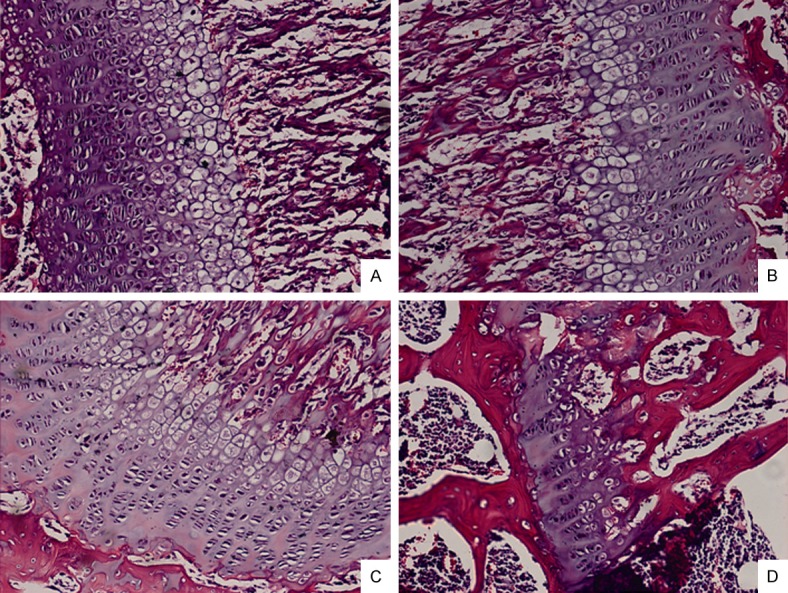
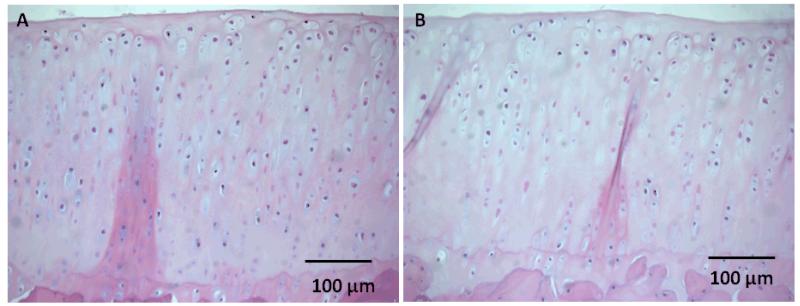
Here’s the 16-week old growth plate, still present but weak:

16-week old mice growth plate

Epithelial cells may already exist in adult bone marrow.

Epithelial cells in bone marrow: do they matter?

“epithelial-like cells can be detected in the bone marrow of many patients not known to have cancer. ”

Inducing a mesenchymal to epithelial transition would be difficult as I haven’t found any studies of it occuring due to physiological stimuli.  Another possibility though would be to have a growth plate without a resting zone as the proliferative zone consists mainly of mesenchymal cells.  The viability of this depends on the viability of a growth plate without a resting zone.  The resting zone may play a role in growth plate orientation which makes sense as epithelial cells tend to be involved in cell polarity and cell adhesion.

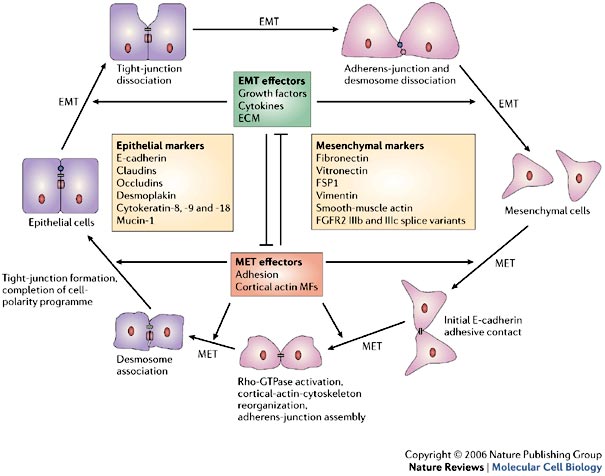
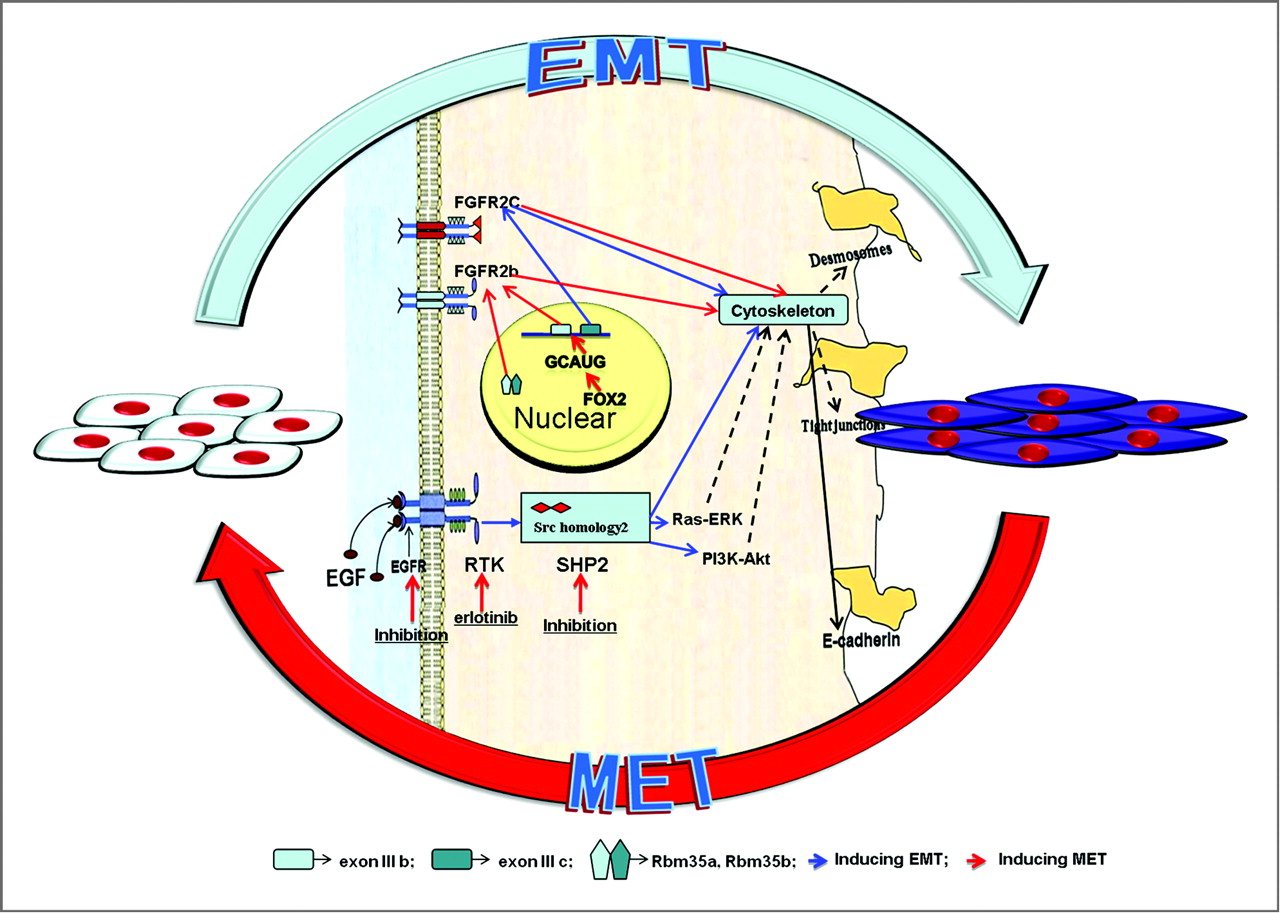
Here’s a diagram of the mesenchymal-epithelial transition:

mesenchymal-epithelial transition

LSJL upregulates Pcdhb2(protocadherin beta 2), Cdh13, Ctnna3, Fat1(a cell adhesion model).  It downs regulates protocadherin subfamily A, 4(Pcdhga4), AK002616(a miscellaneous Cadherin related protein), Celsr2, Cdh15, Cdh11.  So LSJL has the definite potential to affect the mesenchymal-epithelial transition although how isn’t clear as it affects a lot of related genes but not in a clear pattern

For the other parts LSJL downregulates Cldn13, Dsp(Desmoplakin isoform 1, the downregulation of this gene suggests that LSJL likely encourages the epithelial to mesenchymal transition but that doesn’t mean that it doesn’t encourage the mesenchymal to epithelial transition as well), and upregulates a gene related to Cldn19, Muc3.  It also downregulates an anti-mucin gene.

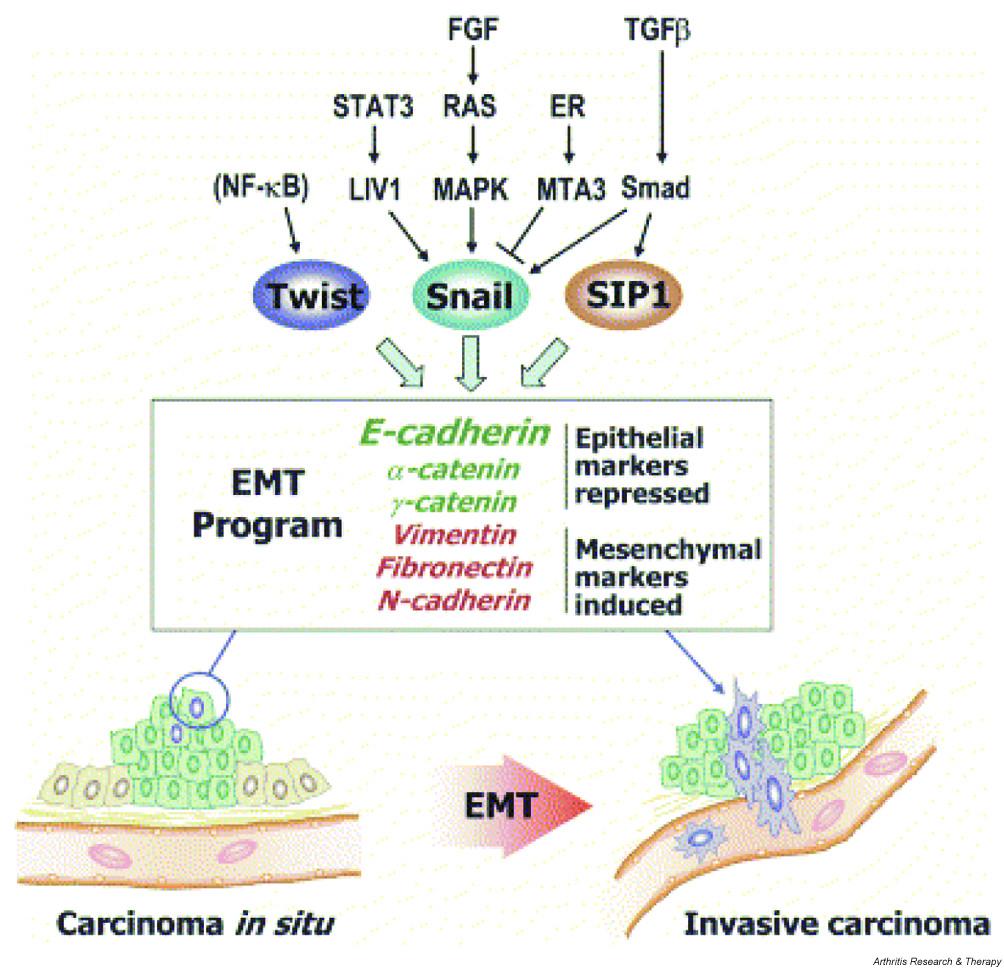
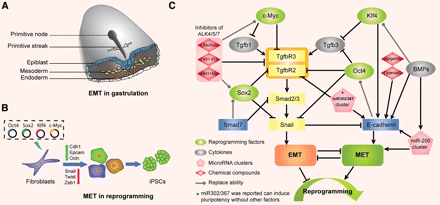
This diagram mentions the reverse markers:
EMT

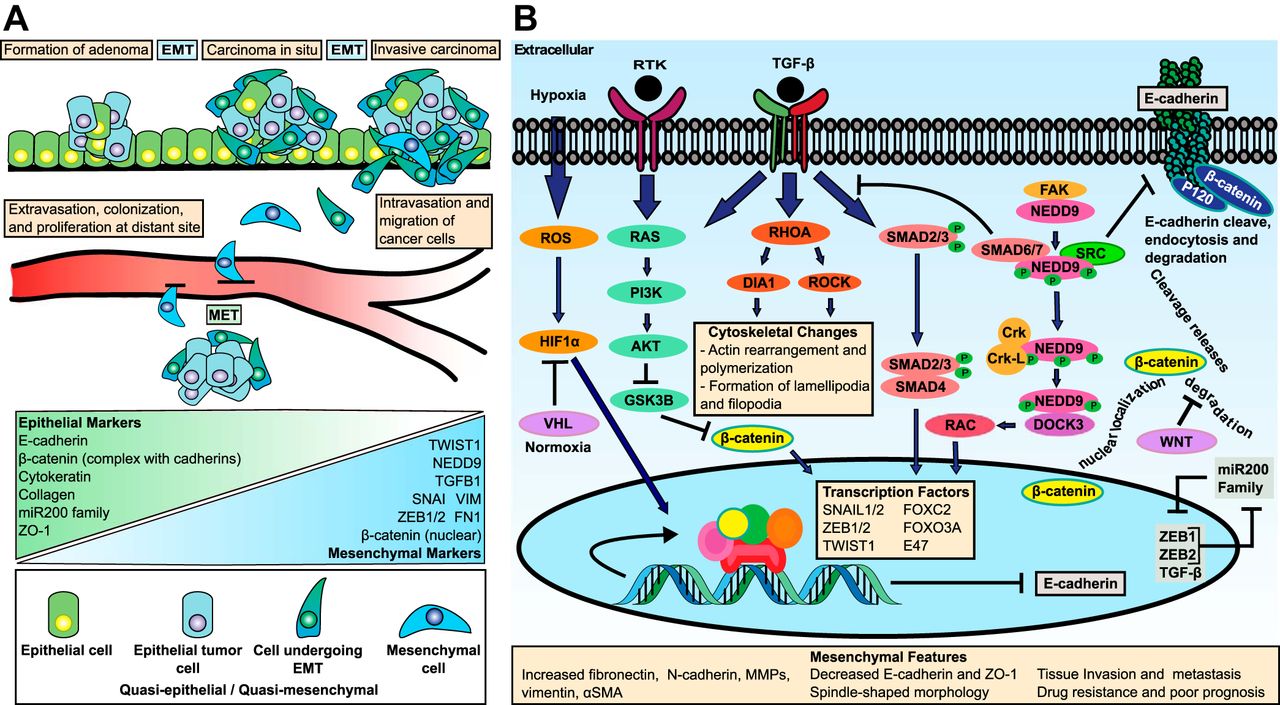
Here’s another diagram:
another EMT diagram

According to Actin stress fibres and cell-cell adhesion molecules in tendons: organisation in vivo and response to mechanical loading of tendon cells in vitro.

“Tendons consist of parallel longitudinal rows of cells separated by collagen fibres. The cells are in intimate contact longitudinally within rows, and laterally via sheet-like lateral cell processes between rows. At points of contact, they are linked by gap junctions. Since tendons stretch under load, such cell contacts require protection. Here we describe the organisation of the actin cytoskeleton and actin-based cell-cell interactions in vivo and examine the effect of cyclic tensile loading on tendon cells in vitro. Cells within longitudinal rows contained short longitudinally running actin stress fibres. Each fibre was aligned with similar fibres in the cells longitudinally on either side, and fibres appeared to be linked via adherens junctions. Overall, these formed long oriented rows of stress fibres running along the rows of tendon cells. In culture, junctional components n-cadherin{this increase is actually not good news for creation of epithelial cells as this is a mesenchymal marker} and vinculin and the stress fibre component tropomyosin increased in strained cultures, whereas actin levels remained constant.  (1) cells are linked via actin-associated adherens junctions along the line of principal strain; and (2) under load, cells appear to attach themselves more strongly together, and assemble more of their cytoplasmic actin into stress fibres with tropomyosin. Cell-cell contacts are protected during stretch, and also that the stress fibres, which are contractile, may provide an active mechanism for recovery from stretch. In addition, stress fibres are ideally oriented to monitor tensile load and thus may be important in mechanotransduction and the generation of signals passed via the gap junction network.”

So according to this in response to load cells may establish more cell-cell contact characteristic of epithelial cells.

Mechanism of the Mesenchymal–Epithelial Transition and Its Relationship with Metastatic Tumor Formation

epithelial characteristics were dramatically associated with increased bone and soft-tissue colonization after intracardiac or intratibial injection.”

“Multiple complex signaling systems are required for the induction of EMT and are also closely related with MET. The FGFR2 gene, which is located at human chromosome 10q26, encodes for FGFR2b and FGFR2c isoforms due to alternative splicing and mutually exclusive use of exon IIIb or exon IIIc. FGFR2b primarily binds FGF10 and FGF7 and is the isoform of choice in epithelial cells, whereas FGFR2c binds FGF2 and is mainly expressed in cells of mesenchymal origin. FGF/FGFR2 signaling governs the EMT that is required for organogenesis in mouse embryos.”

“expression of FGFR2b induced MET [induced cancer in one instance]”

“As for the regulation of FGFR2 isoforms’ alternative splicing, a highly conserved GCAUG element was shown to be required for efficient exon IIIb activation. Afterward, Fox protein family members, especially Fox-2, were shown to regulate the FGFR2 exon choice, and this regulation was absolutely dependent on the GCAUG elements present in the FGFR2 pre-mRNA. Fox-2 induced the FGFR2c to FGFR2b switch, accompanied by molecular and morphological changes consistent with MET”

“2 paralogous epithelial cell type–specific RNA binding proteins, Rbm35a and Rbm35b, which are essential regulators of FGFR2 splicing. Ectopic expression of either protein in cells that express FGFR2c caused a switch in endogenous FGFR2 splicing to the epithelial isoform”<-Note it’s FGFR3 that’s typically associated with dwarfism.

MET

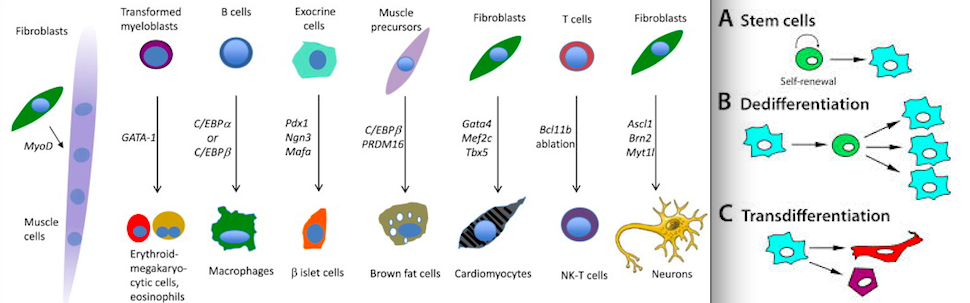
EMT and MET as paradigms for cell fate switching

“Cell fate determination is a major unsolved problem in cell and developmental biology. The discovery of reprogramming by pluripotent factors offers a rational system to investigate the molecular mechanisms associated with cell fate decisions. The idea that reprogramming of fibroblasts starts with a mesenchymal-epithelial transition (MET) suggests that the process is perhaps a reversal of epithelial to mesenchymal transition (EMT) found frequently during early embryogenesis. As such, we believe that investigations into MET-EMT may yield detailed molecular insights into cell fate decisions, not only for the switching between epithelial and mesenchymal cells, but also other cell types.”

“In any given animal tissue, one may find two very common cell types: the epithelial cells that line the surface of a tissue or organ and mesenchymal cells that are embedded in the three-dimensional matrix. “<-Growth plate cells line the bone matrix.

“the epithelial cells are attached to the basement membrane, establish an apical–basal axis of polarity, and communicate with each other through the gap junction. Across and underneath the basement membrane, there is the stroma made of the three-dimensional extracellular matrix synthesized by the resident mesenchymal or stromal cells.”

“Inside the nuclei, Snail genes are considered as the most important downstream targets of the nodal-SMAD2/3 pathway during gastrulation. The Snails may in fact be the guardians of the mesenchymal phenotype by activating mesenchymal genes and suppressing epithelial genes. Indeed, Snails have been shown to down-regulate E-cadherin effectively, which is one of hallmarks for epithelial cells. Snail-deficient embryos could not proceed through gastrulation and form mesodermal cells as they could not down-regulate the expression of E-cadherin in the primitive streak. It is generally recognized that the embryonic EMT process is orchestrated and maintained through the collaboration of extracellular signals and intracellular transcription factors.”

F1.medium

Fluid Flow enhances Osteoclast Production

Cortical bone is detrimental to longitudinal bone growth as it is not capable of interstitial growth.  Osteoclasts degrade cortical bone.  Degradation of cortical bone in combination with generation of tissue capable of interstitial growth is key to height growth.  Thus if fluid flow increase osteoclastgenesis this should be beneficial.

SUPRAPHYSIOLOGICAL LOADING INDUCES OSTEOCYTE-MEDIATED  OSTEOCLASTOGENESIS IN A NOVEL IN VITRO MODEL FOR BONE IMPLANT LOOSENING

“We aimed to develop an in vitro model for bone implant loosening, allowing analysis of
biophysical and biological parameters contributing to mechanical instability-induced
osteoclast differentiation and peri-implant bone loss. MLO-Y4-osteocytes were mechanically
stimulated for 1h by fluid shear stress using regimes simulating 1) supraphysiological loading
in the peri-prosthetic interface (2.9+/-2.9Pa, 1Hz, square wave),{This is below the minimum chondregenic range which is about 0.1MPa or 100Pa} 2) physiologic loading in the
cortical bone (0.7+/-0.7Pa, 5Hz, sinusoidal wave), and 3) stress shielding. Cellular
morphological parameters, membrane-bound RANKL expression, gene expression
influencing osteoclast differentiation, nitric oxide release and caspase 3/7-activity were
determined. Either Mouse bone marrow cells were cultured on top of loaded osteocytes or
osteocyte-conditioned medium was added to bone marrow cells. Osteoclast differentiation
was assessed after 6 days. We found that osteocytes subjected to supraphysiological loading
showed similar morphology and caspase 3/7-activity compared to simulated physiological
loading or stress shielding. Supraphysiological stimulation of osteocytes enhanced osteoclast differentiation by 1.9-fold compared to physiological loading when cell-to-cell contact was permitted{this is not a bad thing as degradation of bone could potentially be beneficial for height growh}. In addition, it enhanced the number of osteoclasts using conditioned medium by 1.7-fold, membrane-bound RANKL by 3.3-fold, and nitric oxide production by 3.2-fold. The stimulatory effect of supraphysiological loading on membrane-bound RANKL and nitric oxide production was higher than that achieved by stress shielding.  In conclusion, the in vitro model developed recapitulated the catabolic biological situation in the peri-prosthetic interface during instability that is associated with osteoclast differentiation and enhanced RANKL expression. The model thus provides a platform for pre-clinical testing of pharmacological interventions with potential to stop instability-induced bone implant
loosening.”

“[There’s] a specific role for osteocyte communication with osteoclasts “<-Osteoclasts, the cells that break down and reabsorb bone, stem from monocytes and macrophages rather than osteogenic cells.

“The decoy receptor for RANKL, osteoprotegrin (OPG), is released by osteocytes upon
physiological mechanical loading.

“Supraphysiological loading had a flow velocity that was 5.6-fold higher, and the wall shear stress rate that was 4.0-fold higher compared to physiological loading”

“Sixty minutes of supraphysiological loading on MLO-Y4 osteocytes did not change the
cell area, cell perimeter or cell feret’s diameter compared to physiological loading or stress
shielding”<-it would be beneficial if it did because it would indicate that the stem cells could possibly change in diameter.

Osteoblasts, Osteoclasts, and Osteocytes: Unveiling Their Intimate-Associated Responses to Applied Orthodontic Forces

“Histologically, the skeleton comprises 2 types of bone tissue: cortical (compact) and trabecular (cancellous) bone. The cortical bone makes up 80% of the volume in the adult skeleton and the trabecular bone makes up the remaining 20%. The cortical bone forms a peripheral shell in all kinds of bone.”
“The vertebrae are most rich in trabecular bone”
“Modeling of the bone is a process that changes the size and shape of bone either by bone resorption without subsequent bone formation or bone formation without previous bone resorption.”
“microcracks in bone and subsequent apoptosis in osteocytes will activate lining cells in
the remodeling process to stimulate osteoclast formation and bone resorption of the microdamaged area. During the resorption process, growth factors in bone are released, which attract and activate osteoblasts to form new bone under a canopy of bone lining cells.”
“. Osteoblasts form a 1 cell layer covering all bone surfaces. One function is to synthesize an extracellular matrix, consisting of type I collagen fibers and several other proteins, and to subsequently mineralize this matrix into bone”
“Osteoclasts are the only cells in nature that can degrade mineralized bone tissue and are important for physiological remodeling and modeling processes”

Teriparatide potential height increase tool

Teriparatide Improves Trabecular Osteoporosis but Simultaneously Promotes Ankylosis of the Spine in the Twy Mouse Model for Diffuse Idiopathic Skeletal Hyperostosis.

Full study->teriparitadeboneformation

“Diffuse idiopathic skeletal hyperostosis (DISH) is a common skeletal disorder in the elderly, which can develop into periosteal hyperostosis and paradoxically into immobilization-associated trabecular osteoporosis. The bone anabolic agent, teriparatide (TPD), seems to be a rational treatment for the immobilization-associated osteoporosis. However, it can lead to development of hyperostosis lesions in DISH patients. Here, we demonstrate TPD effectively treats trabecular osteoporosis while simultaneously promoting ankylosis of the spine in DISH model tiptoe-walking Yoshimura (twy) mice, compared with the ICR mice. Eighteen male twy mice were divided into three groups, and ICR mice were used as a normal control. Subcutaneous injections of TPD or phosphate-buffered saline (PBS) were performed according to three dosing regimens; 40 µg/kg once daily (TPD × 1 group), 40 µg/kg three times daily (TPD × 3 group), and PBS (control; Ctl group). Treatment was commenced at the age of 7 weeks and continued for 5 weeks. Micro-computed tomography (µCT) and histological analysis were performed. Longitudinal µCT study revealed that trabecular bone volume in both the vertebral body and distal femur decreased with time in the Ctl group, but increased dramatically in the TPD × 3 group. The twy mice developed ankylosis of the spine, the progression of which was accelerated with TPD therapy. We also confirmed that TPD therapy promoted ossification of spinal ligaments. Histomorphometrical study revealed that TPD treatment increased bone formation at the vertebrae enthesis region{This is the key to where this has promise} and in the trabecular bone. TPD therapy effectively treats trabecular osteoporosis, but potentially promotes ankylosis of the spine in patients with DISH.”

“The twy mice are mutant mice showing multiple osteochondral lesions, and have been used as a model for DISH and ossification of the posterior longitudinal ligament”

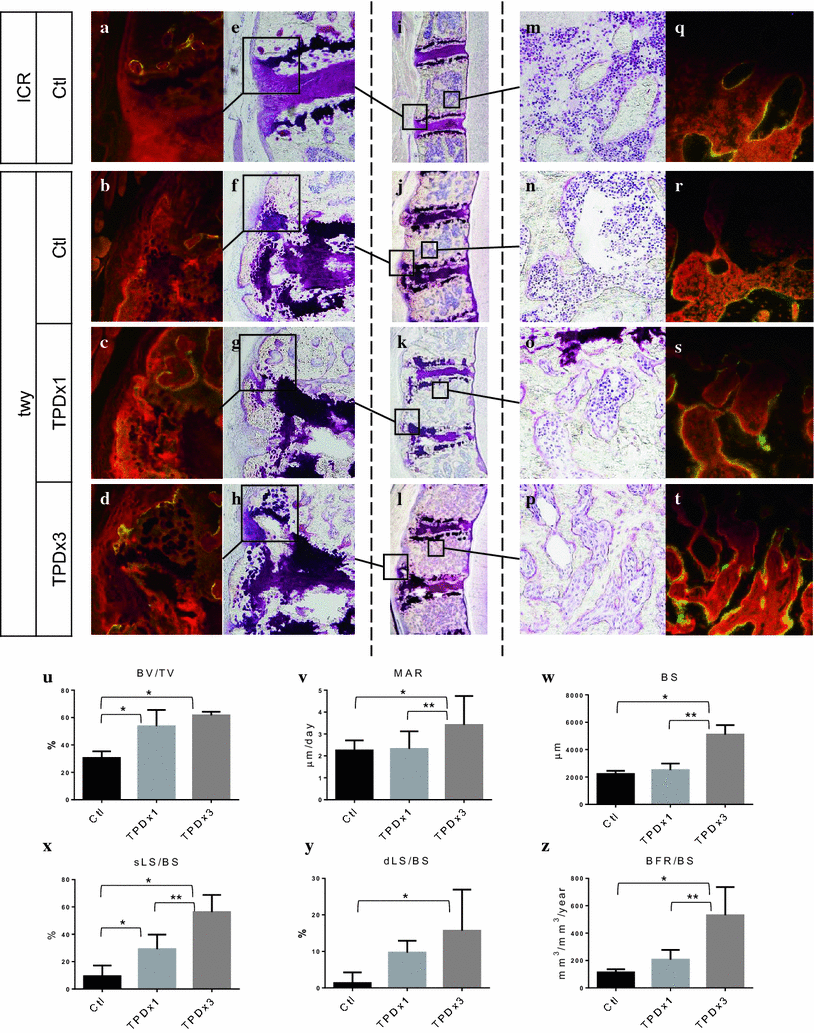
Teriparatide increased ectopic calcification(Fig3C).

“both TPD × 1 and TPD × 3 treatments promoted ectopic calcification. Histologically, there were no cells inside the ectopic calcification but there were fibroblast- or osteoblast-like cells around the ectopic calcification.”<-Fibroblast cells could be precursors to chondrogenic cells.

Here you can see the effects of teraparatide, it can increase height of the spine but also can cause scoliosis:


teriparatide effects

Study with potential implications to LSJL

TISSUE MODIFICATION OF THE LATERAL COMPARTMENT OF THE TIBIO-FEMORAL JOINT FOLLOWING IN VIVO VARUS LOADING IN THE RAT

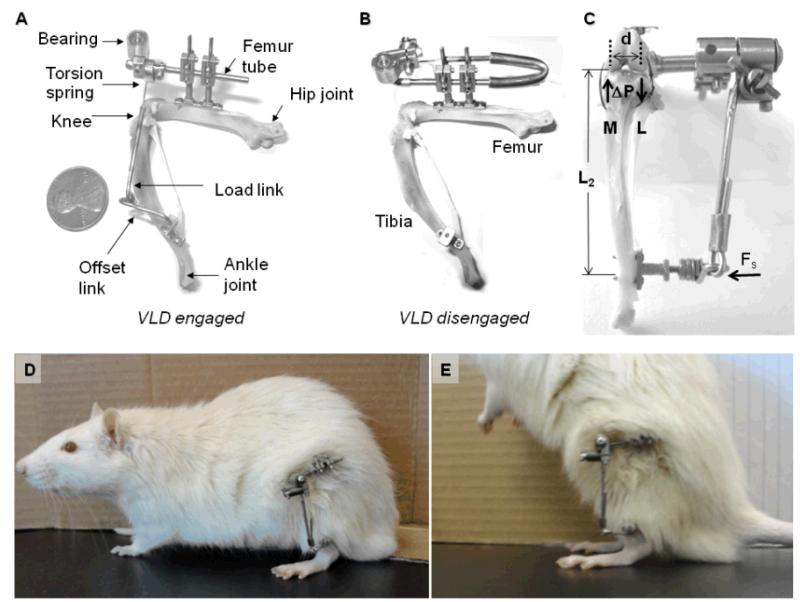
“This study describes the first application of a varus loading device (VLD) to the rat hind limb to study the role of sustained altered compressive loading and its relationship to the initiation of degenerative changes to the tibio-femoral joint. The VLD applies decreased compressive load to the lateral compartment and increased compressive load to the medial compartment of the tibio-femoral joint in a controlled manner.

Mature rats were randomized into one of three groups: unoperated control, 0% (sham) or 80% body weight (BW). Devices were attached to animal’s leg to deliver altered loads of 0% and 80% BW to the experimental knee for 12 weeks. Compartment-specific material properties of the tibial cartilage and subchondral bone were determined using indentation tests. Articular cartilage, calcified cartilage and subchondral bone thicknesses, articular cartilage cellularity, and degeneration score were determined histologically.

Joint tissues were sensitive to 12 weeks of decreased compressive loading in the lateral compartment with articular cartilage thickness decreased in the peripheral region, subchondral bone thickness increased, and cellularity of the midline region decreased in the 80% BW group as compared to the 0% BW group. The medial compartment revealed trends for diminished cellularity and aggregate modulus with increased loading.

The rat-VLD model provides a new system to evaluate altered quantified levels of chronic in vivo loading without disruption of the joint capsule while maintaining full use of the knee. These results reveal a greater sensitivity of tissue parameters to decreased loading versus increased loading of 80% BW for 12 weeks in the rat. This model will allow future mechanistic studies that focus on the initiation and progression of degenerative changes with increased exposure in both magnitude and time to altered compressive loads.”

” The VLD applies altered loads in addition to the normal loads across the joint without disruption of the joint capsule while maintaining full use and range of motion of the joint.”

The mice were 9-month old sprague dawley.  The rats had the plates attached surgically so it’s not really an exact approximation of LSJL.  And the 0% BW results were drastically different from control so the apparatus definitely had an effect.
loaded rats

“Gross observation of the tibial plateau revealed minimal erosion or fibrillation of the articular cartilage in all experimental groups.”

“The thickness of the articular cartilage in the peripheral region of the lateral compartment decreased 19% in the 80% BW group as compared to the 0% BW group and 26% as compared to the control group. In contrst, the thickness of the subchondral bone increased 38% in the 80% BW group as compared to the 0% BW group”<-So loading increases subchondral bone “thickness” but does this thickness add to height?

Here’s a comparison between sham control(0% BW) and 80% BW.  Loading definitely decreased chondrocyte number but it didn’t seem to decrease articular cartilage height and subchondral bone height seemed to be higher.
loading on chondrocytes

Subchondral bone thickness is considered height.

Height-Not all HGH and IGF-1

Short and tall stature: a new paradigm emerges.
Full Study->jeffreybaron study

“In the past, the growth hormone (GH)-insulin-like growth factor 1 (IGF-1) axis was often considered to be the main system that regulated childhood growth and, therefore, determined short stature and tall stature. However, findings have now revealed that the GH-IGF-1 axis is just one of many regulatory systems that control chondrogenesis in the growth plate, which is the biological process that drives height gain. Consequently, normal growth in children depends not only on GH and IGF-1 but also on multiple hormones, paracrine factors, extracellular matrix molecules and intracellular proteins that regulate the activity of growth plate chondrocytes. Mutations in the genes that encode many of these local proteins cause short stature or tall stature. Similarly, genome-wide association studies have revealed that the normal variation in height seems to be largely due to genes outside the GH-IGF-1 axis that affect growth at the growth plate through a wide variety of mechanisms. These findings point to a new conceptual framework for understanding short and tall stature that is centred not on two particular hormones but rather on the growth plate, which is the structure responsible for height gain.”

Regulation of growth plate function.Note extracellular fluid is listed as a factor and extracellular fluid flow can be modified by LSJL.

This page lists genes that cause mutations to linear growth.  This page lists other mutations and their effects on stature.

“the vast majority of children with short stature do not have a well-substantiated defect in the GH–IGF-1 axis.”

“Many new genes have been identified that, when mutated, result in short stature or tall stature, the majority of which do not participate in the GH–IGF-1 system”

“Estrogen has complex effects on the growth plate, not only altering growth rate, but also accelerating the loss of progenitor cells in the resting zone and thereby speeding up the developmental program of growth plate senescence, which causes early cessation of growth”

“tumour necrosis factor, IL-1β and IL-6 act directly on growth plate cartilage to suppress bone growth”

“fairly low doses of ionizing radiation, such as a single dose of 10 Gy, can impair longitudinal growth. Mechanical compression across the growth plate also impairs the elongation of bones, which is partly due to decreased enlargement of hypertrophic chondrocytes.”<-Chondrocyte hypertrophy size increases due to lsjl.

“FGFR-3 signalling negatively regulates growth by decreasing proliferation in the proliferative zone, decreasing production of the extracellular matrix, accelerating the onset of hypertrophic differentiation and decreasing the size of the hypertrophic chondrocytes”

“~2% of children who present with idiopathic short stature have mutations in NPR2, Conversely, overexpression of CNP or activating mutations in NPR2 result in tall stature.”

” Binding of CNP to NPR2 stimulates the guanylyl cyclase activity of the receptor, thereby increasing synthesis of cGMP, which activates the type II cGMP-dependent protein kinase”

“Of individuals presenting with idiopathic short stature, 2–15% have mutations in SHOX, with the exact percentage depending on the study. Conversely, increased copies of SHOX are associated with tall stature in individuals with Klinefelter syndrome and other types of sex chromosome aneuploidy”

“Sotos syndrome (characterized by tall stature) is associated with decreased activity of the Ras–MAPK pathway.”

“Ras, a small GTPase, signals via MAPK cascades to phosphorylate numerous cytoplasmic and nuclear proteins, regulating cell proliferation and differentiation.”

“heterozygous mutations in DNA methyltransferase 3A (DNMT3A) cause tall stature, a distinctive facial appearance and intellectual disability.”

“heterozygous mutations in EZH2, which encodes an enzyme that specifically methylates lysine residue 27 of histone 3 (H3K27, which is associated with transcriptional repression), are associated with Weaver syndrome (characterized by prenatal and postnatal overgrowth and a markedly advanced bone age).”

There’s a lot more covered in the study than I mentioned here.  The full study is worthwhile to read.

Bodybuilders didn’t wait for scientists

It’s frustrating how much bodybuilding research there is in terms of sets, reps, and all sorts of factors to build up muscle and how little there is in terms of height.  Note that most of this research does not come from science it comes from tons of independent bodybuilders.

With muscle building we know that stressing the muscles in general increases their size.  Bodybuilders don’t wait for calf and pec implants to get bigger muscles.

We don’t know though how to lengthen bone?  We don’t know what stimulus to apply?  Actually we have a pretty good idea.

To induce chondrogenic differentiation(chondrocytes are the basis for the growth plate) one method is to induce a hydrostatic pressure of at least 0.1 MPa.  A blood pressure cuff during a heart beat generates about 120mmHg which is about 0.015MPa an order of magnitude of what we need.  To get 0.1MPa we’d need a blood pressure of about 750mmHg which would probably cause death.  There has to be a way for the body to safely induce hydrostatic pressure of 0.1MPa-10MPa’s to induce chondrogenic differentiation.  HP levels of the articular cartilage can vary between 1-5MPa in response to physiological(occurs normally) stress.  There are two possible ways to make up the difference in the hydrostatic pressure deficit(0.015MPa versus 0.1MPa or ideally higher) fluid flow and bone deformation.

Ultrasound levels of 30–200 mW/cm2, Frequency=1–1.5 MHz are one possibility(you’d target in the epiphysis).  Note I have not tested this so attempt at your own risk!  Muscular contraction can also increase marrow hydrostatic pressure.  You’d probably need to use external electrical stimuli to generate the muscular contraction needed to induce significant hydrostatic pressure.  Again I can not say whether or not this is safe or not!

An increase in hydrostatic pressure also results in an increase in fluid flow which may be the primary inducer of chondrogenic differentiation rather than the HP itself.  Thus you could find ways to induce fluid flow directly and in conjunction with an increase in hydrostatic pressure to get the needed stimulus to induce chondrogenic differentiation.

The growth plate is exposed to high hydrostatic pressure via the bone pressing down on it.  If we create a fibrous layer in a neo-growth plate region maybe the hydrostatic pressure to encourage a growth plate will occur naturally.  Note that LSJL does encourage fibrous tissue differentiation.  If we can create a fibrous tissue layer, the compression force of the bone itself will create the hydrostatic pressure and induce chondroinduction.

Fluid flow induces recruitment of integrins to focal adhesions.  This alteration in cell signaling by fluid flow directly could induce chondrogenic differentiation.

So we know the key to growing taller is to induce a new growth plate in the bone as bone tissue is not mechanically suited for interstitial growth.  We know that this can happen at around 0.1MPa hydrostatic pressure in the bone epiphysis.  It’s possible to make up for a deficit in hydrostatic pressure levels via other factors like fluid flow via dynamic lateral compression.  There’s also the possibility of using ultrasound and electrical muscle stimulation.  Such levels would have to be supranormal as no muscle stimulation of longitudinal bone growth has yet to be reported.  Since it is supranormal all the effects are not known so it would have to be tested somewhat for safety first.