Author Archives: Senior Researcher

Increase Height And Grow Taller Using Microfracture Surgery, Part II

Screen Shot 2013-01-22 at 3.53.04 PMIn the previous post, I wanted to establish the basis for the origin of the idea for this question to see if we can somehow use the microfracture surgery technology to increase height. From a post, Tyler had said…

Scientists have utilized the power of microscopic fractures in stem cells with knee microfracture surgery to stimulate cartilage growth.  You can also cause microscopic fractures in the ends of the long bones to release these powerful red bone marrow stem cells.  Laterally pressing against the ends of your bones also increases fluid flow within the bone.  This increase in fluid flow sends the stem cells to your now opened growth plate!

The idea is theoretically sound and might work from a quick analysis. I would do a little more research on microfracture surgery. Let’s first see what Wikipedia says with it’s article on Microfracture Surgery. From Wikipedia…


Microfracture surgery is an articular cartilage repair surgical technique that works by creating tiny fractures in the underlying bone. This causes new cartilage to develop from a so-called super-clot. Microfracture surgery has gained popularity in sports in recent years; numerous professional athletes including …. have undergone the procedure.

The surgery is quick (typically lasting between 30-90 minutes), minimally invasive, and can have a significantly shorter recovery time than an arthroplasty (knee replacement).

Background

Chronic articular cartilage defects do not heal spontaneously. However, acute traumatic osteochondral lesions or surgically created lesions extending into subchondral bone, e.g. by Pridie drilling, spongialization abrasion or microfracture causing the release of pluripotent mesenchymal stem cells from the bone marrow, may heal with repair tissue consisting of fibrous tissue, fibrocartilage or hyaline-like cartilage. The quality of the repair tissue after these “bone marrow stimulating techniques” depends on various factors including the species and age of the individual, the size and localization of the articular cartilage defect, the surgical technique, e.g., how the subchondral bone plate is treated, and the postoperative rehabilitation protocol.

Procedure

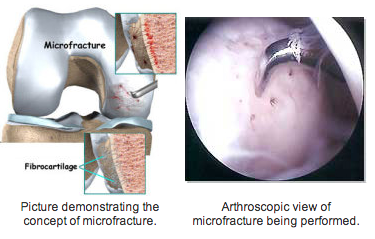
The surgery is performed by arthroscopy, after the joint is cleaned of calcified cartilage. Through use of an awl, the surgeon creates tiny fractures in the subchondral bone plate. Blood and bone marrow (which contains stem cells) seep out of the fractures, creating a blood clot that releases cartilage-building cells. The microfractures are treated as an injury by the body, which is why the surgery results in new, replacement cartilage. The procedure is less effective in treating older patients, overweight patients, or a cartilage lesion larger than 2.5 cm. Further on, chances are high that after only 1 or 2 years of the surgery symptoms start to return as the fibrocartilage wears away, forcing the patient to reengage in articular cartilage repair.

The effectiveness of cartilage growth after microfracture surgery is thought to be dependent on the patient’s bone marrow stem cell population and some think increasing the number of stem cells increases the chances of success. A couple of physicians are promoting an alternative treatment implanting autologous mesenchymal stem cells directly into the cartilage defect, without having to penetrate the subchondral bone.

Microfracture Reports

Studies have shown that microfracture techniques do not fill in the chondral defect fully, forming fibrocartilage rather than hyaline cartilage. Fibrocartilage is not as mechanically sound as hyaline cartilage; it is much denser and unable to withstand the demands of everyday activities as well as the original cartilage and is thus at higher risk of breaking down. The blood clot is very delicate after surgery and needs to be protected. In terms of time, the clot takes about 8 weeks to 15 weeks convert to fibrous tissue and is usually fibrocartilage by about four months post surgery, holding implications for the rehabilitation.

Chondrocyte Implantation procedures (CCI), a cell based articular cartilage repair procedure that aims to provide complete hyaline repair tissues for articular cartilage repair, have been posed by some as an alternative to microfracture surgery. In February 2008, Saris et. al published a large-scale study claiming that CCI results in better structural repair for symptomatic cartilage defects of the knee than microfracture surgery. According to the study, one year after treatment, the tissue regenerate associated with CCI is of better quality than that of microfracture surgery.


So we know a few things just from a Wikipedia article. This idea of purposely creating microfractures in the knee subchondral bone plate area in the shape of small circular holes will cause blood and bone marrow to flow out, cause some clotting, which will cause cartilage formation. It seems that the clotting action of the bone marrow with the stem cells inside which seeps out is what causes cartilage formation. The problem seems to be that the cartilage formed is fibrocartilage, NOT hyaline cartilage. We must remember that there are different kinds of cartilage. The growth plates and the articular cartilage are hyaline cartilage, which is what we are looking for and to create. However the idea of making very small microfractures and punctures through the bone into the subchondral layer is enticing. Cartilage is formed so that is a start.

From a section of the website for the US National Library of Medicine, National Institutes of Health


Knee microfracture surgery

Knee microfracture surgery is a common procedure used to repair damaged knee cartilage. Cartilage is the material that helps cushion and cover the area where bones meet in the joints.

Description

Three different types of anesthesia may be used for knee arthroscopy surgery:

  • Medicine to relax you, and numbing the knee using shots of pain killers
  • Spinal (regional) anesthesia
  • General anesthesia, where you will be asleep and pain-free.

The surgeon will make a 1/4-inch surgical cut (incision) on your knee.

  • A long, thin device called an arthroscope is placed through this cut. It is like a camera. It is attached to a video monitor in the operating room. This tool allows the surgeon to look inside your knee area and work directly on the joint. See also: Knee arthroscopy
  • The surgeon makes another surgical cut and passes tools through this opening. A small pointed tool called an awl is used to make very small holes, called microfractures (tiny breaks), in the bone near the damaged cartilage.
  • These holes release cells in your bones that build new cartilage. Your body will build new cartilage to replace the damaged cartilage.

Why the Procedure is Performed
Your doctor may recommend this procedure if you have some damage to the cartilage in the knee joint and on the underside of the kneecap.

The goal of this surgery is to prevent or slow further damage to the cartilage, preventing knee arthritis. It can help you avoid the need for a partial or total knee replacement.

This procedure is also used to treat knee pain due to cartilage injuries.

Another surgery, autologous chondrocyte implantation, is done for similar reasons.


What we see from this resource is overall a repeat of the same information. From the website for the London Knee Clinic, it would seem that the procedure is similar in effect as the Autologous Chondrocyte Implantation (aka Transplantation). It says that in the beginning, there will be 1/4th of an inch in cut on the articular cartilage surface area. There is a 2nd cut and surgical tools are passed through this opening. Something called an awl (sharp pointy device??) is used to make the small holes, which is what the microfractures are. The hole are big enough to release the cells from inside the bones to the outside where the cartilage covering is but small enough that bone healing from the clotting effect will be easy and will be relatively simple and noninvasive.

This is Part II in a 3 post series where I look at the potential idea on using the techniques and theories from microfracture surgery to possibly find a way to increase height.

Increase Height And Grow Taller Using Microfracture Surgery, Part I

In the previous post I mentioned that an old post entitled “Grow Taller Basics” from HeightQuest.com made me realize that from something as simple as head and feet rubbing can possibly lead to height increase. Something else that caught my eye from the post was this segment he added in…

“Scientists have utilized the power of microscopic fractures in stem cells with knee microfracture surgery to stimulate cartilage growth.  You can also cause microscopic fractures in the ends of the long bones to release these powerful red bone marrow stem cells.  Laterally pressing against the ends of your bones also increases fluid flow within the bone.  This increase in fluid flow sends the stem cells to your now opened growth plate!”

I recently been looking at the idea of possibly using the current microfracture surgery technology to increase height after I went back to an old post about the Shinbone routine and using Microfractures to grow taller to add to these old posts which I edited and upgraded. The idea on growing taller using induced microfractures has been around a long time and there were even groups and teams of people who tried out their own created routines to see if the idea would work.

Tyler’s idea is interesting and has some points with…”Their is a myth that the growth plates completely fuse after puberty but that is untrue.  Their is actually a thin growth plate line that is simply inactive.

I would actually have to disagree with this idea, because I have read from sources that the epiphyseal line itself will also eventually go away. At this point, I can’t find those sources which state that the line itself will also at one point disappear too.

From WiseGeek.com“The epiphyseal line the part of the bone that replaces the epiphyseal growth plate in long bones once a person has reached their full adult height. An epiphyseal line is visible on a standard x-ray. It looks like a thin dark streak that stretches horizontally across the rounded ends of the bone.”

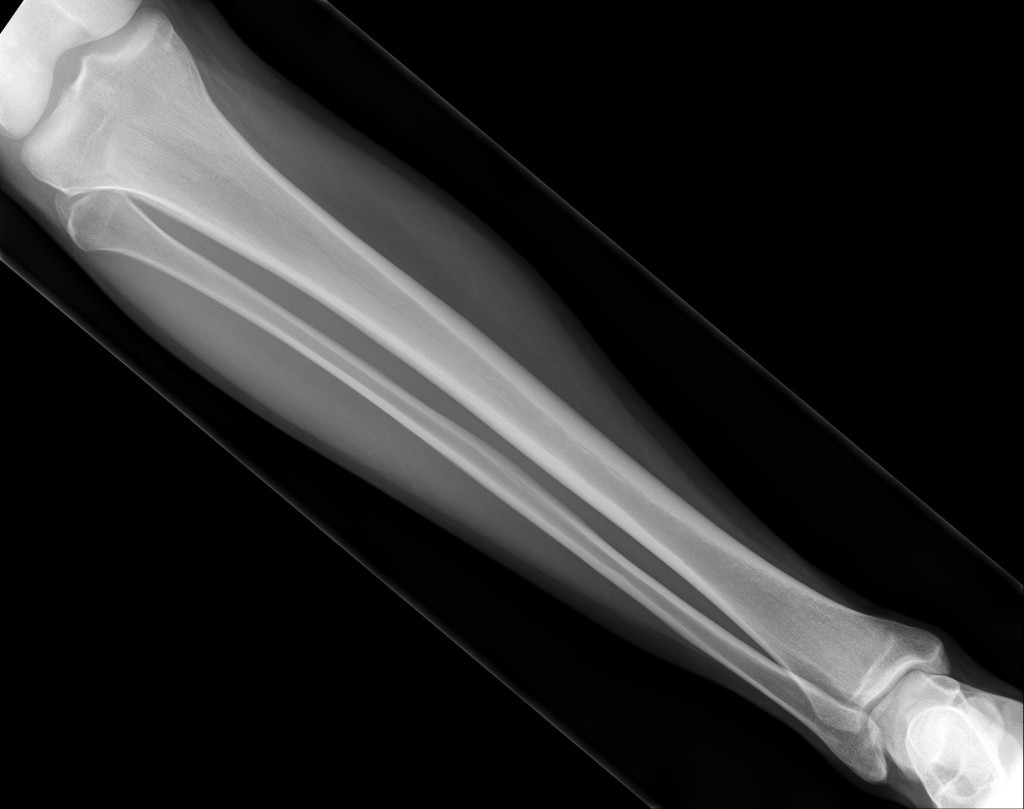
I would have to validate this type of claim from an pic of 1 X-Ray (out of 3 provided) of a tibia I received in the website email today I got where a person asked me whether I can see if their growth plates are fully closed and how to reopen them again. A guy named Felipe (last name not revealed over privacy issues) would give me this message…

“…here there are some pictures of my tibia distal and proximal growth plates,i had been using mens routine for 2 years and i hadnt any result, Actually i will be turning 20 in 2 months more,and i need a way to open my growth plates.”

[Note: As always, if this picture breaks any type of privacy or medical confidentiality laws, and I am informed by the person who gave me this picture that I am doing something wrong, I will of course take this picture down for privacy and legal reasons.]

Of the 3 X-rays he provided, this picture is probably the clearest. We can see that even a young 19 year old male already no longer has even an epiphyseal line. My claim is that the line also eventually goes away. There is a slight hint of some type of indention on the ends at the epiphysis but they are not where the epiphyseal plates are supposed to end up when they finally die out and calcify completely. I would guess that the line like indention is an indication of where the articular cartilage covering of the ends end off. If we use WiseGeek’s advice, I can’t find where the dark think streak is. Do you?

This is Part I of a 3 part series of posts where I look at whether we can use microfractures to cause some type of height increase.

18395516-0-RX DE PIERNA DERECHA-img0

Increase Height And Grow Taller From Head And Feet Rubbing And Tapping, A Simple Idea With High Feasibility

urlAs I was scouring through the usual sites that deals with height increase, I somehow came across a post on the GrowTallInfo.com website which made me realize that there may be a VERY easy and simple idea on how to possibly cause some bit of height increase. From the thread entitled “Grow Taller Basics” I realized that the thread was actually an old post that Tyler Made on HeightQuest.com HERE. After reading over the post, I was rather shocked to realize that a very simple and easy method for some height increase was possible that I completely forgot about which has a really good chance to work.

The post that was on HeightQuest.com mentions the fact that there are other types of bones in the human skeleton, not just the long bones. The skull for example is a clear example of a non-long bone but an irregular bone. The top of the skull is irregular in shape with a flat surface. As he states…

“The same tissue that is present on the width of long bones is present at the top bone of the skull.  Therefore, since you can increase the width of this tissue height increase after puberty is possible.”

“Now how do you increase the width of this outer sheet?  You rub against it.  Since it is the outer covering of the bone, you only need to target the surface of the bone.  So, a vigorous head massage may be one of the ways to get taller!”

When I thought over this simple and easy to do idea, I was very surprised at how simple it could be. All that one really has to do is do some vigorous top of head rubbing or massage. When I was little I would hear old wive’s tale that for a balding or bald man to regrow hair, he should just rub a raw potato on the top or back of his head, where the bald stop is. Maybe head and skull rubbing may cause more than just hair regeneration, but also some additional height that will come from the flat surface on the top of the head.

I remember looking over the idea of a dynamic bone loading method to widen the shoulder bones which I wrote a post about at “Review Of Claim To Widen Shoulder Bone, Lengthen Forearms, And Lengthen Lower Legs” and I had stated that the idea for shoulder widening really could work since the shoulder bone is irregular. Any possible loading on the surface of the shoulder could cause the bone sides to increase in width, thus leading to wider shoulder. The same idea is for the top skull flat bone.

I would maybe even suggest that instead of rubbing the head, it might be better to tap the entire upper head area, but get the loading to be of equal pressure distribution. If the tapping on the top of the head leads to just one small sized lump, like what we see in the cartoons when an anvil falls on a person’s head. However

If we remember, the way that real height is measure is from the top most point of a person’s top of head to their feet when they are standing completely erect and straight. The bump could mean that any bumps formed from appositional growth and bone remodeling from certain loading can lead to maybe a little bit of skull flat bone width increase and height increase.

Gray290As for the feet…

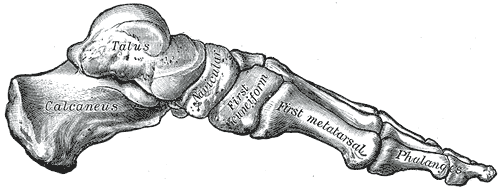
Tyler would state…”There is also a bone in your feet.  Your heel bone.  This bone is completely covered with the sheet that can increase in width.  If you can increase the width of this bony sheath it will act sort of as height increasing shoes and you will be taller!

What he is referring to is known as the Calcaneus. From Wikipedia, “In humans, the calcaneus (from the Latin calcaneum, meaning heel[1]) or heel bone is a bone of the tarsus of the foot which constitute the heel. In some other animals, it is the point of the hock.”

Theoretically I would guess that the calcaneus may have the same bone remodeling effects as the flat surface of the top of the head, although I would suspect that in real life, the results would not be positive. We have to remember that in terms of the amount of weight and load any of the bones in the body gets most exerted on them, the heel bone probably has the most load on it. When a 200 lb human being jumps up, when they land back down, the heel bone and the ankles are the area of the body which gets the greatest amount of force per area and shock. Even if a person did manage to put enough load over the sheet of the heel bone, I would guess that the incredible load that the human body from the gravitational force exerted on it would experience would negate any real bone width increasing, but it might be possible to get 1-2 mm of height increase from applying pressure on the heel bone. I would rather suggest that it might be smarter to use a hammer or a 50-75 lb dumbbell for a stronger enough load on the bone.

The Multiple Difficulties And Challenges Involved In The Idea Of Going With Chondrocyte And Cartilage Implants And Transplants

As a response to the previous post I did about a member from the Make Me Taller forums named Mordred on a post HERE who talked about the idea of implanting chondrocytes into the closed growth plate area, I wanted to list the issues and challenges and problems which I can see at this point with this overall method.

Coming with an idea like implanting chondrocytes, progenitor cells like mesenchymal stem cells (MSCs), or completely in vitro epiphyseal cartilage plates into the original closed epiphyseal regions is easy and it makes sense.

However the hard part will always be…

  • Actually regrowing the epiphyseal hyaline cartilage plates and get the extracellular matrix of the cartilage to be the right compositions, with the collagen type II, the preoteoglycans, growth factors, cytokines, the gylcoaminoglycans, and the sulphated alkalines to be as close to what is found in vivo as possible.
  • You still have to cause some form of initial distraction or fracture or break in the bone so you can embedded the cartilage or chondrocyte material. The type of initial break would have to be uniform in a specific shape so that the shape of the completely regrown plate can slip in the distraction. The fact that the ilizarov method with its easy hammer and chisel quick fracture may seem it would be faster to go with the old idea. Even then, the process will be surgical where the outer muscle and skin tissue may have to be cut open to implant the cartilage.
  • You would have to check the immunological issues with this approach because of the fact that human bodies which detect foreign objects will try to attack it with its white blood cells and other resistance and defensive biological. This would cause the completely functioning body to REJECT the implant. Remember from talks with medical professionals about how hard it is to find the right blood donor, or organ donor? It is because of the human body’s natural defensive system, in rejecting foreign bodies.
  • You must remember that the human body when it was young had at least two dozen growth plate cartilage areas, not just the knee region with the distal femoral area and the proximal tibial area. – If you want to get a proportional body, you would have to open or embedded the foreign in vitro grown cartilage into the humerus at least so that your arms are as long as your legs, in proportion. We must remember that in general, the wingspan of a human is about the same length as their height.
  • There were growth plate cartilage in the hip joint area, in each other vertebrate of the torso, in both ends of the knee, both ends, wrist, elbow, metatarsals, metacarpals, collarbone, etc. – Would we spend possibly hundreds of thousands of dollars also embedding more cartilage into our body to get the entire body to be proportional?

Conclusion: What is clear is that the overal idea and method is reasonable and makes sense. There are just a few major challenges we would have to get around to make the idea reasonable and practical enough to get it working for the average person who hopes for an alternative to the limb lengthening solution.

Artificial Puberty, A Possible Alternative To LL, From The Make Me Taller Forums

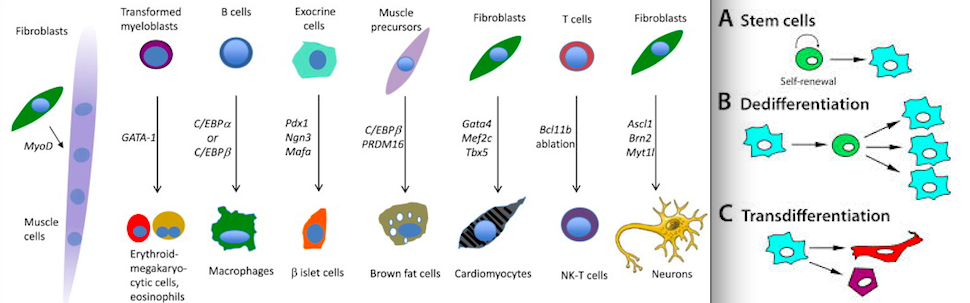
I was going through the Make Me Taller Forum recently and I came across a post by a member who is suggesting his own idea on how to renew the growth process using chondrocyte implants. The post is from this thread HERE. It seems that his method is to implant stem cells into the area of the closed growth plates and then get them to differentiate into chondrocytes after they are implanted. He is on the right track, and has been thinking over the science a little which is good and I would suggest that if he ever finds this website to join on board the team and help us and the other researchers in doing more scientific research. I’ve only really been getting into the research in the last 6 months. I don’t intend to make any real breakthroughs until I have gotten the basic science from medical school textbooks down. There is no point in making wild claims and ideas (although I do write posts about them) until we are sure the science is right and agrees with what is being observed in the research labs and medical clinics.

Sometimes I wish that more people who are interested in increasing their height would find this website and read the posts to see what other people are thinking about and coming up with. I personally know and DEFINITELY realize that I am NOT the only person who would like to be taller and probably has done some research at some point on the research and literature out there on what is possible. I am constantly searching all the corners of the internet to find new information and helpful resources and scientific articles which might give us another clue on how to push the endeavor further and make some real breakthroughs.

The guy is willing to think and come up with ideas as an alternative to limb lengthening which is what we are trying to do here. I have found in general that the people on the Make Me Taker Forum to be very one sided and only think that Limb Lengthening will be the only thing that will ever work or be reasonable. They are not that helpful and sort of close minded.

Mordred

n00b

Credibility 0
Gender: Male
Posts: 9

Artificial Puberty: A possible alternative to LL

« on: January 07, 2013, 02:31:33 AM »

Ever since I came across LL (while searching for ways to get taller), I’ve been thinking about alternative ways to boost height without going through this painful, salient process that changes you bodily proportions.

So I conjured up a theoretical method for height increase which I call “artificial puberty”:

The main obstacle to height increase is the closing of epiphyseal (growth) plates.  Your growth plates close because the cartilage (which is made up of cells called chondrocytes), age, die, and ultimately become replaced by real bone.  Estrogen accelerates this process.

My proposal is to implant stem cells at the site of closed growth plates, tweaking them beforehand to differentiate into chondrocytes.  This will create “artificial growth plates,” allowing growth in height once more.  Okay, so now you can grow again, but we have yet another obstacle: human growth hormone secretion diminishes after puberty.  So solve this, just supplement the implants with safe amounts of HGH injections.

So basically the two steps to artificial puberty are:
1.  “artificial growth plates” – chondrocyte implants
2.  “artificial growth” – SAFE amounts of HGH injections

Assuming that this procedure is possible, it would offer a number of benefits lacking in LL:
1.  Keeps proportions intact – HGH makes every part of your body grow with opened growth plates
2.  Less painful – Pain isn’t a factor in my case, because I would do anything to grow taller, but this procedure definitely would be less painful.
3.  Less overt – You don’t have metal rods sticking out of your legs.
4.  You can (probably) walk/live a “normal” life while undergoing this procedure.

With the stem cell technology boom, this type of procedure, or something like this anyways, will probably be feasible in less than 10 years.  Think about it; we’re already implanting stem cells in deaf/blind people so they can hear/see again.  Why can’t we do this?

In response we see posts like these….

Repelsteeltje

MMT Member
*Credibility 1
Gender: Male
Posts: 119

Re: Artificial Puberty: A possible alternative to LL

« Reply #8 on: January 07, 2013, 05:39:58 PM »

I’ve seen studies and articles that are saying the same. There is much more possible than we think… However, as optimistic as I am if it comes to alternative treatments for height increase I don’t think we will ever get the change using a treatment like this. Also, lengthening your legs without having pain in the future is one thing and may be possible at some point. But to be in proportion you also need to lengthen your torso. And to be honest I don’t think this is ever going to happen. Of course very much is possible nowadays. But we have to be realistic.

Does Masturbation Cause Stunted Growth And Shorter Height?

Like the post before, I wanted to look at another idea, urban myth, or old wive’s tale. This one is about the connection between stunted growth and stunted growth.

I remember finding on many Yahoo Questions like Here, Here, Here, Here, and many many other internet boards and forums where one person asks this question and the others often ridicule,  joke, and say something. 

It seems that the general arguement made by anyone who really does believe this idea is that through masturbation, assuming a person is a teenage or adolescent male, it will lead them to ejaculate and lose semen, which contains hormones, specifically testosterone which is something you need to grow taller.

As we know from past research, having some relatively high level of testosterone is a good thing since testosterone will eventually aromatize into estrogen, which will be what causes the initial step in the endocrine system process which starts puberty and causes the “growth spurt” so many guys and girls experience around the 10-13 year range.

There is some evidence to show that good testosterone levels may have some positive correlation to being taller than average. If we remember from basic evolution, there are alpha males, and there are beta males. Alpha males are usually bigger, taller, and more aggressive than beta males. Alpha males also tend to have more sexual partners than beta males, and be more dominant and be leaders. They also have higher levels of testosterone.

However we also know that estrogen is also what will cause the eventual depletion of chondrocytes in the resting zone of the growth plate. The reason the growth plates really close is because at the end of puberty, there is a sort of 2nd wave of higher level of estrogen release into the body causing the last remaining chondrocytes to go through apoptosis and get the rest of the hyaline cartilage matrix to calcify and convert to bone matrix. From the PubMed study “Normal bone growth requires optimal estrogen levels: negative effects of both high and low dose estrogen on the number of growth plate chondrocytes.” I had porposed in a previous post “Alpha, Above Average Testosterone Males Are More Likely To Be Taller, An Endocrine Explanation” a hypothesis that the short stature male syndrome commonly called “Napoleon Complex” could be from a male who has too much testosterone in his system, with all the testosterone converting to estrogen and ending the growth process earlier than other men.

From this quick hormonal explanation, we can see that the scientific theory on the idea that masturbation would cause testosterone level to drop would not make any sense. What I am willing to propose, as a hypothetical is that there is a chance that at least occasional masturbation during the adolescent, teenage, still growing years might be actually beneficial for the growth process.

The first reason is that if the ejaculation process did cause any testosterone level, it would actually help a little in delay the eventual process of growth plate process, and increase the amount of time gor growth. Plus, masturbation does cause the release of good endorphins through the brain by the dopamine during orgasm. From source, “Dopamine-synthesising neurons that originate in the lower brainstem (specifically the ventral tegmental area) are activated during ejaculation in men, as measured by PET imaging (Holstege et al., 2003).

Also…

Abundant evidence points to dopamine as the key neurotransmitter involved in stimulating orgasm in humans. Thus, administration of the dopamine precursor L-dopa, dopaminergic agonists (e.g. apomorphine), dopamine releasers (e.g. amphetamine), or dopamine reuptake inhibitors (e.g. cocaine or bupropion) facilitate the expression of orgasm in men and women. Conversely, administration of antipsychotics impair orgasm, by blocking postsynaptic dopamine receptors (see Komisaruk et al., 2006).

It would seem that L-Dopa is the precursor to Dopamine. We saw from previous like “Increase Height And Grow Taller Eating Mucuna Pruriens Or Velvet Bean“with L-Dopa, which is Levadopa, that it can cause human growth hormone (hGH) release. 

We CAN”T show this process: Masturbation–>Orgasm–>Dopamine–>L-Dopa–>increased hGH released –> increased height

The actual process direction is L-Dopa–>Dopamine.

What we can prove with the research and knowledge we do know that is people who are still growing who go through a lot of stress and anxiety does cause them to develop stunted growth. From PubMed study “Stress response in school-age children who have been growth retarded since early childhood.” there is a weak but positive correlation between stunted growth and psychological issues, although it could be more likely that stunted growth leads to psychological issues, not that psychological issues leads to stunted growth. There are however a few articles that was written in the mid 90s that I’ve found which suggest that extreme stress in the childhood years while still in physical development can lead to development issues not just emotionally and mentally but also physically. There have been quite a times that young adults or teenagers who ask this question of whether their psychological damage from some type of abuse in their childhood can lead to stunted physical growth like HERE. What we know from orginary medical science is that stress does cause the increase in cortisol levels. Cortisol is a steroid hormone, more specifically a glucocorticoid (source is Wikipedia). I have found multiple PubMed studies which show that glucocorticoids in general have been used to even inhibit the growth of exceptionally tall adolescent girls.

From the article “Editorial: Inhibitory Actions of Glucocorticoids on Skeletal Growth. Is Local Insulin-Like Growth Factor I to Blame?“…

Glucocorticoids have profound effects on the skeleton due to their actions on the cells of bone and cartilage. The consequences of these effects have serious clinical implications, and glucocorticoids cause osteoporosis and impaired longitudinal growth.

Unfortunately, most of the skeletal effects following chronic exposure to glucocorticoids result in decreased skeletal mass and short stature (2, 3, 4).

This shows a direct connection between constant high levels of stress and stunted growth and short stature.

If we go back to the issue of masturbation again, we understand that masturbation leads to orgasm, which causes a release of dopamine neurotransmitters to the brain. After most orgasms in general and the release of semen, stress levels in men drop dramatically. This shows that in an indirect way, masturbation can at least lead to reduced levels of stress in young, adolescent males who have high levels of hormones in their bodies driving them crazy, causing possible stress and anxiety.

In conclusion, masturbation will NOT lead to stunted growth. Masturbation may not cause height increase, but it may actually HELP PREVENT stunted growth from the excess increased levels of glucocorticoids caused by stress from the increased hormone levels in young males going through puberty.