Category Archives: Uncategorized

Grow Taller Using Sequential And Double Growth Plate Implantations

This post is one of the most controversial ideas I have been thinking about since it would require that the human body change in shape and physiology in a dramatic way. One of the basic ideas of innovation by business analysts is that the person who is trying to figure out how to think outside-of-the-box needs to question and challenge all assumptions to test to see if they are all valid. Well this post is going to challenge some of our most basic ideas on how endochondral ossification and how the structure and alignment of the growth plates to the bones might work.

When I was reading over on how the long bones are even formed in the beginning from chondrogenic condensation & aggregation, I started to wonder whether it might be possible to create more than just the primary and secondary ossification center as expected from the neonatal development of humans. I am proposing that if we had more than the usual 1 primary and 2 secondary ossification centers , but had an additional primary ossification center then we would have more than just the two growth plates on each side, proximal and distal, of each long bone in our limbs. We might be able to create 4 growth plates on each limb. So, an we create the long bone development to have two secondary ossification centers and two or even three primary ossification centers?

We know that humans naturally develop ‘growth plates’ because the specific areas when the cartilage tissue starts to ossify/turn into bone are pushing against each other, turning what used to be entirely made from cartilage tissue into a band of cartilage that is left. Cartilage can expand due to the elastic, deformable nature of the extracellular matrix composition. the cells in the matrix can expand and push against each other, which would cause the entire tissue to expand with the expansion of the cells.
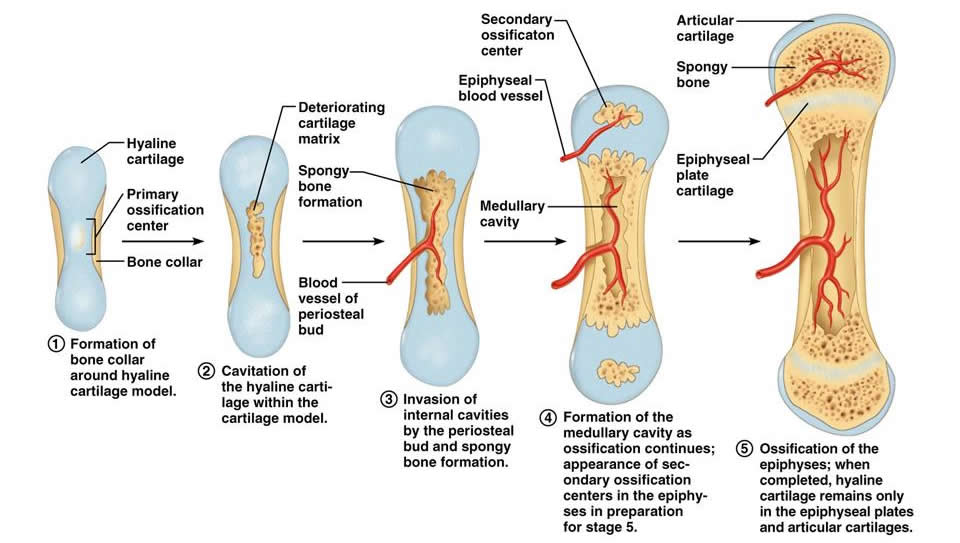
Slide15First, from basic anatomy, we have to realize that there is really no such thing as ‘growth plates’. The actual term for growth plates is just a name given to the band of cartilage that has not been encroached upon and turned into bone. I refer to picture to the right is taken from a class at Midlands Tech. The picture is small so it might be smart to click on the picture to make it bigger.

We see that in the actual development of the bones which grow not just longer but also wider, that the bones start out as completely cartilage, when the human is still in the womb and growing as an embryo. I don’t know enough about obstetrics but I would guess that the fetus starts to have some of the earliest cartilage tissue ossify before it is even born. If that was not the case and the long bones were still cartilage, from the process of birth where the fetus’s head has to pass through the birth canal, it’s cartilage head would be completely deformed or even crushed by the PC muscles of the female vulva region. Its body and limbs should also be partly bone or the mother and father in the hospital room would not be ale to hold the baby that was just born without hurting it through deformation of the cartilage.

Without reading anything on pediatrics or pediatrics growth, I am assuming right now that when the baby is just born, it already has the ends of the cartilage structure start to ossify and the diaphysis also ossify too. This is the beginning of where the ossification centers are.

So the growth plates are just where the ossification centers meet and where they haven’t encroached completely on through vascularization and mineralization.

I am proposing that it might be possible to have a limb bone growth with almost unlimited length if we can get a second band of cartilage alongside the original band of cartilage in the long bone’s bone tissue.

Depending on how the double growth plate would go together, and in which arrangement might be slightly tricky, at least at this stage. We know that the growth plates have around 4 basic zones which must all function in continuous, sequential path.

  1. Resting Zone – where the progenitor mesenchymal stem cells differentiate into the chondrocytes
  2. Proliferation Zone – the area where the cartilage cells multiply through the process of mitosis
  3. Hypertrophic Zone – the area where the actual bone lengthening (or actually cartilage matrix expansion) is being done.
  4. Calcification Zone – the area that is being infiltrated, vascularized, and mineralized to turn the cartilage tissue matrix into bone tissue matrix

The smooth sequential series of cell differentiation steps must also work for the 2nd growth plate, which would be implanted into the limb’s long bone, around the metaphyseal area, in parallel with the natural one.

The Actual Arrangment 

I remember reading that the way that the cartilage/growth plate actually manage to make the overall bone structure longer is that while the middle part of the long bone stays where it is, there is a part of the bone that is slowly being PUSHED away from the other area/ distance of the overall bone structure. Technically, the epiphyseal ossification center, which is the secondary center is being pushed outward by the continuous cartilage into bone tissue process of calcification aka ossification.

So remember this part – The natural process of how long bones get longer is that the resting zone is actually pushing the long bone’s ends, the epiphysis away from the center of the long bone structure. From physics, we have to remember that there really is no such thing as a PULLING FORCE. Anything that is moving is the result of a force that is doing PUSHING, NOT PULLING.

So what surface of tissue is pushing which surface of tissue to make the long bone longer?

The general current medical conclusion is that the edge of the growth plate that is on the epiphysis side (aka the resting zone side) is pushing distally the epiphysis away from the spatial center of the bone.

So how does this relate to the principle of height increase through double growth plate implants?

We have to decide in which direction should the growth plate go in, with either the resting zone facing outwards from the center of the bone, or facing inwards towards the center of the bone. Remember that the natural growth plate is facing away from the medium.

The 2nd thing to remember is that there has to be a continuous source of bone marrow derived mesenchyme that can differentiate into the cartilage cells/chondrocytes that we want. If we put the growth plate in the wrong direction, the bone marrows progenitor mesenchymal stem cells might not be enough and get depleted.

I present a picture found elsewhere below.
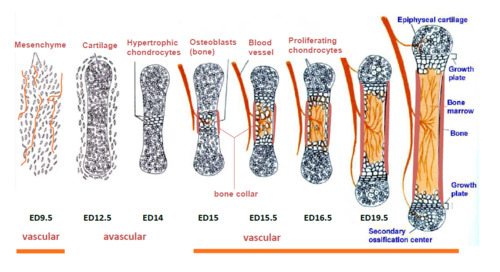
Growth Plate development

Notice that the blood vessels are going in only certain parts of the long bone so that the organic tissue in the cavity in the middle is kept alive. This would be the same blood vessel which would continue to make new progenitor mesenchyme. While there is maybe one major vessel going into the epiphysis, there is much more going into the middle of the bone. That is why I propose that the direction which a 2nd growth plate on each side should be put in be facing the direction where the resting zone would be on the side closer to the middle. The result is an overall long bone that actually has 5 sections, instead of the usual 3 sections, which results in 4 growth plates on each limb.

Complications With This Idea

The main issue with this proposal is from the failure of the long bone’s structural integrity because it became too long and the body became too heavy. The loading on the continuous cartilagenous area from above the growth plate would get heavier and heavier as the person got older, and the cartilage may not longer be able to support the body. If the bone, like a femur, became too long, it might become too weak
PEMF Decreases Articular Cartilage Thickness – So Does That Mean It Is Bad For Height Increase?

This study I recently found seems to put the old idea of using PEMF (Pulsed Electromagnetic Field) to grow taller really into question.

The truth is that in the very beginning, we had found studies which showed that PEMF helps towards accelerated bone fracture healing times, meaning that it was potentially good toward bone tissue growth.

  1. Pulsed electromagnetic field treatments enhance the healing of fibular osteotomies.
  2. Additive effects of prostaglandin E2 and pulsed electromagnetic fields on fracture healing.
  3. The effects of pulsed electromagnetism on fresh fracture healing: osteochondral repair in the rat femoral groove.

The article titles are above without the right links.

These studies showed that after say a surgical cut through the bone or a fracture, the non-union of the two part can be increased in healing by applying PEMF in short durations.

For me at this point in the research, I am no longer looking for techniques or compounds that will lead to bone growth since that implies bone tissue increase from bone mineral density increasing. I am almost completely focused on finding growth factors and methods to induce cartilage mainly because cartilage has been the only type of tissue that would work if we wanted to try to stretch human limbs. Bone tissue is just too hard, strong, and brittle to pull and create plastic deformation.

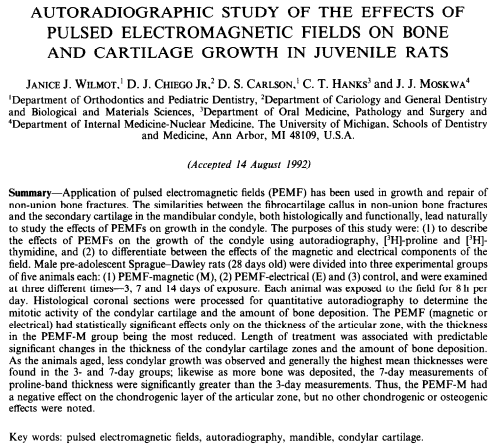
Study #1: AUTORADIOGRAPHIC STUDY OF THE EFFECTS OF PULSED ELECTROMAGNETIC FIELDS ON BONE AND CARTILAGE GROWTH IN JUVENILE RATS

Analysis: Articular Cartilage

Right off the bat we see that the point of PEMF is towards repair of non-union bone fractures.

We remember that for new bones to form, something called a callus is first developed. This callus will have a type of cartilage known as fibrocartilage inside.

The fibrocartilage and the cartilage found in the condyle area of the synovial joints are similar. The PEMF was applied to the articular cartilage in the condyle region.

There was 3 groups, the control, the group with only PEMF-M, and the last is PEMF-E. The fields were applied for 8 hours a day on the lab animals. The results show that for the PEMF-M group, the cartilage in the condyle region was most reduced. The researchers do note the fact that with different variations of time for PEMF application, there was varying degrees of articular cartilage thickness. It seems that as the animals grew older, the amount of cartilage growth decreased.

The ending may sum it best – The PEMF_M had a negative effect on the chondrogenic layer of the articular zone, but no chondrogenic or osteogenic effects were noted 

Interestingly, other studies seem to have contradictory conclusions…

Effects of Pulsing Electromagnetic Fields on Bone Growth and Articular Cartilage

Abstract

Observations made during treatment of juvenile pseudarthrosis by pulsing electromagnetic fields (PEMF) suggested that bone growth might be altered. PEMF applied to immature rabbits under conditions of continuous stimulation (24 hours/day for 8 weeks) produced no major changes in bone growth. Continuous stimulation by PEMF induced a statistically significant increase (22%) in femoral articular cartilage glycosaminoglycan. Intermittent PEMF stimulation (12 hours with stimulation/12 hours without stimulation) for 18 weeks produced no significant change in bone growth or time of epiphyseal plate closure. No significant changes in the physical characteristics of growing bone were observed with any treatment.

Analysis

This study seems to show that at least for the type of material inside, the glycoaminoglycan, that was increased if the PEMF was applied continuously 24 hours a day. The application showed no big changes in the growth of the bones or at what time the growth plates would have closed.

So for developing human children who still have their growth plates, PEMF doesn’t seem to increase the endochondral ossification process which would result in increased bone tissue formation rate. The glycoaminoglycan content level did go up but that did not cause the cartilage to thicken.

Implications For Height Increase

For a long time it was proposed that PEMF application would stimulate growth of bone. In the beginning it was looked at as a viable option to increase height. Now it seems that it can’t even make the growth of bone tissue increase in immature lab animals (and thus human as well) or the cartilage of the growth plates. I am willing to conclude at this point that maybe it is only possible to see the PEMF have any effect when there is a real fracture causing a non-union and we need accelerated healing. It still might be possible to use the PEMF technology after limb lengthening surgery to speed up the healing process.

An In-Depth Analysis On The Chondrogenic Ability Of BMP-7 or OP-1 – Is This The Strongest Growth Factor? (Breakthrough)

I have shown in past posts that BMPs are important as a family of growth factors as well as show that GDF-5 was critical on bone longitudinal growth.

But something that I always wondered was this – Which growth factor is the strongest and have the highest ability to turn progenitor cells into chondrocytes and make cartilage?

While I had argued before that it might be GDP-5, recent research suggest that maybe it might be BMP-7 (Bone Morphogenetic Protein-7) or known as OP-1 (Osteogenic Protein-1)

I wanted to go over an article I found which would give us more information on this specific compound and see just how good it really is in cartilage formation and cartilage regeneration

Study #1: OP-1/BMP-7 in cartilage repair – Authors: Susan Chubinskaya, Mark Hurtig, and David C. Rueger

The study is just a way for the researchers who have after an additional 3 years of BMP-7 research to summarize what new information they have accumulated about the growth factor. They have done in vitro studies, ex vitro studies, an in vivo studies. The focus is supposed to be on articular cartilage and the chondrocytes in the articular cartilage but it would also reveal some research they did on the non-articular cartilage in the intervertebral disks.

The the researches concluded after years of research is that BMP-7 is slightly more pro-chondrogenic than most other growth factors. It has the pro-anabolic qualities that make it useful for cartilage repair and cartilage regeneration but it also has anti-catabolic qualities as well.


Remember –


BMP7 (OP-1) has been shown in multiple studies looking at multiple types of models where the articular cartilage in the tested lab animals to repair cartilage. The different ways that cartilage can degradate or break down are…

  1. focal osteochondral
  2. chondral defects
  3. osteoarthritis
  4. degeneration in intervertebral disc cartilage

In all of these types of degeneration, the growth factor has shown cartilage repair qualities.

The researchers note from the start of the Introduction section that one of the major difficulties in orthopaedics is to figure out how to get the tissue of cartilage to regeneration and repair itself. It turns out that osteoarthritis is one of the most debilitating disorders for US adults. Also, degenerative disk disease (aka DDD) is one of the main causes for chronic back pain. Researchers in recent years realize that it might be possible using BMPs, but especially BMP-7, to fix these cartilage degeneration problems. They are used as cartilage anabolic factors because of their ability to induce matrix synthesis and promote repair in cartilage.

The functions of BMPs as a general group (part of the larger TGF-Beta Superfamily) include the regulation of…

  1. Cellular proliferation
  2. Cellular apoptosis
  3. Cellular differentiation 
  4. Cellular Migration
  5. Embryonic development
  6. Maintenance of Tissue Homeostasis 

Recent findings show that additional functions include…

  1. Inducing ectopic endochondral bone formation (in subcutaneous implants)

It seems that in the adult human, there are many places which create this growth factor, but especially in the articular cartilage.

Side Fact: It turns out that OP-1 was the first BMP to get regulatory approval and be allowed to be used in the treatment of bone and cartilage disorder.

Over the years the OP-1 as a cartilage repair factor has shown to have two main abilities.

  1. It can induce bone formation
  2. It can repair cartilage

It seems that for orthopaedic disorders & conditions which involves the cartilage degradation of either the articular cartilage or the intervertebral disks, the OP-1 will be very useful in application for treatment.

In Vitro Studies

OP-1 has this ability to up-regulate chondrocyte metabolism and protein synthesis without also creating uncontrolled proliferation (and formation) of bone tissue cells known as osteophytes.

Osteophyte – commonly referred to as bone spurs or parrot beak, are bony projections that form along joint margins. Osteophytes usually limit joint movement and typically cause pain.

If we take the growth factor and put it on chondrocytes, the extracellular proteins that result from the growth factor will only be towards cartilage tissue formation.

The types of extracellular protein that will be formed include, but are not limited to…

  1. Collagen type II
  2. Collagen typ VI
  3. Aggrecan
  4. Decorin
  5. Fibronectin
  6. Hyaluronan [HA]
  7. Normal, functional proteoglycans

It seems that the type of extracellular matrix protein that is created by the chondrocyte from Op-1 application is consistent and it does not change, whether the chondrocyte was normal or from osteoarthritic conditions, and whether it came from an old or young individual. It doe not cause the chondrocyte to even change in shape or differentiate into hypertrophy either.

But wait, there’s more!

OP-1 seems to be able to control the stimulation and rate of formation of other types of proteins which include…

  1. IGF-1
  2. TGF-Betas
  3. BMPs
  4. Interleukin-6

It also controls the formation of chondrocyte cytoskeletal proteins including…

  1. Talin
  2. Paxillin
  3. Focal adhesion kinase

The other thing listed that it does was that BMP-7 can increase the gene expression of an anabolic molecule tissue inhibitor of metalloproteinase (TIMP) in both normal and osteoarthritic chondrocytes.

So we realize that it has multiple pro-anabolic abilities for cartilage tissue formation. However it doesn’t stop there. It also has inhibitory abilities for cartilage tissue extracellular matrix degradation  inducing growth factors.

It inhibits these tissue degradation proteins…

  1. MMP-1
  2. MMP-3
  3. MMP-13
  4. ADAMTS-4

To summarize, the anabolic qualities seen in BMP-7/OP-1 include…

  1. Promotion of  cell survival
  2. Regulates various anabolic pathways active in articular cartilage
  3. Activates the IGF-1 signalling pathway

This means that BMP-7 might have the ability to restore the IGF-1 sensitivity/response of the chondrocyte which are lost through aging. If we actually took the BMP-7 and combined it with IGF-1, the cartilage matrix formation increases and the proliferation of the cells/chondrocytes increases 2-fold. This effect is not seen from using either IGF-1 or BMP-7 individually.

It is interesting that if you introduced a third growth factor like basic FGF, the cartilage tissue formation would actually decrease. I wrote about the effect of basic FGF in an old post referencing a patent which showing that basic FGF with hyaluronic acid can work together to form bone tissue.

To summarize it’s anti-catablic abilities through inhibiting of matrix degenerating factors, it inhibits

  1. proinflammatory cytokines like Interleukin-1 and Interleukin-6
  2. fragments of cartilage matrix proteins like fibronectin fragments or HA hexasaccharides 
  3. IL-6 family of chemokines
  4. leukemia inhibitory factor, (LIF)
  5. the downstream signalling molecules of the family of interleukin chemokines.
  6. a baseline and cytokine-induced expression of MMP-1 and MMP-13

The reseachers summarized all of the claims and results with a a passage…

“To our knowledge, OP-1 is the only BMP studied thus far in cartilage that exhibits both broad pro-anabolic and anti-catabolic activities. As we found OP-1 is a better stimulator of PGs than BMP-2, 4, 6 and cartilage-derived morphogenetic proteins (CDMPs) 1 and 2…”

Note: The cartilage derived morphogenetic proteins 1 and 2 is another name for chondromodulin type 1 and 2.

The cause on how OP-1 inhibits the MMP-13 and MMP-1 is by inhibiting the upstream activators of MMP-1 & 13, which are the NF-κB and AP-1. Not only that, there seems to be a new way that OP-1 can inhibit the IL-1β signalling. It appears that OP-1 has a potential to reverse MAPK signalling via the inhibition of IL-1β-induced P38 phosphorylation.

In terms of where we can find this special growth factor, it is found and formed in articular cartilage. It is not restricted to just humans however but most other large mammal tissue.

In terms of where else in the body can the BMP-7 protein be found from, they are…

  1. synovial fluid from normal joints and from patients with OA and rheumatoid arthritis (RA)
  2. in synovium
  3. ligament
  4. tendon
  5. menisci

What we know for a fact is that the gene and the expression of the gene for BMP-7 decreases dramatically with the aging and degeneration of the cartilage. In normal cartilage, the concentration of the BMP7/OP-1 is around 50 ng per gram of dry tissue.

The results from manipulating the BMP-7 concentration in chondrocytes showed that endogenous OP-1 is a critical factor that controls cartilage matrix integrity and is involved in the maintenance of normal cartilage homeostasis. The lack of OP-1 expression negatively affected a number of matrix proteins and anabolic pathways and stimulated factors associated with cartilage catabolism.

Certain BMPs, in particular BMP-7, have an important role in

  1. chondrocyte differentiation
  2. extracellular matrix production
  3. the maintenance of adult chondrocyte phenotype. 

The next 3-4 pages of the PDF would go into showing how the application and injection of the OP-1/BMP-7 in animals for studies lead to fixing focal osteochondral defects, focal chondral defects, and osteoarthritic models.

What is probably the most fascinating for use as height increase researchers is the section called “Non-articular cartilage repair

From the PDF…

“…The stimulatory effect of OP-1 on Intervertebral disc cells was first demonstrated in vivo by the intradiscal injection in normal rabbits. the height of the discs increased. This corresponded with an increase in proteoglycan concentration of the nucleus pulposus.”

Note: The study has been referenced multiple times in multiple posts


and it was one of the studies that really showed me in the beginning of the website just how powerful the BMPs can be. I proposed at least 1 idea on how to use the OP-1 to increase adult human height.

What happened was that rabbits had their disc heights decreased by putting a needle through puncturing the surface of the disk letting out the matrix liquid contents. Liquid OP-1/BMP-7 was injected into the NP. Six weeks after the injection a complete restoration of the disc height was observed. Biomechanical measurements demonstrated that OP-1 also restored the viscoelastic properties of the disc to the level of non-punctured control discs.

This testing with rabbits was repeated with rats and the same results showed up. The testing showed that the following compounds were all decreased or inhibited leading to anti-catabolism.

  1. aggrecanase
  2. MMP-13
  3. TNF-α
  4. IL-1β
  5. substance P

Conclusion

BMP-7 aka OP-1 is going to have multiple applications for cartilage repair. It is endogenously expressed in cartilage and has anabolic qualities on chondrocytes in culture. Beyond cartilage, it is also found in tendons, ligament, and synovial joint fluid.

In terms of its function, it can stimulate the synthesis of all the major cartilage extracellular matrix proteins and to counteract the degenerative effect of numerous catabolic mediators.

Animal studies have also demonstrated that OP-1/BMP-7 can be safely administered to the joint or the disc. This suggest that if humans wanted to try this idea out for themselves, it should be relatively safe. However I am not sure just how close a needle and syringe filled with BMP-7 injected into a disc would actually be relative to the spinal nerves. There is a chance that if we get the wrong area with the needle, the subject will go through extreme pain in have a nerve root stimulated directly.

What is most amazing is that there seems to be no side effects for the liquid form of BMP-7 administered to the body through say the synovial joint cavity of the knee.

“…In these studies there have been no reports of side effects, such as bone formation on the synovial or disc surface or free floating objects in the synovial fluid. Furthermore there have not been reports of inflammatory side effects such as synovitis, pannus formation or joint effusion.”

The conclusion is taken directly from the study.

The BMP-7 could be delivered locally to a focal defect site on an appropriate scaffold material or possibly delivered to the joint without a scaffold as was demonstrated in the minipump delivery study. In the disc studies liquid OP-1 was demonstrated to be effective when directly injected into the disc.

So is BMP-7 the best pro-chondrogenic, pro-cartilage formation growth factor that researchers know currently?

At this point, I would have to say yes, at least when you are talking about using a single type of growth factor alone. It has both anabolic and anti-catabolic properties for cartilage tissue extracellular matrix protein formation. There was the part which showed that with IGF-1, the results might even be better.

Implication for height increase

This compound has serious possibilities in allowing adult humans to increase their height if they can be administered in the right places. The fact that this compound is supposed to be better at stimulating proteoglycan formation than even cartilage-derived morphogenetic proteins (chondromodulin) shows just how powerful it really is.

More research still needs to be done. The areas now to figure out are…

  1. To pinpoint where exactly the an injection of BMP-7 or BMP-7 with other growth factor should should go.
  2. To figure out the amount of concentration used in each injection (the starting concentration is around 50 ng per gram of dry tissue)
  3. The right type of minimal invasive way to get the BMP-7 to the right locations.

Increase Height Using Tamoxifen, Where Scientific Sources Contradict Each Other

I wanted to show the readers in this post something which I have been finding a lot recently, which is that different medical sources seem to say the exact opposite thing in their results. I was doing research on BMPs for another post and there was contradictory information on which BMPs have the highest chondroinductive potential.

So for this post, I wanted to focus on the compound Tamoxifen. Tamoxifen is what is known as an aromatase inhibitor, where it is supposed to prevent androgens aka testosterone in the body from turning into estrogen. 

So by that logic, since it is preventing estrogen from being produced, it should help in increasing the length of time for growth from preventing growth plates from fusing completely.

There is sources that support this idea like from old Height Increase forums in threads like Real advice from an endocrinologist

“…Anti-estrogen, or aromatase blockers, are available widely and might not require a prescription. They should be safe, but given that they deal with the brain, if you experience and neurologic effects like uncontrollable shaking of your hand, stop treatment and seek professional advice. Examples of anti-estrogen can be Letrivole, Tamoxifen and many more.”

Other sources like from the article Tamoxifen May Help Short Boys Grow Taller

“…tamoxifen, which is usually used for the treatment of breast cancer, decreases the rate of skeletal maturation in boys giving them time to attain higher final body height. These research findings were reported in the in a recent issue of the medical journal Pediatrics.”

The referenced study is The Use of Tamoxifen to Improve Height Potential in Short Pubertal Boys. It would seem that many of the other websites that are saying that Tamoxifen can help increase height all reference this one study, which for me is slightly troubling.

The main thing to note from the real source is that the few boys tested on were almost 15 years old and on average had tamoxifen administered for a littler over 2 years.

THE OPPOSITE SIDE

Interestingly Tyler wrote about this factor in the post Grow Tall With Tamoxifen where he realizes that there seems to be more evidence showing that Tamoxifen is bad for longitudinal growth.

Not only that, Hakker posted years ago in the bodybuilding forum this…

“Avoid tamoxifen (sold as “Nolvadex”). Bodybuilders on steroid cycles often use tamoxifen because it interferes with the estrogen receptor; that way, they don’t get man boobs. Some may take tamoxifen for its anti-estrogen qualities to keep their growth plates open. Don’t. In several studies, ironically, tamoxifen has actually caused irreversible death of growth plate cells, a precursor to the fusion of the growth plates. In some instances, tamoxifen has been given to end the growth of very tall girls. Tamoxifen also greatly stunts growth hormone secretion and IGF-1 production. Tamoxifen is an anti-breast cancer drug. Not a bodybuilding drug. Bodybuilding and anti-estrogen is an off-label use of tamoxifen. Lowered GH and IGF-1 is good for breast cancer, but bad for growth. Take home lesson: Avoid tamoxifen or Nolvadex.”

This concurs with two studies I have found on PubMed point at that fact…

  1. Tamoxifen impairs both longitudinal and cortical bone growth in young male rats.
  2. Tamoxifen induces permanent growth arrest through selective induction of apoptosis in growth plate chondrocytes in cultured rat metatarsal bones.

Another source I wanted to cite is “Precocious puberty and statural growth”

“…From the Discussion Section..Tamoxifen, a selective estrogen receptor modulator, has also been used and a recent report of a 1 year treatment shows a decreased frequency of bleeding episodes (from 3.4 to 1.2 per year in average), a decrease of growth velocity (–1.8 ± 3.0 SD) and a decrease of bone age maturation (ΔBA/ΔCA: –0.5 ± 1.0). Of note, nine of the 25 patients in this study had failed on aromatase inhibitors and were successfully treated with tamoxifen. In any case, no data are available on the long‐term effects of aromatase inhibitors or tamoxifen on height in McCune–Albright syndrome.”

Final Analysis:

It would seem that Tamoxifen seem to have two functions towards height. It causes chondrocytes to die out at a faster rate but somehow it also manages to slow down bone maturity. It is very confusing. From the first study cited above…

“…elevated chondrocyte proliferation and apoptosis, as well as decreases in the number of hypertrophic chondrocytes and in the size of terminal hypertrophic chondrocytes”

I am left to wonder whether the way tamoxifen really works is to just lead the chondrocytes to proliferate at a higher rate but don’t allow the chondrocytes to go through full hypertrophy, and then killing the cells off. This explains the growth arrest but not how it is able to slow down growth plate maturity. Very strange, and still confused at the writing and posting of this article.

Side Note: Hakker on the same bodybuilding forum thread notes this about the phytoestrogen in soy products which is the same idea I proposed a a very recent post “Phytoestrogens Found In Soy Based Foods May Explain Why Vegetarians and Asian Ethnicities Have Been Historically Shorter (Very Important!)

Avoid soy products – Not only do they contain potent phytoestrogens that can mimic estrogen’s effects on the growth plates, but the same soy phytoestrogens have been shown to block IGF-1 signaling. Soy is bad for growth at both ends: at increasing IGF-1 and at lowering estrogen. Read ingredient labels; avoid anything that lists soy protein as a major ingredient. Soy sauce does not contain much at all of these chemicals. (Hakker)

Avoid broad beans, also known as fava beans – It contains a potent phytoestrogen (plant-based compound with effects in the body similar to estrogen) that has the ability to activate estrogen receptors. The growth plate is full of estrogen receptors. In the presence of its activation, it may begin to turn into hard bone and end growth completely. (You might even say that broad beans will turn you into a broad.) Those who red the scam book Grow Taller 4 Idiots (seriously for idiots) know that it recommends broad beans because it contains a growth hormone secreatogue, L-DOPA. Oral ingestion of L-DOPA does increase growth hormone, but not significantly in doses contained in broad beans. To achieve a significant growth hormone increase with L-DOPA, one would have to obtain purified L-DOPA from plants, which is usually so expensive that I didn’t bother to put it on the list, or get synthetic L-DOPA, which can only be obtained with a prescription. Also note: The same phytoestrogens in broad beans are found in soybeans, although the issue of phytoestrogens in soy is sure to stir up debate. (Hakker)

Just something to consider for myself when I reach the same conclusion as the research done by Hakker and the gang at Grow Tall Forum years back. Sometimes I do wish I did not have to reinvent the wheel in terms of rediscovering already studied and concluded points and get some of the already done research form the now dead website. Oh well.


An Issue Over Website Spying By Chinese and Other Government Agencies

Side Note: Ever since the incident with Snowden leaking the story of how the NSA has been supposedly tracking the cell phone records of everyone in the US has come out, I have been wondering just how much effort certain government agencies have been doing to watch the development of this website.

I recently noticed that the traffic this website is getting from the countries of China and India have increased dramatically recently.

Now, traffic from India is actually normal and normally it is the nation that give me the 2nd most number of visitors. From checking the website’s rankings across the internet, in recent weeks it has been going up a little. The average amount time spent by visitors from India and the Philippines are actually much higher than what I see by visitors from the USA. The Bounce rate is very low from the Philippines so I would guess that those people are really searching for a solution.

India and the Philippines have history with using the English language so it is reasonable for large amounts of traffic to come from those countries where people are typing in English into the keyboards searching for a way to possibly grow taller. I personally don’t know how a person would type Tagalog or Hindi script or characters on a keyboard.

However the traffic from the nation of People’s Republic of China has also increased by a large margin. A few days ago I noticed that some of the visitors that stayed the longest on the website (engagement time) are coming from an address in China. When I check the address of the website, it seems that the same address is being used by networks inside the USA and from a certain network in Mainland China. They log on for over an hour each time and take almost 100 actions looking over the articles and resources I have collected.

It could be that there is just a Chinese person who learned how to get around the Firewall over there and they are desperate in looking for a way to increase their height. However this is coming from multiple sources in the country.

Not only China, I have noticed from the very beginning from the website tracking software that multiple times a day I get visitors that comes from the Department of Defense or Department of Information. They don’t stay too long so I am guessing it is a bot or script written to scour the internet for suspicious activity.

I am left to wonder just how much does certain governments track our movements online. I am positive now that certain government organizations are watching this website with high interest. The fact that I have proposed the idea of increasing height using certain technologies that have not even been completely available yet means that some people are not just worried, but quite curious at whether we can make any type of breakthrough. I don’t expect that one day my place will be broken into and government agents will swoop in to take my computer and all of the papers and research I have been doing.

Maybe I am becoming paranoid over what has been on the news and internet websites recently but I am left with the quote stated by former Intel CEO Andy Grove…“Only the paranoid survive”

Melanoma Inhibitory Activity or MIA is Needed To Get TGF-Beta2 and BMP-2 To Stimulate Mesenchymal Stem Cells Towards Cartilage Than Bone Tissue (Breakthrough!)

Study:  Regulation of mesenchymal stem cell and chondrocyte differentiation by MIA.

Tscheudschilsuren G, Bosserhoff AK, Schlegel J, Vollmer D, Anton A, Alt V, Schnettler R, Brandt J, Proetzel G.

Source: Scil Proteins GmbH, Heinrich-Damerow-Strasse 1, 06120 Halle/Saale, Germany.

Abstract

Melanoma inhibitory activity (MIA), also referred to as cartilage-derived retinoic acid-sensitive protein (CD-RAP), an 11-kDa secreted protein, is mainly expressed in cartilaginous tissue during embryogenesis and adulthood. Currently, the function of MIA in cartilage tissue is not understood. Here, we describe that MIA acts as a chemotactic factor on the mesenchymal stem cell line C3H10T1/2, stimulating cell migration significantly at concentrations from 0.24 to 240 ng/ml, while inhibiting cell migration at higher doses of 2.4 microg/ml. When analyzing the role of MIA during differentiation processes, we show that MIA by itself is not capable to induce the differentiation of murine or human mesenchymal stem cells. However, MIA influences the action of bone morphogenetic protein (BMP)-2 and transforming growth factor (TGF)-beta 3 during mesenchymal stem cell differentiation, supporting the chondrogenic phenotype while inhibiting osteogenic differentiation. Quantitative RT-PCR analysis revealed the up-regulation of the cartilage markers MIA, collagen type II and aggrecan in human mesenchymal stem cell (HMSC) cultures differentiated in the presence of MIA and TGF-beta 3 or BMP-2 when compared to HMSC cultures differentiated in the presence of TGF-beta 3 or BMP-2 alone. Further, MIA down-regulates gene expression of osteopontin and osteocalcin in BMP-2 treated HMSC cultures inhibiting the osteogenic potential of BMP-2. In the case of human primary chondrocytes MIA stimulates extracellular matrix deposition, increasing the glycosaminoglycan content. Therefore, we postulate that MIA is an important regulator during chondrogenic differentiation and maintenance of cartilage.

Analysis: This paper is most interesting because it shows that there might be certain compounds which have a supporting or even controlling influence on how TGF-Beta and BMPs will affect mesenchymal stem cells.

This compound known as Melanoma Inhibitory Activity (MIA) is very new to me. It is also known as cartilage-derived retinoic acid-sensitive protein (CD-RAP). The fact that is is only expressed during embryogenesis and during adulthood makes me however question whether it is any good at creating cartilage when children are still growing and going through endochondral ossification. Why is this compound not expressed when kids have open growth plates and expressed in adults?

The other thing that I wanted to raise was over the fact that the other name for MIA is retinoic acid sensitive protein. We know that retinoic acid is not good for longitudinal growth. If this compound is sensitive to retinoic acid then maybe it acts like a substrate to the RA to bind to when further cartilage formation is needed to stop ie. full bone maturity.

However the reason why this compound is considered such a breakthrough in the research is that when it is used in combination with TGF-beta or BMP-2, the cartilage tissue cell lineage is differentiated while the bone cell lineage is inhibited.

The MIA, BMP-2, and the TGF-Beta are not enough alone to create the cartilage lineage, although all of them have some type of chondrogenic and osteogenic differentiation potential. With the MIA in as part of a mixture of growth factors, human mesenchymal stem cells seemed to focus only on differentiating in that cartilage lineage. Not only that Collagen Type I markers were found, which is always a good sign.

There was also increased amount of deposition of cartilage extracellular matrix material as well as increased GAG formation.

If I was to create the best chondrogenic growth factor formula, I would definitely be studying much more on this new compound called Melanoma Inhibitory Activity.