 I have been recently looking more towards the old Grow Tall Forum website for clues on what types of research and methods height increase seekers before me were up to. One website or company which were claiming that they had a working product was called Height FX which had the website HeightEffects.com. I typed in the url but nothing showed up. A look through the forums back in 2008-2009 shows that this website was definitely something that was talked about. From checking the WayBack Machine it seems that the website was around from 2008 to 2011. The board members seemed to show some serious interest in it and whoever was the person doing the scientific research on trying to figure out a proposed method was doing real research.
It seems that through using the WayBack Machine and clicking on a save copy of the website from back in Feb of 2011 I managed to get a copy of the pills/product that was being sold on the website. I managed to do a clipping of the website and pasted the pics below.
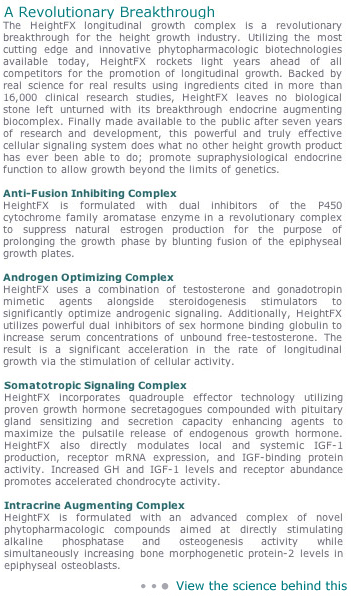
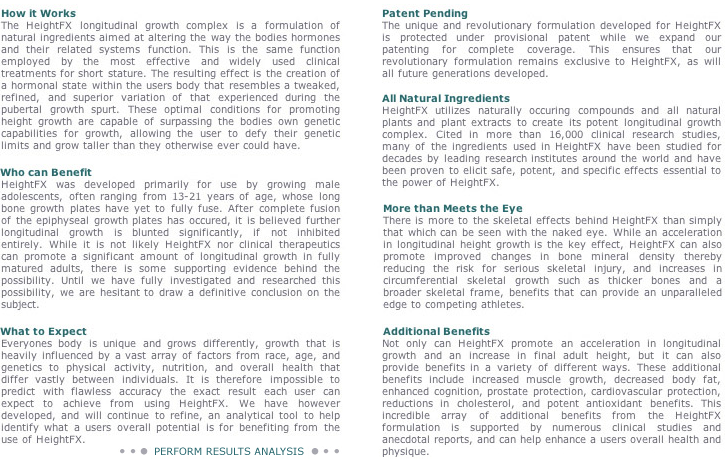
I looked for a copy of the ingredients and science section of this product and did find an old copy of the information on the page. There seems to be nothing on the Research page but when I clicked on the “view the science behind this” link I am taken to a section is quite scientifically intensive.
I took the liberty to copy and paste all of the information from the old website to this post which is below….
Note: My review of the website and the science of this proposed pill is at the very bottom of this post, which you will have to scroll all the way down to read. This proposed height increase idea is quite advanced.
HeightFX Biotechnology
Introduction to the HeightFX Technology
The HeightFX longitudinal growth complex is unlike any other height growth product ever developed. Based upon real science to provide real results, HeightFX incorporates some of the most cutting edge science available today. The HeightFX formulation can be broken down into 4 major components detailed below. Each component shown below includes decades of clinical research conducted by a wide variety of institutions from around the world in support of the technologies used. Many of the components used in HeightFX mimic the very same mechanisms used in clinical hormonal treatments for short stature by the medical community. .These mechanisms represent the leading and most effective treatments for short stature currently available.
Proprietary Extraction Techniques
Not all plant extracts are created equal. Many plants contain dozens, if not hundreds, of naturally occuring active compounds called phytonutrients. The extraction technique used determines what fraction of these phytonutrients is captured in the finished extract, and it is these phytonutrients that elicit the potent effects behind HeightFX. We at the Herbal Height company, alongside our manufacturing partners, are continuously developing and refining our own proprietary extraction techniques to capture the optimal phytonutrient fractions of the plants used in the HeightFX formulation. The plant extracts used in HeightFX contain highly specialized, custom tailored, phytonutrient compositions not found replicated in other extracts of the same plants. It is these fine details that define the effects of HeightFX, and set it apart from other extracts currently available on the market today.
Anti-Fusion Inhibiting Complex
One of the primary mechanisms behind the revolutionary HeightFX formulation is its ability to suppress estrogen production within the body by inhibiting activity of the P450 cytochrome families aromatase enzyme in a reversible manner. The aromatase enzyme is responsible for converting a portion of testosterone into estrogen within the male body. This same mechanism has had a major impact in shaping the clinical therapies used in the new millenium for treatment of short stature. Ample clinical studies conducted in recent years, as well as novel cases of aromatase enzyme gene mutation in certain individuals, have shown that the suppression of estrogen in the male body by use of aromatase enzyme inhibitors delays growth plate fusion, thereby extending the length of time the patient can continue to grow taller and significantly increasing their final adult height [1, 2, 3, 4, 5, 6], an outcome in direct defiance of their genetics. Recorded medical cases [7, 8], as well as clinical studies, have shown that estrogen is the major mediator of epiphyseal growth plate fusion, likely through agonist activity at the estrogen receptor alpha [9, 10, 11]
The HeightFX longitudinal growth complex utilizes dual inhibitors [12, 13, 14] of the aromatase enzyme to accomplish significant suppression of endogenous estrogens thereby extending the period of time that the users epiphyseal growth plates can continue to develop new skeletal tissue . However, unlike clinically used aromatase inhibitors (AI) such as the triazole family of reversible inhibitors; Letrozole and Anastrozole, the primary AI used in HeightFX, a proprietary extract of grape seeds, has been shown not only to inhibit existing aromatase enzymes, but also to suppress the expression of the aromatase enzyme gene [5]. Suppression of aromatase enzyme gene expression can result in an overall decrease in the amount of newly forming aromatase enzymes, thereby furthering the effectiveness over time of HeightFX’s anti-fusion inhibiting complex.
HeightFX’s anti-fusion inhibiting complex leads to a delay in growth plate fusion thereby allowing the user to continue to grow taller for a longer period of time than they otherwise could naturally.
Androgen Optimizing Complex
Considered to be the most potent class of clinical hormonal therapy utilized for the acceleration of height growth in growing adolescents, androgen therapy is a cornerstone of the HeightFX longitudinal growth complex. The most well known androgen is the male sex hormone Testosterone. Other androgens used in the clinical treatment of short stature include the synthetic anabolic androgenic steroids Oxandrolone and Fluoxymesterone. The administration of androgens, wether naturally occuring or synthetic, leads to a significant acceleration in the rate of longitudinal height growth with minimal side effects, are well tolerated in the majority of patients, and result in the most significant increases in height growth of any treatments used clinically [15, 16, 17, 18, 19, 20, 21, 22]
HeightFX elicits functional androgenic effects by increasing androgen receptor agonist activity in the epiphyseal growth plates. The first major androgenic mechanism utilized involves the use of sex hormone binding globulin inhibitors to prevent its binding to its receptors and circulating androgens [23, 24, 25, 26]. Sex hormone binding globulin (SHBG) is a glycoprotein found in both sexes that binds with androgens and estrogens circulating through the blood stream and deactivates them. A portion of the testosterone and other androgens in circulation are bound to SHBG and therefore inhibited from eliciting an androgenic effect on tissue [27, 28]. Certain phytonutrients utilized in HeightFX function by binding to existing SHBG and rendering it incapable of deactivating endogenous androgens. The result is an increase in the serum blood levels of active-unbound androgenic hormones able to promote longitudinal growth.
Another major mechanism by which the phytonutrients utilized in HeightFX increase androgen receptor binding activity is by directly increasing production of androgenic hormones, primarily testosterone and its 5-alpha-reductase catalyzed derivative dihydrotestosterone. One way in which HeightFX accomplishes this is by increasing steroidogenesis, the production of testosterone, within the leydig cells of the testicles [29, 30, 31, 32, 33, 34, 35]. The aromatase inhibitors used in the HeightFX formulation also work to increase testosterone levels through endocrine feedback mechanisms and by preventing a portion of produced testosterone from being aromatised into estrogen. Additionally, HeightFX employs the novel phytonutrient Icariin which elicits a testosterone-mimetic effect by directly binding to androgen receptors thereby functioning as a selective androgen receptor modulator (SARM) [36]
The androgen optimizing complex utilized in HeightFX leads to a significant acceleration in the rate of longitudinal height growth.
Somatotropic Signaling Complex
Human Growth Hormone (HGH) and Insulin-like Growth Factor-one (IGF-1) have long been used alone or in combination with androgens clinically to treat growth disorders such as short stature by accelerating longitudinal growth velocity [37, 38, 39, 40, 41, 42, 43, 44, 45, 46, 47, 48, 49, 50, 51]. Growth hormone and IGF-1 elicit the majority of their height growth promoting benefits through the modulation of chondrocyte activity, cartilage cells, within epiphyseal growth plate tissue [52, 53, 54, 55, 56, 57, 58]. Additionally, studies suggest that HGH and IGF-1 have direct effects on osteoblasts and osteoclasts and therefore play a major role in not just the growth of growth plate cartilage, but also the ossification of that cartilage to bone as well as the remodeling of existing skeletal structures [59, 60, 61]
HeightFX has a vast spectrum of somatotropic effects within the growth plate, effects that promote a far broader array of synergistic benefits than that experienced from increasing HGH and IGF-1 levels alone. The cornerstone of HeightFX’s somatotropic signaling complex is its direct effects regulating the release of HGH and IGF-1 through a cutting edge complex of secretagogues and sensitizing agents. HeightFX’s androgen optimizing effects are able to blunt the negative feedback mechanisms controlling the pulsatile release of growth hormone [62], thereby allowing greater release of growth hormone from the pituitary gland in response to HGH secretagogues utilized in the HeightFX formulation. Research studies also show that androgens increase IGF-1 receptor abundance and gene expression in skeletal chondrocyte tissue [63, 64], an effect that allows a stronger IGF-1 growth response to occur. Further evidence suggests that increased androgen activity, such as that promoted by HeightFX, modulates HGH and IGF-1 release responsiveness at different points in the somatotropic endocrine cascade [65, 66, 67, 68, 69]
The primary mechanism making up the somatotropic signaling complex utilized in HeightFX involves the combination of an acetylcholinesterase inhibitor [70, 71, 72] alongside a potent growth hormone secretagogue [73, 74, 75, 76, 77, 78, 79, 80]. Inhibition of acetylcholinesterase potentiates growth hormone release response to the primary secretagogue used in HeightFX [81], a result of increased acetylcholine levels resulting in the inhibition of somatostatin [82, 83, 84, 85, 86, 87]. Furthermore, the inhibition of somatostatin also prolongs the duration of growth hormone secretion pulses [88]
The end result of HeightFX’s somatotropic signaling complex is a rapid acceleration in the rate of chondrogenesis by stimulating increased chondrocyte proliferation and hypertrophy.
Intracrine Augmenting Complex
The intracrine systems of the epiphyseal growth plates are extremely complex systems of autocrine origin hormones, cytokines, growth factors, binding proteins, morphogens, and other highly specialized cellular signaling ligands, many of which are specific to skeletal tissue only. The majority of HeightFX’s growth promoting effects focus on accelerating chondrogenesis, the creation of new cartilage within the epiphyseal growth plate. One major element of HeightFX’s intracrine augmenting complex however, focuses on enhancing osteogenesis, the calcification of newly formed growth plate cartilage into bone tissue. Osteogenesis is the result of osteoblast cell activity depositing calcium into the cartilage matrix formed by chondrocytes, and the HeightFX formula aims to accelerate osteogenesis in harmony with chondrogenesis.
HeightFX promotes increased osteogenesis by stimulating the differentiation and proliferation of osteoblasts via the increased production and mRNA synthesis of bone morphogenetic protein-2 levels (BMP-2) in osteoblasts, as well as by increasing osteoblast alkaline phosphatase (ALP) activity [89, 90, 91]. HeightFX can also accelerate the proliferation and ALP excretion capabilities of bone marrow stromal cells (BMSCs), resulting in greatly improved osteogenesis activity of BMSCs [92].
The overall result of the intracrine augmenting complex used in HeightFX is a significant increase in osteoblast activity leading to an acceleration in the formation of new skeletal tissue via endochondral ossification.
Biotechnology Summary
HeightFX accomplishes its incredible height growth promoting effects through mechanisms that mimic those employed in the most effective and widely used clinical therapies for short stature. It is through this wide spectrum of synergistic pharmacologic effects that makes HeightFX unlike anyother height growth product to ever exist on the market. The inhibition of the aromatase enzyme and its gene expression allows a dramatic prolonging of the longitudinal growth phase in growing adolescents, while the increased androgenic, somatotropic, and intracrine effects simultaneously accelerate the rate of longitudinal skeletal growth to supraphysiological levels otherwise unachievable. This unique complex of growth promoting mechanisms makes HeightFX the first and only product ever made available to the height growth community that uses real science supported by real research to promote real height growth. You no longer have to accept the height your genetics have dictated for you, biotechnologies as effective if not more effective than those used in clinical treatments are now available at your fingertips thanks to the HeightFX longitudinal growth complex brought to you by the Herbal Height company.
The Future of HeightFX
The Herbal Height company will continue to develop, refine, and improve the HeightFX longitudinal growth complex for years to come. Not only do we have many plans for future generations of the HeightFX formula, some of which are currently in development stages, but we are also developing additional products and informational resources to be used in conjunction with the HeightFX longitudinal growth complex, or on their own.
Clinical Study References
[1] Zhou P, Shah B, Prasad K, David R. (2005) Letrozole significantly improves growth potential in a pubertal boy with growth hormone deficiency.
[2] Hero M, Norjavaara E, Dunkel L. (2005) Inhibition of estrogen biosynthesis with a potent aromatase inhibitor increases predicted adult height in boys with idiopathic short stature: a randomized controlled trial.
[3] Wickman S, Sipilä I, Ankarberg-Lindgren C, Norjavaara E, Dunkel L. (2001) A specific aromatase inhibitor and potential increase in adult height in boys with delayed puberty: a randomised controlled trial.
[4] Faglia G, Arosio M, Porretti S. (2000) Delayed closure of epiphyseal cartilages induced by the aromatase inhibitor anastrozole. Would it help short children grow up?
[5] Dunkel L, Wickman S. (2003) Novel treatment of short stature with aromatase inhibitors.
[6] Mauras N, Gonzalez de Pijem L, Hsiang HY, Desrosiers P, Rapaport R, Schwartz ID, Klein KO, Singh RJ, Miyamoto A, Bishop K. (2008) Anastrozole Increases Predicted Adult Height of Short Adolescent Males Treated with Growth Hormone: A Randomized, Placebo-Controlled, Multicenter Trial for One to Three Years.
[7] Eric P. Smith, Jeff Boyd, Graeme R. Frank, Hiroyuki Takahashi, Robert M. Cohen, Bonny Specker, Timothy C. Williams, Dennis B. Lubahn, and Kenneth S. Korach. (1994) Estrogen Resistance Caused by a Mutation in the Estrogen-Receptor Gene in a Man
[8] MacGillivray MH, Morishima A, Conte F, Grumbach M, Smith EP. (1998) Pediatric endocrinology update: an overview. The essential roles of estrogens in pubertal growth, epiphyseal fusion and bone turnover: lessons from mutations in the genes for aromatase and the estrogen receptor.
[9] Weise M, De-Levi S, Barnes KM, Gafni RI, Abad V, Baron J. (2001) Effects of estrogen on growth plate senescence and epiphyseal fusion.
[10] Juul A. (2001) The effects of oestrogens on linear bone growth.
[11] Nilsson O, Falk J, Ritzen EM, Baron J, Savendahl L. (2003) Raloxifene acts as an estrogen agonist on the rabbit growth plate
[12] Elizabeth T. Eng, JingJing Ye, Dudley Williams, Sheryl Phung, Roger E. Moore, Mary K. Young, Ugis Gruntmanis, Glenn Braunstein, Shiuan Chen. (2003) Suppression of Estrogen Biosynthesis by Procyanidin Dimers in Red Wine and Grape Seeds.
[13] Kijima I, Phung S, Hur G, Kwok SL, Chen S. (2006) Grape seed extract is an aromatase inhibitor and a suppressor of aromatase expression.
[14] Gansser D, Spiteller G. (1995) Aromatase inhibitors from Urtica dioica roots.
[15] Strickland AL. (1993) Long-term results of treatment with low-dose fluoxymesterone in constitutional delay of growth and puberty and in genetic short stature.
[16] Lenko HL, Mäenpää J, Perheentupa J. (1982) Acceleration of delayed growth with fluoxymesterone.
[17] Stanhope R, Bommen M, Brook CG. (1985) Constitutional delay of growth and puberty in boys: the effect of a short course of treatment with fluoxymesterone.
[18] Schroor EJ, van Weissenbruch MM, Knibbe P, Delemarre-van de Waal HA. (1995) The effect of prolonged administration of an anabolic steroid (oxandrolone) on growth in boys with constitutionally delayed growth and puberty.
[19] Joss EE, Schmidt HA, Zuppinger KA. (1989) Oxandrolone in constitutionally delayed growth, a longitudinal study up to final height.
[20] Wilson DM, McCauley E, Brown DR, Dudley R. (1995) Oxandrolone therapy in constitutionally delayed growth and puberty. Bio-Technology General Corporation Cooperative Study Group.
[21] Stanhope R, Buchanan CR, Fenn GC, Preece MA. (1988) Double blind placebo controlled trial of low dose oxandrolone in the treatment of boys with constitutional delay of growth and puberty.
[22] Malhotra A, Poon E, Tse WY, Pringle PJ, Hindmarsh PC, Brook CG. (1993) The effects of oxandrolone on the growth hormone and gonadal axes in boys with constitutional delay of growth and puberty.
[23] Gansser D, Spiteller G. (1995) Plant constituents interfering with human sex hormone-binding globulin. Evaluation of a test method and its application to Urtica dioica root extracts.
[24] Schöttner M, Gansser D, Spiteller G. (1997) Lignans from the roots of Urtica dioica and their metabolites bind to human sex hormone binding globulin (SHBG).
[25] Hryb DJ, Khan MS, Romas NA, Rosner W. (1995) The effect of extracts of the roots of the stinging nettle (Urtica dioica) on the interaction of SHBG with its receptor on human prostatic membranes.
[26] Ismail T. (Unpublished) Private study from the university of Malaysia.
[27] Rosner W, Hryb DJ, Khan MS, Nakhla AM, Romas NA. (1991) Sex hormone-binding globulin: anatomy and physiology of a new regulatory system.
[28] Hryb DJ, Khan MS, Romas NA, Rosner W. (1990) The control of the interaction of sex hormone-binding globulin with its receptor by steroid hormones.
[29] Hsu CC, Huang YL, Tsai SJ, Sheu CC, Huang BM. (2003) In vivo and in vitro stimulatory effects of Cordyceps sinensis on testosterone production in mouse Leydig cells.
[30] Huang BM, Hsu CC, Tsai SJ, Sheu CC, Leu SF. (2001) Effects of Cordyceps sinensis on testosterone production in normal mouse Leydig cells.
[31] Wong KL, So EC, Chen CC, Wu RS, Huang BM. (2007) Regulation of steroidogenesis by Cordyceps sinensis mycelium extracted fractions with (hCG) treatment in mouse Leydig cells.
[32] Chen YC, Huang YL, Huang BM. (2005) Cordyceps sinensis mycelium activates PKA and PKC signal pathways to stimulate steroidogenesis in MA-10 mouse Leydig tumor cells.
[33] Hsu CC, Tsai SJ, Huang YL, Huang BM. (2003) Regulatory mechanism of Cordyceps sinensis mycelium on mouse Leydig cell steroidogenesis.
[34] Huang YL, Leu SF, Liu BC, Sheu CC, Huang BM. (2004) In vivo stimulatory effect of Cordyceps sinensis mycelium and its fractions on reproductive functions in male mouse.
[35] Huang BM, Ju SY, Wu CS, Chuang WJ, Sheu CC, Leu SF. (2001) Cordyceps sinensis and its fractions stimulate MA-10 mouse Leydig tumor cell steroidogenesis.
[36] Zhang ZB, Yang QT. (2006) The testosterone mimetic properties of icariin.
[37] Kirkland RT, Clayton GW. (1979) Growth increments with low dose intermittent growth hormone and fluoxymesterone in first year of therapy in hypopituitarism.
[38] Guyda H, Friesen H, Bailey JD, Leboeuf G, Beck JC. (1975) Medical Research Council of Canada therapeutic trial of human growth hormone: first 5 years of therapy.
[39] Wong SC, Hassan K, McGrogan P, Weaver LT, Ahmed SF. (2007) The effects of recombinant human growth hormone on linear growth in children with Crohn’s disease and short stature.
[40] Cotterill AM, McKenna WJ, Brady AF, Sharland M, Elsawi M, Yamada M, Camacho-Hübner C, Kelnar CJ, Dunger DB, Patton MA, Savage MO. (1996) The short-term effects of growth hormone therapy on height velocity and cardiac ventricular wall thickness in children with Noonan’s syndrome.
[41] Wacharasindhu S, Supornsilchai V, Aroonparkmongkol S, Srivuthana S. (2007) Diagnosis and growth hormone (GH) therapy in children with GH deficiency: experience in King Chulalongkorn Memorial Hospital, Thailand.
[42] Angulo MA, Castro-Magana M, Lamerson M, Arguello R, Accacha S, Khan A. (2007) Final adult height in children with Prader-Willi syndrome with and without human growth hormone treatment.
[43] Lindgren AC, Ritzén EM. (1999) Five years of growth hormone treatment in children with Prader-Willi syndrome. Swedish National Growth Hormone Advisory Group.
[44] Angulo M, Castro-Magana M, Mazur B, Canas JA, Vitollo PM, Sarrantonio M. (1996) Growth hormone secretion and effects of growth hormone therapy on growth velocity and weight gain in children with Prader-Willi syndrome.
[45] Blum WF, Crowe BJ, Quigley CA, Jung H, Cao D, Ross JL, Braun L, Rappold G. (2007) Growth hormone is effective in treatment of short stature associated with short stature homeobox-containing gene deficiency: Two-year results of a randomized, controlled, multicenter trial.
[46] Davenport ML, Crowe BJ, Travers SH, Rubin K, Ross JL, Fechner PY, Gunther DF, Liu C, Geffner ME, Thrailkill K, Huseman C, Zagar AJ, Quigley CA. (2007) Growth hormone treatment of early growth failure in toddlers with Turner syndrome: a randomized, controlled, multicenter trial.
[47] Rosilio M, Carel JC, Ecosse E, Chaussainon JL. (2005) Adult height of prepubertal short children born small for gestational age treated with GH.
[48] Chernausek SD, Backeljauw PF, Frane J, Kuntze J, Underwood LE. (2007) Long-term treatment with recombinant insulin-like growth factor (IGF)-I in children with severe IGF-I deficiency due to growth hormone insensitivity.
[49] Backeljauw PF, Underwood LE. (2001) Therapy for 6.5-7.5 years with recombinant insulin-like growth factor I in children with growth hormone insensitivity syndrome: a clinical research center study.
[50] Azcona C, Preece MA, Rose SJ, Fraser N, Rappaport R, Ranke MB, Savage MO. (1999) Growth response to rhIGF-I 80 microg/kg twice daily in children with growth hormone insensitivity syndrome: relationship to severity of clinical phenotype.
[51] Ranke MB, Savage MO, Chatelain PG, Preece MA, Rosenfeld RG, Blum WF, Wilton P. (1995)Insulin-like growth factor I improves height in growth hormone insensitivity: two years’ results.
[52] Hutchison MR, Bassett MH, White PC. (2007) Insulin-like growth factor-I and fibroblast growth factor, but not growth hormone, affect growth plate chondrocyte proliferation.
[53] Oberbauer AM, Peng R. (1995) Growth hormone and IGF-I stimulate cell function in distinct zones of the rat epiphyseal growth plate.
[54] Olney RC, Mougey EB. (1999) Expression of the components of the insulin-like growth factor axis across the growth-plate.
[55] Oberbauer AM, Peng R. (1995) Fractionation of growth plate chondrocytes: differential expression of IGF-I and growth hormone and IGF-I receptor mRNA in purified populations.
[56] Cruickshank J, Grossman DI, Peng RK, Famula TR, Oberbauer AM. [2005] Spatial distribution of growth hormone receptor, insulin-like growth factor-I receptor and apoptotic chondrocytes during growth plate development.
[57] Ohlsson C, Nilsson A, Isaksson O, Bentham J, Lindahl A. (1992) Effects of tri-iodothyronine and insulin-like growth factor-I (IGF-I) on alkaline phosphatase activity, [3H]thymidine incorporation and IGF-I receptor mRNA in cultured rat epiphyseal chondrocytes.
[58] Kiepe D, Ciarmatori S, Hoeflich A, Wolf E, Tönshoff B. (2005) Insulin-like growth factor (IGF)-I stimulates cell proliferation and induces IGF binding protein (IGFBP)-3 and IGFBP-5 gene expression in cultured growth plate chondrocytes via distinct signaling pathways.
[59] Chihara K, Sugimoto T. (1997) The action of GH/IGF-I/IGFBP in osteoblasts and osteoclasts.
[60] Wang Y, Nishida S, Elalieh HZ, Long RK, Halloran BP, Bikle DD. (2006) Role of IGF-I signaling in regulating osteoclastogenesis.
[61] Ueland T. (2005) GH/IGF-I and bone resorption in vivo and in vitro.
[62] Veldhuis JD, Anderson SM, Iranmanesh A, Bowers CY. (2005) Testosterone blunts feedback inhibition of growth hormone secretion by experimentally elevated insulin-like growth factor-I concentrations.
[63] Phillip M, Maor G, Assa S, Silbergeld A, Segev Y. (2001) Testosterone stimulates growth of tibial epiphyseal growth plate and insulin-like growth factor-1 receptor abundance in hypophysectomized and castrated rats.
[64] Maor G, Segev Y, Phillip M. (1999) Testosterone stimulates insulin-like growth factor-I and insulin-like growth factor-I-receptor gene expression in the mandibular condyle–a model of endochondral ossification.
[65] Meinhardt UJ, Ho KK. (2006) Modulation of growth hormone action by sex steroids.
[66] Mauras N, Rogol AD, Haymond MW, Veldhuis JD. (1996) Sex steroids, growth hormone, insulin-like growth factor-1: neuroendocrine and metabolic regulation in puberty.
[67] Meinhardt UJ, Ho KK. (2007) Regulation of growth hormone action by gonadal steroids.
[68] Ho KK, Gibney J, Johannsson G, Wolthers T. (2006) Regulating of growth hormone sensitivity by sex steroids: implications for therapy.
[69] Chowen JA, Frago LM, Argente J. (2004) The regulation of GH secretion by sex steroids.
[70] Zhang HY, Yan H, Tang XC. (2008) Non-cholinergic Effects of Huperzine A: Beyond Inhibition of Acetylcholinesterase.
[71] Wang G, Zhang SQ, Zhan H. (2006) Effect of huperzine A on cerebral cholinesterase and acetylcholine in elderly patients during recovery from general anesthesia.
[72] Zhang SQ, Wang G, Luo GJ, Zhan H, Chen HW. (2008) Effects of huperzine A on cognitive function of rats recovering from general anesthesia.
[73] Ghigo E, Bellone J, Aimaretti G, Bellone S, Loche S, Cappa M, Bartolotta E, Dammacco F, Camanni F. (1996) Reliability of provocative tests to assess growth hormone secretory status. Study in 472 normally growing children.
[74] Müller T, Welnic J, Woitalla D, Muhlack S. (2007) Endurance exercise modulates levodopa induced growth hormone release in patients with Parkinson’s disease.
[75] Biller BM, Samuels MH, Zagar A, Cook DM, Arafah BM, Bonert V, Stavrou S, Kleinberg DL, Chipman JJ, Hartman ML. (2002) Sensitivity and specificity of six tests for the diagnosis of adult GH deficiency.
[76] Nunez SB, Municchi G, Barnes KM, Rose SR. (1996) Insulin-like growth factor I (IGF-I) and IGF-binding protein-3 concentrations compared to stimulated and night growth hormone in the evaluation of short children–a clinical research center study.
[77] Page MD, Dieguez C, Valcavi R, Koppeschaar HP, Scanlon MF. (1994) Growth hormone releasing hormone 1-44 NH2 and 1-40 OH levels in normal subjects during growth hormone stimulation tests.
[78] Mitsuhashi S, Yamasaki R, Miyazaki S, Saito H, Saito S. (1987) Effect of oral administration of L-dopa on the plasma levels of growth hormone-releasing hormone (GHRH) in normal subjects and patients with various endocrine and metabolic diseases.
[79] Chihara K, Kashio Y, Kita T, Okimura Y, Kaji H, Abe H, Fujita T. (1986) L-dopa stimulates release of hypothalamic growth hormone-releasing hormone in humans.
[80] Tapanainen P, Knip M, Lautala P, Leppäluoto J. (1988) Variable plasma growth hormone (GH)-releasing hormone and GH responses to clonidine, L-dopa, and insulin in normal men.
[81] Ghigo E, Bellone J, Imperiale E, Arvat E, Mazza E, Valetto MR, Boffano GM, Cappa M, Loche S, De Sanctis C. (1990) Pyridostigmine potentiates L-dopa- but not arginine- and galanin-induced growth hormone secretion in children.
[82] Rubin RT, Miller TH, Rhodes ME, Czambel RK. (2006) Growth hormone responses to low-dose physostigmine in elderly vs. young women and men.
[83] Rubin RT, Abbasi SA, Rhodes ME, Czambel RK. (2003) Growth hormone responses to low-dose physostigmine administration: functional sex differences (sexual diergism) between major depressives and matched controls.
[84] Hoeck HC, Vestergaard P, Jakobsen PE, Falhof J, Laurberg P. (2000) Diagnosis of growth hormone (GH) deficiency in adults with hypothalamic-pituitary disorders: comparison of test results using pyridostigmine plus GH-releasing hormone (GHRH), clonidine plus GHRH, and insulin-induced hypoglycemia as GH secretagogues.
[85] Cordido F, Dieguez C, Casanueva FF. (1990) Effect of central cholinergic neurotransmission enhancement by pyridostigmine on the growth hormone secretion elicited by clonidine, arginine, or hypoglycemia in normal and obese subjects.
[86] Kelijman M, Frohman LA. (1991) The role of the cholinergic pathway in growth hormone feedback.
[87] Kelijman M, Frohman LA. (1990) Impaired inhibitory effects of somatostatin on growth hormone (GH)-releasing hormone stimulation of GH secretion after short term infusion.
[88] Spoudeas HA, Matthews DR, Brook CG, Hindmarsh PC. (1992) The effect of changing somatostatin tone on the pituitary growth hormone and thyroid-stimulating hormone responses to their respective releasing factor stimuli.
[89] Yin XX, Chen ZQ, Liu ZJ, Ma QJ, Dang GT. (2007) Icariine stimulates proliferation and differentiation of human osteoblasts by increasing production of bone morphogenetic protein 2.
[90] Meng, F. H., Li, Y. B., Xiong, Z. L., Jiang, Z. M., Li, F. M. (2005) Osteoblastic proliferative activity of Epimedium brevicornum Maxim.
[91] Li SL, Gao H, Zhang KH, Fu J. (2008) Effects of Epimedium on proliferation, function and apoptosis of mouse osteoblasts in vitro.
[92] Liu HJ, Wang XP, Lin J, Yu YC, Jiang XQ, Zhang XL, Zhou ZT, Zhang WD. (2006) The effect of icariin and astragalosid I on the proliferation and differentiation of bone marrow stromal cells.
A Personal Assessment of the Science
It is quite clear that the website, which is only 5 pages big from what I can tell is quite accurate on many of the big points. The main ways that these groups of people/researchers are trying to help kids who are still growing is to promote 4 process that are all controlling somatic growth, which they have called
- Anti-Fusion Complex
- Androgen Optimizing
- Somatotropic Signaling
- Intracrine Augmenting
Aftre spending a good 30 minutes reading over the notes, I am going to write a very simple summary of what each process is supposed to do.
For the anti-fusion complex, it seems that there is a part of this pill formulation that inhibits the formation and function of estrogens to delay the closure of the plates. The exact inhibition is on something known as the P450 cytochrome family of aromatase enzyme. The exact compound that is supposed to do the inhibiting is “a proprietary extract of grape seeds” which is said to also be able “to suppress the expression of the aromatase enzyme gene”.
For the androgen optimizing, here is another part that causes more testosterone to go through the body as well as increase the amount of testosterone receptors and testosterone receptor sensitivity. There is many studies that support the theory that man who have more testosterone going through their body are on average slightly taller and bigger than males with less testosterone going through their body. Some synthetic anabolic androgenic steroids like Oxandrolone and Fluoxymesterone have been used multiple times to increase longitudinal growth. The phytonutrient Icariin is used and there is another part of the formulation that is supposed to inhibit globulin.
For the somatotropic signaling, supposedly the formula has another part (a combination) that can cause more IGF-1 and GH to go through the system and make them more effective, without the usual negative feedback loop which would limit the rate of the amount of GH that can be release by the pituitary. This is done from a combination of an acetylcholinesterase inhibitor with growth hormone secretagogues in the pill. It turns out that if you increase the level of acetylcholine in the brain, the level of somatostatin is decreased. By removing the negative feedback loop, the GH secretagogues would be more effective on the pituitary since the somatostatin was inhibited.
For the intracrine augmenting, the idea is that bone deposition below the growth plate will be increased through increasing osteoblast formation and increased alkaline phosphatase. Apparently there is some element in this pill that can cause the mRNA of BMP-2 to be increased.
Overall Assessment
The science is right, and the information is better presented and written than anything that I can do at this time. Whoever wrote the page has a better grasp on how to make children with open growth plates grow then probably even me or Tyler, however the same problem occurs again. This formulation has a good chance on working on children if it does have the many compounds that it claims it does.
Tyler wrote a post reviewing this website entitled “Height FX Review“ from back in April of 2010.
It seems that in the post, he notes that the website is quite impressive in the depth of their knowledge on the subject. The thing Tyler wanted back then was that this company who is selling a product should go through with a clinical trial to make sure that any results that they did see was not due only to the placebo effect.
However the critical part is from HeightQuest.com which found the list of ingredients inside, which are…
- L-Dopa
- Grape Seed Extract
- Urtica Dioica Extract
- Huperzia Serrata Extract
- Cordyceps Sinesis Extract
- Eurycoma Longifolia Extract
- Epimedium Brevicornum Extract
It is a little hard for me to believe that this 7 group of extracts would be able to do 4 process, increase osteogenic deposition in the growth plate, slow down growth plate senescence through inhibition of aromatization, increase the level and sensitivity to testosterone in the body, and get more GH released by the pituitary gland.
I really hope that this 7 ingredients are not the only ingredients because the people stated that there was supposed to be Icaritin in the formulation but I don’t see it.
Tyler stated that this guy or group has definitely done their research and that at least for the their claim that “high levels of testosterone inhibit negative feedback of growth hormone” they are right. So for the androgen optimizing, the increase of male androgen/testosterone is correct.
Tyler stated that while the science on why this would work is well explained, the company who is selling the pill should bring their pill to do clinical trials to prove that it can really do what it claims. The idea is again is the question “How can we be sure that if we do see increased height growth after taking this pill of multiple extracts formulated together, that increase is the result of the pill and not just due to natural height increase?”
Tyler asked for at least one clinical study where there will be a control group and an experimental group, a double blind study, where one group takes a sugar pill and the other group takes the actual pill, and see how the growth rates look between the two group after a certain amount of time. He even states that for this situation, we might not even need a placebo, just a control group where people don’t take anything. However there might be some reason to think that maybe the belief from taking a pill that one might increase their growth rate might actually cause a slight increase in growth rate.
Overall, if the clinical study does go through, the difference in the increased height (growth rate) between the two group must be large enough to say that this formulation of 7 extracts have any function at all. I don’t know much about the other extracts except that for at least the grape fruit extract, it might have some antiviral, antibacterial properties which means that it mean less oxidative stress on the body meaning senescence is slowed down, allowing for the growth plates to last just slightly longer.
The company has just one sentence written which said that might be a very small possibility this formulation might work for people with closed plates, and that they are looking into it. The main claim is that this formulation would work on children with open plates. So at least this website is not making any insane claims that it would work on people with fused plates.
However the fact that the website was taken down and no pill/product is sold anymore makes me and other height increase seekers wonder just whether it was real or not. The fact that the website looked just like any other Internet Marketing Scam for Height Increase selling a useless grow taller pill makes everyone including me and other serious researchers uneasy with great doubt.