Can Casein Phosphopeptide Or Glycerol Monolaurate Lead To An Increase In Height And Help Children Grow Taller?

A few compounds that I recently found which one can find in baby formulas enhanced with non-natural compounds are two elements…

  • Casein Phosphopeptide
  • Glycerol Monolaurate

Ever since I did research on the compound Colostrum and showed that this critical element found in human breast milk may help optimize baby and infant growth rate in the post “The Connection Between Colostrum, Growth, And Height (Important)” I have wondered what other critical elements in the natural human breast milk are critical for optimal growth in developing children.

These two new compounds seem to have the same eventual effects as the colostrum from a very quick first impression. I wanted to go a little deeper on the research of these two compounds to see what they have the potential to help growing children increase or at least optimize their growth potential.

With colostrum, I had list in the previous post that it had all the following important growth factors…

  • – Interleukins
  • – Cytokines
  • – IGF-1
  • – IGF-2
  • – TGF-alpha
  • – TGF- beta 1
  • – TGF- beta 2
  • – FGFs
  • – VEGFs
  • – Platelet Derived Growth Factors
  • – granulocyte-macrophage-stimulating growth factor
  • – Epidermal Growth Factors

This made the colostrum very likely to be a powerful growth stimulator. It might be possible that the Casein Phosphopeptide and Glycerol Monolaurate can function with Colostum in a mutually beneficial way to make endochondral ossification occur faster.

So let’s see what other internet sources say about Casein Phosphopeptide.

From ArlaFoodsIngredients.com

Casein phosphopeptide (CPP) is proven to enhance mineral absorption from food and beverage products, improving consumers’ overall uptake of important minerals such as calcium.

A bioactive peptide produced during casein digestion, CPP acts by forming a complex with soluble calcium. This means more calcium is maintained in the small intestine, facilitating absorption.

Functional foods

When tested, CPP addition with a calcium supplement resulted in significantly increased calcium absorption. Research suggests that CPP acts in a similar way with other minerals, such as zinc. 
Studies have also shown that CPP is able to improve oral hygiene.

Analysis: 

So it seem that Casein Phosphopeptide helps increase the absorption of Calcium just like Vitamin D. Not only Calcium, it seems that Casein might help other mineral to be absorbed by the ingested person’s system.

From Wikipedia it seems that another name for Casein Phosphopeptide is Recaldent. From the Wikipedia article on Recaldent…

“…amorphous calcium phosphate, or CPP-ACP, is a milk-derived product that strengthens and remineralizes teeth and helps prevent dental caries (tooth decay). Casein phosphopeptides (CPP) from the major protein of milk have the ability to stabilize calcium, phosphate and fluoride ions as water soluble amorphous complexes that provide bioavailable calcium, phosphate and fluoride ions to the tooth…”

This compounds would sound like many of the ingredient one might find from a Internet Marketed Height Increase supplement or pill. The liquid version or powder form of calcium phosphate has been found in most grow taller pills I have researched. It would not surprise me if the calcium phosophate used was actually Casein Phosphopeptide. However most of the Internet Sold Grow Taller Supplements and Pills with the Calcium Phosphate is almost always marketed to children and developing people with open plates. Would the increased Calcium absorption ability of Casein actually then help children become slightly taller? Maybe.

From the Wikipedia article on Recaldent or Casein, it seems that this compound can actually heal or reverse cavities in teeth. So we can say that the compound is a bone growth or fracture healing compound. Somehow the Casein can replace the calcium and phosphate ions that are lost due to tooth decay leading to cavities in the early stage.

From the PubMed studies “Fluoride and casein phosphopeptide-amorphous calcium phosphate.” and “Increased remineralization of tooth enamel by milk containing added casein phosphopeptide-amorphous calcium phosphate.” and “Consumption of milk with added casein phosphopeptide-amorphous calcium phosphate remineralizes enamel subsurface lesions in situ.” we see that the Calcium Phosphate that is Casein does help teeth become remineralized and enamel sub-surfaces are greatly improved.

Conclusion:

There is a lot of supporting studies and evidence to show that for small cavities, the Casein can actually heal them and remineralize the fractured tooth. Teeth/ Oral health improves more than just using Flouride or Milk. The thing then to ask is whether Calcium Phosphate by itself can help make the process of endochondral ossification increase the length of bone faster. It would be the same thing as asking whether Vitamin D which does a similar function can help young developing children potentially grow taller and increase the growth rate.

At this point, I would say that for children who don’t get enough nutrition, food, or Vitamin D in their diet, like in India or poorer developed nations, the Casein can indeed help increase the rate of Calcium Absorption leading to greater bone lengthening while the child is still growing. Only in situations where kids are likely to have stunted growth from malnutrition would casein be effective in increasing the growth rate of children, but its effectiveness is indeed there.

So what about the Glycerol Monolaurate?

From Wikipedia, it seems that the compound Glycerol Monolaurate goes by many other names, including Monolaurin, glyceryl laurate or 1-Lauroyl-rac-glycerol. To make the compound, you need lauric acid and glycerol and the compound is an ester.

From wikipedia…

Uses

Monolaurin is most commonly used as a surfactant in cosmetics, such as deodorants. As a food additive it is also used as an emulsifier.

Occurrence

In the human body, lauric acid is converted into monolaurin. Monolaurin is found in coconut oil and human breast milk.

Pharmacology

Monolaurin has antibacterial and other antimicrobial effects in vitro. It may therefore be useful in the treatment or prevention of various infections, but its clinical usefulness has not been established.

Analysis:

From just a first glance at the compound it seem to be similar to the compound Quercetin which I have looked at before. The fact that it is used as an emulsifier and is put on the top of deodorants as a surfactant. From the citied study entitled “Coconut Oil – Ideal Fat next only to Mother’s Milk (Scanning Coconut’s Horoscope)” by B M Hegde it seems that the monolaurin can be found in abundance in coconut oil. The benefits are that it is anti-bacterial, anti-viral, and anti-fungal. As the writer B M Hegde writes in the article….

Little over 50% of coconut oil is medium chain fatty acid, Lauric acid and another 7 – 10% is a medium chain Capric acid. Lauric acid gets converted inside the human system into Monolaurins– the best fat that mother’s milk has..

Other than mother’s milk, monolaurins are found only in coconut oil. New born babies and infants depend on the monolaurins for their immune system development and their capacity to withstand any infection. In addition, coconut oil can be digested by the salivary lipase, getting absorbed very fast to give energy like carbohydrates. All other fats need the pancreatic lipase for digestion that the infants do not have. The best alternative food fat for the infant when mother’s milk is not available is coconut oil (in baby foods).

In additon, from PubMed study “Effect of glycerol monolaurate on bacterial growth and toxin production.” and “Modulation of immune cell proliferation by glycerol monolaurate.” and “The effect of glycerol monolaurate on growth of, and production of toxic shock syndrome toxin-1 and lipase by, Staphylococcus aureus.” we are finding that the Monolaurin has the ability to disrupt Staph infection and seem to boost immune cell proliferation.

So what does this mean for children who want to try out these compounds to increase their height?

The glyerol monlaurate has no ability to make endochondral ossification increase or make chondrocyte proliferate but it does have multiple abilities to decrease bacteria and infection in developing babies and infants. Since growth in humans is at the highest levels right after birth, during the 1-3 years, it would make sense that to help optimize growth potential and decrease any chances of stunted growth from infections and illness, any compound like Monolaurin which fights virus, bacteria, etc. which decreases longitudinal growth would help increase longitudinal growth.

This means that for children, the casein phosphopeptide and glyecrol monolaurate both have effects which would help children optimize their growth, whether it is from lack of nutrition or illness, respectively. The effects of these compounds would be most effective for younger children, especially infants, and for infants born in developing nations.
Does Eating A Vegetarian Or Vegan Diet Lead To A Shorter Height?

In many of my former posts I had talked about the importance of getting a lot of protein for developing children to optimize their growth potential. Since the easiest way to obtain protein for humans is to eat meat, does that automatically mean that eating a vegetarian or vegan diet lead to a shorter height?

The research is inconclusive on this point although there is evidence to lean towards the side that says meat eating leads to slightly higher final height. Most people when asked this question would lean towards the side in believing that people who eat meat are likely to end up taller than their vegetarian counterparts.

However I would like to point out that the largest land animals on earth as well as on earth’s history have all been plant eaters. The male African Elephant has been recorded to be around 10-13 feet at their shoulder length. The giraffe, the tallest land animal today, which grows up to 18-20 feet tall is also a plant eater. Then we look at the horse, an animal we are more likely to see and note that the horse’s shoulder height is usually around the level of the human shoulder, but the neck pushes the overall horse’s height to be much taller than humans.

When we look at the example of the dinosaurs we note that the large meat eaters could grow to be a few dozen tons and be even 25 feet tall. However then we see the herbivores in comparison and see that they can be 60 feet tall and almost 100 tons in weight. It seems that from history and looking at the largest animals on earth, being a plant eater causes the species to end up bigger over long periods of time.

If we look at it this way, from a more evolutionary and ecological perspective, we could say that for animals in general, through multiple generations, the plant eaters can end up being larger than the meat eaters over time. It is well accepted that meat eaters being higher of the food chain would need to eat much more plant eater’s flesh than there was around. If the meat eater got too big, it would need to eat much more and probably would die from not being able to eat enough food in terms of weight to keep it alive. It is not sustainable.

However if we changed the way we view the vegetarian to just humans, and just looked at each individual during their single lifetimes, we can see that it seems the reverse phenomena is occurring.

When we get more proteins in the body, there is a higher level of creation of body building proteins. Proteins is what a huge portion of our bodies are made of. The building block of proteins are known as amino acids which get connected in strands and branches. The amino acids all have a nitrogen element in the center. So it seems that the major building block in animals is the nitrogen element. This element is also important as the needed element to make fertilizer for nutrition for plants. The plants grows bigger from absorbing the fertilizer. The plants we eat have a compound known as cellulose which is something our human bodies can not completely digest.

In many agriculture based civilization through history, there have been droughts and famine and this meant that the grain was more likely to be available than meat. It is also easier to pick vegetables and fruit which doesn’t move than to catch fish, rabbits, or boars which run and swim away when we try to catch them. So for many people in nations like Egypt, Greece, Mesopotamia, China, etc. it would be more likely that poorer people would be fed with bread, corn, rice, potatoes, onions, etc. than pig and fish. There is plenty of studies which show that poorer individuals in a society are usually shorter on average than the people who are more well off. This also means that they were not eating as much meat as they high class since meat has been for so long been considered a luxury item in most ancient agricultural societies.

With the explosion of human population after humans figured out how to settle down in one place instead of being hunters and gathers, the main source of food to feed the expanding population was grains which is made of carbohydrates. Carbohydrates are in essence different types of sugars aka saccarides or starches like Glucose, Fructose, Sucrose, which get converted to glycogen, which is the first source of energy in the human body.

In the traditional food pyramid it was suggested that the food group one should get the most portions is the grains and starches like bread, pasta, rices, wheat, etc. but in recent years there is evidence from the Paleo Diet movement that believes that human health, size, and longevity actually dropped from the agricultural revolution. People in the Paleo Diet camp believe that the Neolithic diet from farming created people with smaller bodies than the Paleolithic diet which was focused on gathering berries, leaves, fruits, and hunting down animals for meat.

So from all this introductory discussion, do people who eat a vegetarians or vegan diet lead to shorter height?

Well, one thing that is probably well backed up is the fact that vegetarians tend to be thinner than their meat eating counter-parts. Their BMI is lower. Many articles on the internet seem to agree with this point.

For the individual who is still growing, the need to get enough nutrients is critical. Since humans can’t break down the cellulose in plants in their digestive system, they can’t really extract the nitrogen and amino acids that would form the basic component of plants. The nitrogen would have to come from other sources. Beans and it derivative the tofu has been used by vegetarians to get their source of protein. Other sources include legumes (peanuts), nuts, chickpeas, eggs, fish, etc.

I guess the answer would be that it depends on the type of vegetarian the person becomes. If the individual is the type of vegetarian who accepts the idea of getting milk, eggs, and fish into their diet but avoids the red meats and chicken, then they would not have any decreased final height relative to a lifestyle eating meat.

If the person is a vegan, which is defined as a person who abstains from eating any products that are derived from animals, then they would have to reject milk, and it s derivatives like cheese, butter, etc. and eggs, the unborn young of chickens and other bird like animals. Fish would also not be allowed. To survive and get enough proteins, the vegan compensates by finding the alternative sources of protein like soy based foods, tofu, beans, etc. They do survive from eating the vegan diet but do they get enough protein to be able to reach the same ultimate height as their meat eating counterparts if every other factor is held constant?

There is evidence to show that the process of longitudinal growth in the bones and the human stage of development of growth, but especially during the puberty stage, requires the body to go into massive energy source usage rates. This is noticeable for parents who might have teenage males who seem to stop eating when they son is in middle school or early high school years. It is not surprising for teenage males to be able to eat 3-4 big meals a day when the body requires extra energy and resources to be able to sustain the type of accelerated longtudinal growth during puberty. Where the average height gain in American males is around 1.5-2 inches/year before puberty, during puberty that increase in height gain be as high as 3-4 inches/year.

An analogy is the extra amount of energy needed to turn the element of water in the transition from one phase to another. When water is just in one phase, to increase the temperature of water, extra energy at a linear rate is introduced heating the water. Once the water reaches a certain point (temperature), for it to change from liquid to gas, an extra quantified amount of energy must go in before the liquid changes to gas, while the temperature of the system stays the same.

Similarly, during puberty, the rate of energy and resource consumption by the developing adolescents body requires that extra protein needs to go in to be able to keep the same level of longitudinal growth as a meat eater. Meat in general take longer to break down, and have more fat which is made of fatty acids. Fats are the second source of energy in the human body which is not usually used until the person uses up all of their first source of energy, sugars.

What I would guess at this point, even though there is no conclusive evidence for my personal guess, is that vegetarians who do eat milk, eggs, and fish would not be that much shorter than their meat eating counterparts, and if they are the difference would be small, probably around or less than 1 inch in difference.

As for vegans, due to their multiple restrictions on food types they can eat, it might not be possible for the growing adolescent male vegan to be able to consume the same amount of proteins needed to build the bodies size during the puberty stages. It is more likely that they would become shorter than meat-eaters by maybe 1-2 inches in difference.

Of course we have to remember the old adage about geneticist who talk about height and whether it is more nurture or nature. They state that 60-80% of one’s final height is determined by one’s genetic makeup. Food is a smaller factor towards the growth rate and height of an individual. More likely, the reason most people do end up shorter than other people is from not getting enough of the right nutrients while they are still growing. Stunted growth from malnutrition has always been a very big problem for vegetarians who don’t understand that their choice not be be omnivores means that they have to be more aware of nutrition than meat eaters who eat both plants and animals.

From my own knowledge, there has never been a study where each individual of identical twins were put on a vegetarian and omnivorous diet respectively to test what their final height would be.

Does Eating An Organic Food Diet Lead To A Taller Height?

Something that I recently been hearing a lot in the media is the harmful effects of people in the USA and other western or Westernized nations eating too much processed, non-organic food which is making them fatter, obese, and less healthy.

Since my focus is looking at how human behavior or lifestyles affect them in terms of their growth in their natural growing years and their overall final height, I wanted to ask the question “Does eating an organic food diet lead to a taller height?”

It should make some logical sense to say that the organic foods that so many people these days talk about should be healthier than the foods that is more processed, and the foods that have chemicals injected in them. Since the food is supposed to be healthier, then shouldn’t it make the person eating it healthier, and that results in better growth rates leading to taller final heights?

From what I have seen at my local Whole Foods store, I would say that it might not be the case. What I have personal noted in terms of just observation and weak anecdotal evidence is that fact that organic foods usually come in smaller sizes and portions than the kind of food found from non-organic sources.

It would seem that the real argument for choosing organic is that they have less pesticide and more nutrients in them. Interestingly, many posts in recent years like from the Huffington Post suggest that the old argument of organic food being healthier, safer, and more nutricious may not be true from studies done by researchers at Stanford. Even NPR have articles that say the same message, that the idea that organic food is healthier and safer may not be true.

The research I have done suggest that everytime a young kid who is still growing suffers some type of illness or infection or inflammation causes the longitudinal increase in the long bones which is responsible for growth to be stunted, even if it is a fraction of a millimeter. While many people have multiple other reasons for why it might be a better idea to go with the organic foods option, I am viewing it from the growth rate point of view.

What might be more important to ask is two basic factors…

  • Whether the nutrients inside the organic compared to the non-organic are higher in the involved of chondrocyte differentiation, proliferation, and hypertrophy.
  • Whether the organic foods compare to the non-organic foods are more likely to cause the person eating it to develop more illnesses and infections. 

These are what will affect the person’s growth and height.

What I would say is that since organic fruits and vegetables which are grown without exotic chemicals they come out to be smaller so that people who buy the organic foods at higher prices are consuming less foods than people eating the non-organic type.

Since the quantity is larger, in terms of overall nutrient concentration in the vegetables and fruits, the non-organic foods probably makes people become overweight more than the former. There have been multiple studies which show that children who become overweight early in life develop into puberty earlier than their peers and that means faster bone maturity. This results in decreased final height. So does this train of thought mean that the organic food selection will make kids taller since they are becoming less likely to become overweight?

Maybe not since we are not looking adding the overall nutrients amount factor in. There might be more nutrients in organic foods but the food of the non-organic compensates for its low nutrient concentration by being larger so it is likely that the overall nutrients amount of greater than the organic foods.

If we are to view growth rates as a positive correlation function to how much nutrients they can get into their bodies, then it might suggest that non-organic foods are better for higher growth rates.

In the articles I have looked at, most of the nutrition researchers show that the quality of the organic food is actually about the same as non-organic foods so the result is more likely that there will be very little height difference between the people who eat organic and those who eat non-organic.

If I was asked which side is more likely to lead to even a slight increased height advantage, I would say that it is more likely that the people who eat non-organic foods are the ones who will end up taller than the people who eat organic. The best example are the animal meats like beef which get injected with Growth Hormones which make the meat thicker and bigger. When the human ingests the meat, they also consume the growth hormone, which might accelerate the growth process a slight amount.

In general, throughout most of human history, obesity was not a big problem. Growth stunting occurred more from not enough food than too much food. It is actually in terms of large generalization not likely that a slightly overweight person would also be below average in height, although there are quite a few people who fit both descriptions. Overweight people are usually big eaters when they were younger, and the overeating meant they did get high levels of some type of nutrients. Even though they may be overweight, their growth would not be stunted from not getting enough to eat, like so many other people in human history.

The thing to take away from this post is to understand that more than one’s choice on whether they are eating organic or non-organic, it is more likely that one’s genetic makeup will determine much more on how high their growth rate will be.

Does Using Steroids While Still Growing Lead To Stunted Growth, Shorter Height, And Premature Early Growth Plate Closure

I had in a recent post “Grow Taller With Steroids And Steroid Derivatives, Part II” had suggested the idea that there is a weak but positive correlation with the usage of steroids and developing stunted growth and shorter final height in males.

It would seem that this subject of believing that premature usage of steroids will lead to shorter final height and stunted growth should be something that must be resolved once and for all.

From what I took from the MedlinePlus website which is linked to the National Library of Medicine and the National Institute of Health…

Anabolic Steroids

(aka Anabolic-androgenic steroids, Performance-enhancing drugs)

Anabolic steroids are man-made substances related to male sex hormones. Medical uses of anabolic steroids include some hormone problems in men, late puberty and muscle loss from some diseases.

Bodybuilders and athletes often use anabolic steroids to build muscles and improve athletic performance. But using them this way is not legal or safe. Abuse of anabolic steroids has been linked with many health problems. They range from unattractive to life threatening and include

  • Acne and cysts
  • Breast growth and shrinking of testicles in men
  • Voice deepening and growth of body hair in women
  • Heart problems, including heart attack
  • Liver disease, including cancer
  • Aggressive behavior

The main thing I wanted to take from the definition of this government sponsored website is that when the general public hears the word “steroids” they are actually thinking of a very specific type of steroids, which are known as anabolic steroids.

I personally had defined the term “steroids” to refer to more than just synthetic male androgens (aka synthetic testosterone) but also included synthetic growth hormones as “steroids”. I am probably wrong in the way I had defined it in the previous post since I had used it to mean two different synthetic compounds used by many people.

It would appear that not only are steroids used to increase muscle mass and definition, but the synthetic growth hormones like genotropin and somatotropin are also used by bodybuilders and professional athletes to gain muscle mass, increase strength, and increase stamina.

It seems that at least one type of synthetic compound which is not defined by the government can be legally defined as not being considered steroids.

So If we do define the term “steroids” in the way the popular general public views it, then we must say that steroids are just manufactured, synthetic male androgens aka testosterone.

If the anabolic steroids then are supposed to function exactly like testosterone, it might be smarter to ask the question, “would the natural increase of testosterone from like eating certain foods like brazil nuts cause the developing male teenager with open growth plates to lead to premature epiphyseal growth plate closure, shorter height, and stunted growth?” Would a 13 year old male who decides to eat food which would lead to increased testosterone into his system cause him to end up shorter?

If we were to go back to the list of negative effects of taking anabolic steroids, I would say that increased testosterone in the developing male’s system would lead to only half of those symptoms.  Anabolic Steroids should not lead to breast growth and shrinking testicles in males since testosterone does not do that, even in high levels.

High levels of testosterone will lead aggressive behavior, hair growth in females, deeper voices, and maybe a higher incidence of prostate cancer in males so steroids would do that, but all the other negative effects of steroids is not based on the evidence.

To answer the original question, the first answer I would give is that it depends on two major factors.

  • The specific individual
  • The stage of development when the steroids is being taken, ie at what age they start.

Since testosterone does convert to the female androgen estrogen, is too much testosterone is release into the male body very early, it could trigger puberty at an earlier stage, which means that the time and duration for height increase/growth is decreased so the final height is decreased.

Since most males start puberty around the age of 10-12, a male would have to start taking the anabolic steroids at the age of 10-11 to have any real evidence that the steroids can decrease their final height by any noticeable amount.

If the steroids is taken after puberty sets in while the person is still growing, the testosterone might still have an effect, but they result would be minimal. The number of chondrocytes are already decreasing and limited in the resting zone to begin with. An influx of testosterone aromatized into estrogen is more likely to saturate the system since there is only so many estrogen receptors on the growth plate to begin with.

Remember that males in general have less estrogen in their system than females. So in proportion they probably also have less estrogen receptors on their growth plates.

The 2nd major factor is that depending on the individual, like the type who has low levels of estrogen receptors, an increase in testosterone might actually increase their growth rate and their final height. Remember that the androgen estrogen is not only the hormone that closes the growth plate, but is also the hormone that initiates the puberty stage.

During the initial stage of puberty and during puberty, the growth rate of height is increased. If the male takes steroids during the early age, and actually stop around the end stages of puberty, they might be able to increase the already high rate of height increase. The extra testosterone would actually make the growth rate increase.

Plus some males have a low level of testosterone and estrogen receptors. The increase in testosterone results in the chondrocytes being proliferated faster at one stage. Since the number of estrogen receptors is limited and small, there is a constraint held on how fast the chondrocytes are bing used up. This means that the steroids can cause the male to increase his growth rate when he is growing the most while keeping the growth plate senescence at a low rate. This results in them developing a higher final height.

There have been studies which showed that decreased estrogen levels in early stages of male development ie around the early puberty stages means less longitudinal growth rates and less chondrocyte proliferation resulting in less early height.

The main point to understand is that steroids, if we are to define them as synthetic testosterone, might not stunt growth as so many people claim. Depending on the individual, at what stage in their development they take it, at how much estrogen receptors they have, and whether they use the anabolic steroids continuously or not, it could stunt or accelerate growth. However, in general and in most cases, the increased intake of testosterone is more likely to stunt growth than accelerate it. It is in the minority of situations and individuals where increased testosterone would lead to taller height.


Further Study On Robert Wadlow And The Hyperpituitarism Which Made Him The Tallest Record Person In History

In this post, I wanted to go back to look at the case of Robert Wadlow, who is documented as the tallest human in history verified by medical records.

In one of my older posts where I had looked at the unique case of Robert Wadlow entitled ”
Robert Wadlow, How Did He Grow So Tall?” I was not able to really understand the deeper physiological mechanics on why it seemed that he never even reached puberty which would have caused the process which would lead to his growth being eventually stopped.

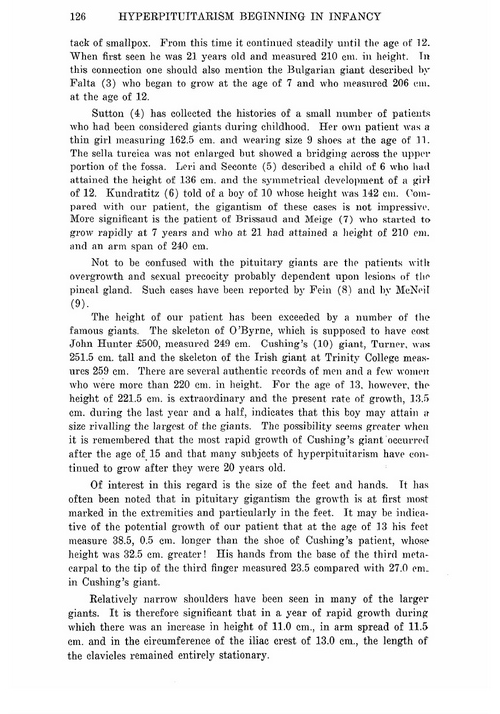
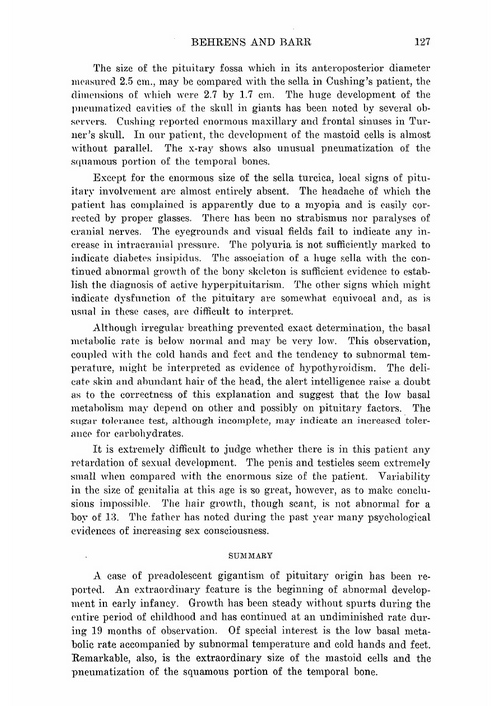
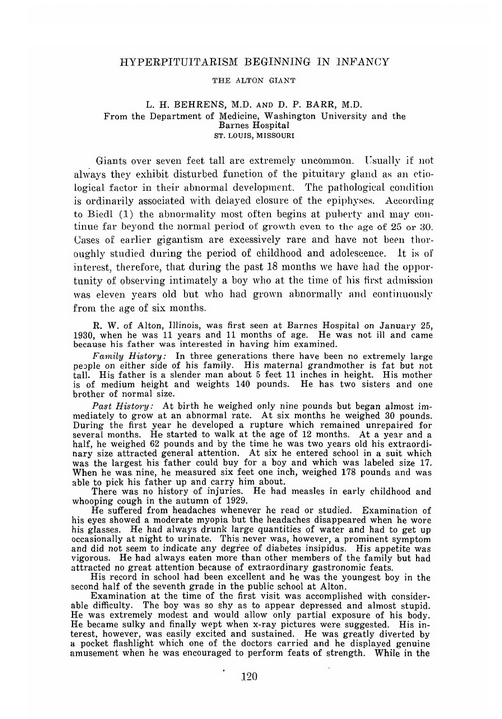
I recently managed to find a PubMed study which looked at his case in a more scientific perpective entitled “HYPERPITUITARISM BEGINNING IN INFANCY THE ALTON GIANT

From TheTallestMan.com forum Hyperpituitarism beginning in infancy. The Alton Giant 1932, the ENTIRE ARTICLE can be found on that thread.

From another TheTallestMan.com forum thread, here is Robert Wadlow’s height growth progression chart. I have copy and pasted the numbers below. (source is Robert Wadlow over the years (pictures and growth chart))

Growth chart:

  • Birth: Height not recorded.
  • Weight of 8.5 lbs. Perfectly normal.
  • 6 months old: Height not recorded. Weight of 30 lbs. Very heavy for a kid his age, I’m guessing he was hitting the 2′ mark at the time.
  • 1 year old: 45 lbs.
  • 5 years old: 5’4″ frame and 105 lbs. Apparently he was already taller than his grandmother by that age. Pics at the time further back him up. Damn.
  • 8 years old: 6′ and 169 lbs. Huge!
  • 9 years old: 6’2″. About 195 lbs, based on mixed sources.
  • 10 years old: This is where it starts getting really scary. He was about 6’5″ at the time, and weighed 210 lbs.
  • 12 years old: Neared 7 feet, with a 6’11” frame and a 241 lbs body! Taller than a modern basketball player.
  • 14 years old: 7’5″. Tallest Boy Scout ever recorded.
  • 16 years old: 7’10”. 374 lbs.
  • 18: 8’4″ and over 400 lbs.
  • 20: 8’7″ and 488 lbs. Heavy.
  • 21: 8’8″ and 492 lbs. A significant drop in weight followed the next year, possibly due to a health deterioration. This was the heaviest point in his life.
  • 22.4: 8’11.1″ (2.72m) frame and 439 lbs. His death point. Tallest man ever recorded.

About a 3-5 in. growth rate per year! Mad tall, no wonder.

Pictures give us a more in-depth insight. His later years send a chill up my spine at how tall he is.

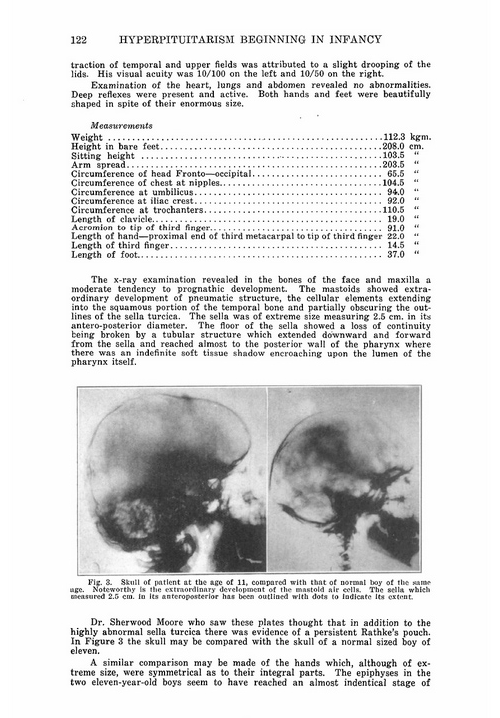
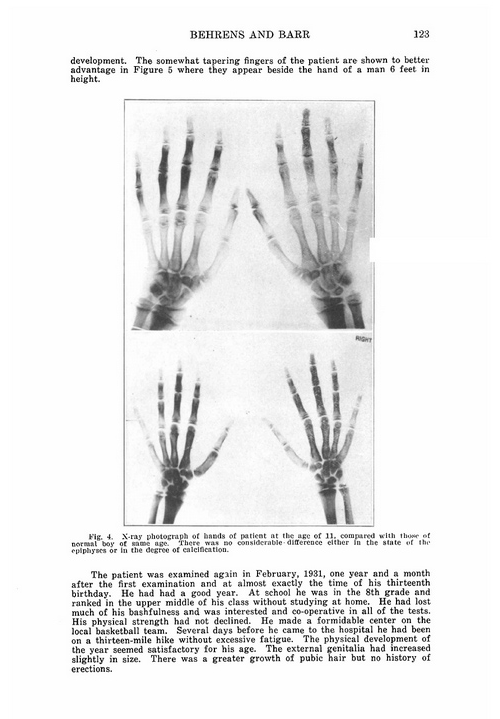
To get a bigger version of the study in PDF format, you can click HERE for the link to Scribd.


Analysis & Interpretation:

I think it is time to really see what the medical physicians who tested him say on the cause for his very unique case.

The first thing that is noted is that it seems that pituitary giants not only seem to have excess HGH being release, but that the mechanism might even cause them to delay the growth plate closure. This idea is something that I had in the early part of my research thought was not possible, but a few message from Tyler (of HeightQuest.com) seems to suggest that maybe the physiological phenomena of pituitary release of the somatropin somehow negatively regulates the estrogens from reaching the estrogen receptors contributing to the decrease of the chondrocytes in the resting zone of the growth plate, which is the real cause of growth plate senescence.

I had argued in previous posts like “Tanya Angus Is Proof That Height Increase Is Possible After Epiphyseal Plate Ossification” andSultan Kosen Is Proof That Height Increase Is Possible After Growth Plate Ossification” that these acromegalic giants somehow still seemed to be able to add at least 1-2 extra inches even in their late 20s and since most people have their growth plates close in the early 20s, that was clear evidence that somehow the excess HGH in their system was able to allow them to overcome the limitation of now cartilage to hypertrophize. It seems that I might be wrong about those early premature assumptions from the article I have clipped and pasted below.

Even very recently a regular reader of the website/blog named bdbuilder has the same argument for why adult height increase might be possible . How is it that these giants are still able to grow into their late 20s? are their bodies different or the body maturity rate different than normal people?

So what is the analysis on Robert Wadlow? What does the medical study on him reveal about his cause for his abnormal growth which might give us some possible clues?

The first thing is that there is no recorded instances of any body in Wadlow’s family being of extremely large stature. Everyone in his family was average sized. His father might have been slightly taller than the average height of the time, being in the early 1900s, at 5′ 11″ but that is still within normal range of height.

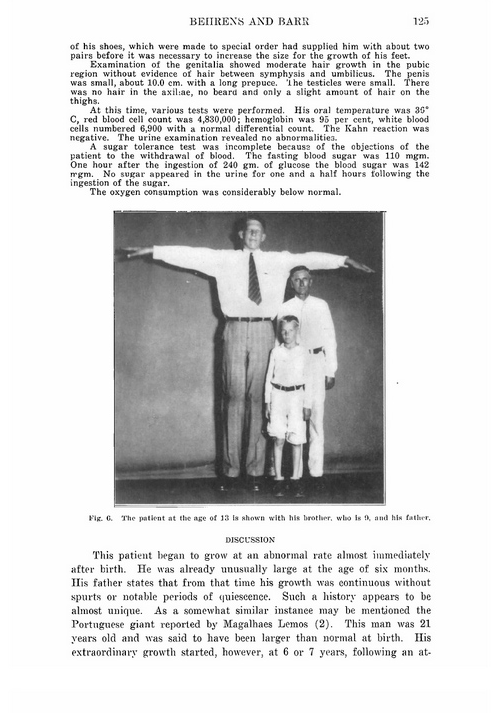
Robert was born of average weight, but his accelerated started almost immediately. By the time he was 9 years old he was already around 6′ 1″ with enough strength to carry his father around. He had bad vision suffering myopia, but glasses corrected for that. He did get headaches but wearing the glasses seemed to stop the headaches. He drank a lot of water which could signify a thyroid problem. There was no sign of him having diabetes.

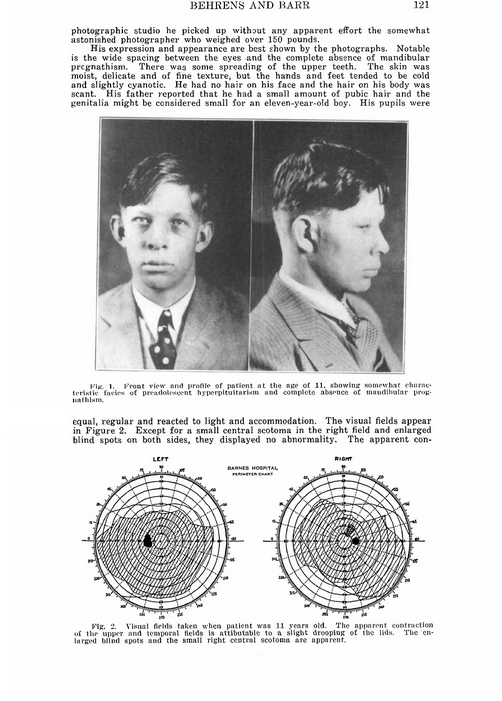
At the first time he was taken to the doctors for examination at the age of 11 years old, he was already 6 feet 10 inches (2.08 meters). His face features were also noted. The spacing between his eyes were rather large. He showed to sign of mandibular prognathism. The hair on his body did show very little pubic hair, which might mean that he was going through puberty, which is normal for boys around the age of 10-12 which is when puberty usually starts for boys. However his genitalia was rather small in comparison to other 11 year old male adolescents. That means that the previous assumption made by me on the idea that Wadlow never went through puberty which means that he had unlimited height growth potential may be wrong. Maybe Wadlow did have a normal growth curve, and he would have stopped growing if he had lived past the 22 years of life he did have. 

The X-Rays of his skull shows a lot of indications that he had the overdeveloped or tumour pressing on his pituitary gland. The sella turcica was being pushed to a large size. There seems to be evidence that a Rathke pouch still existed in the subject.

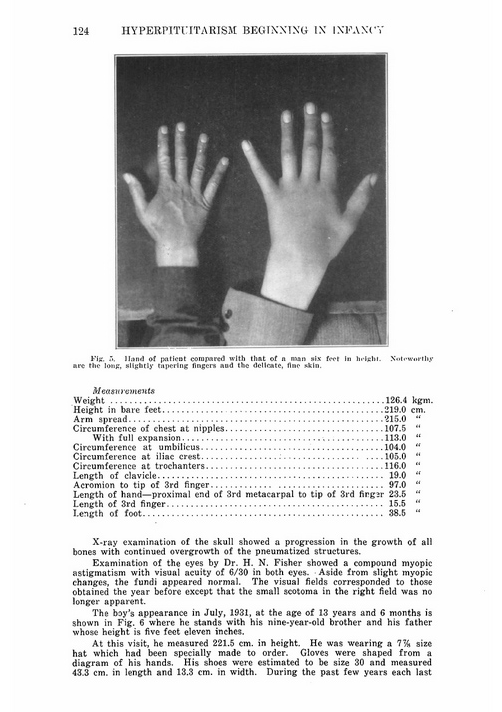
When an X-ray was done on his hands, it showed that his hands were very proportional compared to average hands, just everything being bigger. The growth plate cartilage in his hands and the rate of calcification aka the rate of bone maturity seems to be normal for the development.

After 13 months, Robert came back for another examination. His personality became more outgoing, his genitalia showed to be bigger, and the amount of pubic hair around his genitalia seems to have increased. At this age of 13, Robert was measured slightly less than 7 feet 3 inches tall. It is noted that his genitalia might still be smaller than usual, including his testicles. Hair had not really developed to his thighs or other areas between the legs and he didn’t have a beard. This could indicate that his rate of testosterone release into the system may be slower than average.

When he was tested on his heart, lungs, and blood tests, everything came out normal. It seemed that he did have a very low basal metabolic rate, a subnormal temperature, and cold hands and feet. His skin was very delicate with fine hair. The doctors guess that Wadlow most likely suffered from hypothyroidism due to the pituitary gland. The O2 consumption was lower than usual. His extremities, but especially his feet were abnormally large, which is usually a way to diagnose large stature or pituitary gigantism. His shoulder width seems to be proportionally small. From 1 year difference in comparison, his clavicle didn’t seem to increase in length. His sexual development seems to be slightly slow, but not too abnormal. He did show recent sexual consciousness as stated by his father at the age of 13.

The physicians note that wadlow seemed to be big from infancy, and grew at a very steady rate, with no growth spurts or times where growth slowed down dramatically. From my own diagnosis, it seems that Wadlow suffered from three main reasons why he grew so big.

  1. He did indeed have an overactive pituitary gland, from a very early age. 
  2. His basal metabolic rate is very low with a low body temperature. This means the process of puberty and growth was not accelerated, meaning the senescence of the growth plates was very low.
  3. His genitalia is proportionally small suggesting testosterone was not being pumped into his system at even the average rate and then being aromatized and converted into estrogen which would lead to full growth plate closure eventually. 

What is even more fascinating is that idea that the medical examiners say that there have been at least two cases where even lesions on the pineal gland can lead to gigantism. One of the articles seem to be in German and the other study is entitled “Preadolescent gigantism with precocious growth in brothers”

robert wadlow 1

robert wadlow 2

robert wadlow 3

robert wadlow 4

robert wadlow 5

robert wadlow 6

robert wadlow 7

robert wadlow 8

robert wadlow 9


Increase Height And Grow Taller Through Epiphyseal Distraction And Epiphysiolysis

Something that we as researchers have to admit at this point if we are up to date with the amount of research we have already done is that people with growth plates can achieve increased height and being taller much easier than people without their growth plates. Another word to describe the growth plates is the medical term “Physis” and when we are describing anything that is related to the term “physis” we say it is “physeal” or “epiphyseal”.

The 2nd thing the research has almost shown with definite conclusiveness is that distraction will help make the epiphyseal plates increase in thickness faster which translates to the overall human body to make them taller. Distraction, or even wounds in terms of fractures themselves give the bones a chance to either heal or develop pieces of mesenchyme progenitor cells which can lead to the chondrogenic lineage and develop into longitudinal growth.

This post is to see what we have available at this time from studies done to see how effective or feasible is the idea of doing distraction or by applying a tensile load on growth plate cartilage or just the epiphyseal ends of long bones to make them longer, thus make the person taller.

Study #1: Experimental limb lengthening by epiphyseal distraction.

  • Clin Orthop Relat Res. 1978 Oct;(136):111-9.
  • Sledge CBNoble J.
  • PMID: 729274
Abstract

Kirshner wires were placed either side of the right distal femoral epiphysis and a constant tension device applied a distracting force across the plate in rabbits. Growth increase was measured between the wires and found to be about 150% greater than the concurrent normal growth between 2 control (undistracted) wires on the left; such growth increase can occur in the absence of fracturing. The forces required to do this were between 1/5 and 1/10 of those shown to cause fracturing in vitro. The growth increase was shown to be associated with hyperplasia and hypertrophy of the plate, as well as an increased rate of cell division and sulfated polysaccharide synthesis. This was in turn shown to be associated with an increase in new bone formation.

Study #2: Response of the growth plate to distraction close to skeletal maturity. Is fracture necessary?

  • Clin Orthop Relat Res. 1990 Jan;(250):61-72.
  • Kenwright JSpriggins AJCunningham JL.
  • Source: Nuffield Orthopaedic Centre, Oxford, England.
  • PMID: 2293946

Abstract

Axial force applied during epiphyseal distraction has been measured close to skeletal maturity in patients having leg lengthening, in a rabbit model, and in vitro from an amputation specimen. In the patient study, both slow distraction rates and low constant distraction loads were applied. For all the distraction regimens, it was not possible to lengthen the limb significantly without evidence of fracture as demonstrated by a sudden decrease in distraction force. Growth plate failure was observed from 600 to 800 N, these levels being lower than those recorded from the in vitro tests. In the animal study, three distraction regimens (0.13, 0.26, and 0.53 mm/day) were applied across the upper tibial growth plate of New Zealand white rabbits close to skeletal maturity. Distraction was applied and force measured using a strain-gauge dual-frame external fixator. The force-time results revealed two distinct patterns. One pattern, in which the forces rapidly increased to maximum values of approximately 25 N and then suddenly decreased, indicated fracture of the growth plate, which was confirmed histologically. In the other pattern, forces increased steadily throughout distraction, reaching maximum values at the end of distraction of approximately 16 N. Histologic observations indicated hyperplasia of the growth plate without fracture, however, only a small increase in limb length was detectable. Hence, if a significant increase in leg length is required close to skeletal maturity, then fracture of the growth plate must occur.

Study #3: Limb lengthening by epiphyseal distraction. An experimental study in the caprine femur.

  • J Orthop Res. 1987;5(4):592-9.
  • Steen HFjeld TORønningen HLangeland NGjerdet NRBjerkreim I.
  • Source: Sophies Minde Orthopaedic Hospital, University of Oslo, Norway.
  • PMID: 3681532

Abstract

Epiphyseal distraction of the left distal femur was accomplished in 10 goats (aged 3-4.5 months). A modified Hoffmann external fixation device was used as a unilateral distraction frame. A distraction rate of 1.5 mm/day was applied for 5.5 weeks. Epiphysiolysis occurred after 3-7 days of distraction. After the lengthening procedure, the growth plate had reduced in height in eight animals on radiographic examination. In two animals the growth plate was fused. Three animals were killed at 4 (Group 1) and 8 (Group 2) weeks and four animals at 16 (Group 3) weeks after the end of the distraction period. The gain in leg length obtained by distraction was reduced owing to growth retardation in the distal femur of the operated limb. The average final lengthening was 24.9, 19.4, and 13.4% in Groups 1, 2, and 3, respectively. Femur and tibia from both sides were tested mechanically in torsion. Only one femur fractured in the elongation area. All but one elongated femur fractured in the area of the diaphysis subjected to distractional force. The torsional strength of the elongated femur compared with control was reduced to approximately 50% in all groups. The corresponding torsional strength of the tibia on the elongated extremity compared with control was reduced to approximately 75% in all groups. The difference in relative strength of femur compared with that of tibia was statistically significant. This finding can be explained by a stress-protective effect on the femur in the distraction area caused by the external device.

Study #4: Epiphysiolysis as a method of limb lengthening.

  • Clin Orthop Relat Res. 1978 Jun;(133):230-7.
  • Letts RMMeadows L.
  • PMID: 688713

Abstract

Epiphysiolysis followed by distraction was performed at the proximal tibial growth plates in 18 young rabbits. Union across the distracted plate occurred in all animals. In 12 rabbits skeletally immature at operation, premature fusion of the separated plate resulted in growth arrest of the operated limb. The contralateral control limb was longer at maturity by an average 1.10 cm. In 6 rabbits near skeletal maturity at epiphysiolysis, the operated limb was the longer at maturity by the amount distracted, an average of 0.62 cm. In all animals a permanent loss of joint motion resulted. Epiphyseal distraction in the very young rabbit does not appear to be practical due to consistent premature fusion of the distracted growth plate. It is possible to lengthen the limbs of rabbits near skeletal maturity with this procedure. An added advantage is that union between the epiphysis and the metaphysis always occurred, eliminated the problem of delayed ana non union found in diaphyseal lengthening. However, at this time, until the effects of distraction and compression on the adjacent joint can be minimized, epiphysiolysis as a method of limb lengthening is not recommended in children.


Analysis & Interpretation:

Study #1 seems to show that at least in lab rabbits, when you use steel wires wrapped around the distal epiphysis end of the femur and pull with the force/area or load that is just 1/5th of the amount needed to cause the bone to fracture, you can get the cartilage of the growth plate to increase its growth rate by 150%. The cause of the increased growth is from chondrocyte hypertrophy, hyperplasia, increased cell proliferation, and sulfated polysaccharide synthesis. What is important to note for this study is that the load was increased gradually in tension fashion.

Study #2 is one of the most significant studies yet to show what will probably happen with bone tissue if we tried to stretch out the bones for bone lengthening. However the study was done where the cartilage in growth plates were stretched out, not bones. The researchers were testing the behavior of growth plates for people or lab animals who were close to bone maturity. What is noticed for both situations where either the slow distraction rates and low constant distraction loads were applied, the researchers noticed that if one tried to lengthen the bone significantly the distraction force will reach a certain point before decreasing dramatically. The sudden decrease in the needed distraction force indicates that the pulling motion had caused a fracture in the growth plate. The failure of the growth plate in being able to continue doing plastic or elastic deformation is seen around the 600 Newtons to 800 Newtons level, which I don’t think is all that high in value for a load. It seems that the in vivo results are lower than the in vitro results.

In lab animals, specifically New Zealand rabbits of the 2nd study, the equipment used is a strain-gauge dual-frame external fixator. The rabbits were also close to bone maturity. When the results are graphed in terms of force vs. time, there seems to be two possible patterns seen in the results. Either the process of slowly increasing the tension load up to 16 Newtons while the distraction is done slowly or the process is increased to 25 Newtons rapidly and there is a sudden drop in the load force indicating fracture. The researchers note for a conclusion…

Hence, if a significant increase in leg length is required close to skeletal maturity, then fracture of the growth plate must occur.

If these results can be translated to human subjects, then we can say that the idea of using tension forces to slowly stretch out the growth plate cartilage in teenagers with plates that are almost closed may not be the best idea since it could result in the fracture of the cartilage. It seems that plastic or elastic deformation is a very low possibility, unless there is special equipment that can make the distraction very slow, in terms of maybe only 0.1 mm/day in bone lengthening.

In the 3rd study, the experiment was done on very young goats. There was only 10 goats used in the experiment. I am not sure at this time whether the goats of only 3-4 months years old would have open or closed growth plates but I would assume now that the growth plates were open since the goats were less than 1 years old. There was an unilateral distraction frame used. The rate of lengthening was 1.5 mm/day for 5.5 weeks (or around 40 days). What seems to happen is that the growth plates seem to decrease in length from the distraction. two of the goats actually had the growth plates completely fuse from the distraction.

After the experiment the goats were killed either 4, 8, or 16 weeks after in groups of 1,2, and 3 respectively. It seems that if one waited later to kill the goats, the measured increase in bone length actually decreased from some type of growth stunting. The goats that were killed later showed less bone lengthening. The long bones that were lengthening were also put in a device that would twist the bone to see how much weaker the torsional load strength had become. For most of the goats, the torsion strength after distraction of the femur had decreased to just 50% of what it was before. For the tibia who was put to the torsion load, the torsion strength dropped to just 75% of what it was before. This study is useful to see what would happen to the growth plates and overall bone strength if we tried to lengthen the femur or tibia in people with open growth plates.

In study #4, the long bones in rabbits are first cut at the section between the epiphysis and the growth plates. Then the entire long bone is stretched apart. What is evident from most of the rabbits is that from the epiphysiolysis, if it is done to young subjects, it will lead to premature fusion of the growth plate leading to growth stunting. If the epiphysiolysis is done on subjects which are close to skeletal maturity, the distraction would lead to longer bones compared to control subjects which didn’t have the epiphysis cut apart from the metaphysis. It seems that overall, there is a reducing in the bone joint mobility in all subjects if the cut is done. The researchers note…

“Epiphyseal distraction in the very young rabbit does not appear to be practical due to consistent premature fusion of the distracted growth plate.”

However they do say that the idea of bone lengthening right before the cartilage is completely ossified might be possible but anything before the time of skeletal maturity will only stunt the longitudinal growth of the full long bone.

It is important to note what the researchers say at the very end of the abstract for any orthopedic surgeons who wants to do limb lengthening on children…

“However, at this time, until the effects of distraction and compression on the adjacent joint can be minimized, epiphysiolysis as a method of limb lengthening is not recommended in children.”