Electromagnetic Stimuli and Resonance Frequency Vibrations For Tissue Transdifferentiation

Electromagnetic Stimuli and Resonance Frequency Vibrations For Tissue Transdifferentiation
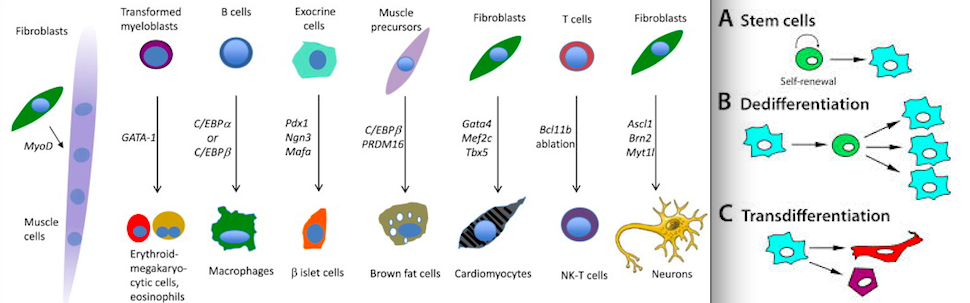
Tissue TransdifferentiationI was recently listening to this episode where a person went on the radio to talk about how the late Nikola Tesla proclaimed that most of the universe’s hidden secrets can be found if a person would approach his analysis through the lens of looking at the world from a perspective of it being electromagnetic stimuli, energy, frequencies, and vibrations. The most famous quote to this claim was “If you want to find the secrets of the universe, think in terms of energy, frequency and vibration” – Nikola Tesla.

When I think back to this claim, I feel that there is probably more and more evidence that the proclamation is right. I remember back during my undergraduate days studying the higher level of classical mechanics. Beyond say the introductory physics course where we are asked to solve for different variables using the ideas of forces and momentums, it is possible to be much more mathematically elegant to solve the same problems using the principle of just energy alone.

For example, the Lagrangian formulation/interpretation of solving the problems of classical mechanics can be done on the principle of finding the path for the state or motion of least action. At the core of this entirely new approach on calculating say the motion of movement of a system being studied is the Langrangian Function which is really just the sum of the kinetic energy and the potential energy, either from a set initial point to an end point, or a set initial time point to a end time point. The function is L=T+V. The letter T represents the total kinetic energy of the system and the letter V represents the total potential energy of the system. What you get eventually is a large 2nd order differential equation you have to simply and solve for the value you are looking for. We obviously are not going to get into the mathematics of any physics in this post, but just explain the principles using words.

In addition, here is something known as the action of the system (S), which is defined in words to be “The summation of the Langragian function over time from an initial time point to an end time point” aka calculus integral function. The goal when you are solving a system is to figure out which path or state of the system would minimize that S.

One of the main reasons why this way of calculating motions, states, and other variables of the system is that by using just the principle of energy (Kinetic plus Potential) we don’t have to worry about the transition from one cartesian coordinate system into another. Remember that the original Newtonian way to calculate forces and motion required that you use the concept of vectors, which had a standard 3 parts to it. With this way, you can calculate out a single value with a single numerical value or symbol instead of having it in 3 parts.  For more information on what the hell I am talking about Click Here.

Getting back to the Main Point…

Beyond just giving a short explanation on physics, what I am hoping to show the reader is that the principle of energy can often be used to explain away phenomena as well as be used as a tool to solve problems which might be too hard in another approach.

In the same way, we can use the idea of waves, vibrations, frequency, and vibrations to explain certain phenomena that say using the traditional approach. Remember what happened in the Double Slit Experiment. A light source was shined through some type of solid pain with two parallel slits. You are looking at the wall or the surface behind the pane and if you see interference then the phenomena that is first reaches the pane has characteristics of a wave. The ramifications of the experiment showed that wave phenomena has properties of both wave and particles. This implied that particles (at least the very small ones) have characteristics of waves as well. Since we are using principles of frequency, wavelength, etc. to describe what could be considered another area of physics, we could use intuitive reasoning to extrapolate this idea that all phenomena could be explained using a waves and vibrations view of the dynamics of the universe. If that is the case, then maybe we could use waves and vibration stimuli to solve many engineering problems as well as medical problems.

What I am overall trying to get at is that maybe the simplest way to induce a statistically impossible biological process to happen, all we need to do is figure out what is the optimum level of energy or frequency, what is the right type of energy or stimuli to use, and what location we need to use it on.

When I look back at all of the ideas I have proposed over the last two years on how we might be able to get bones to grow again, I have gone through almost every single idea. Here is a list of most the types of stimuli I have looked into.

In my most recent seminal post about using a combination of silver acupuncture needles as a form of electrode to transmit a very small intensity level of Direct Current to stimulate cartilage and the periosteum to increase their size, I had used over a dozen old studies and citations of experiments done by researchers from back in the 80s to validate the concept. The PEMF technology I described would work with around 95% confidence in over its efficacy.

That post was Electromagnetic Stimuli Will Increase Ossification and Make Bones Longer, Big Breakthrough!

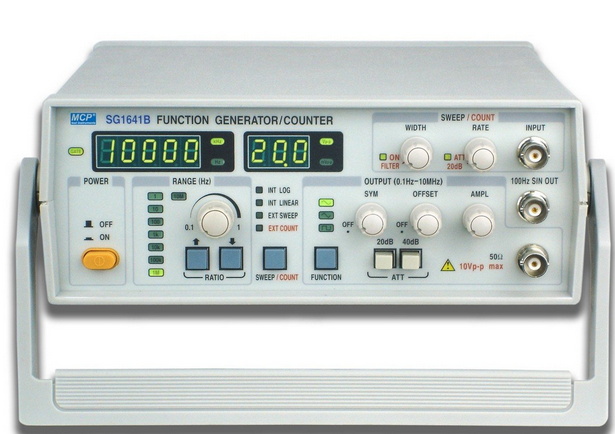
Function GeneratorI had previous showed that it might be possible to induce the bones to increase the rate of endochondral ossification with something as simple as a Function Generator or even a TENS Unit which often cost less than $100.

Take a look at the older post Do We Use A TENS Electronic Pulse Massager or A Function Generator?

At this point I have no clue what could be the biomolecular reason why sending something as simple as a pulsed electrical signal at a signal could induce human tissue of all varieties to have some type of effect. If we actually think about it, it should make perfect sense. Just think about what actually makes the human brain (or any brain) work anyway. The fundamental unit of the nervous system is the neuron, a nerve cell. (Sure you have stuff like the Ganglia but that is not the point.) The whole point of the neuron is to have the dendrites on the neuron cell body to integrate (add up over the surface) all of the biochemical signal into a type of voltage potential. When all the built up potential reached in the neuron to a certain threshold, an electrical current is fired from the cell down the axon, to the tips, which are close to the dendrites of other neurons.

The same can be said for the human heart. If we remember our introductory CPR class, the whole reason for pushing in a rhythmic fashion on the chest is to get the heart to beat again, so that the heart can act as a type of biological pump to push the blood through the vessels around the entire body to feed the tissues who always need ATP. When the Paramedics (or EMT) first gets to a body of a person who is not responding and/or unconscious, they check to see if they are breathing and has a pulse. The indication of a pulse, means that the heart in the person’s body is at least doing its job of pumping the blood, nutrients, minerals, and oxygen around to sustain the cells and tissues. If the heart stops, there is no pulse.
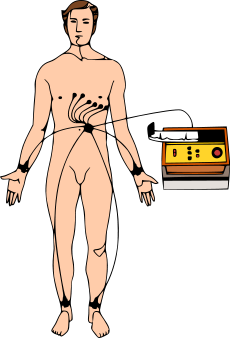
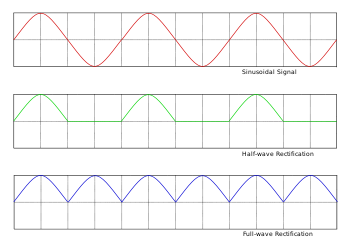
ElectrocardiographyThe heart operates actually on a very clear rhythm of electrical signal. For the people who have ever had an ECG (Electrocardiography) done, they have probably been told that what is being measured is the electrical signal that is coming from the heart beating. If there is some type of irregularity in the heartbeats, this is known as arrhythmia. To correct for it most people get some type of internal Implantable Cardioverter Defibrillator. If however the person is already on the ground, most emergency rescue personnel with some type of advanced life support (ALS) or basic life support training (BLS) will use some type of portable external defibrillators to reset the rhythm of the heart beating. What we are trying to say is that at the most basic level, our most important internal organs, the brain and heart, both operate on electrical current.

In one of my most recent posts Tyler said that what I was proposing, the changing of the bone tissue into cartilage tissue would be cell transdifferentiation. I countered to point out that if we are trying to regenerate epiphyseal growth plate cartilage tissue from bone tissue, it would not be enough. Even if we could do the transdifferentiation step, we still have to figure out what to do about the other biological, molecular, organic, and nonorganic material in the extracellular matrix of the bone. We might not need to worry about some organic and biological compounds like the collagen and proteins but we do have to worry about the inorganic compounds and minerals. The most common problem would be the Calcium Hydroxyapatite crystals which is the mineral that is causing the bones to become so strong and have such a high level of compression strength.

There are two things we have to induce.

  1. Changing the terminally differentiated osteoblasts and osteoclasts into chondrocytes
  2. Removing the minerals and inorganic compounds in the bone composition that causes the defining characteristic and properties of bone tissue.

However, it would probably be much easier to do the 2nd process. We have already shown in previous posts that using something as simple as Vinegar (Ascetic Acid) covering bone would be enough to chelate the hard minerals. This is known as bone decalcification. The hard part would be the first part.

How do we turn one type of cell into another?

The basic idea proposed by Dr. Robert Becker from his book (which I am still reading) shows that besides say the red blood cells which have no nucleus and the gametes which have just have the number of chromosomes, most cells in the human body does have dormant genes which are no longer turned on beyond a certain stage in prenatal development of child growth. How and why those genes are not turned on has not been figured out yet. What this suggest to some of us hopefuls is that idea that maybe using some type of stimuli, which I propose in this post to be electromagnetic or vibrational wave in nature, targeted in the right way could reactivate those genes again. If the same gene or microRNA in enough cells are activated, it might mean that we can get transdifferentiation to work and get one cell to possibility turn of the trigger causing them to become bone cells and turn on the one causing them to directly turn into cartilage cells aka chondrocytes.

I suspect that we might be able to use pulsing electrical stimuli or some type of ultrasonic high frequency, low intensity waves to stimulate the cells to go through transdifferentiation in an non-invasive approach similar to how using the MR Guided Focused Ultrasound Surgery works.


The Correlation Between Male Adult Height and Nasal Width and Ear Size

The Correlation Between Male Adult Height and Nasal Width and Ear Size

Ear SizeWhat I wanted to propose in this post is a hypothetical correlation which is from a lifetime of observation. I personally believe that there is a positive correlation between the width of the adult male and their ear size and their overall adult height.

I would suspect that if we were a primatologist and did a measurement of the nose widths of each male gorilla’s nose in a pack in the jungles of Eastern Africa, we would find that the alpha male who would have more testosterone would have on average a slightly wider nose and/or larger ears than the beta males which traditionally have thinner noses and smaller ears.

Of course it is easy to dismiss this by some people as common sense. Alpha males in gorilla packs tend to be bigger and taller than the beta males. That is from a slightly higher level of testosterone than the average level. Just from a proportionally of body parts perspectively, it would make sense that alpha male would thus have larger noses (as well as larger jaws, crane sizes, hands, etc)

However, I wanted to take the hypothesis and use it to as a sort of heuristic trick to help people determine which pre-pubescent young males still in elementary school before the growth spurt/puberty phase is most likely to get the largest growth spurts and end up the tallest.

If you measured the widths of each boy’s nose and the width of their ears and averaged out the boys of one class, it can be used to tell which males would end up taller than their peers as adults when their schooling is over

The same can be said about the ears. I propose the hypothesis that if we looked at the width of a young male’s ears compared to their male peers before they start puberty, we would have an accurate chance in predicting which boys would end up taller than the others.

We have found from at least 3 sources, including PubMed studies that the ears and noses actually never stop growing throughout a person’s life. It is said that over a 50 year span (after the normal growth phase has ended through complete bone maturity) a person will have their ears grow 1 cm overall.

In one of the references we have listed, it was claimed that because the ears and nose are cartilage, which never harden, they have the ability to expand. Unfortunately they are not hyaline cartilage, but fibrocartilage. Fibrocartilage is one of 3 different types of cartilages found in the human body. It does not have the orderly laminar layer hyaline cartilage structure so it doesn’t expand in some type of specific direction like the way the long bones growth during the normal endochondral ossification process. The fibrocartilage does grow and expand as the collagen in the extracellular matrix expands but it is very slowly.

So how does the fact that our ears and nose can still grow into old age (our 60s-70s) help us?

It shows that as long as there is some cartilage tissue, there is some chances for the cartilage to expand, even if the cartilage is fibrocartilage. Since the bones for most adults past normal growth phases (ei 20-50) still have a layer of articular cartilage, which is hyaline cartilage, then we can theoretically stimulate whatever cartilage we have left in the joints between our bones to increase slightly in size.

If our noses and ears can grow bigger, then we can make our bodies get bigger vertically if we can get the cartilage to increase in thickness in certain directions.

Again, I suspect that one can measure how tall a young boy will be relative to his male peers by comparing the width of their ears and noses before they hit puberty.

Can Meclizine be absorbed in the human body?

Earlier I wrote that Meclizine was a very promising height growth supplement for people with open growth plates.

Here’s information on the dosages of Meclizine.  Information on the bottle should be followed.  25 to 50mg daily is what seems to be recommended.  Resistance to Meclizine may develop over time if the body begins to produce more CYP2D6.  At that point cycling would be necessary.  I can’t do research on all the possible side effects on Meclizine.  Since Meclizine is a common medication given for nausea, a doctor or pharmacist would be helpful for insight.  Especially, since it is something I just recently discovered and do not have a great deal of experience with.

Theoretically, Meclizine will only increase height in people with actively proliferating growth plate chondrocytes.  And it will only increase height in proportion to how much proliferation growth plate chondrocytes have.  So if you don’t have much natural growth left, meclizine won’t give you much growth.

Meclizine has similar effects to CNP in that both inhibit FGFR3.  However, CNP has additional effects.  For one, CNP increases levels of Guanyl Cyclase.  Since studies on Meclizine are limited, it is possible there are also as of yet unknown side effects.

Can Meclizine be absorbed and get to the growth plate chondrocytes where it exerts it’s height increasing effects by inhibiting FGFR3?

Given the below results of Meclizine being present in the serum, which would likely be delivered to growth plate chondrocytes, it is likely that yes Meclizine could indeed get to the growth plate chondrocytes.

Meclizine metabolism and pharmacokinetics: formulation on its absorption.

the onset of action of meclizine was about 1 hour for the treatment of motion sickness and vertigo. A new suspension formulation of meclizine (MOS) was developed with the intention to achieve a rapid effect. To investigate the pharmacokinetics of the new MOS formulation versus the marketed meclizine oral tablet (MOT), a phase 1 pharmacokinetic study was performed in 20 healthy volunteers. In addition, an in vitro metabolic study using human hepatic microsome and recombinant CYP enzyme was also performed to determine the metabolic pathway in the human body. The plasma concentration of MOS appeared more rapidly in comparison to the MOT. The geometric mean ratios (90% confidence interval) of AUC(0-24) and AUC(0-∞) indicated no significant difference in bioavailability between the 2 formulations. CYP2D6 was found to be the dominant enzyme for metabolism of meclizine, and its genetic polymorphism could contribute to the large interindividual variability{So individual variations in CYP2D6 enzyme could affect the ability of meclizine to increase height in individuals with active growth plates?}.”

” In one anecdotal report, a serum level of 10 ng/mL was reported at 12 hours following an oral dose of 75 mg, and the elimination half-life of the parent compound was 6 hours. In another report, the plasma concentration-time profile of 1 subject was described, and the AUC0–24 and half-life were found to be 66.6 ng/ml·h and 7 hours, respectively. In rats, meclizine was distributed throughout most body tissues, found to cross the placenta, and metabolized in the liver to an inactive form, norchlorcyclizine. When give extravascularly, the drug is excreted in feces and urine unchanged or as metabolites such as norchlorcyclizine”<-If Meclizine is excreted or converted to the inactive form it’s not going to increase height.  However, Meclizine does seem to be present in serum and in rats was present in most body tissues

Meclizine Inhibits Mitochondrial Respiration through Direct Targeting of Cytosolic Phosphoethanolamine Metabolism.

meclizine, an over-the-counter drug, as an inhibitor of mitochondrial respiration{Could this inhibition of mitochondrial respiration be linked to the height increase effects?}. Curiously, meclizine blunted respiration in intact cells but not in isolated mitochondria, suggesting an unorthodox mechanism. Using a metabolic profiling approach, we now show that treatment with meclizine leads to a sharp elevation of cellular phosphoethanolamine, an intermediate in the ethanolamine branch of the Kennedy pathway of phosphatidylethanolamine biosynthesis. Metabolic labeling and in vitro enzyme assays confirmed direct inhibition of the cytosolic enzyme CTP:phosphoethanolamine cytidylyltransferase (PCYT2). Inhibition of PCYT2 by meclizine led to rapid accumulation of its substrate, phosphoethanolamine, which is itself an inhibitor of mitochondrial respiration. Our work identifies the first pharmacologic inhibitor of the Kennedy pathway, demonstrates that its biosynthetic intermediate is an endogenous inhibitor of respiration. ”

They tested on fibroblasts but not on chondrocytes and stem cells.

Growth plate versus articular cartilage

Regulation of growth plate and articular chondrocyte differentiation : implications for longitudinal bone growth and articular cartilage formation

“the embryonic Ihh/PTHrP feedback system is maintained postnatally except that the source of PTHrP has shifted to a more proximal location in the resting zone.”

“in articular cartilage, superficial chondrocytes differentiate from chondrocytes in the deeper layers following a program that has some similarities to the hypertrophic differentiation program in growth plate cartilage.”

“transplanting growth plate cartilage to the articular surface in an EGFP rat model that enabled cell tracing. We found that hypertrophic differentiation appeared to be inhibited in growth plate cartilage transplanted to the articular surface. The transplanted cartilage also underwent structural remodeling into articular-like cartilage, which suggests that the synovial microenvironment inhibits hypertrophic differentiation and promotes articular cartilage formation.”<-So if we change the bone microenvironment we could encourage growth cartilage.

“An essential genetic switch for patterning of skeletal elements is the expression of Hox genes, which encode a highly conserved family of transcription factors. Mesenchymal condensations are initially uninterrupted and at a later time differentiate into chondrocytes that express type II collagen”

“At the bottom of the proliferative zone, chondrocytes stop proliferating and undergo hypertrophy, a process characterized by gains in cell height, intracellular volume, and organelle size up to 4-, 10-, and 3-fold, respectively, and that also contributes to longitudinal bone growth”

“infection of embryonic chick limbs with retroviruses encoding BMP-2, -4, and GDF-5 increased chondrogenesis and final sizes of skeletal elements”

“in vitro administration of BMP-2 to rat fetal metatarsal bones or mouse embryonic stem cell lines increased chondrocyte proliferation and hypertrophy, whereas addition of Noggin elicited the opposite effect of preventing hypertrophic differentiation, thus indicating endogenous production of BMPs”

“mice deficient in both BMPR-IA and -IB receptors in cartilage lacked most skeletal elements that form by endochondral ossification and those that formed were rudimentary, demonstrating the importance of BMP signaling in early chondrogenesis. Conversely, mice overexpressing the BMPR-IA receptor had shortened proliferative columns and accelerated hypertrophic differentiation in the growth plate, suggesting BMP signaling also stimulates chondrocyte maturation”

“loss of BMP antagonism[BMP inhibitors] in Noggin and Gremlin knock-out mice led to multiple skeletal abnormalities including enlarged growth plates and defective patterning and outgrowth of limbs.”<-So increasing BMP expression does always increase growth but it depends on whether it’s worth the side effects.

“cartilage-specific overexpression of antagonist Smad6 in mice caused significantly delayed chondrocyte hypertrophy, thin trabecular bones, and dwarfism”

“activating mutations of PTHR1 cause Jansen’s metaphyseal chondrodysplasia characterized by short bowed limbs with normal growth plates but disorganized metaphyseal regions, whereas inactivating mutations of PTHR1 cause Blomstrand lethal chondrodysplasia characterized by short limbs, increased bone density, and advanced skeletal maturation”

“As proliferative chondrocytes grow distant from the source of PTHrP they undergo hypertrophy. Ihh is produced by prehypertrophic and hypertrophic chondrocytes and signals by perichondrium dependent and independent pathways to periarticular chondrocytes to express PTHrP, proliferative chondrocytes to increase the rate of cell division, and perichondrial cells to form bone collar”

“Perichondrial cells produce FGF-1, -2, -6, -7, -9, -18, -21, and -22, whereas growth plate chondrocytes only express FGF-2, -7, -18, and -22 at very levels, suggesting that FGFs from the perichondrium are the main regulators of chondrogenesis”

“In the growth plate and surrounding tissues, FGFR1 is expressed by prehypertrophic and hypertrophic chondrocytes, FGFR2 is expressed by the perichondrium and the c isoform by resting chondrocytes, FGFR3 expression has been more controversial being suggested in all zones, and FGFR4 is expressed by resting and proliferative chondrocytes”

“overexpression [of FGF-2] in mice causes shortened body length, expanded resting and
proliferative zones, and reduced hypertrophic zone”

“overexpression of Notch-1 in the ATDC5 chondrogenic cell line inhibited chondrogenesis and expression of Notch markers were shown to decline with the differentiation of human articular chondrocytes in pellet mass cultures”

“decreased Wnt signaling in articular cartilage compared to the growth plate due to
increased expression of Wnt antagonists FRP and Dkk-1″<-inhibitors of Wnt signaling may downregulate hypertrophic differentiation.

“We first found that Ihh, Patched, Smoothened, Gli1, Gli2, Gli3, and PTHR1 were expressed in regions analogous to the expression domains in prenatal epiphyseal
cartilage: Ihh was differentially expressed in the prehypertrophic (pre-HZ) and
hypertrophic (HZ) zones; Patched, the receptor for Ihh, was expressed in the resting
(RZ) and proliferative (PZ) zones and perichondrium; Smoothened, a second messenger
of Ihh signaling, was differentially expressed in RZ, PZ, and perichondrium; Gli1, Gli2,
and Gli3, transcription factors with activity downstream of Ihh, were differentially
expressed in RZ, PZ, and perichondrium; and PTHR1, the receptor for PTHrP, was
differentially expressed in pre-HZ and HZ. Most notable, however, was that PTHrP
was differentially expressed in RZ, which is a site that differs from the prenatal source
of PTHrP, the periarticular cells”

“We found that, at gestational day 16 (E16), lacZ activity was most pronounced in the superficial articular cartilage and perichondrium and gradually dissipated toward a minimum in HZ. At 1 week of age, lacZ activity was high in the articular cartilage, RZ, PZ, and perichondrium, whereas expression was low in HZ and minimal in hypertrophic cells located in the middle of the epiphysis where the secondary ossification later forms. At 4, 8, and 12 weeks of age, the lacZ activity pattern established at 1 week of age was largely maintained with distinct expression in the articular cartilage, RZ, PZ, and perichondrium, except that the superficial chondrocytes in articular cartilage lost detectable lacZ activity.”

“the prenatal Ihh/PTHrP feedback loop is maintained in the postnatal growth plate, except that the source of PTHrP has shifted to the resting zone. Since the number of resting zone chondrocytes decline with age[which produces PTHrP], our finding may explain why the height of proliferative columns shortens with age until the entire growth plate disappears at the end of puberty.”

Characterization of the proliferating layer chondrocytes of growth plate for cartilage regeneration.

“Cell-based therapy is a strategy capable of repair defect cartilage. At present, the articular chodrocytes (ACs) is the cell source for cartilage repair. Problematically, as serial culture, the ACs de-differentiation occurs, may result in graft failure. In present study, we evaluate the chondrogenic capacity and physical characteristics of proliferating layer chondrocytes (PLCs) derivates from growth plate cartilage, clarify its potential capacity for cartilage repair. We found that PLCs preserved more chrondrogenic phenotypes, such as polygonal appearances, whereas ACs appeared fibroblast-like after seventh passage{so growth plate chondrocytes have more differentiation ability}. Profoundly, the ACs expressed higher apoptosis-related proteins, such as cleaved-caspase-9 and cleaved-caspase-3, than PLCs. Also, the PLCs have higher proliferation rate than ACs, the cell-doubling time is 20.9h for PLCs, and 29.5h for ACs. Using flow cytometry, we demonstrated that 26.6% PLCs entered S-phase after 16h serum re-addition to starved cells, compared to 13.3% of ACs. Otherwise, col2a1, aggrecan, sox5, sox6 and sox9 mRNA were significantly increased in PLCs compared to ACs, in contrast, the col1a and col10a1 mRNA expression level in PLCs is less than in ACs. The glycosaminoglycan (GAG) content in PLCs was higher than ACs by the direct 1,9-dimethylmethylene blue (DMB) assay. Histological and immunohistochemical evaluations have demonstrated that significantly more chondrogenic extracellular matrix was detected in PLCs group when compared with ACs group after implantation in nude mice. Taken together, our data indicate the PLCs preserved much more chondrogenic phenotypes than ACs in vitro and in vivo. Those might imply that PLCs as the better cell source for transplantation can effectively repair and regenerate growth plate and articular cartilage.”

Update #10 – Thinking Of The Big Picture – January 1, 2014

Update #10 – Thinking Of The Big Picture – January 1, 2014

The Big PictureIt has been almost a year and a half since I first began documenting all of the information and ideas I have accumulated in this journey. There have been many things I have learned. This post that will be starting the year 2014 will be some of my thoughts on where this website will be heading. I am thinking of the big picture.

The posts we have been posting for the last few months have been getting more coverage and more and more people are coming to the website. Along with the comments have been a few people who have made some critical comments which we do indeed have to take into consideration.

Issue #1: All this writing about theory and medical facts don’t seem to go anywhere. The people want some real action steps they can do to get results.

Issue #2: We have ideas for people who have growth plates but non for people without them

Issue #3: The ideas we propose needs to be tested and have real people try them out.

Of course, I understand that these are the only two possible critical issues anyone would have with this website. This website’s main goal is to help people increase their height. We have not achieved that to any extent. There has been a lot of medical research in the form of reading study after study but nothing actively done. I am not willing to apologize for whatever action I have not been taking. This endeavor is not going to be something I can accomplish in a year, or even a few years.

In one of the most seminal posts I wrote about why it is so difficult to achieve what we are hoping to achieve, I had stated that the simplest, most logical route to take is to figure out how to convert the bone tissue of our long bones into hyaline cartilage

{Well, that would be what’s known as transdifferentiation.  I think it would be easier to induce mesenchymal stem cells into growth plate chondrocytes.  The pre-chondrogenic cells in the Zone of Ranvier are the cells that are used for growth plates.  Create a microenvironment that makes stem cells more like these zone of Raniver cells. Cells in the Zone of Ranvier are positive for BMPR1a.  So BMPR1a could be key for this.-Tyler}. That is unknown.

In Response To Tyler: I don’t think transdifferentiation is the way, since not even the real researchers with the best equipment have figured that out. There have been only a few cases showing that fibroblasts can be some type of proxy connecting the osteoblasts to the chondrocytes through reversing the natural biochemical processes/de-differentiation. What I suggest is first removing the calcium crystals from a small band of the bone that is causing the bone hardness. Calcification is the problem in my opinion. Decalcifying the crystals inside the extracellular matrix of the bones leaves just the collagen.

Look guys, I’ll just make this post update much shorter. A lot of the recent comments have been complaints that we have too much theory on this website and not enough actionable steps people can take. The other major complaint is that there is no proof that this stuff works.

That is all true. However, that is the nature of this endeavor. From a biologically perspective, there is probably nothing harder than what we are trying to do, save for finding a cure for cancer or reversing the aging process. We are doing the best we can, with the resources we do have.

However realize that we are probably the only hope you guys have. The guys who was doing serious research on GrowTallForum.com got far with the research, which took them years but they didn’t get anything and the website was brought down.

Unless one of you guys is willing to take up the mantle, and put skin into the game, then stop making all the critical points because we understand perfectly well the limits of what we can do. We all have lives, and other obligations. Me and whoever posts here have our own lives. We have no obligation to help anyone, but we choose to put our time and effort into it.

To put years and years of effort into doing the research, going through the history, figuring out how to create a website, and doing regular updates, as well as bringing all of the important information into one central website, as well as find all of the books out there provided free of charge, at the risk of civil law suits and DMSAs, we hope people realize that we are doing what we can. Back off and let us do the research our way.

I will give a time line on how fast this thing might take. This endeavor will probably take at least 10 years, but I would put the time closer to 15-20 years. I am in the game for the long term.

Height Progression

For the last 3 months I have not been able to get an accurate measurement of my height because my hair had grown too long. There was too much deviations of the measurements from each other.

The thing that has changed however has been my supplementation, which has been a daily intake of 1000 mg of Glucosamine Sulfate to see if there would be any changes.

Here is the good news. The intake of Glucosamine at 1000 mg has resulted in a decreased loss of height over the day time. Where before I would drop from almost 183 cm (around 182.8 cm) right out of bed to less than 181 cm at night, the measurement I am noticing at night has been around 181 cm at night. What this shows is that the glucosamine has been able to reduce the effects of gravity on the overall bone structure at a minimal level. The reduction of lost height has been around 2 mm.

This was only visible just yesterday after I went to get my head shaved. The decrease in the height of the hair let me compare notes of my height from 3 months ago, which was the last time my height was measured at a consistent level. As for any increases in height, I have noticed a very small increase in height for the measurement after waking up in bed. So as for the supplementation, it does have some effect.

In addition, my joints feel better. Where I used to feel pain in my left knee from an old injury from college sports, the pain has almost disappears. I guess that claim about the effects of Chondroitin and/or Glucosamine is sort of accurate.

LSJL Might Work

LSJL Might Work

The year 2014 is about to come and I wanted to write one last post for the year to cap it off. I wanted to write a quick post on my thoughts on LSJL after not looking at it for so long.

About 2 months ago Tyler finally came on the website to start writing here to help out the cause. He gave that announcement on his website Height Quest and so far he has produced around a dozen super informative articles, some of which helped piece together a few issues which I had been having questions about.

I have been at this research for just around a year and a half now, and I wanted to give some thoughts about the technique Tyler has been promoting for more than half a decade. When I first interviewed him in the 2nd podcast episode (Listen Here) he had stated that he had been interested in figuring this thing out for almost 5 years when he started writing about it back in 2008. That means for probably a decade now Tyler has been doing research on this issue.

That is what I call supreme dedication. Now, obviously the big question is “Is all this theoretical research going to pay off in the end?”

Obviously the hope by everyone who reads this website is that all this stuff if going to reach a happy ending at the end. Recently there have been a few comments made by people who said that there is too much theory and research going on with not enough experiments. They want so real stuff that they can do, like some pill they can take, or exercise they can do.

The most recent post about Running DC stimuli on Silver Acupuncture Needles was the one that made me realize that there is HUGE potential in using PEMF Devices. Using electric currents at a certain frequency and low intensity has a high correlation to bone ossification rates. There is also a anabolic effect on chondrogenesis on the chondrocytes in articular cartilage which is validated by certain studies.

My recent focus will be on the effects on bone and cartilage tissue from various types of electrical stimuli. That is what I plan to look at for the first 3-6 months of next year. There will be a few sporadic posts here and there but there is where I heading.

However, this post about LSJL. This post about my thoughts on why it just might work. Back in Sept 2012 I had wrote a rather infamous post entitled Sky’s Mistake, Why He Never Increased In Height“. Sky was a former height increase seeker who started a rather large movement back in the time frame of 2005-2010 to try the technique of induced microfractures to lengthen the shin bones. He started at 5′ 8″ and saw no gains after years of trials. He has since left the community and moved on with his life. I do hope the best for him in whatever he tries to accomplish. Looking at the way he did it, it was obvious it would not work.

If something as simple as hanging 30 LB weights on ones lower leg would increase height was effective, it would already been accomplished thousands of years ago. Throughout human history I would guess millions of people who were not happy with their height probably tried something similar. They tied some heavy to their feet or ankles, held on to a high bar, and tried to stretch their body out. That was too obvious. People before Sky would have tried it already. Thousands probably already had the same idea as him. The moral of this story is that there have probably been thousands of people before who tried the same thing he did and failed. Why would he think it would work for him?

Plus, I had calculated using simple tensile load (aka Pressure) over area calculations what it would take to possibly stretch out the bones beyond the elastic region in a stress-strain graph to the elastic region before reaching the Ultimate Yield Strength. I took tensile force values obtained from experiments done on young rabbits with healthy growth plate cartilage and mutipled those values by factors of 20X and 50X to reach a values of around 25,000-30,000 Lbs of force needed to strength the femur of an adult human male{Remember according to the definition of microstrain, bone is continuously changing in length throughout the entire day-Tyler}.

However, this post is about why LSJL just might work.

From a historical perspective, Sky’s method must have already been tried thousands of times before he came along. That didn’t work.

What Tyler proposed from the study “Lengthening of mouse hindlimbs with joint loading.” was a truly revolutionary idea. Sure, it may be true that even in aged rats/mice the growth plate cartilage never fully go away but the technique is unique because of the specified region he claims you should be pushing down on.

Thinking back on it, if Tyler had suggest any other place besides the synovial joints, I would have discounted the idea by now. However, based on the location and angle on which to load the bones, the technique is something which has probably never been attempted before, especially for any person trying to lengthen long bones.

Throughout human history, there have been people who have probably loaded almost every other area of their body. Every single military unit and group in history had their bodies trained to be strong and tough. It is especially well known that in certain Martial Arts like Karate and Kung fu that practitioners will purposely hit their bodies on hard surfaces to destroy nerves in the area and make that part of the body stronger. Just watch any video from YouTube where Master Ho Eng Hui breaks open a coconut with his finger, which has become thick and disfigured from years of finger loading. (Watch Here). {There’s a better image of the kung fu cocunut funger here in this video, it looks like there is some compression too which could explain why the finger doesn’t grow longer-Tyler} Spartan soldiers from thousands of years ago probably had every part of their body hit upon to be made tougher. Throughout the millenias it should not be too hard to suggest that other tough cultures and soldiers had unusual rituals where certain body parts were been hit over and over to be made tougher. However, we still have never heard any ancient society which had grown overly tall individuals.

Loading the fists, knuckles, feet heels was probably a major part of the regime of a person training in martial arts. Add in the fact that Muy Thai which involves using the shins, elbows and knees to hit in practice did not result in longer bones shows that loading in most of the major well known areas have never worked.

This suggest that Wolff’s Law (aka Bone Remodeling through Mechanical Loading) used on common body areas would NEVER result in ordinary long bones with NO growth plate cartilage becoming longer. They would however make the trabecular bones become more dense and possibly increase periosteal bone growth making the long bones thicker however. (Whether loading long bones w/ epiphyseal cartilage in certain ways to increase longitudinal growth is something which we think is totally possible)

I have looked at various articles and studies on the piezoelectric nature of the bones and what happens to the potential gradient in the bones as you push down on certain areas of the bones. The science that Tyler is showing can be validated if a person took the time to read over the studies he references. The hydrostatic pressure increase does have some type of effect on the differentiation, proliferation and hypertrophic rates of the MSCs in the epiphysis core.

The point from all this talk is to show that if you are going to try something like loading the bones in a place which other people possibly also loaded on, it would not work. That is why I don’t believe that loading the ankles would work. If it worked on the ankles, most people who have done yoga and pressed their full torso/body weight down on the ankles in the lotus position (or while meditating) would have noticed their lower legs becoming longer. Obviously that didn’t happen.

The unique approach of this bone loading method is to load the sides of the long bone at the epiphysis which is completely novel in approach. I can not think of why anyone in the past would ever want to try to load the sides of the epiphysis.

Based on this idea, on the fact that no one has probably ever done this technique purposefully in a diligent way, shows at least that it has not been completely disproven base on the trials and failures of thousands of people before us. If thousands and millions of desperate people have already tried this method before us, we would not need to be still discussing the efficacy of this method. I still have hope that for a small minority of people, the technique does have some chance.

I know the argument is not completely logical, but because very few people before recent years have probably ever been loading the sides of the epiphysis before (Why would any sane normal person who did not read the Zhang/Yokoto papers have any type of motive or incentive try something like that?) the technique has been at least NOT been proven wrong. 

(Note: I realize this type of strange logical argument is something people who believe on god would use when debating an atheist about the existence of god would also be using. Just because you can’t (or haven’t yet) disproved something yet does not mean it exists or is right. It is a sort of big leap of faith I am taking.)

So, Lateral Synovial Joint Loading just might Work.

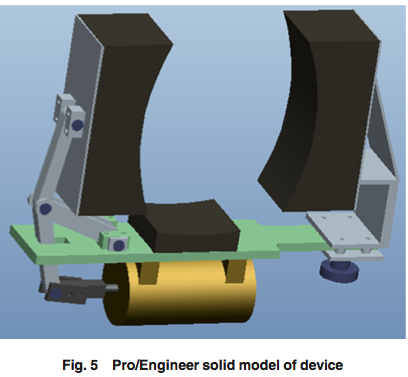
Yokota LSJL MachineRead the post A Simple Step By Step Guide For Lateral Synovial Joint Loading to try it out.

In addition, I did want to tell the people that Yokota has gone into writing up a proposal to the building of the loading device. Check out the paper Development of a Portable Knee Rehabilitation Device That Uses Mechanical Loading

Have a good New Years guys and happy 2014.