Category Archives: Uncategorized

Grow Bone And Grow Taller Using Intermittent Mechanical Loading

Something that me and Tyler realize at this point is that intermittent mechanical loading may be one of the best approaches we have towards something that could work. However that chance is very small. The entire LSJL approach is based on short bursts of mechanical loading that is repeated maybe once or twice a day for a few days and then stopped, and then restarted a week later and have that cycle also repeated.

The reason why any type of stimuli that would be applied to the human body must be intermittent is that the human body (or any living organism’s body for that matter) has this ability to be able to react to stimuli from the external world and shift the way the systems in the body in how they work to a new set point of equilibrium.

The best example of this is when people who first start out trying weak drugs develop a tolerance for the weaker drugs and need to take stronger drugs to get the same type of effect they had when they first started out. Their body after continuous stimuli by the outside influence shifted the way the brain worked either upregulating or down regulating certain types of brain neurotransmitters and that resulting in a new place of physiological equilibirum.

The same principles apply to why Hakker and steroid researchers and users would talk about the need to cycle through the compounds. Cycling allows the body to re-set its equilibirum back to a state where the weaker stimuli would still have an effect.

Tyler talks about the fact that maybe the long bone epiphysis he has been loading for these years might have lost their sensitivity so he had to increase the dumb-bells he has been loading with. He had been able to theoretically increase the duration of the loading effectiveness by going off of the loading for a few days.

In my opinion, the mechano-sensitivity he is talking about is something that is unknown at this time.  I don’t believe Tyler can tell whether his epiphysis will still even respond to loading anymore. It could be that the loading he has done even from doing it intermittently has cause the area of bone to stop being able to respond at all to the loading anymore, whether electrically due to piezo nature of bone or any other type of Wolff’s Law bone remodeling patterns.

It could be that he needs to stop loading for an extended amount of time, maybe 2 months before starting again to give the bone area a chance to regenerate the osteogenic properties again.

This article I found seems to show that bone disorders where bone mineral density drops can be negated by doing mechanical loading

Method and device for treating bone disorders by applying preload and repetitive impacts

ABSTRACT

Bone disorders may be treated by applying a compressive preload and repetitive impacts. The patient may be maintained in a static position and the preload be provided by gravity or compression. The impact load, impact rate, and a number of impacts determined by a physician prior to treatment are chosen to generate electrical signals in the patient’s bone such that the majority of energy of the electrical signals lies between 0.1 Hz and 1 kHz, and the peak amplitude values of the electrical signals lie between 15 and 30 Hz.

Analysis & Interpretation

This shows that for bone growth, the compressive repetitive impacts do work. LSJL will work to promote bone growth. The values that is cited in this paper are very low actually at around 0.1-10,000 Hz. The amplitude of the loading is around 15-30 Hz.

Note: This is not an ordinary post, but a patent. There is more in the Description section of the patent.

To slow or reverse bone loss, doctors have focused their attention on estrogens, calcium, and exercise, used either together or individually. More recently, fluorides and thiazides have been tested as therapeutic agents, but none of these approaches has been successful in restoring a severely depleted skeletal bone mass to normal. In addition, many elderly individuals with advanced bone loss cannot participate in exercise programs due to poor reflexes, motor tone and balance, as well as stress pain and stress fractures.

Certain researchers have suggested an electrical intermediary in Wolff’s law. Wolff’s law states, in short, that bone adapts to the forces acting upon it. In other words, bone will increase in mass and remodel to relieve the applied stress.

Because bone is piezoelectric and electrokinetic, it generates an electrical signal in response to the applied force. That electrical signal then effects bone formation. This is explained in Bassett, “Effect of Force on Skeletal Tissues,” Physiological Basis of Rehabilitation Medicine, Downey and Darling eds., 1st ed., W. B. Saunders Co. (1971). On the basis of Wolff’s law and more recent investigations, two techniques have been developed for treatment of bone disorders. One involves mechanical forces and the other involves electrical forces.

Implications For Height Increase

The patent is an interesting read and shows that we can indeed grow bone mass at least from a short intense repetitive loading on bones so that the bones will induce electricity, which somehow stimulate some type of bone growth.

Overall, this patent is useful in showing that we have at least clear evidence that the LSJL method has already been proposed by some researchers before for bone mineral density problems. This is used to treat osteoporosis, not short stature.

There is supposed to be 2 techniques developed to treat bone disorders. One is mechanical and the other is electrical.

Mechanical –  periodical strain rates and cycling patterns generate maximal osteogenic response in avian bones….an experiment demonstrated that cyclically loading the bones at 0.5 Hz caused bone formation, although repetition of more than 36 cycles did not seem to increase bone formation.

Electrical – in vitro and in vivo measurements showed the electrical potentials developed due to bone deformation…. the development of products for the stimulation of bone tissue electromagnetically.

It seems that the end result for both of the techniques is that the bones being deformed create a electrical signal.

The main thing to get out of this is that LSJL has a very good chance of increasing growth rates in people with open growth rates. It might have a smaller chance of working on people with no growth plate cartilages if we can somehow get the bone layer underneath the articular cartilage to be slightly more osteogenic. LSJL might be able to do that in a small minority of people who try it.

The Fingertips Of Young Human Children Can Regenerate If The Wound Is Not Closed And A Blastema Can Form

I have found from reading old library textbooks back in the University of Washington Health Sciences Library a few passages where surgeons talk about this phenomena where if you cut off the finger tips of young human children, they will actually regenerate back completely in some cases.

This actually seems reasonable to believe. At some level most living organisms have to have some type of regenerative ability if they have managed to survive for millions of years from injuries, inter-species fighting, and predators.

Here are the few sources which seem to validate this idea that in young children, they can regrow back parts of lost limbs

Source 1 – The doctor treated the injured finger for infection but, forgot to send the child along for surgery to seal up the end of the finger. What could have been a costly medical error turned out to be a Godsend for that child; over the next month, the finger grew back, much in the same way as a salamander will regrow lost limbs….Just by doing nothing and letting the body heal itself, by 1974 Illingworth had documented hundreds of cases of regenerated fingers in children….The criteria for this to happen are that just the tip of the finger be lost – the region from the fingernail down to the very first joint – and that the child be under eleven years of age. If the finger is sliced below the first joint then regeneration does not take place. If the skin is stitched back over the cut the finger will also not grow back. Also, the younger the child the quicker is the regrowth

Fingertip Amputations In Young Children

Doctors treat fingertip amputations somewhat differently in children younger than 6 years of age. After thoroughly cleaning and preparing an amputated fingertip, the surgeon may reattach it to the finger. The fingertip may continue to grow relatively normally, even if bone was exposed. This is especially possible in children younger than 2 years of age.

Source #2: OrthoInfo – Fingertip Injuries and Amputations – AAOS American Academy Of Orthopaedic Surgeons

Children with Severed Fingers

Children are more likely to heal an amputated digit, and more likely to have good function of a replanted finger. Therefore, every effort is made to reattached severed fingers, especially in young patients.

Results of Reattaching A Severed Finger

Modern surgical techniques have allowed doctors to reattach fingers with high rates of success. In fact, about 90% of reattached fingers are successful–meaning the finger is viable. That’s the good news. The bad news is that most reattached fingers have only about 50% of normal motion, many have significant deficits of sensation, and many have difficulty with cold tolerance. Often that’s better than not having the finger, but not always. It’s very important to only reattach fingers in appropriate situations, and not reattach the finger when a poor outcome is likely.

Source #3: Time Magazine – Medicine: The Regenerative Finger – Monday, Aug. 25, 1975

Source #4: Stanford Medicine

Read more: http://www.time.com/time/magazine/article/0,9171,913436,00.html#ixzz2UGaWXtQl

The Connection To Deer Antler Blastema

I remember reading about how the antlers in deers actually work to manage to grow in length every year and it seems that the basic principles apply in both situations. The post “The Connection Between Regenerating Deer Antlers and The PTHrP, PTH And IHH pathway for Cartilage Regulation, PTHrP Seems To Be The Answer (Big Breakthrough!)” was where I learned that the antler in the deer just happend to fall off and there is a rather bad wound that is left from the antler from falling off. That wound DOES NOT HEAL. instead, that wound is let to stay that way until a blastema forms. This is what I believe is happening to the fingertips of children, that if you don’t suture the wound area up, there would be blastemas which would develop and those differentiate into the multiple different types of cells needed for tissue regeneration.

Update 5/24/ 2013: After reading over the 3rd source from Stanford Medicine, I may be wrong about the blastema idea. The researchers states in a related article

The finding discredits a popular theory that holds that previously specialized cells regress, or dedifferentiate, in response to injury to form a pluripotent repair structure called a blastema.“…

We’ve shown conclusively that what was thought to be a blastema is instead simply resident stem cells that are already committed to become specific tissue types….

“The re-growth of amputated digit tips — a few millimeters in mice and up to the first joint in humans — is the only documented case of limb regeneration in mammals. We wanted to understand the basic mechanism of how this happens.”

“…damage to a digit tip is repaired by specialized adult stem cells that spend their lives quietly nestled in each tissue type. Like master craftsmen, these cells spring into action at the first sign of damage, working independently yet side-by-side to regenerate bone, skin, tendon, vessels and nerves. But just as you wouldn’t ask a mason to wire your house, or an electrician to put on a new roof, the division of labor among these stem cells is strict. Each is responsible solely for its own tissue type.

In contrast, the blastema theory invokes a new pluripotent cell type formed out of urgency from previously specialized cells. This jack-of-all-trades cell discards its former profession and instead jumps in to indiscriminately regenerate all the tissue types of the limb.”

This finding changes the current dogma of limb regeneration, from pluripotent blastema cells to tissue-specific stem and progenitor cells,” said Rinkevich.

“We found that each tissue type could only give rise to that type of tissue,” he said. “There was no cross contribution between tissue types or germ layers.” In other words, there were clear demarcations between areas of color that corresponded to structures such as the epidermis, tendon, nail, vessels, nerves and bone.

“I was extremely surprised,” said Rinkevich. “I began the experiment very eager to find something like a dedifferentiation or transdifferentiation phenomenon — that is, one tissue type becoming another. But this is clearly not the case.”

In addition to the blastema theory, there was one other possibility. Some researchers had suggested that stem cells circulating in the blood could contribute to this type of regeneration….

They found that the labeled cells did not contribute to the regenerated tissue, showing that circulating stem cells were unlikely to be involved in the regrowth of the limb.

Implications For Height Increase

I had thought that when I was beginning this paper to show that humans might have some intrinsic ability to regenerate limb tips like what we see with the deer antlers. The blastema is formed and that leads to longitudinal growth. If the bone tip of a finger is cut open, we might be able to choose not to close it, and it eventually leads to mesenchyme forming at the tip and pushing themselves up like how the secondary ossification layers push themselves away from the primary ossification layer during normal endochondral ossification. It seems that for humans to regrow appendages, there will not be any type of pluripotent blastema. There is no dedifferentiation or transdifferentiation, only that whatever stem cells that already there which was going to differentiate into their preprogrammed lineage cell types would do so, only now they would start to move towards where the wound was so that cell growth would happen in that area. Like the researchers said…”the division of labor among these stem cells is strict. Each is responsible solely for its own tissue type.”

———————-
Articles like this one from CNN “Woman’s persistence pays off in regenerated fingertip” show that tissue engineering to regrow recently cut off appendages seem to be possible even in adults.

Sections from the article…

a relatively new procedure called tissue regeneration, which had made amputated finger parts grow back for other patients.

Dr. Stephen Badylak, the University of Pittsburgh physician who helped pioneer the procedure

made an appointment with Dr. Michael Peterson, an orthopedic surgeon in Davis

The therapy involved cleaning out the finger and removing scar tissue — a process called debridement — and then dipping her finger into MatriStem wound powder. After seven weeks of treatment, her fingertip grew back (as shown in the before and after photos above).

she’s had physical therapy to decrease tingling in her finger caused by severed nerves.

Another story from FOX NEWS “Doctors regenerate man’s finger”

a wound healing powder nicknamed “pixie dust.”

A couple of days later, right in Dr. Schwartz-Fernandes’ office, Altier’s wound was coated with a white powder that’s actually called Matri-Stem

in this case cells—to rebuild Altier’s fingertip, including nerves, nail and fingerprint. 

Researchers at the Wake Forest Institute for Regenerative Medicine in Winston-Salem, North Carolina gave us a first-hand look at how it works.

“We take a very small piece of tissue from the patient about half the size of a postage stamp,” Atala said.

It takes a month for those cells to multiply.

“The cells are placed on the biomaterial, and it’s like a sandwich. You have muscle cells on the outside; you have lining cells on the inside.”

That bio-material is like the steel beams of a building, shaping the organ.  It eventually disintegrates, leaving only the cells behind.

There was a few news reports that showed that the powder we are looking at is just extracellular matrix. It is made from pig’s bladders and comprises of proteins & connective tissue which have been traditionally used by surgeons to repair tendons.

The person that is pioneering this field known as Regenerative Medicine is Dr Stephen Bodylak, at University of Pittsburgh at the McGowan Institute for Regenerative Medicine. In the interviews, Dr. Bodylak says that in theory, one can regrow an entire limb that has come off. The US military has taken up on the theory to regrow limbs testing the miracle powder on soldiers who have been wounded in the wars.

Another doctor named Dr. Steven Wolf at the Army Institute of Surgical Research says that several different technologies for limb regeneration already exists.

The same video HERE Dr. Bodylak was going to insert esophagus tissue into a patient who lost a lot of material from throat cancer.

The thing that made me really interested is where the claim is made that ‘if stems cells can regrow arteries, then there is less need for surgeries”.

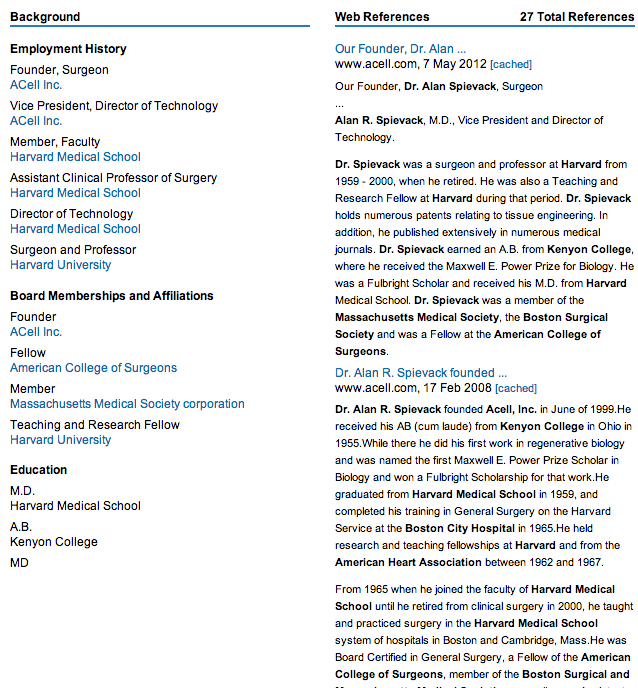
For more information on how to get the pixie dust as it is called, I have clipped pictures of the www.acell.com company’s information.

www.acell.com

Increase Height And Grow Taller Using Creatine

Recently I found out from listening to the Podcast by Dave Asprey of the Bulletproof Executive that the compound that has been traditionally been used in male muscle enhancement creatine has benefits towards increasing a person’s intelligence quotient (IQ) by something around 10-15 points. (source (webMD) – Creatine May Boost Brain Performance Study Shows Intelligence, Memory Improvements With the Dietary Supplement)

From the same webMD source…

“Creatine is a type of amino acid created by the Kidneys, Liver, and Pancreas. It is mostly stored in the muscles, where it becomes a source of energy and muscle growth. As a nutritional supplement, creatine has been shown to enhance athletic performance, and in a 2000 study, Scheff found that it protected against traumatic brain injuries in people who were already using it prior to being injured.”

I remember many height increase seekers years ago on the old Impartial Grow Taller Board discussing whether taking other types of amino acids like L-Lysine, and Arginine, and Glutamine would possibly increase their height. While they never gave a scientifically sound explanation on why increased amino acid oral consumption would lead to height increase, it did lead an impression and I have wondered whether amino acids in general do have some positive correlation to height. Proteins are made of amino acids, and and there is a weak positive correlation between people who eat meat being taller than people who eat only vegetables.

This made me wonder whether Creatine could be a type of compound that might increase the level of height growth in people as well. It is indeed a big leap to go from linking the cognitive enhancements of a compound with the possibility that the same compound would have bone growth enhancing properties as well. However it seems that there might be some evidence that shows I am not so crazy in making such a connection.

Tyler wrote a post about the link between Creatine and possible natural height increase in the post “Natural Height Increase with Creatine” back in 2010. I would try to summarize what he was trying to imply with a short paragraph of what I can get from that post.

Point 1: Myostatin is BAD for height increase. While it is a good thing for increased muscle size, losing body fat, and getting cut, myostatin is bad for height increase.

Point 2: Studies Tyler found seem to imply that creatine can inhibit the functions of myostatin.

Point 3: GASP-1 inhibits the biological activity of mature myostatin, but not activin.

Point 4: Activin & Myostatin are both members of the TGF-Beta superfamily

Point 5: GASP-1 binds directly not only to mature myostatin, but also to the myostatin propeptide. – (I don’t understand what this means but I would guess that means that GASP-1 seem to inhibit all forms, mature and immature forms of myostatin.)

Point 6: The other effect of GASP-1 is that it inhibits protease.  Protease breaks down peptide bonds that link amino acids together which means that it can break down compounds like Human Growth Hormone (by Tyler)

Point 7: GASP-1 inhibits BMP-11

Point 8: Resistance training caused significant decrease in serum levels of myostatin and increase in that of GASP-1. Creatine supplementation in conjunction with resistance training lead to greater decreases in serum myostatin, but had no additional effect on GASP-1. —> So this implies…”Exercise can make you taller by inhibiting myostatin and increasing serum levels of GASP-1 which in turn inhibits Myostatin further.” (by Tyler)

That post seems to imply that if we just inhibit the inhibitors of of growth (in double negation way), then our growth will increase. At this point, I would say that this type of thinking doesn’t work very well in height increase. From articles i have read about how the stature of humans is restrained and limited due to continuous lower numbers of cells possible to proliferate and make the bones bigger, removing obstacles that might have held back bone growth doesn’t always imply that we will get taller as a result.

When I googled the term “creatine grow taller” I did find some interesting results. The first came from the website BodyBuilding.com in a thread entitled Did I get taller from creatine?” . the poster makes the point to say that he was around 6′ 4″ before and he claims he is 6′ 5″ in his profile. He knows that Creatine is somehow related to skeletal muscles. He is 33 right now (2013), so at the time he posted (2007) he would be around 27 years old. His claim is that he grew 1-2 inches in height around the late 20s from doing creatine.

Replies talk about compounds I have never heard of like Fizogen, Cell-Tech, ….

“…creatine monohydrate as a supplement is taken for muscle creatine phospahte (CP) wich is used (during weight training) for muscle contraction energy (ATP). your supplementing your CP pretty much so it restores faster and your muscles will grow faster…in laymens terms….of course….if your creatine includes the human growth hormone well then maybe on a very very rare occasion you might just be getting taller…..”

The guy ultimate says…

“well jokes aside..I tell ya i’m sure I grew a bit (.5-1”)..not sure if it’s posture or like I said bloated spinal disks (cus “The center of the disc is a jelly-like substance called the nucleus pulposus”) no clue if it can bloat or not (hence this thread)..maybe when I cycle off i’ll take actual measurements and see..”

Other people suggest that if they took something called the hardcore version of Cell-Tech that they possibly would increase in height. – Although this can be assumed to be just a joke.

So what do I think about the possibility that Creatine can be used to possibly make a person taller?

From the EHow article “How Does Creatine Affect Growth Hormone and Aging?” it is implied that  creatine somehow stimulates the pituitary gland to overexpress on GH. This could imply that creatine has some way to help in the growth process of developing children. However another section suggests that creatine will almost all be concentrated in the muscles…

Almost all creatine in the body is concentrated in the muscles, and the remaining 5 percent is found largely in organs with high-energy needs such as the heart, brain and testes

The thing about creatine is that it just converts fats in the body to energy. There is no studies that make the connection between taking creatine supplements and possibly increasing endochondral ossification or chondrogensis. Some people have gone on the Yahoo Questions & Answers section to ask whether taking Creatine will help make them taller. The almost unanimous decision by people on there is that it won’t help even the child who is still growing.

What is the conclusion?

Creatine is made of amino acids. For so many years beginning height increase seekers want to try to take proteins and amino acid formulations to grow taller. At this point, I have not heard one genuine success story from just taking amino acids like Glutamin and Glycine. So that implies that one should NOT be able to increase their height from taking Creatine. The few cases where taking creatine would help may be for vegetarians who don’t get enough proteins in their diet or children who live in malnourishment and can’t get enough nutrients into their body which leads to stunted growth. Creatine might help a little for the child who has stunted growth, but for an adult, it should never work to make a person taller.

Nitric Oxide Actually Inhibits Chondrogenesis And May Inhibit Bone Longitudinal Growth

Someone recently sent a message to me and to Tyler showing studies which seem to show that Nitric Oxide can actually be involved in inhibiting chondrogenesis. These studies puts into question many old ideas and proposed supplements that were studied by the Grow Taller Forum (currently gone) spearheaded by Hakker years ago. Back then there was a lot of research into stuff like Niacin, mTOR, CNP up-regulation, and other stuff that was believed that would work since they caused increased vascularization and blood flow.

I even wrote a post about the possibility of using Nitric Oxide to stimulate increased growth in
Increase Height And Grow Taller Using Nitric Oxide”. Tyler wrote about it too in HeightQuest.com in the post “Be Taller with Nitric Oxide?”.

He states that the NO if it has any affect, it would be towards osteoblast increases meaning that long bone lengthening was out of the question. These posts found seem to show that NO can have the opposite affect towards people who are still growing.

POST: Nitric Oxide Actually Inhibits Chondrogenesis And May Inhibit Bone Longitudinal Growth

Study #1 – Inhibition of transforming growth factor beta production by nitric oxide-treated chondrocytes: implications for matrix synthesis.

Study #2 – Nitric oxide decreases IGF-1 receptor function in vitro; glutathione depletion enhances this effect in vivo.

Study #3 – Nitric oxide inhibits chondrocyte response to IGF-I: inhibition of IGF-IRbeta tyrosine phosphorylation.

I won’t paste the abstract below since one can just click on the links above. What I wanted to do was give a first impression analysis on the abstracts that go with the study

Analysis & Interpretation

The first study shows that there is a link between Nitric Oxide and TGF-Beta1 and Proteoglycan synthesis. The relation is inverse in nature.

Here is what seems to happen.

  • Interleukin 1 Beta (IL-1Beta) that is added to articular chondrocytes creates both nitric oxide and TGF-Beta1. 
  • If you block the NO production, then you indirectly cause the chondrocytes to produce more TGF-beta1 and proteoglycan.
  • The thing they use to block NO is NG-monomethyl-L-arginine (L-NMA)
  • L-arginine (10 mM) reversed the inhibitory effect of L-NMA on NO production
  • If there is more TGF-Beta 1 production, there is more proteoglycan production.

These are the 5 main points from the 1st study’s abstract. This is extremely good evidence that Nitric Oxide is actually really a bad idea for cartilage creation or regeneration. In my opinion, anything that is inhibiting either TGF-beta production or proteoglycan production is not a good idea to make people with no growth plates grow taller.

The 2nd study has a big claim made by the researchers. “We previously showed that high concentrations of nitric oxide (NO) decrease IGF receptor tyrosine phosphorylation and response to IGF in intact chondrocytes”. The rest of the abstract just talks about the types of compounds they tried out to decrease the effect of NO in decreasing the IGF’s receptors and the IGF’s response ability. The point I would make here is that NO seems to also decrease the responsiveness of IGF-1 since their receptors are blocked.

From the 3rd study we looked at…

“…suggest that NO is responsible for part of the cartilage insensitivity to IGF-I. These studies characterize the relationship between NO and chondrocyte responses to IGF-I in vitro, and define a mechanism by which NO decreases IGF-I stimulation of chondrocyte proteoglycan synthesis.”

“…These studies show that NO is responsible for part of arthritic cartilage/chondrocyte insensitivity to anabolic actions of IGF-I; inhibition of receptor autophosphorylation is potentially responsible for this effect”

Conclusion:

NO seems to have some type of indirect ability to decrease the effectiveness of IGF-1 on chondrocytes in terms of the IGF-1 anabolic properties. They also decrease TGF-Beta production and proteoglycan synthesis. This means that the cartilage matrix can’t be formed. NO would inhibit any way for us to regenerate growth plate cartilage in adults with bone maturity. In my opinion at this point, there is absolutely no way that NO would be able to help the person with no growth plates end up taller.

I conclude by saying thank you to the contributor who shows me and Tyler the studies.


Engineering Growing Cartilage Tissue In Vivo Through Chondrocyte Transplantation (Big Breakthrough!)

I think this may be the first study I have found where there is something substantial to show for from doing so much research.

These groups of university grad students, post docs, and professors have finally, FINALLY been able to engineering growing cartilage tissue in vivo through chondrocyte transplantations. The result is that they have been able to engineering growing cartilage that exhibit the same type of characteristics as the epiphyseal growth plates.

The only thing that it doesn’t say is that they can do this non-invasively. However this type of ability is a huge breakthrough in terms of the research we have been dedicated to.

The paper below shows that bones with cartilage attached can grow like the natural endochondral ossification has been emulated

University PDF Article: Engineering growing tissues

Authors: Eben Alsberg, Kenneth W. Anderson, Amru Albeiruti, Jon A. Rowley, and David J. Mooney

University of Michigan, Ann Arbor, MI 48109

Edited by Robert Langer, Massachusetts Institute of Technology, Cambridge, MA, and approved July 10, 2002 (received for review May 15, 2002)

Abstract

Regenerating or engineering new tissues and organs may one day allow routine replacement of lost or failing tissues and organs. However, these engineered tissues must not only grow to fill a defect and integrate with the host tissue, but often they must also grow in concert with the changing needs of the body over time. We hypothesized that tissues capable of growing with time could be engineered by supplying growth stimulus signals to cells from the biomaterial used for cell transplantation. In this study, chondrocytes and osteoblasts were cotransplanted on hydrogels modified with an RGD-containing peptide sequence to promote cell multiplication. New bone tissue was formed that grew in mass and cellularity by endochondral ossification in a manner similar to normal long-bone growth. Transplanted cells organized into structures that morphologically and functionally resembled growth plates. These engineered tissues could find utility in treating diseases and injuries of the growth plate, testing the effect of experimental drugs on growth-plate function and development, and investigating the biology of long-bone growth. Furthermore, this concept of promoting the growth of engineered tissues could find great utility in engineering numerous tissue types by way of the transplantation of a small number of precursor cells.

Analysis #1:

I’m going to treat this post a little different due to nature of how critical this study is in our endeavor. This study and paper is a big game changer. That is why I will be doing a series of smaller, shorter analysis for each section I post to show the reader what the implications are. These researchers at the University of Michigan, Ann Arbor, from the Department of Biomedical Engineering have been able to do a 5 step process

1. Buy the raw materials needed to make the medium, which is a alginate based hydrogel.

2. Embedded a peptide that they bought and modified into the hydrogels first. These peptides have a specific type of animo acid chain sequence that is arginine-glycine-aspartic acid which is also called R-G-D, RGD. The longer peptide chain is actually G-G-G-G-R-G-D-Y (aka G4RGDY)

3. They take a subject/patient and remove some bone and cartilage cells from them, which are called the osteoblasts and chondrocytes. This is the explant.

4. They put the osteoblasts and chondrocytes into the now already embedded hydrogel.

5. The hydrogel is placed in an area of a lab animals (for this case, it is mice) skeleton where there is bone/cartilage missing.

The thing that they have shown is that not only have they been able to create bone tissue (old news), or cartilage tissue (harder, but still doable), but growing bone tissue, which means that the cartilage cells that is with the bone cells is proliferating, hypertrophizing, and turning out cartilage that is expanding.

This is exactly how the growth plates work.

From the introductions area…

We hypothesized that it would be possible to engineer a growing tissue by presenting appropriate growth stimuli from the cell transplantation scaffold. This hypothesis was tested in the context of engineering growing bony tissues by the cotransplantation of osteoblasts and chondrocytes. It is critical to promote the multiplication of transplanted cells if one is to engineer a growing tissue in vivo, and one required growth stimulus for most mammalian cell types is an appropriate adhesive substrate. We hypothesized that providing a high density of adhesive ligands to transplanted chondrocytes from the polymeric delivery vehicle would promote their multiplication, and synthetic peptides containing the arginine-glycine-aspartic acid (RGD) cell adhesion sequence were covalently coupled to the alginate polymer chains used to form the hydrogel delivery vehicle to provide this requirement. We have previously documented that this approach allows one to specify the mechanism of cell–material adhesion, and that an appropriate density of RGD ligands promotes the proliferation of various cell types in vitro. Considerable efforts have been made to date to regenerate bone and cartilage tissues separately and together, but no attempts to form a growing bony tissue have been reported. We now demonstrate it is possible to regenerate a tissue structurally and functionally similar to a growth plate by providing a growing cartilage anlage with transplanted chondrocytes, similar to that in long-bone development, as a framework for subsequent bone formation by cotransplanted osteoblasts.

Analysis #2:

These researchers felt that to get the chondrocytes to grow cartilage that will expand again, they will add/embed the growth factors first into the hydrogel matrix/scaffold.

Note 1: Most tissue engineering is already done this way. The idea of first embedding growth factors is the standard approach, not something new or totally radical.

Note 2: When the researchers are using the terms, alginate, scaffold, matrix, or hydrogel they are talking about the exact same thing. So alginate = scaffold = matrix = hydrogel

The cells are then added next into the hydrogel and over time, the already embedded peptides will diffuse or seep into the cells and get them to proliferate and eventually disintegrate the hydrogel matrix and leave a cartilage matrix in its place.

They get it right in focusing mainly on the need to have the chondrocytes that they transplanted to focus mainly on multiplication/division/proliferation. To make sure that the cells are doing this, they need to add growth stimuli. One of the growth stimuli that they have found from their research which works is an adhesive substrate, at least for mammalian cells. They wanted to test the idea of taking a high density of these adhesive ligands, which are synthetic peptides containing that RDG amino acid sequence, and getting them to bond to the chondrocytes and obsteoblast’s membrance surface. It seems that the specific type of peptide sequence can specify the mechanism of cell adhesion. If the RGD ligands are at the right density, they can promote the proliferation of various types of cells in vitro.

The introduction is concluded by the researchers stating that growing bones which are going through the endochondral ossification process has never been successfully created. It seems that they may be the first group of researchers that have succeeded and published a paper showing their results.

Results and Discussion, Part 1 -(By the researchers, In the article)

To test first if a growing cartilaginous tissue could be engineered, as a first step to engineering growing bony tissues, RGD-modified and unmodified alginate hydrogels were used to transplant isolated chondrocytes into mice for periods from 6 to 25 weeks. Gross examination of explanted tissues revealed that only implants combining chondrocytes with RGD-alginate demonstrated convincing characteristics similar to native cartilage (e.g.,pearly white opalescence, firm to palpation) (Fig. 1a and b). Furthermore, tissues engineered with the RGD-modified alginate increased significantly in mass (Fig. 1c) and size over time. Quantification of the cell number in these tissues indicated a continued increase in cell number over time (data not shown), supporting the gross observation of extensive tissue growth.

Analysis #3:

Again, like I said and the researchers said before, there were three main groups, the negative control, the control and the experimental. Two groups had explanted chondrocytes that were grown in in culture up to a certain cell chondrocyte concentration. two groups had the alginate/hydrogel/scaffold put into them. Two groups had the chondrocyte seed into the scaffold. Only the experimental group had the RGD added into the alginate beforehand. The result is that the RGD-modified alginate that was put into the experimental group caused the chondrocytes to grow into cartilage that had the right color and firmness. The tissues as a result increased in both mass and size over time. This means that whatever type of tissue did grow, they increase in volume, (aka REAL BONE VOLUME GROWTH). More testing showed that the cells had indeed increased in number indicating that they were proliferating.

Results & Discussion, Part 2

Histologic evaluation of the engineered tissues indicated an accelerated rate of tissue formation (e.g., higher cellularity and type II collagen deposition, decreased residual alginate) with the RGD-alginate hydrogels. The negative control group (unmodified alginate without cells) demonstrated only residual alginate and fibrovascular ingrowth; no evidence of cartilage formation was exhibited by any of these implants at any time. Implants of unmodified alginate with chondrocytes demonstrated islands of cartilage-like tissue (Fig. 1d) that were noted to expand and coalesce with increasing time of implantation. In contrast implants of RGD-alginate with chondrocytes demonstrated an abundance of cartilage-like tissue even at the earliest time point, with small islands of residual alginate contained within the cartilage (Fig. 1e). The ratio of cartilage to alginate increased with time, and at the 25-week time point these implants were almost entirely composed of cartilage-like tissue, with only occasional small pockets of residual alginate. Quantification of the areas staining positive for type II collagen (a specific marker for cartilage), by using computerized image analysis, revealed that the negative control demonstrated no type II collagen deposition. In contrast, the RGD-alginate group exhibited extensive positive staining (95 plus and minus 3% of tissue area). These tissues also demonstrated significantly greater compressive moduli than tissues engineered with unmodified alginate (data not shown), further supporting the finding of increased rate of cartilage formation. Significant progress has been made toward engineering functional cartilage tissue in terms of achieving mechanical, biochemical, and histologic properties similar to those properties of native cartilage (17); however, no growing cartilage tissue has been reported previously. The current findings demonstrate that providing specific cell-adhesive interactions with the cell delivery vehicle can markedly enhance the growth of engineered cartilage tissue.

Analysis #4: 

This part reiterates the point that with the negative control, which has neither chondrocytes of RGD peptides implanted, there was no chondrocytes or cartilage signs over time. With the control group where there was chondrocytes but no RGD there were pockets of chondrocytes around but the cartilage/alginate ratio didn’t change much over time. With the RDG-alginate group, there was a clear sign that Collagen Type II production was occuring, as well as an increased cartilage/alginate ratio, which kept going higher. Eventually there was little alginate left, but just filled with cartilage. The cartilage that did develop seemed to also have a high compressive moduli, showing that even the firmness and strength that are seen in natural growth plates are shown in the RGD-alginate group.

Results & Discussion, Part 3

Once a growing cartilage template had been achieved, the cellular environment present during endochondral ossification was partially recreated in an effort to form a tissue engineered growth plate-like structure. Past studies aimed at modeling growth plate physiology used monolayer chondrocyte cultures, which do not stabilize the chondrocyte phenotype and neglect the true in vivo spatial arrangement of chondrocytes and their matrix (18, 19). Subsequent studies have used chondrocyte aggregates (20) or suspension cultures in which chondrocytes were cultured in a variety of three-dimensional gels (21–27). Although these systems preserved the chondrocyte rounded phenotype and provided a more realistic three-dimensional environment, none of these models provided for chondrocyte transformation from a proliferative to a differentiating phenotype within the growth plate (20) nor accounted for the complex cell–cell interactions and soluble signaling that occurs between osteoblasts and chondrocytes within an actual growth plate. To address these limitations of past models, chondrocytes and osteoblasts were mixed together in a G4RGDY-modified alginate delivery vehicle and injected into the backs of severe combined immunodeficient mice for 4–26 weeks. A control of osteoblasts-alone transplantation was also used in this study. Engineered tissues were excised at 26 weeks, and gross inspection of both experimental groups revealed the appearance of bony nodules (Fig. 2a and b). Specimens with a 2:1 ratio of primary RCO to primary BAC cells were substantially larger than the RCO-only transplants, however, and also had regions that grossly resembled cartilage. Bone mineral density plots taken with dual-energy x-ray absorptiometric imaging on implants at 26 weeks confirmed mineral content throughout the implants in both groups (Fig. 2c and d). Although the bone mineral density was significantly greater in the RCO-only group than in the cotransplantation group at 13 and 26 weeks (Fig. 2e),the bone mineral content in the cotransplantation group was significantly greater than that of the RCO-only group at 4 and 26 weeks (Fig. 2f). In addition, the mass (Fig. 2g) and the cell number per implant (Fig. 2h) of the cotransplantation group significantly increased over time, while no increase in either variable was observed in the RCO cell-only condition over time. Thus, cotransplantation of chondrocytes and osteoblasts in this vehicle resulted in a growing bony tissue, as evidenced by significantly increased mineral content, mass, and cell density over time.

Analysis #5:

I think this is the section which really reveals why this study is such a big game changer.

1. Researchers have tried to grow from scratch a functional growth plates with similar characteristics as the natural thing. They had tried to go with a monolayer structure. This approach was not successful because the form or shape of the chondrocytes could not be stablized and sustained. The other big problem was that the monolayer was not really representing how the chondrocytes are aligned spatially in real growth plates.

2. Other researchers tried to put the chondrocytes into a packing form in 3-D gels and cultures. These did solve the problem on getting the chondrocytes to stay in their rounded form as well as get the structural alignment of chondrocytes relatively similar like real growth plates. However these research found out the problems that arose for them was that the chondrocytes didn’t differentiate in the way (ie. Hypertrophize) that real growth plates would do. Another problem was that the 3-D suspensions could not account for the cell-cell signaling that was done between the bone layer and the cartilage layer during ordinary endochondral ossification.

3. The researchers who wrote this article tried to account for all of the 4 major problems by putting osteoblast progenitor cells in with the chondrocyte progenitor cells. They did the bone-cartilage cell combination along with a control group of just using bone cells. The results showed that there were bony nodules. The ones with cartilage cells in the mix showed at the macroscopic level to be cartilage like. The bone mineral density of the bone cell transplant was higher but the cartilage-bone cell cotransplant showed that there was a higher cell density and the volume of the bone that resulted was bigger.

Results & Discussion, Part 4

Histologic examination of the RCO cell only and cotransplantation constructs revealed mature bone formation in both conditions at 26 weeks (Fig. 3a and b). The cartilage, however, was present only in the cotransplantation group, as confirmed both morphologically and through specific staining of sulfated mucopolysaccharides (component of cartilage) (Fig. 3c and d). Histomorphometric analysis of hematoxylineosin and aldehydefuchsin alcian blue eosin-stained sections, by using image analysis software, revealed that the total amount of bone achieved with cotransplantation of the two cells types was significantly greater than that obtained from the transplantation of RCO cells alone (Fig. 3e). In addition, unlike the RCO-only group, the cotransplantation group demonstrated significant cartilage tissue and marrow space. Minimal alginate remained in the cotransplantation group, whereas more than 50% of the tissue in the RCO-only group was residual carrier.

Analysis #6:

Testing showed that the volume size of the bone that resulted from the cotransplantation was much bigger than just using the bone cells as a transplant. In addition, the cotransplantation caused most of the alginate/scaffold to be either disintegrated or absorbed while a a signifiant amount of the alginate was still around for the RCO-only group.

Results & Discussion, Part 5

A striking result observed in the cotransplantation group was that 80% of these growing bony tissues contained structures that histologically resembled growth plates (Fig. 4a and b) at the interface of the cartilaginous and bony regions of the tissue. The first region of these structures is similar to the reserve zone of normal growth plate histology, where the spherical chondrocytes exist individually or in pairs and are similar in size to the cells of the proliferative zone (Fig. 4c). These chondrocytes are separated by large amounts of extracellular matrix and not as densely packed as cells in the other regions (28). In the next region, the chondrocytes, flattened and aligned in longitudinal columns, mirror the morphology of the proliferative zone of the growth plate (Fig. 4 c) (29). The flattened cells of the preceding region turn into rounded, distended chondrocytes, which are similar in morphology to the hypertrophic zone of a growth plate (Fig. 4d). The final region exhibits trabeculae of primary spongiosa and marrow space typical of a growth plate’s metaphysis (Fig. 4e) (3). The regions of cartilaginous and bony tissues ranged in size from 1.75 to 11.50 mm 2, with the junctions between the zones ranging from 1 to 6.5 mm. Organization of transplanted cells to form growth-plate-like structures has not been reported, but other cell types (30–36) have demonstrated the ability to self-assemble in vitro into structures that have similar functional and or morphological properties to the tissues from which they were isolated (37). In addition, several groups have engineered complex functional tissues such as the urinary bladder (38) and the small intestine (39) through the transplantation of multiple cell types in specific locations on the delivery vehicle. However, the development of growth-plate-like structures presented here is a striking demonstration of the ability of randomly mixed multiple cell types to self-organize into several distinct tissue types. The mechanisms of cellular self-assembly underlying these findings are not entirely understood, but may include differential adhesion between different cell types, differential response to chemotactic gradients, different rates of adhesiveness reacquisition after cell isolation, the differential contractility hypothesis, and the specific adhesion hypothesis (40). The different cell types may also affect the organization of each other by the secretion of growth factors, or the cell populations may respond differently to the insoluble signals provided by the adhesive moiety bonded to the alginate vehicle.

Analysis #7:

This is the part of the article where the researchers compare what the tissue that was formed from the cotransplantation to the type of cell morphology seen in ordinary growth plates. They comment that 80% of the cells in the tissue that develops looks very much like the interface in growth plates where the cartilage meets the bone. There is a section of the tissue that resemble the resting zone, another section of the tissue that resemble the proliferation zone, and a third area which matches the hypertrophy zone of growth plates. This means that the continuous process in which chondrocytes result in expanded volume of bone has been duplicated.

The researchers again make the point to show that there has not been a report yet of any researcher being able to generate “growing bones” before…

“Organization of transplanted cells to form growth-plate-like structures has not been reported, but other cell types (30–36) have demonstrated the ability to self-assemble in vitro into structures that have similar functional and or morphological properties to the tissues from which they were isolated (37)…However, the development of growth-plate-like structures presented here is a striking demonstration of the ability of randomly mixed multiple cell types to self-organize into several distinct tissue types.”

This shows that even though the researcher can’t explain the minute details or the mechanism of just how the chondrocytes and the osteoblasts (along with the RGD-peptides and alginate scaffold) come together to create a working growth plate like unit, the histological testing shows that the tissue seems to work almost exactly like the growth plates.

Conclusion: 

Months ago, around the end of last year in december I wrote a post that stated that I was 99% sure that epiphyseal growth plates have already been successfully grown in the lab. The post was “A Real Alternative To Limb Lengthening Surgery – Epiphyseal Growth Plate Regeneration, Regrowth, Implantation, And Transplantation Is Completely Possible (Big Breakthrough!)”

In addition, I also wrote a post about another study showing that if we could grow the growth plates to the right size that are needed for implantation, the surgery for growth plate implantation would have a high chance of success as long as we can get the vascularization issue resolved.

“Epiphyseal Plate Transplantation Through Vascularization (Breakthrough!)”

In addition, I wrote about the fact that China was in their military hospital doing experiments on rabbits to get the growth plates regrown

“China Military Hospital Research Clinics Have Already Engineered Functional Epiphyseal Growth Plates (Breakthrough)”

In the post above, I cited 5 articles that Chinese Military researchers have published about their results. They are extremely close, if not already successful in getting growth plate transplantation down at least, but maybe not complete growth plate generation from scratch.

Study #1: [The treatment of premature arrest of growth plate with a novel engineered growth plate: experimental studies].

Study #2: [Repair of upper tibial epiphyseal defect with engineered epiphyseal cartilage in rabbits].

Study #3: [Repair of growth plate defects of rabbits with cultured cartilage transplantation].

Study #4: [Experimental and clinical research on repair of growth plate injury].

Not only are the Chinese Military doing this type of research, researchers from Hong Kong seem to be able to show that engineered cartilage pellets that are implanted back in lab rabbits have been shown to be able to instigate longitudinal growth again. Refer to the study below…

Interestingly, these Korean researchers from Yonsei University have been able to do the same type of experiment, showing that chondrocyte allograft transplantations would work in repairing broken growth plates which might have developed body bridges.

In every one of them, the researchers used the standard tissue engineering and stem cells principles. Thinking back even further into the research of the news, I remember now that at the beginning of this website, I had found off of the Make Me Taller forum thread entitled Russian scientists develop an alternative way of growing taller using step cells a link to this article about this group of researchers from Russia who had been able to implant stem cells into human leg bone to make them grow longitudinally again. The post was…“Great News For Stem Cell Method For Height Increase! :)” 

The original article was entitled “RUSSIAN SCIENTISTS CREATE LEG BONE EXTENSION PRODECURE”. There seems to be 2 sources I found, Source 1, and Source 2, both telling the same story. Source 1 was from a russian news website called Rionavasti and the 2nd source was from a website called Newlife Certified, Top Board Certified Philippine Plastic Surgery”

Note: The story by Dr. Joaquino which is the 2nd source referenced the 1st source so it turns out that there is only source for this story. It makes me question the legitimacy of the claims and of the researchers.
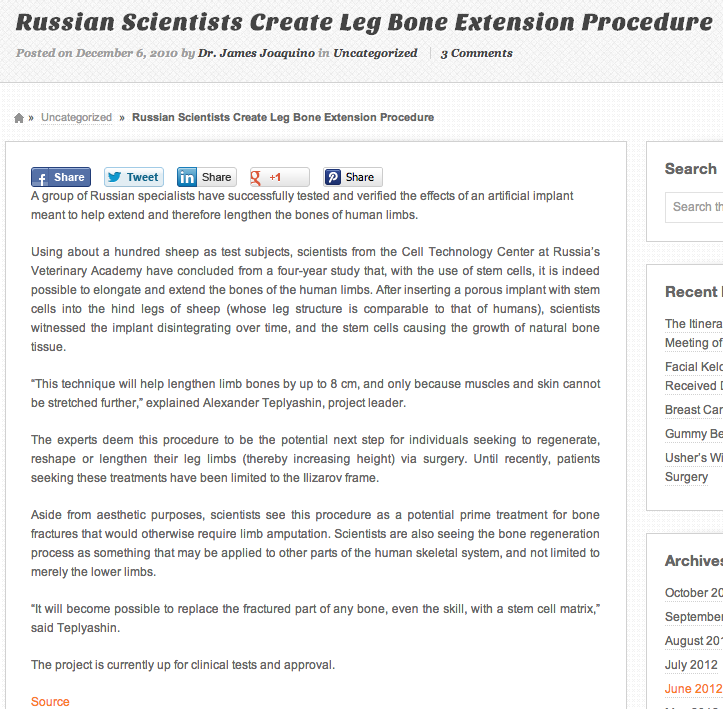
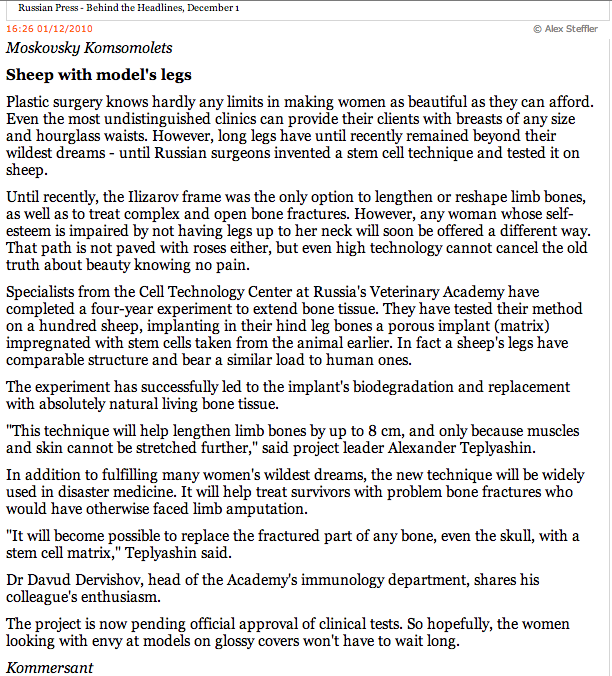
Russia Stem Cells 2Russia Stem Cells
The ideas and techniques that are claimed to be done by these Russian scientists sound similar to already well known tissue engineering and tissue regeneration technologies. Years ago, there was a story “Sky News Exclusive: Groundbreaking stem cell technique used to repair and lengthen bones” where Scientists in the UK injected stem cells into the fracture of a broken leg. Then they used a “high tech scaffold” to stretch the stem cell filled fracture apart and then added more stem cells. The term “scaffold” is used again and it makes me think that maybe the scaffold which is implanted is the key.

There is a lot of information in this post so I wanted to state one thing for the readers of this website/blog. We have been successful in regenerating cartilage that act just like growth plates from using stem cells coupled with tissue engineering to develop bones that growth in volume.

We have also been relatively successful in being able to transplant into lab animals growth plates.

It is only a matter of time before some researchers will try to implant/embed a newly grown growth plate cartilage into the bones of an adult human being. When that happens, humans will be able to grow their bones again.
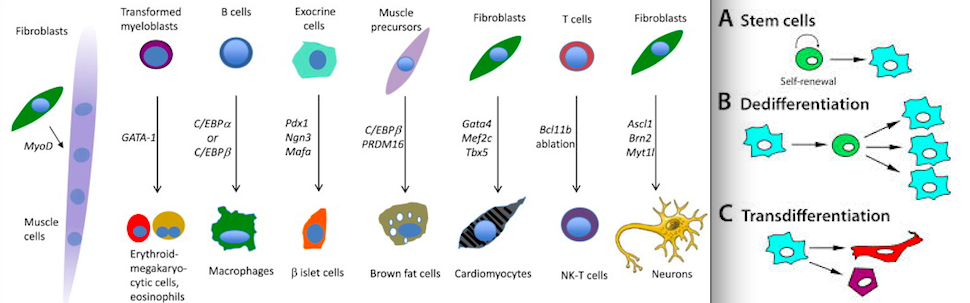
How Much More Height Can Be Gain From Stretching For Morning, After Waking Up Height? (Important)

This study I found months ago which I only got a chance to really go over until today has made me and potential other height increase researchers maybe rethink over the whole endeavor of what we are doing. Some startling data and claims revealed in the study below seem to suggest that even the stretching exercises we are doing has little to no effect.

Study Title: Diurnal variation in stature: is stretching the answer?

Authors: L D Voss, B J R Bailey

  • Department of Child Health, Southampton General Hospital – L D Voss
  • Faculty of Mathematical Studies, University of Southampton – B J R Bailey

Abstract

Aims—To investigate the extent and timing of diurnal variation in stature and to examine the eVectiveness of the stretched technique in reducing the loss in height.

Setting—A Southampton school.

Design—Fifty three children, divided into two groups, were measured by two independent auxologists using a Leicester
height measure. Each child was measured four times, at 0900, 1100, 1300, and 1500, using both an unstretched and a stretched technique.

Outcome measures—Height loss after each of the three time intervals for both unstretched and stretched modes.

Results—There was a clear decrease in stature during the morning, but no further loss occurred after the subjects had been up for around six hours. The mean height losses for the unstretched (stretched) modes were 0.31 cm (0.34 cm) and 0.20 cm (0.23 cm) for the periods 0900 to 1100 and 1100 to 1300, respectively, but only 0.045 cm (-0.019 cm) from 1300 to 1500. Stretching did not reduce the eVects of diurnal variation, but significantly aVected the recorded height by an average of 0.28 cm. There was no significant diVerence in reproducibility using either technique (SD 0.30 cm stretchedv 0.31 cm unstretched).

Conclusions—Diurnal variation in stature may substantially aVect the reliability of height data and careful consideration should be given to the timing of repeat measurements. As most height loss occurs in the morning, afternoon clinic appointments would be preferable. The standard stretched technique does not appear to reduce diurnal variation, nor does it affect
precision. Measurements made using an unstretched method are recommended to avoid interobserver diVerences, known to occur where diVerent observers are used.


Analysis & Interpretation:

This article is something that I have been wanting to find for a long time, which talks about the phenomena which we as height increase researchers have known for so long, which is that after we get out of bed from going through a regular cycle of sleeping, we actually are a little taller, and over time, that height drops throughout the hours that we are standing up and awake. The general belief is that the intervertebral disks are being compressed.

It seems that there is a scientific term for this phenomena called “Diurnal variation” and there are quite a few studies that the article references which talks more about the phenomena known as diurnal variation.

Getting back to the original point of this point, I am asking and trying to answer two main questions..

  1. How much height on average is lost by adult people (assuming they are male and between the adult height of 5′ 6″ – 6′ 0″)?
  2. How Much height can be regained if we did stretching many hours after waking up and we already experienced diurnal variation?

I refer to a few select passages that I found from the article…

“…confirm the presence of diurnal variation in the adult. Most agreed that the total loss amounted to between 2 and 3 cm, and the evidence suggested that the greater proportion of the decrease in height was occurring in the trunk.

some studies also showing that much of the height loss can be restored by taking a short nap. Almost all reports agree that the greater proportion of the decrease in stature appears to occur soon after rising, though it is assumed that, without a nap, further loss continues throughout the day

Even in studies using larger numbers, one found a mean decrease in height of 1.54 cm in 100 children between rising and late afternoon, whereas another found a mean decrease of just 1.0 cm in 70 boys between early morning and bedtime

A stretching technique did become widely adopted about 20 years ago, however, after Whitehouse et alsuggested that ‘gentle upward pressure on the mastoid processes’ could minimise the eVects of diurnal variation.11 Indeed, these authors claim to have shown that, using this technique, loss in stature between morning and afternoon, though not entirely eliminated, can be reduced to a maximum of 0.46 cm.

The aims of the present study were twofold: (a) to ascertain the time of day at which height loss eVectively ceases; and (b) to examine the eVectiveness of stretching in reducing diurnal variation in height”

What the selected sections shows is that the height loss seen in people, but children for this experiment example is around 2-3 cms, or 1 inch. Some smaller groups of subjects showed even smaller height loss, just 1 cm. The thing that is noticed is that the height is lost from the trunk (torso). Most of the height loss happens right after a person gets out of bed, in the early hours.

This is the biggest thing that can be taken from the study….

“Figure 2 clearly shows that, on average, stretching added a constant amount to the unstretched height, but did nothing to reduce the diurnal loss of height…”

This shows that stretching can cause a very small amount of height increase in people who have already experienced diurnal loss of height, but that amount is usually slightly more than 3 millimeter or 0.003 meters in difference (it really is that small)

In the discussion section, the researchers reveal their conclusion which reveal what I had seen from obsessive measuring of my own height many years ago…

The present data confirm both the existence of diurnal variation and that the greater proportion of the height loss occurs during the earlier part of the day. Over the period 0900 to 1500 we found an average decrement of around half a centimetre, though several children lost well over 1 cm regardless of the method used (fig 1). On average, the largest decrement occurred during the first time interval, 0900 to 1100.

Once a child has been up for six or seven hours there appears to be no further discernible loss of height—the timing of afternoon appointments can therefore be more flexible and measurements made after 1300 can be repeated at any other time in the afternoon.

This is the part which also is sort of an eye-opener in terms of revelation.

Though commonly used, the technique of stretching does not appear to have any advantages. It simply increases the measured height, in this case by almost 3 mm. This amount appears to remain constant, irrespective of the time of day at which the height is measured

There is some confusion over this term; there can be no such thing as the ‘true height’ of an animate body, only a mean height, with variability about it….The aim is not to record the maximum height possible, but a height that can be easily reproduced

Stretching was therefore ineffective in reducing the stature lost during the course of the day, as suspected by Buckler.

So to the two question above, the answers are….

  1. The average amount of height loss due to diurnal height loss is around 2-3 cms for most adults.
  2. The amount of height gain that can be achieve is only about 3 millimeters. That gain will not be effective in reducing the loss of height over the course of a day.

These results are very interesting because they seem to go against everything that we as height increase researchers would hope for. Where I had hoped that we can increase our height 2-3 cms, maybe even 4 cms, it seems that the more likely result from stretching is only a few millimeters.

There are of course exceptions to the rule on how much of extra height can be regained like with the TightSkinFlash guy on Youtube. I did a post about the guy in the post “Reviewing A Height Increase Success Story By SkinTightFlash From Youtube, A Lance Ward Supporter”This guy gained a little more than 1 inch from 3-4 hours of daily stretching. He went from 5′ 7″ to 5′ 8″ which is quite impressive. However now I say that his case is an outlier, something that most of us can’t expect anymore.