Category Archives: Uncategorized

The Reasons You Should And Should Not Go Through With Limb Or Leg Lengthening Surgery

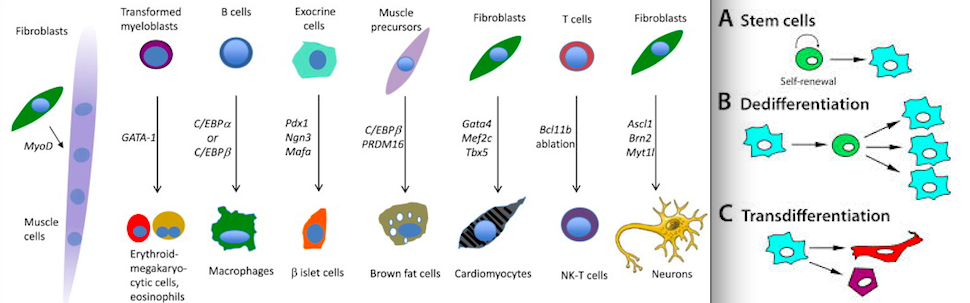
Of all the methods and techniques that are proposed to increase one’s height, the only one that will clearly work is the surgery where one get their legs cut open, separated, and slowly using metal screws increased in length while everything is held together. When it come to trying to manipulate and mold the human bone, anything beside blunt force and knife incisions will have little effect. There are many height increase ideas being developed currently like using low frequency ossilating pulses, implants, stem cells, and DNA manipulation, but the limb surgery is still the one method that has worked and will continue to work as long as it is allowed.
So we know that it does work. However, the complications involved with the surgery, the pain, the expense, and the emotional and mental effort one has to put in makes the surgery a very controversial subject and decision. If you have ever considered the idea of going through with the surgery and told your family or friends, the most likely reactions are confusion, anger, shame, and fear.

Your mother might start crying and say something like “You are perfect the way you are. Why would you want to put yourself through such a painful and horrifying experience jus tot gain a few inches?”

Your father might get angry and start shouting and try to argue with you to change your mind with “Are you crazy? Or stupid?! Do you realize that you will have to give up your schooling or work for at least 6 months-1 year to go through with this cockamaney idea! Who put this in your mind?”

Your brother might be confused and state “You are crazy for going through with this…Is it because you are worried you can’t find a girlfriend/boyfriend because you are short? I am only slightly taller than you and I am fine with my own height”

Your friends would try to understand but also concerned about you and go with something like “Wow, I can’t imagine ever putting myself through that type of pain and hell. It is your life and body and you will ultimately have to choose what you want to do. I wouldn’t recommend it. Can I help in some way?”

All of them have their own reasons to act and react the way they do. All of their concerns and fear are well founded. If they try to convince you to reconsider or get out of the idea of limb and leg surgery they are doing it out of real caring for you.

So the main question is…

“What are the main real reasons you have for why you have decided to go through with limb lengthening surgery?”

right after this question is answered, the logical next question is

“Is the reasons you gave on your desire really valid and good enough to justify going through such a painful process which will affect all the rest part of your life?”

So let’s look at this issue really deeply. I personally wanted to go into my own psyche to figure out the real WHY? and the other question sS IS IT REALLY WORTH IT?

Here is my own list of reasons that would be good enough to justify why I decided to purposely cut my own leg in half to only reattach it slowly back together in what can only bedescribed by most people as a most painful manner.

1. I want to be taller so I can have a better chance at meeting someone who can like me without worrying about the size difference.

2. I want to be taller so I don’t have to suffer through the emotional and mental pain of feeling like I am not worthy.

3. I want to look at myself in the mirror and be happy with what I see

4. I want to get other people to stop teasing about my short stature

5. I want to be taller so that people will stop rejecting me as a potential and immediately citing my height as the main reason they won’t even give me a chance.

Now, here are my own list of reasons that would not be worth it. At least for me. (For men mostly)

1. I want to be tall enough to be able to play in professional basketball

2. I want to be taller so that my coworkers would start respecting me instead of making fun of me.

3. I want to be taller so that the girl who had rejected me can look at my changes and regret not going out with me

4. I want to prove to other people that I am just as good as them.

5. I want to be tall enough so that my girlfriend can now wear high heels.

6. I want to be taller so that I can get all the girls to find me attractive

7. I want to be tall so that other men can find me more intimidating

If we look at the reasons which make sense, and the reasons which don’t make sense, we can kind of guess what what really makes a reason valid. If the reason you want to go through the surgery is from an intrinsic internal source of desire to make yourself feel happier about yourself, go do it. However if you want it so that you can satisfy the desires and expectations of other people and the rest of the world, you shouldn’t. You can never be able to make everyone happy, keep everyone satisfied.

If your reason is so the external world will stop judging you on your height and to remove the constant teasing and ridicule you get for this state, go do it. If however your reason to ge the surgery is to show off your new body and invalidate the beliefs and opinions of others, don’t. There is no way you can truly change the thoughts and feelings of other people. In conclusion, please understand that you are ultimately going to do or not do this surgery for yourself, so that you can find peace and acceptance and remove the suffering in your life, but definitely not for others because you can never appease other people’s expectations.

Increase Height Using The Shinbone Method Or Shinbone Technique

This method or technique called the Shinbone was a really interesting and unique case because of the people associated with it development. There was a guy named Sky which came along around the 2006-2009 period (I am not sure about the real dates since I haven’t done all the research) who wanted to form some type of group or organization to find the solution to our height increase problem. His answer to the issue was a very radical and original method.

If I was to summarize how his method worked, it would be a combination of 1. Microfractures and 2. Ankle Weights. The personal will have to first do some really high intensity anareobic exercises like jumping up and down with weights, and than doing some sprints. The idea is that the high intensity exercise will allow certain areas on the lower leg bones, the tibia and fibula to develop microfractures, at least in the vertical direction. After the microfractures occur, one must put on heavy ankle weights, and use the force of gravity with the weights to push downward on the shine bone to expand and stretch the bones which now have the fractures.

There was a group formed, a lot of testing was done with home made equipment, and plans to expand the method to other cities. The guy named Sky kept on making a lot of claims and in the end he never revealed what the resutls showed. The forums were left wondering what happend and they never got their answer. In my opinion, the guy tried to get this specific method to work, and the result was not what he wanted. The shinbone method didn’t seem to work .

This is my conclusion on this most unique of ideas, at least at this current time. If you are still interested in finding some routine to do with ankle weights hoping to increase your height, refer to my post on Ankle Weights, Part I (link below) which does give at least 3 ideas and routines on how to use the ankle weights to gain extra height.

If you wanted more information about the technique, please go to another post I wrote about Ankle Weights, Part I and Part II. You can also refer to the article on microfractures located HERE.

Lateral Synovial Joint Loading Explained In Simple English

Lateral Synovial Joint Loading Explained In Simple English

Update Dec 30,2013: I wanted to bring this post back up for people who are thinking about trying the method out for the first time. Some of the directions given on the first website is hard to follow. This post was originally written back in Aug of 2012 and I wanted to see if this post would still be of high value even more than a year later. 

I knew one day I would have to do a review, or summary on this method/technique because I know that no real or legitimate height increase website would be complete without this technique. Now, this idea is very well substantiated with the science behind the physiology and anatomy of at least mouse bodies. When it comes to humans, it is still very iffy. Tyler from HeightQuest.Com is the person who has been promoting this method for at least 2 years and the results seem to be that he grew from 5’9′ to 5’10” (Note: Jimmy, a reader of this site from the US has informed me that Tyler’s actual height increase was from 5′ 8.5″ – 5′ 10″. Edit made). If I was to play devil’s advocate, I would say that Tyler could have gotten that kind of height increase through some basic stretching and maybe yoga. Now that is not a lot but it is substantial enough to show that the technique can work.

This method would be the most simple, and cost effective way to gain real extra height. I would probably endorse and promote this method along with one other possible method, the Qigong one, which I have talked about extensively before and you can read about HERE (Part I) and HERE (Part II). The blog and website seems to be created from a person who is truly sincere and not trying to sell anything or trick anyone. However, even the qigong method goes into the area of pseudoscience and mysticism which some people would not consider or don’t believe in. If that is the case, this may be the only reasonable option.

It has taken me 2 entire days and at least 12 hours of reading, learning, and researching mostly unknown medical terms to figure out what Tyler is talking about. The biggest help was reading up on Yokota’s Joint Loading Modality which I had written a very short review and analysis on HERE.  The main article and link I read were these on his site and I managed to piece everything together into a very user friendly method. It will be explained as simple as possible.

Note: This article due to the nature of the method will most likely be altered and changed over time to fit with new information and scientific studies. If Tyler sees any point or place I have made an error in logic or methodology, please tell me so I can fix it. If you have read this and still don’t understand what to do, email me and I will either try to answer your question or edit this article/ post to make it easier to understand for people.

Note 2: I have never fully understood why the fibula is never mentioned. I haven’t figured out the growth or ossification process of the fibula, and whether if you just stretch the tibia, the fibula will stretch along with it. 

So the height increase method or technique is called Lateral Synovial Joint Loading. In laymen’s term that just means you find ways to compress or push a certain area of your leg with enough force and maybe also at the right speed or rate (aka frequency).

I will break up this method into 5 parts, Location, Equipment, Amount of Force And Freqency, Supplements, Theory .

1. Location

I am just going to talk about the most common synovial joint right now. That is the one for the lower leg, the tibia.

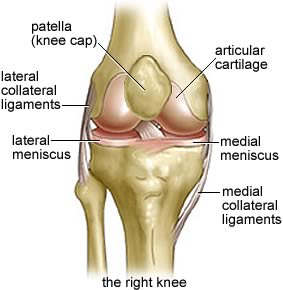
The exact location on your body you are supposed to compress/push is the area in the upper part of your lower leg, right below the knee area. If you just read the name of the method Lateral Synovial Joint Loading, you can guess that the method involves putting some load (aka compressing down on) on the synovial joint of the lower leg bone in a lateral (aka side) direction. The picture on the right shows where the synovial joints are. The exact location is actually two places. You want to compress the bone with some form of clamp (or flat stiff surface and weight) so one part of the clamp goes on one side of the upper tibia and the other side of the clamp goes on the other side. The exact location or spot is on the location for the picture of the right just maybe 0.75-1.25 inches under where your patella (aka knee cap) is located, assuming you are a normal sized person (5 ft- 6 ft). Note the arrows that say “lateral meniscus” and medial meniscus”. The clamps must go just below (maybe .25-0.5 inches) the regions labeled lateral meniscus and medial meniscus. The area of the leg to apply the clamp should be from the side, not front and back.

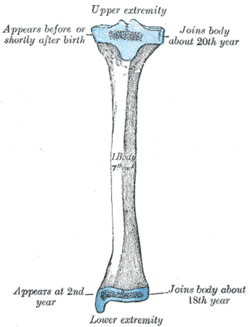
One of the things you have to learn and understand is the terms of the parts of the long bones, specifically the femur, tibia, humerus, and maybe the ulna. The epiphysis is the protruding ends of the long bone while the diaphysis is the middle part that is more cylindrical and thinner. The epiphysis is what must be compressed, from the sides, both left and right. Remember that the real location of the places to clamp or compress is usually where you can feel on your leg or arm that is protruding out, which is not surrounded by too much muscle or ligaments. That means that you can push down on it without hurting your ligaments or muscles that much.

2. Equipment

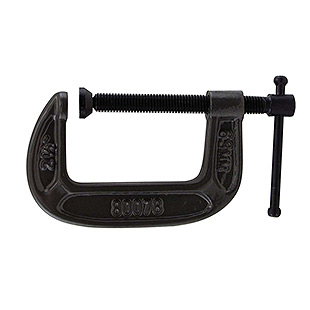
You have to clamp down on the bone. Since bone is a very hard material, your hands and arm strength will not be sufficient to cause real bone deformation (unless you are either extremely strong with your hand or you suffer from weak bones). The equipment talked about by Tyler is a C- clamp. From Home Depot or any hardware store, it could cost you around $15-20. If you have ever worked in a chemistry lab or any type of lab where you need to hold something in place ,you know what a clamp is. If you don’t, refer to the picture on your right. Using a clamp is probably the cheapest option you have, which probably would do the work. For the experiment done on the mice, the equipment to subject limb size ratio was far bigger, but I don’t know where we could find some other bigger clamp at a reasonable price.

There is really at least 10 places where there are synovial joints you can compress at, the wrist area, right below the elbow area, the location right above your your knee cap, the location right below your knee cap, and your ankle area, and the thickness and morphology of the joints require that you will need more than just one type of clamp. For the wrists and ankles, you can use a smaller clamp, like a mini clamp. The cost to buy a mini clamp from Lowe’s or Home Depot can be as cheap as $10-15

3. Amount of Force and Frequency

There is two types of equipment I had talked about, clamps and dumbbells/weights.

With clamps, you have to find out where the location you should compress on. Once you find it, you put the clamp ends on the right location and turn the lever until you feel the bone underneath the skin deform a little. There is no quantified I can give at this moment. The only thing is that if you found the right place, the clamps compressing down should not hurt that much since you are only hitting bone (there will be some pain because you are pushing also against some skin). So, turn the lever of the clamp until you feel that the epiphysis has reached some level of deformation. For the experiments done of mice forearm ulna, it took very little force and a small frequency only a show time to see results. Clamp down for at least 30 seconds up to 75 seconds, 1-2 times everyday. Repeat the step for 3-5 consecutive days. It is okay to not do the exercise 1-2 (non consecutive) days of the week to let the  bones heal themselves.

With weights, on Tyler’s blog he uses weight or dumbbells up to 60 lb to 75 lb as the compressing force. You are supposed to take the head of the dumbbell and weights and push them down on your synovial joint epiphysis (whether it is knee, wrist, ankle, elbow) while the long bone is layer down flat on the hard firm ground or another firm surface that won’t move. With your knees, you can that only by sitting down in a lotus position with the leg you want to compress the one actually laying on the ground (with your other leg you can put on top of the other one or something else). Hold the dumbbell handle and lay it on the right place (the synovial joint) and push down for at least 30 seconds up to 75 seconds, 1-2 times everyday. Repeat the step for 3-5 consecutive days. It is okay to not do the exercise 1-2 (non consecutive) days of the week to let the  bones heal themselves. Then repeat the process.

4. Supplements

The only two supplements that have been consistently talked about in height increase forums and discussions are Calcium with Vitamin D and Glucosamine with Chondroitin. The Calcium with Vitamin D is used to make the matrix of the bone cell (osteon) within the cortical bone part stronger. The Glucosamine with Chondroitin is to somehow help with preventing cartilage degeneration. I still haven’t figure out how the glucosamine with chondroitin exactly prevents cartilage degeneration but for the cost of say $30 for the Calcium with Vitamin D and $30 for the Glucosamine with Chondroition, I would say it is worth it for you to buy and take in your endeavor to increase your height. The supplements are safe so “why not?” I say.

Update: After finding another article on HeightQuest.Com entitled “Lateral Synovial Joint Loading Supplement Guide” I realize that the list of supplements I had put up previously (only talking about Calcium w/ Vitamin D & Glucosamine w/ Chondroitin)  is severely lacking and a much better and more complete listing of supplements can be found from Tyler’s site if you click on the link above. Sorry about that.

5. Theory

Note: You do have to learn some medical (specifically orthopedic) terminology to understand the theory behind the method.

I am going to try to make the theory as simple as possible. First let’s define the name “Lateral Synovial Joint Loading”.

“Lateral” means side. “Loading” means a pushing on, or applying force to. So “lateral loading” is means putting a force on from the side direction. If you take the palm of your hand and push the side of a  tower of jenga blocks to make it fall down, you applied a “lateral loading” or “pushed it on from the side”. “synovial joint” is the most common form of joint in  your body. There are 7 types of synovial cavity but the what makes a synovial joint a synovial joint is that all synovial joints have 3 main things (1. Synovial cavity, 2. Articular Capsule, 3. Articular Cartilage). The components and functions are not important to know at this time. You just have to know which joint in our human body are synovial joints. The elbow, knee, wrist, and ankle are all synovial joints. Thus, the term “lateral synovial joint loading” means to apply a force from the side on to either the elbow, knee, wrist, or ankle at a very specific position.

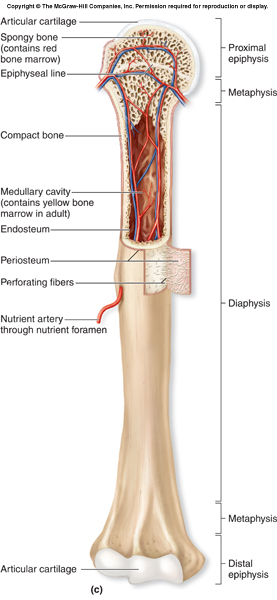
The specific position or location you have to apply a load (push upon) to is the epiphysis of the long bone. The Epiphysis is the protruding ends of the long bone, while the thinner middle part is called the Diaphysis. If you need a picture of what they look like look to the picture on the right (I know the picture is Copyrighted but until someone contacts me and tells me I can’t use it anymore, I’ll keep it up). The line that separates the epiphysis from the diaphysis is roughly where the growth plates used to be and fused at are. Inside the diaphysis and running into the epiphysis is this hollow area called the Medullary Cavity. This cavity is where the bone marrow lies and also where adult stem cells can be found. It is also also filled with interstitial fluid. The interstitial fluid is held inside the bone and that creates hydrostatic pressure pushing against the inner wall of the bone. (If you have ever taken a college class in fluid mechanic you understand what I am talking about).

The other thing you should understand is what the growth plates are made out of. The growth plates or epiphyseal plates were a type of cartilage called hyaline and made of mostly of collagen. The hyaline cartilage matrix is mostly made up of type II collagen and Chondroitin sulfate. If the cartilage is examined under the microscope, it will be found to consist of cells of a rounded or bluntly angular form, lying in groups of two or more in a granular or almost homogeneous matrix. The cells are called chondrocytes. It is the chondrocytes that really causes bone lengthen (thus height increase) and are what multiply through process called mitosis. The chondrocytes still alive go through mitosis and a part of the resulting chondrocytes change in form and function (aka differentiate) by ossification and degeneration into bone material by osteoblasts (bone cell units) and a part of the chondrocytes available keep on going through mitosis. The old chondrocytes develop on the diaphysis side to increase the length of the long bone while the new chondrocytes on the epiphysis side keep on going through mitosis to create more.

What the method of Lateral Synovial Joint Loading does is that by applying a certain amount of compressive force from the side on the ends of the long bone (aka the epiphysis), this forces 2 main reactions or processes to occur.

1. The compression causes the interstitial fluid inside to increase in flow downwards into the diaphysis and also causing the hydrostatic pressure in the hollow cavity in the bone to increase. Since we are pushing on the bone, the cavity should get smaller so the pressure inside should increase. This increase to hydrostatic pressure is theorized to increase or assist the stem cells to turn into chondrocytes (aka differentiation).

2. This causes the stem cells in the bone marrow in the medullary cavity to turn themselves into chondrocytes. The newly formed chondrocytes can then more readily go through the process of mitosis and endochondral ossification, which would lead to long bone lengthen, leading to height increase.

Note: I still can’t figure out just how the already existing stiff and strong cortical bones of in the diaphysis or epiphysis will fracture (aka go through distraction) to even allow the newly formed condrocytes to go through their natural processes. I would guess that a compressed epiphysis that leads to newly formed chondrocytes would only build on the inner wall of the medullary cavity and thicken the layer of cancellous bone inside the outer cortical bone shell.

Increase Height And Grow Taller By Inducing Microfractures

url-1

Update 1/21/2013: After going back to this post to review the information that I had previously put up, I realized that this post needed to be redone, edited, and added on the technical details.

There is a theory that if one can induce microfractures, one can then use some form of device or equipment to stretch the long legs where the microfractures which were induced  can lead to longitudal length gain, thus an increase in height. This idea was the main theoretical background behind the shinbone method.

The idea of microfractures has been one of the most researched and tested theories and methods for height increase. The experimenter Sky and his team at LimbCenter.org (which I don’t think exist anymore except on the Wayback Machine.) tried applying the microfracture theory to gain height for over 5 years and in the end, the results were very dismal and showed little success. Through Sky’s effort, he would develop the prototypes and many variations of ideas on how to induce microfractures, including a Shinbone Method, Thighbone Method (which I remember seeing but could never find any information on), and also a Lumbar/Back Method.

In addition, the trainer Pierre Pozzuto would come up with A-Grow-Bics and use the principle of microfractures to explain why any bit of height increase would even be possible for adults. However the results which we do find from his program, which does seem to work for a small group of his clients, can be explained instead by the idea of vertebral decompression, better posture, and some bone realignment moves similar to what we might find in rolfing, or the Alexander Technique.

In my personal opinion, at this point in the research, I would not recommend trying or applying this method. The idea behind inducing microfractures was that the external cortical bone of the long bones in the legs would have a weak enough tensile strength being rather on the brittle side to allow even for a bit of microfractures to come about from repeated kicking, jumping, or running.

In general we remember and note that the tensile strength of human cortical bone, which is cylindrical in nature to give it the most strength in terms of bone strength/volume, is very, VERY high.

The hollow nature of human long bone gives it the strength and durability to land animals who need to stand up right and still be nimble and fast enough to either run for prey or outrun predators. The same idea for hollow bones is found in birds who need the strong hollow bone matrix to hold their body structure up and also be light enough to be able to glide and fly.

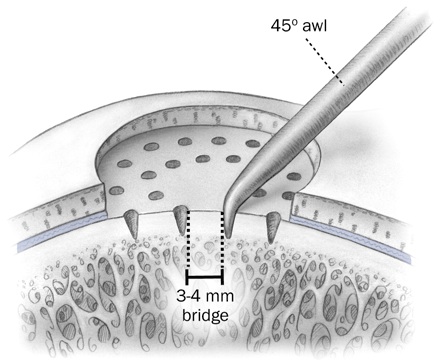
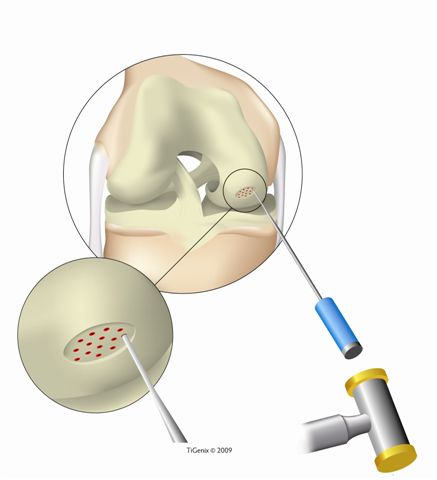
url-2It would turn out that when I did a quick Google search for the term microfractures, that the idea is currently already being done by orthepaedic surgeons as a way to heal articular cartilage damage.

The picture to the left is a picture I found from a website where a surgeon/physician is showing in diagram how to perform a type of knee arthroscopy. What they seem to be doing is inducing microfractures that are  just small holes less than 1 mm in diameter in the sub condylar and sub chondral medial & lateral areas of the epiphysis of the upper knee area, where the distal end of the femur is.

It seems that overall the medical professionals have been able to figure out how to use microfractures to cause the healing of chronic articular cartilage damage.

As for the technology to use microfractures to lead to height increase, it would seem that maybe it would just be easier to get medical professionals to cause the microfractures formations. If the idea of microfractures was truly sound, then a medical professional with a few drills will be instead used to cause the bones to develop the microfractures we are looking for. All we then would have to do is prove using any type of bone lengthening device that the induced microfractures can cause lengthening.

However I have wondered whether any chance for bone lengthening is dependent on microfracture shape as well. With the microfracture surgery, the drill in round, hole shape has to reach the subchondral bone level so that the pluripotent progenitor stem cells will be released from the bone marrow inside to cause cartilage formation. This shows that any microfracture technique will in terms of depth be able to reach the subchondral layer. What is left in terms of factors is the shape. The question then to ask is whether  the shape should be a slit in the horizontal direction or vertically since a large bone defect would not do much except cause blood loss. I would guess that a horizontal slit fracture may give the bone a slightly greater chance to be able to expand vertically, thus causing height increase.

There really isn’t much more to say about microfractures which hasn’t already been stated in other posts like the one on the shinbone method or the posts about ankle weights, part II.


Increase Height And Grow Taller Using The Alexander Technique, Updated

I had previously written a very short intro post about the possibility of using the Alexander Technique to Increase Height (HERE). I was getting into the research to see what others have found.

From this Resource (a SHE magazine article on the Alexander Technique website), it seems that a women who has had very bad posture for a long time increased her height from 5′ 5″ to 5′ 7″ after a few weeks of using the Alexander Technique sessions.

From this PDF HERE, we learn that the technique has been used by movie stars, musicians, athletes, and actor students in Julliard and the NYC Actors Studio Drama School for over 70 years. The quote I will take is ,

” The results can be very dramatic; people can gain up to an inch and a half in “lost” height that was due to collapse….”

From the Resoouce HERE it is stated also that “commonly adults gain height”. I found this link to be very useful and informative on what the Alexander method does.

Of all the resources on the internet, the best resource is TheAlexanderGuide.Com . From the website, I copy and pasted the first intro paragraph…


The Alexander technique is a way of becoming more aware of your balance and how you move. It’s based on the premise that most people have bad postural habits that, over time, stop us using our bodies as easily and comfortably as we should. Wrongly used muscles contract and pull down, giving to the classic sign of bad use: head tipped back at the start of any movement, especially sitting or standing.

The way of modern living leads to bad postural habits; shoulders raised and stiffened by stress, neck poked forward over desk work, tired bodies slumped into saggy armchairs. Soon we’ve lost all sense of how we really are, so that what feels natural (because it’s habitual) is widely out of line. That’s why it’s hard to correct our own posture without expert help. The Alexander Technique aims to re-educate the body into moving more easily – relearning the natural grace all children have until they all go to school and start slouching over desks.

How can Alexander Technique make you grow taller?

It’s based on what Alexander Technique teachers call ‘good use of the body’ – allowing the spine to regain its natural curves, holding the head effortlessly in the easiest position and distributing weight evenly over your feet. The bonus is that you look taller and feel lighter.

The Alexander Technique teaches you how to stand, how to sit and how to use a chair. Posture is perfected and the body is taught to move with ease. It is not unusual for Alexander Technique practicioners to have grown by 2-3 cm. It can simply be that their spine was curved or they held their head too far forward. It’s about letting the spine reach its full length. Many of us carry our heads too far back and tilted skywards. The technique teaches you to let go of the muscles holding the head back, allowing it to resume its natural place on the summit of our spines. The head weighs 4-6kg (10-12lb), so any misalignment can cause problems for the neck and body.

How is Alexander Technique different from Pilates or Yoga?

Alexander Technique is not like Pilates in that it does not involve actual exercise (like on the cadillac or reformer) but has some of the same ideas about being centered.

Pilates was developed to strengthen the body core (Pilates originator, Joseph Pilates, was a gymnast who wanted to speed up recovery). Alexander Technique was originally developed for stage performers to “free up” their bodies (Mr. Alexander was an actor). That is, you would not get stiff after an Alexander Technique session like you would after your first Pilates sessions, nor will Alexander Technique do anything for your muscle strength.

Alexander Technique is more about realignment, which is where it comes closer to Yoga. But it does not have the meditative and stretching/relaxing element of Yoga. Alexander Technique is stricly about using your body better and more efficiently.


Me: If I was to go out into the street right now and put adult 10 people in 10 sessions with a licensed Alexander Technique instructor, I would guess that half of them but the end of the 10 sessions would have added at least 1 extra cm of height. The Alexander Technique helps normal people who often live lives where they are slouching and hunched over gain what I have termed “lost height”. In the US based on our living habits, I would say 60% (or higher) of people have at least 1 cm of “hidden height” that they don’t realize. If they were worked on, I would guess a good number of them can increase their height by up to 1-1.5 inches in extra height.

It is because they are choosing not to stand and walk in the right posture. The alexander method redirects the person who goes into the session to learn how to direct and focus the movement of their body. They learn how to stand, walk, and move better.

So in conclusion, the Alexander Technique can help a person gain “hidden height” from better posture and spinal realignment. The technique will NOT give another 2 inches to a ballet dancer or figure skater, or anyone who had already learned how to stretch out their body to the body’s natural limit through training and exercises. It works, and it also doesn’t work. 

Increase Height And Grow Taller Using the Feldenkrais Method

One of the first methods and techniques I discovered when I first started doing research to see how one can increase their height and grow taller was the Alexander Technique. I have written two posts about the feasibility, effectiveness, and theory of how the Alexander Technique works in increasing height found HERE and HERE.

When one starts learning about the Alexander Technique, one is bound to also learn about the Feldenkrais method. They are similar in their ultimate goal, which is to help elevate pain, reduce certain pathological conditions, and improvement movement and posture in the individual. First we learn what exactly is the Feldenkrais Method.

Using a very unscientific approach, let’s just see what Wikipedia says about it. You can find the original article link HERE. Again I will copy and post a few of the main points about the method below


The Feldenkrais Method – often referred to simply as “Feldenkrais” – is a somatic educational system designed by Moshé Feldenkrais (1904–1984).

Feldenkrais aims to reduce pain or limitations in movement, to improve physical function, and to promote general wellbeing by increasing students’ awareness of themselves and by expanding students’ movement repertoire.

Feldenkrais is used to improve habitual and repetitive movement patterns rather than to treat specific injuries or illnesses. However, because habitual and repetitive movement patterns can contribute towards and in some cases cause injury, pain, and physical dysfunction, the method is often regarded as falling within the field of integrative medicine or complementary medicine.

Approach

Feldenkrais believed that health is founded on good function. He asserted that his method of body/mind exploration improved functioning (health) by making individuals more aware: “What I am after is more flexible minds, not just more flexible bodies”…. Feldenkrais’ approach was essentially experiential, grounded in tools of self-discovery and movement enquiry.

Techniques

Functional Integration (FI)

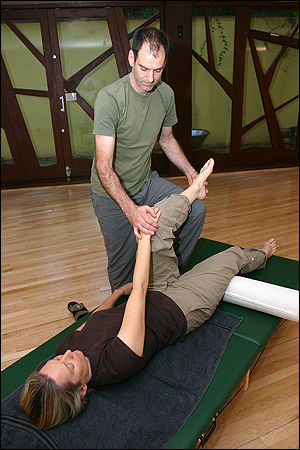
In a Functional Integration lesson, a trained practitioner uses his or her hands to guide the movement of a single client, who may be sitting, lying or standing (fully clothed). The practitioner uses this “hands-on” technique to help the student experience the connections among various parts of the body (with or without movement). Through precision of touch and movement, the client learns how to eliminate excess effort and thus move more freely and easily. Lessons may be specific in addressing particular issues brought by the client, or can be more global in scope. Although the technique does not specifically aim to eliminate pain or “cure” physical complaints, such issues may inform the lesson. Issues such as chronic muscle pain may resolve themselves as the client may learn a more relaxed approach to his or her physical experience—a more integrated, free, and easy way to move.

Awareness Through Movement (ATM)

In Awareness Through Movement classes, people engage in precisely structured movement explorations that involve thinking, sensing, moving, and imagining. Each lesson consists of comfortable, easy movements that gradually evolve into movements of greater range and complexity. Awareness Through Movement lessons attempt to make one aware of his/her habitual neuromuscular patterns and rigidities and to expand options for choosing new ways of moving while increasing sensitivity and improving efficiency. There are hundreds of Awareness Through Movement lessons contained in the Feldenkrais Method that vary, for all levels of movement ability, from simple in structure and physical demand to more difficult lessons. Feldenkrais taught that changes in our ability to move are inseparable from changes in our conscious perception of ourselves as embodied. He said that changes in the physical experience could be described as changes in our internal self image, which can be conceived as the mapping of the motor cortex to the body. (This relates to the body image theory that was developed by Penfield in the form of cortical homunculus.) Feldenkrais felt that activity in the motor cortex played a key role in proprioception (the sense of body position). He aimed to clarify and work therapeutically with this relationship, with instructions that involved both specific movement instructions and invitations to introspection.

Scientific studies

In 1999, a randomized controlled trial investigated whether physiotherapy or Feldenkrais interventions would reduce the complaints from neck and shoulder pain and disability….The Feldenkrais group showed significant decreases in complaints from neck and shoulders and in disability during leisure time. The two other groups showed no change in complaints (Physiotherapy group) or worsening of complaints (Control group).

According to Norman Doidge, current research on neuroplasticity, by scientists such as Doidge and Michael Merzenich, may support Feldenkrais’ key theories of somatic re-education.


On the main website (found HERE) that teaches the Feldenkrais method is this claim

“”The Feldenkrais Method is for anyone who wants to reconnect with their natural abilities to move, think and feel. Whether you want to be more comfortable sitting at your computer, playing with your children and grandchildren, or performing a favorite pastime, these gentle lessons can improve your overall well being.

Learning to move with less effort makes daily life easier. Because the Feldenkrais Method focuses on the relationship between movement and thought, increased mental awareness and creativity accompany physical improvements. Everyone, from athletes and artists to administrators and attorneys, can benefit from the Feldenkrais Method.

We improve our well being when we learn to fully use ourselves. Our intelligence depends upon the opportunity we take to experience and learn on our own. This self learning leads to full, dynamic living.””

In the FAQ section, these are the answers to the most frequently asked questions (found HERE). 

What is the Feldenkrais Method?

The Feldenkrais Method is named after its originator, Dr. Moshe Feldenkrais, D.Sc. (1904-1984) [about], a Russian born physicist, judo expert, mechanical engineer and educator.

The Feldenkrais Method is a form of somatic education that uses gentle movement and directed attention to improve movement and enhance human functioning. Through this Method, you can increase your ease and range of motion, improve your flexibility and coordination, and rediscover your innate capacity for graceful, efficient movement. These improvements will often generalize to enhance functioning in other aspects of your life.

The Feldenkrais Method is based on principles of physics, biomechanics and an empirical understanding of learning and human development. By expanding the self-image through movement sequences that bring attention to the parts of the self that are out of awareness, the Method enables you to include more of yourself in your functioning movements. Students become more aware of their habitual neuromuscular patterns and rigidities and expand options for new ways of moving. By increasing sensitivity the Feldenkrais Method assists you to live your life more fully, efficiently and comfortably.

The improvement of physical functioning is not necessarily an end in itself. Such improvement is based on developing a broader functional awareness which is often a gateway to more generalized enhancement of physical functioning in the context of your environment and life.

Who Benefits from the Feldenkrais Method?

Anyone—young or old, physically challenged or physically fit—can benefit from the Method. Feldenkrais is beneficial for those experiencing chronic or acute pain of the back, neck, shoulder, hip, legs or knee, as well as for healthy individuals who wish to enhance their self-image. The Method has been very helpful in dealing with central nervous system conditions such as multiple sclerosis, cerebral palsy, and stroke. Musicians, actors and artists can extend their abilities and enhance creativity. Many Seniors enjoy using it to retain or regain their ability to move without strain or discomfort.

Through lessons in this method you can enjoy greater ease of movement, an increased sense of vitality, and feelings of peaceful relaxation. After a session you often feel taller and lighter, breathe more freely and find that your discomforts have eased. You experience relaxation, and feel more centered and balanced.

Successful Students: here are examples of recent successes students have accomplished after work with the Feldenkrais Method:

  • a 42 year old computer programmer with incipient wrist problems is able to increase his speed on the keyboard after learning how to use his arms and hands more efficiently.
  • a 28 year old woman goes through her third pregnancy, but the first one without back pain.
  • a 55-year old woman is able to lift her affectionate 2 year old granddaughter without straining her back.
  • a 40-year old cellist becomes so creative in developing new, less strained positions to play in that she able to extend her musical repetoire.
  • a 9-year old with learning disabilites can read a full page competently and gains self-confidence in his intelligence.
  • a 19-year old diver is able to visualize and perform the complex series of movements needed to accomplish an intricate endeavor more proficiently.
  • a 78-year old man walks a mile daily, free of chronic knee pain he’s had for 30 years.
  • a 32-year old man learns to reuse his hands after a crippling auto accident.

Professional athletes who have enjoyed the benefits of Feldenkrais include basketball star Julius Erving and PGA golfers Rick Acton and Duffy Waldorf. Celebrities who have used Feldenkrais include Norman Cousins, Margaret Mead, former Israeli Prime Minister David Ben-Gurion, Helen Hayes and Whoopi Goldberg. Famous musicians include violinist Yehudi Menuhin, and cellist Yo Yo Ma.

What Happens in a Feldenkrais Method Session?

Feldenkrais work is done in two formats.

In group classes, called Awareness Through Movement, the Feldenkrais teacher verbally leads you through a sequence of movements in basic positions: sitting or lying on the floor, standing or sitting in a chair.

Private Feldenkrais lessons, called F unctional Integration, are tailored to each student’s individual learning needs; the teacher guides your movements through touch.

People learning the Feldenkrais Method are usually referred to as ‘students’ rather than clients or patients. This reinforces our view of the work as primarily being an educational process.

How Does the Feldenkrais Method Differ from Massage and Chiropractic?

The similarity is that both practices touch people, but beyond that our Method is very different. In massage, the practitioner is working directly with the muscles, in chiropractic, with the bones. These are structural approaches that seek to affect change through changes in structure (muscles and spine). The Feldenkrais Method works with your ability to regulate and coordinate your movement; which means working with the nervous system. We refer to this as a functional approach wherein you can improve your use of self inclusive of whatever structural considerations are present.

How are Feldenkrais Practitioners Trained?

All Feldenkrais practitioners must complete 740-800 hours of training over a 3 to 4 year period. Trainees participate in Awareness Through Movement and Functional Integration lessons, lectures, discussions, group process and videos of Dr. Feldenkrais teaching. Eventually students teach Awareness Through Movement and Functional Integration under supervision. Trainees gradually acquire knowledge of how movement and function are formed and organized. This extensive subjective experience forms the basis from which she/he will learn to work with others.

The main purpose of the training is for the trainees to acquire for themselves a deep understanding of movement and its formation, to become aware of their own movement, to become astute observers of movement in others, and to be able to teach other people to enlarge their awareness and movement skills.

The training process is based upon the vast body of knowledge Dr. Feldenkrais introduced. Since he integrated into his body of learning theory aspects from a variety of scientific fields such as Newtonian mechanics, physics, neurophysiology, movement development, biology and learning theories, we present some of these aspects in the training program for the trainee to comprehend the theoretical background of the method.


Me: What is clear is that the Feldenkrais Method is practiced and utilized by a minority group of people in society to solve many of their movement pathologies. When I looked through google to see how the feldenkrais method is used to increase height, that was a strong association with the two subjects. Apparently on one of the websites, there was even an unpublished Masters’ Degree thesis on the effect of the method on height (found HERE). There was even an entire book written about the effects on height from using the Feldenkrais Method which I found on Google Books (located HERE) titled “Changes in Height and Postural Stability Using the Feldenkrais Method” . The last resource I found which even talked about the idea of the method allowing for increases in height was found HERE. The PDF is long and I did not take the time to read or look over it to see what the results and conclusion were.

Overall, it turns out there are very few claims that the Feldenkrais Method can be used for the purpose of hieght increase. With this conclusion, I guess we end this topic by stating that the method is not recommended for the purpose of increasing height, but only improved movement, flexibility, and posture.