Why Beta-Ecdysterone aka Beta-Ecdysone Could Help Some Adults Grow Taller

Why Beta-Ecdysterone Could Help Adults Grow Taller

Note: At this point, I am not sure if the compounds Beta-Ecdysterone & Beta-Ecdysone are the same compound. I am going to assume that they are the same, until someone tells me otherwise. They are also known by the family of compounds known as the Ecdysteroids. Other names for Beta-Ecdysterone include ecdysterone or 20-hydroxyecdysone (Update April 13, 2014: It does seem that Ecdysterone has a variety of names, which includes Beta-Ecdysone. Refer to the WebMD short article on it Here)

I said before that many of the compounds I will look at and research have already been looked at by Tyler in his posts from many years ago. This particular compound which we call Beta-Ecdysterone is one of those compounds. (The older post from Height Quest is available here) However, I wanted to give my own spin on the same studies he had referenced.

The studies he had referenced before are below…

  1. Ecdysteroid coordinates optic lobe neurogenesis via a nitric oxide signaling pathway.
  2. Beneficial effects of beta-Ecdysone on the joint, epiphyseal cartilage tissue and trabecular bone in ovariectomized rats

It is definitely the 2nd article which is most interesting, since it shows that the compound Beta- Ecdysone has the effect of thinkening the articular cartilage. He notes (and quotes the following)…

Ecd and E(2) [estrogen] induced a significant increase in the thickness of joint cartilage

The whole epiphyseal growth plate and its proliferative and hypertrophic zones were also increased by Ecd {Ecdysterone stimulated the growth plate} whereas E(2) reduced their size {this was probably over the equilibrium quantity of estrogen, you need some estrogen}. The percentage of trabecular area in the metaphysis of tibia was significantly increased in Ecd and E(2) treated animals.

As for the 1st study….

The first study he referenced talks about the ability of using Beta- Ecdysone to stimulate Nitric Oxide. Tyler’s whole thesis behind the post I referenced is this: Beta- Ecdysone seems to increase NO, but NO has only the ability to make chondrocytes which are already there to go into hypertrophy. It has not been shown in any studies we’ve found yet to differentiate stem cells or make chondrocytes already there to proliferate. Like a chain of chemical reactions, if you have the catalyst to change the 3rd product into the 4th product, but you have no catalyst to get the 1st raw material to turn into the 2nd product, there is nothing to work with. (The first chemical process would be to differentiate whatever little MSCs is in the trabecular bone material into the chondrocyte lineage, which NO doesn’t do).

The comparison of Beta-Ecdysone to Estrodial

It was in the 2nd study which showed that while both compounds have osteogenic qualities, increasing the bone density of the trabecular bone, they had opposite effects on chondrocyte/cartilage. Beta- Ecdysone increased cartilage thickness while Estradiol decreased it, which is already well established.

The young Brazilian Height Increase Researcher who was trying to create a formulation which I even did a full podcast episode about kept repeating over and over again about how bad the effects of estradiol are, which I agree with completely.

What seems to be going on is that the Ecdysone is not able to bind to the estrogen receptors, which in my opinion is a very good thing! Remember that in our studies on phytoestrogens and isoflavones, I had suggested back then that the phytoestrogens, found in soy based products, was bad for height, but good for curing certain types of cancers.

The idea that it doesn’t work on humans

We are fully aware (and do read) other people who comment in on the posts. One person noted that Beta-Ecdysterone was never supposed to work on large mammals so oral ingestion of the compound would be useless. They referenced Identification of ligands and coligands for the ecdysone-regulated gene switch.

It seems that ecdysone can’t attach to certain ligands in mammalian bodies.

The big question is probably this – Does this compound really work on mammals/humans, specially adult humans?

Let’s refer to the study “Practical uses for ecdysteroids in mammals including humans: and update

It is absolutely true that there is very little studies to back up the idea that the ecdysteroids would even work on mammals. From the study above I quote “Ecdysteroids are structurally quite different from mammalian steroids, and they are not expected to bind to vertebrate steroid receptors“. So it sort of suggests that ecdysteroids should not work. What is good however, is that they are non-toxic. It was used back in the Cold War decades by soviet athletes as a type of performance enhancing drug used in resistance training.

We quote the following “Ecdysteroids are apparently not endogenously generated components of mammalian systems. However, they are normal components of the diets of many animals

So it seems that our bodies don’t naturally produce this chemical, but it is found often in plant-based foods that we consume. The only plant/vegetable which this compound is found in in large enough concentration seems to be spinach.

What is the end result?

While this compound is very safe for mammal and human oral ingestion, it seems that it does not last very long in the body. Most of the applications of this compound has been in the lab, in in-vitro cultures, to test different types of cells. The compound has never been injected into mammals, and the researchers have said that the end results are inconclusive. This compound is just very short-lived in the body. It seems to get caught by the liver, get transported by the bile duct, and is pushed out of the system through fecal matter.

Many times over it has been shown that ecdysterone is a very good candidate to be used in gene therapy, since it can turn on & off gene expressions.

This compound has so many different types of benefits in terms of cell proliferation that it is overwhelming to list all the organ systems it seems to benefit. What I will however reference is the study on how it was shown to decrease the time for fractures to heal.

  • Syrov VN, Matveev SB, Kurmukov AG, Islambekov US. Effect of ecdysterone and nerobol on the healing of experimental bone fractures. Medicinal’nii Zhurnal Uzbekistana. 1986a;(3):67–69.

While there seems to be no conclusive studies which shows that this compound is even supposed to be able to bind to the ligands and receptors in human body, athletes have been using the compound for at least 40 years as a performance enhancing drug, first started as a practice by nations in the Eastern Bloc.

This compound however is extremely abundant in nature. I quote the following “Ecdysteroids are probably the most abundant steroids in nature because they are produced not only by arthropods, but also by many plant species. They seem to display a wide array of pharmacological effects on vertebrates, many of which are beneficial

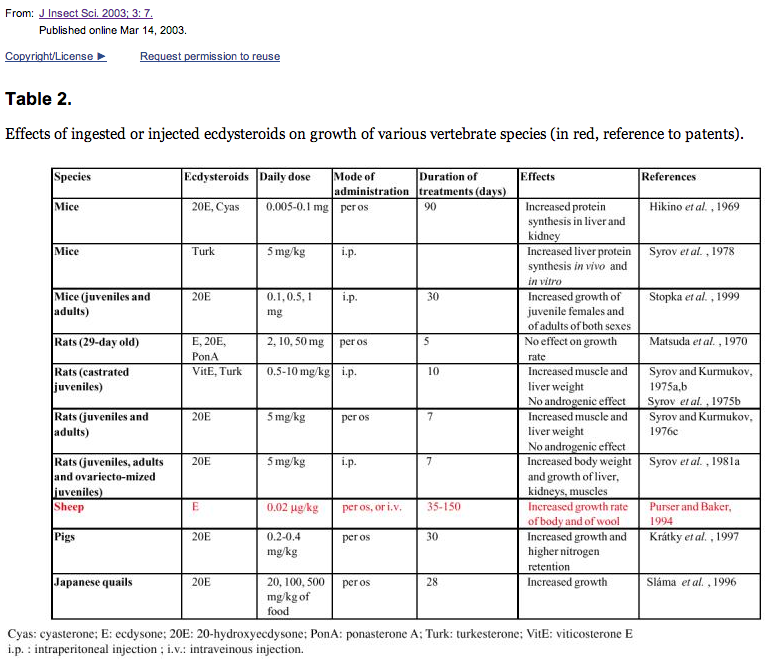
The last thing I can show is a chart taken from the study referenced showing the effects of this compound on various types of lab animals, but never humans.
Beta-Ecdysterone

What is consistent is that it seems to increase protein synthesis in the liver, and makes some of the organs larger, even in the juvenile lab animals.

I am willing to conclude that this compound most likely has more than one beneficial effect to the mammalian body. The professional researchers claim that there is not enough studies to validate that this type of steroid would even work on humans, but I feel that there is enough evidence. It will work on animals.

The key is that you have to increase the dosage of taking the compound, whether orally, through intravenous injection, or intramuscular injections, by a large multiple. The compound seems to be taken up by the body very quickly.

There is only 1 rat study to show that this compound can increase the thickness of epiphyseal growth plate cartilage and increase the thickness of articular cartilage, but that does show that it has some beneficial effect.

I would suggest that to make sure that the chemical be higher in efficacy, it would be a better idea to inject the compound subintravenously locally into the bones close to the articular cartilage. 

If however, people are squeamish about using the needle method, you would have to buy probably A LOT of Beta-Ecdysterone to consume orally, maybe 10-20 pills a day, and that doesn’t guarantee that it would be enough. It could be as high as 100-200 pills a day of the compound. It is however completely safe. What is nice about this compound at least is that It is a type of non-prescription supplement you can find in many online retail stores. You can get get it from Amazon here.

The best possible outcome is a few millimeters of increase, as the articular cartilage becomes thicker if you an adult. If you are a child with intact growth plates, it can be one of those magic pills that can give a statistical difference, like 1-2 cm extra in final adult height. The effect of this compound seems to be real, but it will be small.
Growth Plate Regeneration For Continued Growth After Partial Ossification Has Been Achieved By Dr. Robert Tracy Ballock

Growth Plate Regeneration For Continued Growth After Partial Ossification Has Been Achieved By Dr. Robert Tracy Ballock

I have been keeping up with the latest developments in 3-D Printing for the last year or so, and it has gotten me interested in buying my own printer to play with. Of course my intention is to use the printers to create cartilagenous tissue to replicate the epiphyseal hyaline cartilage.

The problem is that even though I might be able to draw out the major molecular mechanism pathways like the IHH-PTHrP loop, I still can’t figure out how his team managed to get the chondrocytes to get into columnar formation, even with thyroxine.

It seems that I might be already late to the game, if this recent report made about our friend Dr. Robert Ballock (at the Cleveland Clinic’s Center for Pediatric Orthopaedic Surgery) is true. I found this very short post made just about 1 month ago on 2/24/2014 entitled “Regrowing Growth Plates: A Fix for Kids’ Injuries? – Promising research to mend growth-stifling plate damage“. The post was written actually on the Cleveland Clinic’s website.

It makes sense that this post would have been written so recently. If it was written even a quarter ago, I would have picked up on this big news.

I copy and pasted the part which is most revelant below…

A new approach: growth plate regeneration

The good news is that researchers are exploring an exciting new way to address growth plate injuries that stifle bone growth: regenerating new growth plate tissue.

This research arises from recent advances in understanding how growth plate cartilage cells multiply, arrange themselves like stacks of coins, and mature. “These advances provide a unique opportunity to develop strategies for regenerating growth plate cartilage after serious growth plate injuries,” says R. Tracy Ballock, MD, a surgeon in Cleveland Clinic’s Center for Pediatric Orthopaedic Surgery who is conducting research in this field under a National Institutes of Health grant.

In test tube studies, Dr. Ballock’s research team developed a 3-D cell culture model that replicates the key features of what appears to cause growth plate cartilage to develop in the column-like shape that leads to lengthening of the long bones in children.

The team used the cell culture model to study molecular and cellular signals that regulate this column-shaped growth in plate cartilage. They showed that, in the test tube, cartilage growth is promoted by stimulation of several pathways of proteins that pass signals from the outside to the inside of a cell.

.…While Dr. Ballock notes that potential studies in humans are still years away, he adds: “The ability to successfully regenerate growth plate cartilage in the same column-shaped ‘architecture’ in which it naturally develops would have a transformational impact on the practice of pediatric orthopaedic surgery. It would make it possible for the first time to replace growth plates that have been irreversibly damaged — not only by injuries but also by infection or radiation.”

We’ve been aware of Dr. Ballock’s research (The grant that the article referenced is available here) for a long time now, and we knew that he did succeed in growing a growth plate cartilage-like tissue in the lab (since he had gotten an award for it more than a decade ago), but I am still surprised that he and his lab team has been able to reach this far already.

Like most doctors, his claims always comes with some caution. It is supposed to be years away from being used on human’s, but my guess is that they have tested the regenerated growth plates on a few select young patients already to revert stunted bone development due to bone bridges.

I am choosing right now not to contact him or his department until I can get all the information I can gather so I can make smart discussions with him on his research at his level of understanding. Hopefully he is willing to talk, since Tyler has said in previous posts that he is a friend of the cause.

How To Plan and Strategize To Use Amara’s Law and Kurzweil’s Law Of Accelerating Return To Our Advantage To Cancel Out Hofstadter’s Law and Murphy’s Law Effects

How To Plan and Strategize To Use Amara’s Law and Kurzweil’s Law Of Accelerating Return To Our Advantage To Cancel Out Hofstadter’s Law and Murphy’s Law Effects

Originally I had wanted to give this post a different name entirely, “Why Height Increasing Technology Is Two Decades Too Early”- This was the original working title for this post. I wanted to through some key phrases in so that the readers may be more aware of what is coming in their future.

Here is the main point of this post: I believe that what we are trying to do, we are at least 20 years too early. The technology is just not there yet. However, that doesn’t stop us from going through the current data, and studies to write a complete guide for the next generation of researchers.

Before me and Tyler, there was Hakker and Sky. They failed because they were missing crucial information. They didn’t know what they didn’t know. They weren’t even aware of what they were ignorant about. The information we are lacking, is not here yet, or at least not revealed to the general public. However, there is something good that is coming. That is accelerated change in terms of scientific breakthroughs.

These days, things are changing so fast but that could be a good thing. It might be horrible for our current career prospects since it feels like we need to do more and more these days to even hold down a steady job and get our bi-monthly deposit into our bank account. However, if we can fully accept that overall, in the long run as long as we don’t kill ourselves through destroying the earth and the ecosystem, and barring any horrible natural catastrophe, where we will be in 40-50 years will be light years better. The same thing can be said about biotech innovation and the amazing breakthroughs happening everyday in labs around the world.

The fact is that height increase technology (or more specifically, cartilage regeneration and transdifferentiation technology) is probably at least 20 years too early of where we wish it could be – My guess is that it will become possible in 3 decades before we reach the next phase in the natural progression.

What Sky and Hakker tried to do, they were too early, and got the timing of the technology wrong. That is why I plan to play this game for the long term. Instead of putting effort into this endeavor for just 1-2 years, I am planning on focusing on this effort for at least 10 years.

What we might be seeing happening across the world and in our every day lives with IT, and computers, and automatization of everything that can be digitalized, is the result of software. What has been traditionally just information can now all be derived from a software engineer who writes in computer language to create an algorithm. The same thing can not be done with biology. What is happening with computers and software is not happening with biology or genetics.

The problem with Biotech, the Biological Sciences, Chemical related, and Anything Related to Medicine, Pharmaceuticals, is because those types of sciences can not be completely fitted into just a data file on a computer. With the biological sciences you need to actually do real experiments, requiring a real lab with laboratory equipment.

Amara’s law says that one greatly overestimates what they can accomplish in 1 year and underestimates what they can do in 10 years.

Our cognitive biases which causes people to become overly optimistic makes us become bad forecasters of the future. We are almost blind to all the factors which will impeded on our progress. We forget to consider just how hard some things will take.  We make a prediction on how fast something takes to be finished, we never consider unknown problems that crop up (That is Murphy’s Law).

The result is that what we thought might be simple and quick takes at least 50% longer in time to work out than we ever anticipated, even when we account for mistakes and poor judgement. That is Hofstadter’s Law.

The way nature works is not linear, but exponential. Let’s first accept the idea that for the next few years, things are just going to go very slowly, VERY SLOWLY. We are not going to see that much traction, not for a long time. I think this is what some people call the Plateau in our research. We have hit a level which we can’t cross without some major initial capital funding into the project, to get lab equipment.

When we are looking at progress in a short time frame, say 2-5 years, progress may look slow, and linear, with 10-30% increases annually. The result is that scientists and data analysts think that in the future, the trend will stay in that growth pattern, when in fact, things almost never grow linearly. It is exponentially.

That is Kurweil’s Law of Accelerating Returns. We have not reached that inflection point yet, when thing really take off. I am betting that after 10-15 years, then things really start to take off for us.

That is the time when we finally start to see some real results, when all of our hard work starts to really pay off and we see not just returns, but massive returns.

So Amara’s Law + Kurzweils’s Law of Accelerating Return will be eventually, after maybe 10-15 years, finally manage to over come all the trappings involved with Murphy’s Law and Hostadter’s Law.

This Person Increased His Height By 0.75 Inches Using Ankle Weights and Inversion Tables

This Person Increased His Height By 0.75 Inches Using Ankle Weights and Inversion Tables

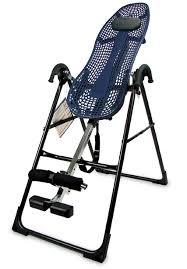
Inversion TablesSometimes I write posts that details information which I gather from the readers and visitors to the website, through the comments or the private website email at naturalheightgrowth@gmail.com.

A regular visitor of the website sent sent us a rather long message which I will copy and paste below. They seemed to have found some success in using a combination of inversion and weights to achieve almost a full length of increase. They said that they took into account height variations throughout the day, and also any type of measuring errors.

I chose not to clip the message since I would like to keep the email information of some of the visitors private. The message below is in italics.

———————-

Hello Michael and Tyler my name is Jake and I’m am an avid follower of your work. I constantly check up on this site and the lsjl forum.

I am a 24 year old male from the midwest and I just wanted to briefly share what helped me increase my morning height. I start my height increase regimen in dec. 2013 i started at 5’6.5 maximum morning height and 5’6 1/8 lowest night height. I began in dec. by stretching but didn’t notice any gains.

After a month of stretching i incorporated. sitting with two ten pound ankle weights on each leg a few times a day along with my stretching. My morning height increased to about 5’6 5/8 after using the weights. But My morning height didn’t increase much more than that after that.

So another. month later I bought a inversion table off of craigslist and within three weeks by March 2014 my morning height increased to 5’6 3/4. So I was stretching sitting with weights and doing inversion three times a day a lot of work. But my biggest increase was yet to come. I am really desperate to get taller so after my inversion table my height seemed to max out at 5’6 3/4 in the morning.

I decided to sit with my ankle weights a different way I decided to sit with them longer. because initially when I would sit with them I would kick them off after like 20-30minutes because they would begin to feel uncomfortable. So in mid March I started sitting with the weights as long as I could once you feel that uncomfortable feeling after like 20-30 minutes that is where it seems you want to be I now call that the growth stage.

So i probably sat with them about an hour and a half two ten pound weights on each leg when i measured myself I stoop a whopping 5’7 1/8 mid day it freakin blew my mind. So I did it again and the very next day I woke up at an astonishing 5’7 1/4. So to recap literally within one day of sitting with ankle weights into this growth stage as long as you can it feels like your body is ripping apart i think this is where the most growth comes from 5’6 3/4 Max morning height to 5’7 1/4 morning height.

So I have been doing this everyday since mid march so about a month and I maxed out at 5’7 3/8 inches in the morning. I wanted to share this with everyone because the absolute biggest factor in my growth was from sitting with the ankle weights until you feel really stretched as you dangle them over the side of the bed.

I wanted to share this because I know what its like to be short and hate your life and get down I sincerely hope that you could make a post about this and share this with others . To see if they sit with ankle weights the way I did if they would grow.

So to recap get two ten pound ankle weights a bed high enough that your legs could dangle off of freely. Then sit until what I call the growth stage for me it s like 20-30 minutes in. This is where the real stretch begins. Try to sit in this state without getting up to relieve any pressure for as long as possible. I typically just sit on my phone watching youtube videos. And its typically about an hour and a half for me until I literally can’t take it anymore and have to sit up.

I have a very accurate way of measuring my height so there was no problems with my measurements. I want to share this to get feedback and hear peoples opinions.

So please Michael if you could share this and you can email me jf you want to correspond. I want people to experience the slight growth I did and for us to all see how we could better tweak it to get even more height. Goodluck to you all. I would have shared this on the lsjl forum but it wouldn’t let me sign up for some reason. Sorry for any grammatical mistakes I had to type this quickly on my phone and with little time to slare.

Good luck to you all hope to hear how it goes…..later!

——————

I corrected a few grammatical and spelling mistakes, and divided up the original message for easier reading.

Here is my message to him

Jake,

You asked that we send you an email and that is what we are doing. I am thinking of writing out a post on your unique routine using ankle weights to do a short analysis on the possible physiological changes occurring in your body. Is that okay with you?

——————————

Here is his first message to us

That is one hundred percent fine with me. I have been an avid follower of your site and tylers. I did a lot of research on growing taller prior to starting my routine. I even read through all of the old posts at Giant Scientific forum. I wanted to do anything to be taller.

I have always had self esteem issues with my height growing up. And in the winter they hit a peak and I decided you know what there are a lot stories on the internet of how people have grown one way or the other. I decided let me try a routine the worst that could happen is I don’t grow and I go on with my life.

The first month in december 2013 when I saw no height gain from stretching. Not even a millimeter was disheartening. So I went to Walmart grabbed a cheap pair of ankle weights and started sitting with the weights three times a day for about 20 minutes. And in January 2014. I started measuring in at 5’6 5/8 that gave me some encouragement . Even though it was only a millimeter that was the tallest. I had ever been. I seemed to max out with stretching and short ankle weight sessions at 5’6 5/8 so I read up on the old height increase success stories and I saw that a few people incorporated the inversion table.

I really didn’t have the money to shell out for a brand new one. Luckily I live near Chicago and just about everything is plentiful on craigslist. I would do a few minutes of inversion three times a day along with stretching and short ankle weight sessions. And within a week my morning height was up to 5’6 3/4. But for the life of me I just couldn’t seem to get past the 5’6 3/4 mark in the morning.

Hence I became really frustrated started thinking of giving up my height routine all together in march I was happy I had gained a quarter inch in the morning from my start height but to be honest I wasn’t very pleased.

So I decided in march what would happen if I sat through the pain as long as I could with ankle weights.

Typically I would kick the ankle weights off at the first sight of discomfort at the 20-30 minute mark but This time in march I sat through the pain and it could become pretty uncomfortable it feels like your getting a very hard deep stretch that kind of comes in waves of tolerability. I would try to sit through this growth state as long as possible it was probably an hour and a half to an hour and forty five minutes. I went to measure myself and I was 5’7 1/8. I mean I was ecstatic. I’M a guy that has never touched 5’7 at all to be 5’7 1/8 was just crazy I felt so tall. lol.

So I continued to stretch like this the nect day and I was up to 5’7 1/4. I mean I was jumping off the walls so happy. But for the rest of march and into April my growth was stagnant again It seems I may have topped out at 5’7 3/8 in the morning. Now this hasn’t discouraged me because its made me want to share this with others. Back in december I never really thought I would grow yet here I am 9/8 inch taller in the morning and a 5/8 inch of that came from sitting with the weights.

Basically what I want to see if others could replicate this. Because if I could easily gain 5/8 inch hopefully some others could gain more.

I want to thank you again Michael for all your hard work in this field. I think your doing an incredible job!  Feel free to email me anytime. Sincerely Jake.

———————————-

Next Message to Us

And I also wanted to add I have a very precise way of measuring. I have a drop ceiling where I fixed a tape measure to be positioned over head in the ceiling. Then I grab a chair and pull the the tape measure down to my head until I find it resting firmly on my head and then I take another tape measure and measure to the point all the while I have huge closets with a mirror so I can be precise and make sure I’m looking straight and not tilting my head.

And also when I started I was becoming discouraged because I wasn’t growing ad fast as I wanted to so I told myself I’ll know I’m making progress if I ever get over 5’7 and I finally did. Its funny the extra inch. has been noticeable to others to the point they thought I had put a lift in my shoes. My brothers are both 5’7-5’8 and I’m right in their range.

And the majority of the height I’ve gained appears to be from my spine. My spine appears to be longer when looking at myself in the mirror. Its almost like my hips to belly looks longer hard to explain but a lot of the pain seems to come in the lower back region to the pelvis area. But that’s all for now.

——————————-

My Personal Suggestions & Concerns

I felt that it is appropriate to write a post to give some suggestions to Jake, and for anyone who wants to try to increase their height using a combination of ankle weights and inversion tables.

I have tried both ankle weights and inversion tables before in my life, at different times, for a variety of reasons.

Ankle Weights

When I was in Middle School I got ankle weights to practice my vertical jumping height for basketball and running speed using it as a type of resistance training, and ankle weights again in my early 20s to tone my legs. Those ankle weights stayed in a closet or a garage until I tried to wear them for a third time to do intense cardio training. I was lying down on a yoga mat and doing leg kicks and crunches as the same time.

I know for a fact that after just a few tries, I noticed that one of my knees felt like it felt a slight twinge of pain, and the leg felt slightly weak.

After the pain started, I realized that the pain was a sign that I needed to stop doing it. I have seen too many knee injuries and problems with other people to realize that knee problems is very common, and there is not many solutions to fix them. One of my grandmothers in her 70s had no articular cartilage at all in her knees, so the bones were just rubbing against each other. She had been enduring pain for years, if not decades. The result was that she had to get a complete knee replacement. I learned from an early age to be very careful with my knees.

Inversion Table

The inversion table was something I bought when I was obsessed with increasing my height, years ago. I wanted to see whether a few minutes of hanging would increase my height.

The result was that I did increase my height, by 1/4th of an inch, and that was enough for me. The gain in height seemed to have been temporary. If I measured my height immediately after getting off the inversion table, the gain is very visible, but it goes away fast, in a few minutes.

The Lower Back Pain Problem

Somewhere in Jake’s messages, he mentioned something about pain in the lower back, and that is what sort of scares me. I know for a fact that if you try to do inversion too much, the human body will start to snap apart, at the region which is the weakest. Since bones have high tensile loading, it will almost always be in the region in the intersection of bones ie. knees, hips, vertebrate discs, ankles.

It is a well known fact that 50% of All Americans will at some point experience back pain at some point in their lives. (Also, 1/3 American Men will have a diagnosis of Cancer at some point in their lives). Back pain is something I suffer with. It is something my male friends who are the same age aka college buddies I’ve known for over a decade also experience.

I am almost positive that the pain I feel in my lower back which has come and gone throughout my 20s has is origins in me trying to use the inversion table I bought when I was 23-24. The long time duration probably meant that something happened there.

At this point, I would NOT RECOMMEND using ankle weights or inversion tables for only cosmetic reasons. I repeat, DO NOT TRY TO USE THESE MACHINES just for cosmetic reasons because if they are more likely to cause some type of orthopedic problem aka pain which you will never be able to correct and reverse. If you didn’t have a problem before, using them just to become slightly taller is not worth it in my opinion. You will cause a problem where there was none before.

If however you already have a lower back problem, like the guy who created the company Teeter Hang Ups and the inversion devices and traction machines of the company and brand, then it would be a good idea. For that guy, inversion therapy had a beneficial effect alleviating his medical problem of lower back pain. However, most of us who will read this post will most likely be using to increase our heights.

The risks are just too high. What starts off a a twinge of pain in your 20s which comes & goes grows steadily up into a debilitating pain in your 40s, and leaves you crippled in your 50s. The most likely thing is that the orthopedic surgeons will remove the IVD (intervetebral disc) from the vertebrate and fuse the adjacent vertebrate bones together, so the leaking disc stop touching the nerve cords. That means that you are going to loss about 1/4-3/4 of Inch of height in your 50s through lower back spinal disc surgery. By the time you are in your 60s, you are in the bed, and other medical issues like diabetes and high blood pressure will appear since the body is immobile and forced to be in the bed all the time.

My Main Point

I would tell Jake to actually stop doing the exercises because the risks involved are just too high. What might seem like a substantial gain in one’s 20, which is 1 inch of extra height, could be the start & cause of a lot of pain, money spent in physical therapy and seeing orthopedic specialists, and agony later in life for many years, even decades. I know from personal experience, but I learned quickly.

If he already has noticed pain after stopping either of the ankle weights or inversion table, he needs to stop right now.

Disclaimer: As always, I am not a medical professional and I will never pretend to be of any type. This website is run by two guys who are amateur researchers. Everything we say, and what we recommend should be taken with complete scepticism. Use common sense and good judgement. We suggest that everyone who comes on the website understand that they are fully responsible for any problems that might develop from taking our suggestions. Me and my partner will not be held legally or financially responsible for any actions taken by the readers or any crazy, stupid mishaps which might result. 

Lengthening bone via microcracks, why hasn’t it work?

Now obviously, if walking was able to increase height people would be a lot taller?  But if repetitive stress can induce plastic changes in cortical bone that could possibly contribute to height gain.  More on plastic deformation hereMichael talks about the definition of Plastic deformation here and he talks about the values needed to induce plastic deformation here.

One possibility as to why inducing microcracks to cause plastic(permanent) changes in bone length is that most microcracks such as those induced by walking would be more compressive microcracks rather than tensile strain microcracks which would be what would be needed to make a bone longer.  One study finding longitudinal decrease in height in the lower legs would be consistent with the fact that typical athletic stimuli induces compressive changes rather than lengthening changes. Although another study also mentioned in the same post found that exercise increased height slightly in the spine. Although it would be logical to think that kicking with ankle weights would be one such stimuli to induce longitudinal plastic deformation of the bone.

Effects of fatigue induced damage on the longitudinal fracture resistance of cortical bone.

“As a composite material, cortical bone accumulates fatigue microdamage through the repetitive loading of everyday activity (e.g. walking). Twenty longitudinally orientated compact tension fracture specimens were machined from a single bovine femur, ten specimens were assigned to both the control and fatigue damaged groups. The damaged group underwent a fatigue loading protocol to induce microdamage which was assessed via fluorescent microscopy. Following fatigue loading, non-linear fracture resistance tests were undertaken on both the control and damaged groups using the J-integral method. The interaction of the crack path with the fatigue induced damage and inherent toughening mechanisms were then observed using fluorescent microscopy.  Fatigue induced damage reduces the initiation toughness of cortical bone and the growth toughness within the damage zone by three distinct mechanisms of fatigue-fracture interaction. Further analysis of the J-integral fracture resistance showed both the elastic and plastic component were reduced in the damaged group. For the elastic component this was attributed to a decreased number of ligament bridges in the crack wake while for the plastic component this was attributed to the presence of pre-existing fatigue microcracks preventing energy absorption by the formation of new microcracks.”

“The composite structure of bone consists of three main components, this includes: collagen type I (organic phase), calcium hydroxyapatite (inorganic or mineral phase) and water [8]. These components are arranged hierarchically from macro to nano scale giving bone distinct material behaviour at each characteristic scale. This composite structure causes bone to form microdamage due to fatigue loading. In bone there are two main types of fatigue damage observed (linear microcracks and diffuse damage), which can be linked to different modes of loading. Another consequence of the composite structure of bone is that it exhibits rising fracture toughness with crack extension (i.e. a rising fracture resistance curve). As a macrocrack propagates through bone, microcracks form in the process zone at the tip of the main propagating crack. This damage can act to reduce the driving force available for crack growth by dissipating energy away from the main crack extension and also provides initiation sites for toughening mechanisms, such as uncracked ligament bridges and crack deflection. Pre-existing fatigue microdamage in the crack path can potentially interact with these mechanisms and alter the fracture resistance.”

In the study a microcrack was induced with a drill so it’s hard to extrapolate the results here to what would happen in various of forms of mechanical stimuli.

microcracks

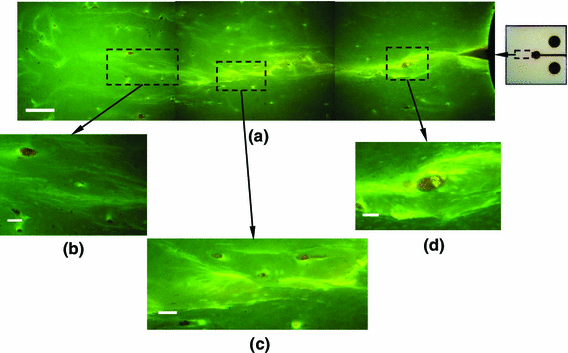
This image shows microcracks in bone.  You can see the drill induced crack on the part of a directly above c.

“a crack path of a typical control specimen showing various toughening mechanisms along the crack path: b microcracking ahead of the tip of the main crack, c several ligament bridges and d deflection and ligament bridge formation.”<-I think this kind of cracking could induce longitudinal bone growth however it would require an initial macrocrack such as that induced by the drill.  If you look at the a image directly above d the ligament bridging covers the entire length of the bone which could potentially result in total longitudinal bone growth.

more microcracks

“Typical damaged specimen following resistance curve testing. The approximate location of the pre-existing fatigue microcracks are marked using white lines. Scale bar is 250 µm”

Exercises like kicking with ankle weights can cause microcracks which can increase the likelihood of getting those macrocracks which can result in plastic deformation like longitudinal bone length increase.  But macrocracks are likely needed to induce that plastic strain in bone and only extreme ankle weight kicking is likely to induce that.

The bone constantly changes in length throughout the day by definition of microstrain.  Just cause a “macrocrack in bone” whole the bone is slightly lengthened and repeat and you should gradually grow taller.

Blood Pressure Cuffs versus LSJL

Does LSJL only increase intermedullary pressure or does it have extra anabolic effects?  The next few studies address what happens only if intermedullary pressure is increased.  It’s possible that LSJL’s effects are due solely to an increase in vascularization which makes it less promising for adult height growth although it would still be possible to induce adult height growth.  These studies are performed on rats much older than those used in LSJL but no impact on longitudinal bone growth was studied.  However, it still shows even in aged individuals developmental genes like BMP-2 and TGF-Beta can be stimulated.

Dynamic hydraulic fluid stimulation regulated intramedullary pressure

“Physical signals within the bone, i.e. generated from mechanical loading, have the potential to initiate skeletal adaptation. Strong evidence has pointed to bone fluid flow (BFF) as a media between an external load and the bone cells, in which altered velocity and pressure can ultimately initiate the mechanotransduction and the remodeling process within the bone. Load-induced BFF can be altered by factors such as intramedullary pressure (ImP) and/or bone matrix strain, mediating bone adaptation. BFF induced by ImP alone, with minimum bone strain, can initiate bone remodeling.  To apply ImP as a means for alteration of BFF, it was hypothesized that non-invasive dynamic hydraulic stimulation (DHS) can induce local ImP with minimal bone strain to potentially elicit osteogenic adaptive responses via bone–muscle coupling. The goal of this study was to evaluate the immediate effects on local and distant ImP and strain in response to a range of loading frequencies using DHS. Simultaneous femoral and tibial ImP and bone strain values were measured in three 15-month-old female Sprague Dawley rats during DHS loading on the tibia with frequencies of 1 Hz to 10 Hz. DHS showed noticeable effects on ImP induction in the stimulated tibia in a nonlinear fashion in response to DHS over the range of loading frequencies, where they peaked at 2 Hz. DHS at various loading frequencies generated minimal bone strain in the tibiae. Maximal bone strain measured at all loading frequencies was less than 8 με. No detectable induction of ImP or bone strain was observed in the femur. This study suggested that oscillatory DHS may regulate the local fluid dynamics with minimal mechanical strain in the bone, which serves critically in bone adaptation. These results clearly implied DHS’s potential as an effective, non-invasive intervention for osteopenia and osteoporosis treatments.”

“bone fluid flow (BFF) with altered velocity or pressure acts as a communication media between an external load and the bone cells, which then regulate bone remodeling. In converse, discontinuous BFF can initiate bone turnover and result in osteopenia”

“Induced ImP possibly triggers the transformation of the bone nutrient vasculature, leading to the ultimate alteration in blood supply to the bone.”

“The ImP reached the peak at 2 Hz.” at about 15mmHg.

Dynamic fluid flow stimulation on cortical bone and alterations of the gene expressions of osteogenic growth factors and transcription factors in a rat functional disuse model

“Dynamic hydraulic stimulation (DHS) [is] a loading modality to induce anabolic responses in bone. To further study the functional process of DHS regulated bone metabolism, the objective of this study was to evaluate the effects of DHS on cortical bone and its alterations on gene expressions of osteogenic growth factors and transcription factors as a function of time. Using a model system of 5-month-old hindlimb suspended (HLS) female Sprague–Dawley rats, DHS was applied to the right tibiae of the stimulated rats with a loading frequency of 2 Hz with 30 mmHg (p–p) dynamic pressure, 5 days/week, for a total of 28 days. Midshafts of the tibiae were analyzed using μCT and histology. Total RNA was analyzed using RT-PCR on selected osteogenic genes (RUNX2, β-catenin, osteopontin, VEGF, BMP2, IGF-1, and TGF-β) on 3-, 7-, 14- , and 21-day. Results showed increased Cort.Th and Ct.BV/TV as well as a time-dependent fashion of gradual changes in mRNA levels upon DHS. While DHS-driven fold changes of the mRNA levels remained low before Day-7, its fold changes started to elevate by Day-14 and then dropped by Day-21. This study further delineates the underlying molecular mechanism of DHS-derived mechanical signals, and its time-dependent optimization.”

BMP2, IGF-1 and Tgf-Beta are all pro chondrogenic.

“Bone formation progresses over time after the initiation of mechanical loading. Within 24–48 hr after mechanical loading starts, new osteoblasts lay on the bone surface and contribute to bone formation that is observed after 96 hr of loading. Bone formation follows a time-dependent manner, in which it increases between 5 and 12 days of loading and returns back to baseline levels after 6 weeks of loading. These data suggest that the whole cycle of bone formation, including osteoblast recruitment followed by matrix production, lasts for about 5 weeks before declining back to baseline levels”<-new osteoblasts implies cell differentiation which could mean new chondrocytes as well.

Dynamic Hydraulic stimulation increased the periosteal surface.

At seven days interestingly the levels of the pro-chondrogenic genes IGF-1, BMP2, and TGF-Beta were low.  At 14 days they were all increased relative to control.

“HS may compress the veins within the skeletal muscle and increase the vasculature pressure gradient that promotes capillary blood flow in bone. Increase of capillary filtration may further increase ImP and induce BFF that ultimately promote bone regeneration”

I think LSJL does more than just pure Hydraulic stimulation does.

“Osteoblasts [orginiate] from MSCs”

“Our group previously presented a longitudinal study of bone marrow MSC quantification under DHS in a rat HLS model, where the MSC number was greatly increased in response to DHS by day 14 and diminished by day 21. MSCs may have completed proliferation and begun to differentiate towards osteoblastogenesis at this stage. In the meantime, the induced mRNA levels of the selected genes that we observed in the present study may couple the process of transforming MSC proliferation and differentiation into osteoblasts, which commit to the subsequent bone formation.”<-so maybe why the pro-chondrogenic genes were low at day 7 is that MSCs were proliferating rather than differentiating into chondrocytes.